
Air Circuit Breaker OEM: Essential Tips for Selecting a Dependable Manufacturing Partner
2026-10-04
Nothing stalls a power project faster than an air circuit breaker that trips when it shouldn't. The real difference isn't the spec sheet—it's the factory behind it. Sorting solid OEM partners from those who just assemble parts takes more than a price comparison. That's why this guide covers the checks that matter: from arc-quenching chamber tests to customization lead times. Along the way, you'll see how MOLDVOLT approaches these challenges, giving you a practical benchmark for your next sourcing decision.
Look Beyond the Showroom: What an ACB Plant Floor Actually Tells You
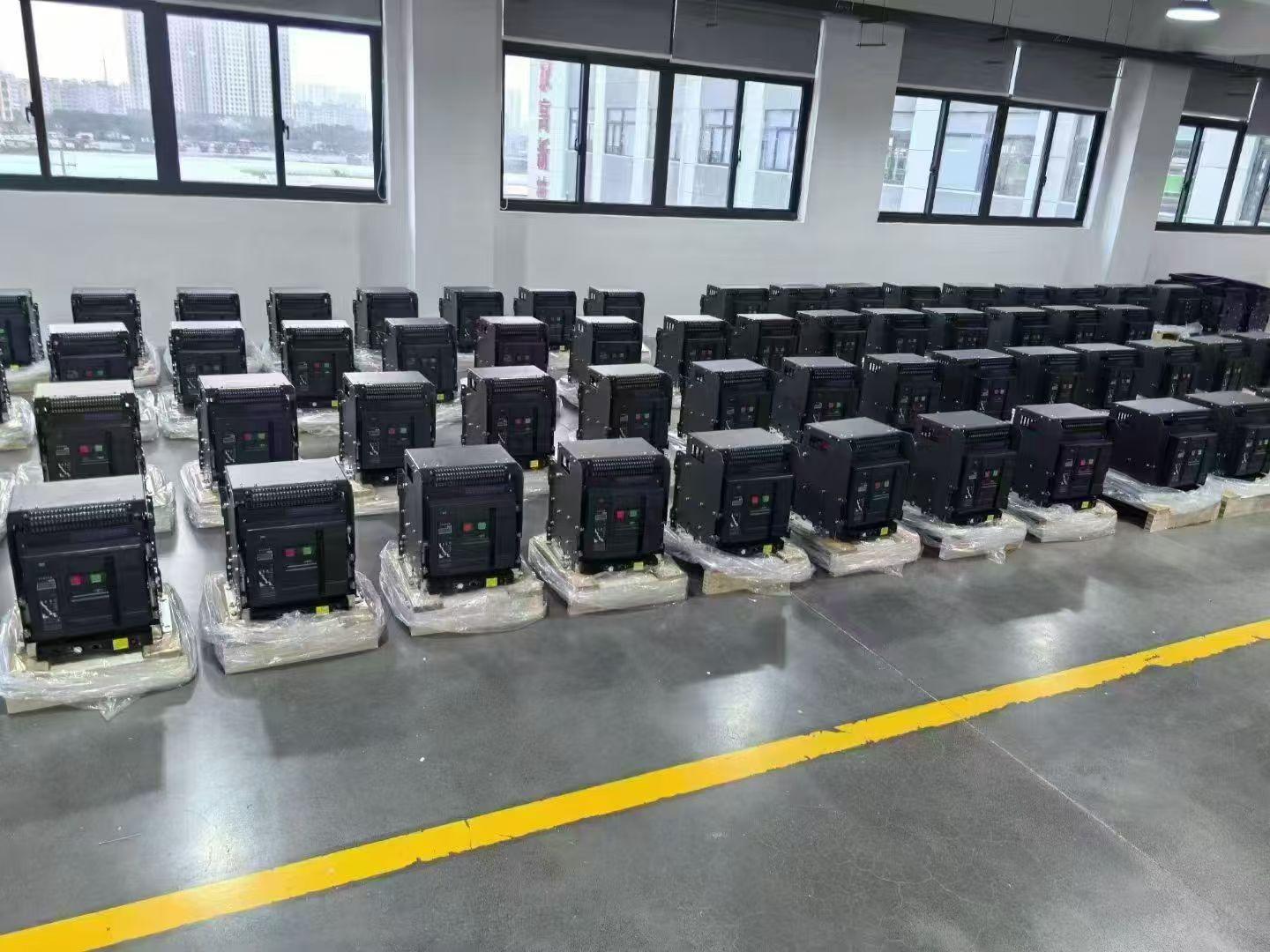
The showroom ACB sits behind glass with its labels aligned and its front cover spotless. That tells you almost nothing. On the plant floor, the first thing worth noticing is whether the assembly path forces the breaker to be handled gently. Arc chutes are stacked near the line, not piled. Mechanism springs are kept in labeled bins, not mixed on a cart. These may seem like housekeeping details, but they are the difference between a device that trips predictably after five years and one that eventually develops a random contact gap.
Move past the initial workstations and watch the testing rhythm. A floor that builds trust in an ACB does not wait until the very end to discover that a pole is misaligned. You'll see quick, focused checks embedded where the failure would otherwise hide: a milliohm reading right after the moving contact assembly, a timing check before the arc chamber is sealed. If the line slows down for these steps instead of rushing past them, the plant is measuring the breaker's behavior, not just its parts count.
Finally, look at how the floor treats the breaker once it leaves the conveyor. Some plants stack finished units on wooden pallets with the terminals exposed; others cap every terminal and torque-stripe every fastener before it moves to packaging. The second choice costs a few minutes and a few cents. It is also the only way a plant sends the message that the breaker you order should arrive exactly as functional as the one you saw in the demo.
Certifications Won't Trip for You: Test Beyond the Paperwork
Certifications tell you someone sat through a course and passed an exam. They don't show how that person reacts when a client changes requirements on a Friday afternoon or when a server crashes during a demo. A framed certificate might look impressive on a wall, but it won't catch the typo in a financial report or calm an upset customer. Paper credentials often say more about memory than about judgment.
That's why practical evaluation matters more than a list of acronyms. Ask candidates to walk you through a relevant problem, watch them use the tools they claim to master, or give them a small task that mirrors real work. You'll quickly see the difference between someone who can recite best practices and someone who can apply them under pressure. A short simulation or a discussion about past projects reveals far more than any credential verification service.
Certifications are a starting point, not a finish line. The real test is whether someone can adapt when the situation doesn't match the textbook. Keep the paperwork in the folder, but put the person in front of the work before making a decision.
The Prototype Timeline Separates Builders from Brokers
The prototype timeline does more than track milestones—it exposes who actually builds and who merely passes things along. Builders live inside the timeline. They know the exact hour a CAD file went to the shop, the day a solder joint failed, and the week a supplier slipped. Their calendars are stained with the residue of real work: late-night test rigs, reflashed firmware, hand-sanded enclosures. Brokers, by contrast, hover above the timeline. They ask for status updates without ever touching a breadboard. They forward emails, schedule check-ins, and use phrases like “let’s circle back on the critical path,” yet the path itself remains someone else’s footsteps.
The separation becomes obvious when the first physical unit emerges. A builder can point to a scratch on the bezel and recall the exact torque setting that caused it. A broker sees only a finished object and wants to know the go-to-market date. One is accountable to the timeline’s texture—its jitter, its setbacks, its ugly middle hours. The other is accountable only to its headline: “shipped.” Prototyping doesn’t just measure time; it measures tolerance for uncertainty. Builders absorb that uncertainty into their own sleep schedules. Brokers convert it into a slide deck.
There is no shortcut here. You cannot fake a relationship with the timeline because the timeline keeps records: tooling marks, revision histories, test logs, scrap bins. Those artifacts tell a story that no résumé or roadmap can overwrite. When a prototype schedule is compressed or broken, the difference shows fast. Builders scramble to re-sequence tasks and swap components. Brokers scramble to update the Gantt chart. And when the prototype finally works, the builder feels relief. The broker feels ready to announce. That moment—not the launch, not the funding—is where the two paths part for good.
Read the Bill of Materials Like an Engineer, Not a Buyer
An engineer scanning a BOM isn't checking off line items to negotiate volume discounts. They're tracing how each resistor value, connector pitch, and fastener coating interacts with the next. A part number that looks interchangeable on a spreadsheet often carries tolerance stackups, thermal drift, or mating geometry that the datasheet won't flag unless you know which parameters matter. That is the difference: a buyer asks "can we get it cheaper?" while an engineer asks "what happens at -40°C, after 10,000 cycles, or when the supplier silently changes the plating?"
The revision column is not just paperwork. It tells you whether a capacitor moved to a smaller case size, whether a PCB finish switched from ENIG to HASL, or whether a firmware-defined pull-up was relocated. Miss that delta and the prototype might work fine on the bench but fail in the field because the new part's ESR changed the ripple margin. Reading the BOM like an engineer means treating every revision note as a potential source of electrical, mechanical, or process variation, not just a date update.
Material and finish callouts deserve the same scrutiny. A stainless screw next to an aluminum bracket can galvanically corrode if the plating is not specified; a nylon standoff rated for 85°C will soften in a chassis that idles near that limit. Instead of grouping line items by cost center, follow the assembly path: board to connector, connector to cable, cable to enclosure. The BOM becomes a map of physical and thermal interfaces, and that map reveals failures that a pure purchasing view would never see.
Custom Trip Settings: Where Real Design Depth Shows Up
Most itinerary builders stop at picking dates and destinations, but custom trip settings are where the product either earns trust or falls apart. The difference shows in small, unglamorous controls: a toggle for travel pace that actually changes how many stops get suggested, not just a label; a budget slider that filters out restaurants and hotels instead of merely sorting them; a checkbox for “avoid highways” that updates the map route in real time. These details rarely get screenshots, yet they’re the first thing a repeat traveler notices when comparing tools.
The best implementations treat settings as part of the trip narrative rather than a separate panel. You don’t set “accessibility needs” and then forget it; the interface quietly adjusts step counts, surfaces elevator-friendly entrances, and flags cobblestone-heavy walking tours. Similarly, a well-designed food preference field won’t just hide non-vegetarian options—it will re-rank the day’s plan so you’re not left with a single backup café. This kind of layered thinking is hard to fake. It comes from watching real users modify trips, not from adding another menu.
Depth also appears in how settings persist and interact. If a traveler turns off museums on day two, does the system remember that for day three, or is it a one-off filter? Can two conflicting settings—like “minimize walking” and “see hidden alleys”—trigger a helpful conflict note instead of a silent compromise? When the controls start reasoning about each other, the design stops being a form and becomes a collaborator.
After-Sales Support: The Real Cost of a 'Cheaper' OEM
When procurement teams chase the lowest upfront quote, they rarely factor in what happens six months down the line. A budget OEM might ship a functional part, but when that part fails on a Friday afternoon, you're not just paying for a replacement—you're paying for idle production lines, expedited freight, and a support team that's either unreachable or reading from a script written in another time zone. The real cost isn't on the invoice; it's in the hours your engineers spend doing the supplier's job.
Contrast that with a manufacturer who treats after-sales as part of the product itself. They stock critical spares regionally, answer technical queries with actual application knowledge, and don't hide behind warranty fine print. Yes, their unit price is higher—sometimes 15 to 20 percent. But when a sensor goes down, that premium buys you a replacement by Tuesday morning and a phone call from someone who understands your production line, not a ticket queue that auto-replies at 3 a.m.
Savvy buyers have learned to map the total cost of ownership, and support is the hidden multiplier. A cheaper OEM that forces you to hold three spare parts in inventory, pay for your own diagnostics, and lose a full shift twice a year isn't cheaper—it's just deferring the bill to your maintenance budget and your downtime reports. The 'savings' disappear the moment you realize you've become the quality control department for your supplier.
FAQ
Look beyond brochures and confirm the factory has international type-test certificates for the specific frame sizes you need. Ask for recent test reports from independent labs, not just in-house data.
Request a sample project timeline and ask how they manage design changes. A reliable OEM will have a clear engineering review process and dedicated project engineers, not just a sales team promising quick turnarounds.
Check whether they perform routine tests on 100% of breakers before shipment—like dielectric strength, mechanical operation, and contact resistance—and ask to see calibration records for their test equipment.
It can make or break long-term reliability. Ask if the OEM provides troubleshooting guides, spare parts lists, and remote support, and whether they stock critical components for at least ten years.
Not always, but a price far below market often signals shortcuts in materials or skipped tests. Compare the bill of materials for key parts like arc chutes and trip units, not just the final quote.
Ask how many backup suppliers they have for copper contacts, molded cases, and electronic trip units, and how they handled disruptions in the past two years without delaying orders.
Request reference installations with similar ratings and ask for contact information of past clients. A dependable partner will share case studies showing real breaker installations, not generic product photos.
Vague answers about test failures, reluctance to allow factory audits, or no documented corrective action process. Also watch for inflated capacity claims that don't match the number of assembly lines or skilled technicians.
Conclusion
Walking through an ACB plant floor tells you more than any polished brochure. You want a manufacturer whose assembly lines are clean, organized, and running tests that go beyond basic dielectric checks. If the factory is reluctant to let you watch a breaker being built or can't explain how they validate short-circuit withstand ratings, that's a warning sign. Real engineering depth shows up in custom trip settings. A dependable OEM will ask detailed questions about your protection coordination and load profile, then propose specific curve adjustments instead of offering a one-size-fits-all trip unit. Watch how they handle the prototype timeline too. A builder who can turn around a working sample in weeks—and explain the trade-offs they made—has actual manufacturing muscle. Brokers just pass your order along and hope for the best.
Dig into the bill of materials like an engineer, not a price-driven buyer. Check the copper grade, contact material, arc chamber design, and even the supplier of the microcontroller that handles trip logic. Small differences in these components decide whether a breaker clears a fault cleanly after years in the field or becomes a liability. After-sales support is where cheaper OEMs quietly fall apart. Ask for a written commitment on spare parts availability, firmware update policy, and on-site commissioning help. A genuine manufacturing partner will have a local service team or at least a direct engineering contact, not a call center that disappears after the invoice is paid. The real cost of a breaker is measured over its twenty-year service life, and cutting corners on the initial quote rarely saves anything.
Contact Us
Contact Person: Hellen
Email: [email protected]
Tel/WhatsApp: 86-13634205622
Website: https://www.voltcabinet.com