
Arc Fault Detection Device Supplier Guide for Reliable Electrical Protection
2026-09-27
Every year, undetected arc faults cause thousands of electrical fires, often in circuits that look perfectly normal—until it’s too late. Choosing the right arc fault detection device (AFDD) supplier isn’t just about compliance; it’s about preventing silent threats that standard breakers miss. But with so many options on the market, how do you separate genuine protection from marketing hype? This guide breaks down what reliable AFDDs actually require, from real-world response times to nuisance tripping resistance, and why ETEK has become a quiet benchmark for engineers who can’t afford second chances. If you’ve ever wondered whether your electrical protection is truly proactive—or just reactive—keep reading.
What Actually Triggers an Arc Fault—and Why Most Panels Miss It
Arc faults don't announce themselves with a loud bang or a visible flash in most homes. They begin silently—often inside a wall, at a loose screw terminal, or where a staple has nicked a cable years ago. The trigger is usually a breakdown in insulation or a mechanical separation of conductors, creating a high-resistance gap. When voltage jumps that gap, it ionizes the air just enough to sustain a current leak that can reach thousands of degrees without ever drawing enough amps to trip a standard breaker.
What confuses the average panel is that this arcing current rides below the thermal-magnetic trip curve. A 15-amp breaker doesn't care if the current is flowing through a clean copper path or a charred, sparking fissure; it only reacts to overload or a massive short. That's why so many hidden arc faults smolder for weeks or months until the wood framing itself becomes part of the circuit. By the time the fire starts, the panel has already failed its only job.
Field experience shows that many 'mystery trips' blamed on nuisance breakers are actually the panel catching a signature it wasn't designed to see. The real problem isn't the arc itself—it's that detection requires recognizing a chaotic, high-frequency pattern in the current, not just a threshold. Without that pattern recognition, an AFCI is just an expensive disconnect switch, and the panel remains blind to the one fault that burns down houses while everyone is asleep.
Reading Beyond the Spec Sheet: What Reliable AFDD Suppliers Don't Advertise
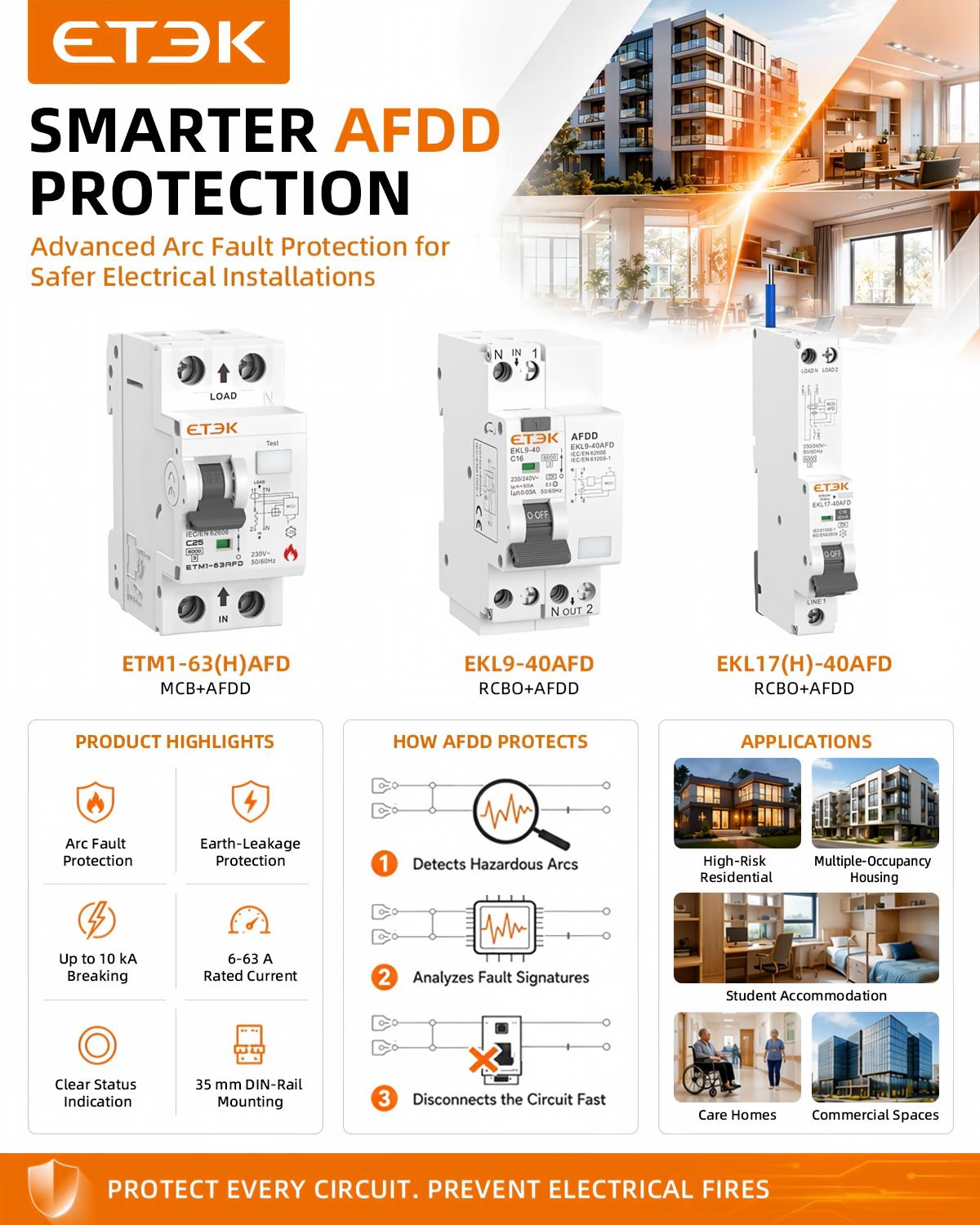
A spec sheet will tell you about rated current, breaking capacity, and compliance marks, but it stays quiet about the things that actually shape long-term performance. Ask any electrician who swaps out nuisance-tripping AFDDs on a regular basis and they'll mention dimmer compatibility, mixed-load behavior, and how the device handles aging wiring. Reliable suppliers rarely put those details in a brochure because they're messy, hard to bench-test, and vary from one installation to the next. Instead, they invest in field return analysis, firmware updates for detection algorithms, and conservative component derating that no customer sees.
What also goes unspoken is the supplier's honesty when something does go wrong. A trustworthy manufacturer may ship an updated trip curve after collecting six months of field data, or quietly replace a batch with a marginal component before failures become widespread. That kind of responsiveness won't earn a line on a datasheet, yet it's exactly what separates a device you can install and forget from one that triggers callbacks and frustrated homeowners. Reading beyond the spec sheet means paying attention to how a supplier talks about nuisance tripping, firmware history, and their own field failure rate—or whether they avoid those topics altogether.
The Certification Maze: Which Marks Matter for Arc Fault Protection
Most electricians learn early that a mark on a breaker does not mean it will actually protect a bedroom circuit. The one you cannot skip is the listing to UL 1699, the standard written specifically for arc fault circuit interrupters. If a device carries a UL Listed mark with arc-fault circuit interrupter in the product identity, it has passed a battery of nuisance-tripping and arc-detection tests under that standard. An ETL mark from Intertek or a CSA mark from the Canadian Standards Association means the same thing when the product is listed to UL 1699, because all three are accredited as Nationally Recognized Testing Laboratories. The key is to look for the standard number next to the logo, not just the logo itself.
Contractors get into trouble when they assume any safety certification automatically covers arc fault protection. A breaker with a generic UL 489 listing for branch circuit protection is not the same as a combination type AFCI that carries the UL 1699 listing. The 489 standard addresses overcurrent and short circuit performance; it says nothing about detecting the unique current signatures of series or parallel arcing. Some imported panels come with breakers that have a CE mark, but CE marking is self-declared for many electrical products and has no standing with North American inspection authorities. If an inspector asks for arc fault breakers, a CE-only device will not pass.
There is also a smaller but meaningful difference between UL Listed and UL Classified. Listed means the product meets the end-use standard on its own. Classified may mean it was evaluated only for use inside another manufacturer's specific panel. For arc fault protection, you want a listed breaker, not a classified insert or add-on module. When the panel label calls for a specific series of AFCI breakers, mixing in a look-alike from another brand, even one with a mark, can void the panel listing and create unresolved liability. The simplest habit is to match the panel manufacturer's approved list and then verify the UL 1699 reference on the label.
Wiring Mistakes That Undermine AFDD Performance in the Field
A loose neutral connection at the panel or in a junction box rarely trips a standard breaker, yet it wreaks havoc on an AFDD. The device depends on a stable reference to separate normal load current from the chaotic signatures of arcing. When that neutral wiggles under thermal cycling or vibration, the AFDD sees a stream of transient spikes that mimic series arcs. The result is either constant nuisance tripping that drives electricians to bypass the device, or a desensitized response that lets a genuine arc fault smolder unnoticed until insulation melts.
Swapping the line and load terminals on an AFDD, or landing the neutral on the wrong bus, does more than create a code violation. It changes the direction of current flow through the internal sensing toroid, so the AFDD's arc detection algorithms are fed inverted or partial waveforms. A parallel arc that should trigger within half a cycle might go completely undetected because the device is looking at the return path instead of the supply side. In the field, this mistake often happens when a replacement AFDD is installed in an older panel where the neutral bar layout doesn't match the original wiring diagram.
Shared neutrals in multi-wire branch circuits pose another silent killer of AFDD performance. When two circuits from opposite legs share one neutral, the AFDD on each hot leg sees a residual current that isn't entirely its own. Under light, unbalanced loads, the borrowed current can look like a low-level arc fault, triggering false trips. Under a real fault condition, the split return path can reduce the sensed differential below the trip threshold, leaving the circuit energized while arcing continues behind the wall. Electricians who don't recognize this interaction often blame the AFDD instead of the wiring topology.
Matching Supplier Claims to Site Conditions: A Practical Check
A supplier's datasheet can look flawless in the lab, yet crumble the moment it meets your actual site. The first step in any practical check is to stop taking nominal values at face value. Go beyond the headline spec—look for the test conditions buried in the footnotes. Was that flow rate measured at 20°C with clean water, or at the slurry temperature and viscosity you actually run? Mismatches here are not rare exceptions; they are the rule, and a quick side-by-side table comparing claimed conditions against your daily operating window will expose gaps before they become shutdowns.
Field verification does not need to be complicated, but it must be deliberate. Pick three or four parameters that matter most for your process—pressure drop, corrosion allowance, power draw, or seal compatibility—and verify them under a typical week of real operation. Instead of asking the supplier 'Will it work?', give them your worst-case site data and request a written confirmation of performance at those points. If their answer hedges with phrases like 'assuming standard conditions' or 'subject to final engineering review', treat that as a red flag, not a footnote. A supplier confident in their claim will welcome your worst case; one who hides behind conditions is telling you exactly where the risk lives.
Finally, document what you actually observe once the equipment is installed and running. Take baseline readings during commissioning, then re-check them after one month and again after a season change. Compare those numbers with the original claim, but do not expect perfection—expect pattern. A consistent 5% deviation in one direction often reveals a site condition the supplier never knew about, like a piping configuration or an ambient temperature swing. That pattern is your best tool for the next purchase, and sharing it with the supplier turns a one-time check into a long-term calibration of expectations.
Long-Term Reliability Starts with the Right Installation Habits
The way a system is put together often determines whether it will still be running smoothly a decade later. Many failures that get blamed on wear and tear actually trace back to small mistakes made during installation—a bolt that wasn't torqued to spec, a seal that got pinched, or wiring left with too much tension. Taking the time to follow the manufacturer's torque settings, check for proper alignment, and keep contaminants out of connections makes a measurable difference. Those habits don't take much extra effort, but they prevent the slow damage that shortens service life.
It also helps to treat the installation manual as a starting point rather than a suggestion. Experienced installers know that local conditions sometimes demand small adjustments, like using a different sealant in high-humidity areas or adding drip loops where water tends to collect. Documenting what was done, including any deviations and why, creates a record that makes future maintenance easier. When the next technician can see exactly how something was installed, they spend less time guessing and more time keeping the equipment in good shape. That kind of follow-through turns a one-time job into a foundation for long-term reliability.
FAQ
A dependable supplier shows verified test reports from independent labs, offers clear guidance on nuisance tripping thresholds, and provides field support when devices need adjustment. They don't just sell hardware; they help you map out which circuits actually need protection.
Arc faults can smolder inside wiring or connections without tripping a standard breaker, eventually causing fires. Detection devices monitor for irregular current signatures and cut power before heat builds up, which is something thermal overload protection alone won't catch.
Look for compliance with UL 1699 for branch/feeder arc fault circuit interrupters, IEC 62606 for general arc fault detection devices, and any local electrical code approvals. A credible supplier will make these documents easy to find instead of hiding behind marketing language.
Older wiring often shares neutrals or has existing leakage currents that can confuse basic detection algorithms. A good supplier will offer devices with adjustable sensitivity or specialized filters, and they should be willing to review your panel schedule before you commit.
Ask the supplier for field data from similar applications, not just lab specs. Some manufacturers publish nuisance tripping rates in real installations. You can also request a trial unit on one or two problem circuits to see how it behaves with normal loads like motors or LED drivers.
Expect help with commissioning, interpretation of trip events, and firmware updates if the device has digital logging. A reliable supplier won't disappear after delivery; they should be able to walk your maintenance team through what a recorded arc signature looks like versus an overload or inrush event.
It depends on the complexity of your installation. Direct purchasing often gives you faster access to engineering support and customization, while distributors may offer better lead times or local stock. The key is that whoever you buy from can connect you to the manufacturer's technical team when questions come up.
Conclusion
Arc faults typically start from loose connections, damaged insulation, or series arcing that standard circuit breakers ignore because the current never rises high enough to trip them. Many panels miss these low-energy events until they become a fire. Choosing a reliable AFDD supplier means going beyond the datasheet—you need to confirm the device's detection algorithm responds to real fault signatures, not just clean laboratory waveforms. Certification marks like UL 1699 or IEC 62606 provide a baseline, but they don't guarantee field performance. A trustworthy supplier will share test data from messy real-world conditions, including motor noise, dimmer interference, and aged wiring, rather than relying only on listed approvals.
Even a well-made AFDD can be defeated by wiring errors. Shared neutrals, reversed polarity, or running sensor conductors next to power cables can cause nuisance tripping or missed arcs. Before accepting supplier claims, compare them to your actual site conditions—line length, load types, and ambient temperature all shift detection thresholds. Long-term reliability depends on installation habits: torque terminals consistently, keep connections clean, and retest after any circuit modification. A dependable supplier will give you clear torque specs, commissioning checklists, and troubleshooting support, not just a product. Reliable electrical protection comes from pairing an honestly specified AFDD with disciplined installation and maintenance.
Contact Us
Contact Person: Andy
Email: [email protected]
Tel/WhatsApp: +86 13356133008
Website: https://www.etek-china.com/