
Artificial Flowers Manufacturer Shares Insider Tips for Lifelike Arrangements
2026-10-23
There’s a fine line between fake flowers that fool the eye and ones that scream ‘plastic.’ After years of crafting high-end artificial blooms at PHLEEYA, we’ve learned exactly what makes an arrangement come alive. In this guide, our designers share the same techniques they use to create botanicals that even florists double-check. From stem shaping to color layering, get ready to see faux florals in a whole new light.
Real Touch Petals: The Material Difference That Fools the Eye
The first time you brush a fingertip across these petals, your brain does a double take. Real Touch isn't just a marketing term—it's a layered polymer blend with a velvety surface texture that mimics the microscopic ridges and softness of actual flower petals. Unlike cheaper silk or plastic alternatives that feel slippery or stiff, this material has a subtle give when pressed, then springs back slowly, creating the same tactile illusion as living tissue. It even carries a faint coolness at room temperature, much like a freshly cut stem.
What really sells the illusion is how light behaves on the surface. The petals are coated with a micro-matte finish that scatters light unevenly, avoiding the telltale plastic sheen. Look closely and you'll notice tiny variations in tone—hand-applied veining and edge gradients that catch shadows the way real petals do when they curl slightly. That's why guests lean in closer, hesitate, and finally ask, "Are these real?"
Durability is the quiet advantage. Real Touch petals resist creasing, fading, and water spotting, so they stay convincing through dozens of events, outdoor heat, and even light handling. You can bend a petal back and it won't crack or leave a white stress line. That combination of visual nuance and physical resilience is exactly what makes this material feel alive—and why it routinely fools even experienced florists at arm's length.
Bend, Don't Break: Shaping Stems for a Natural Slouch
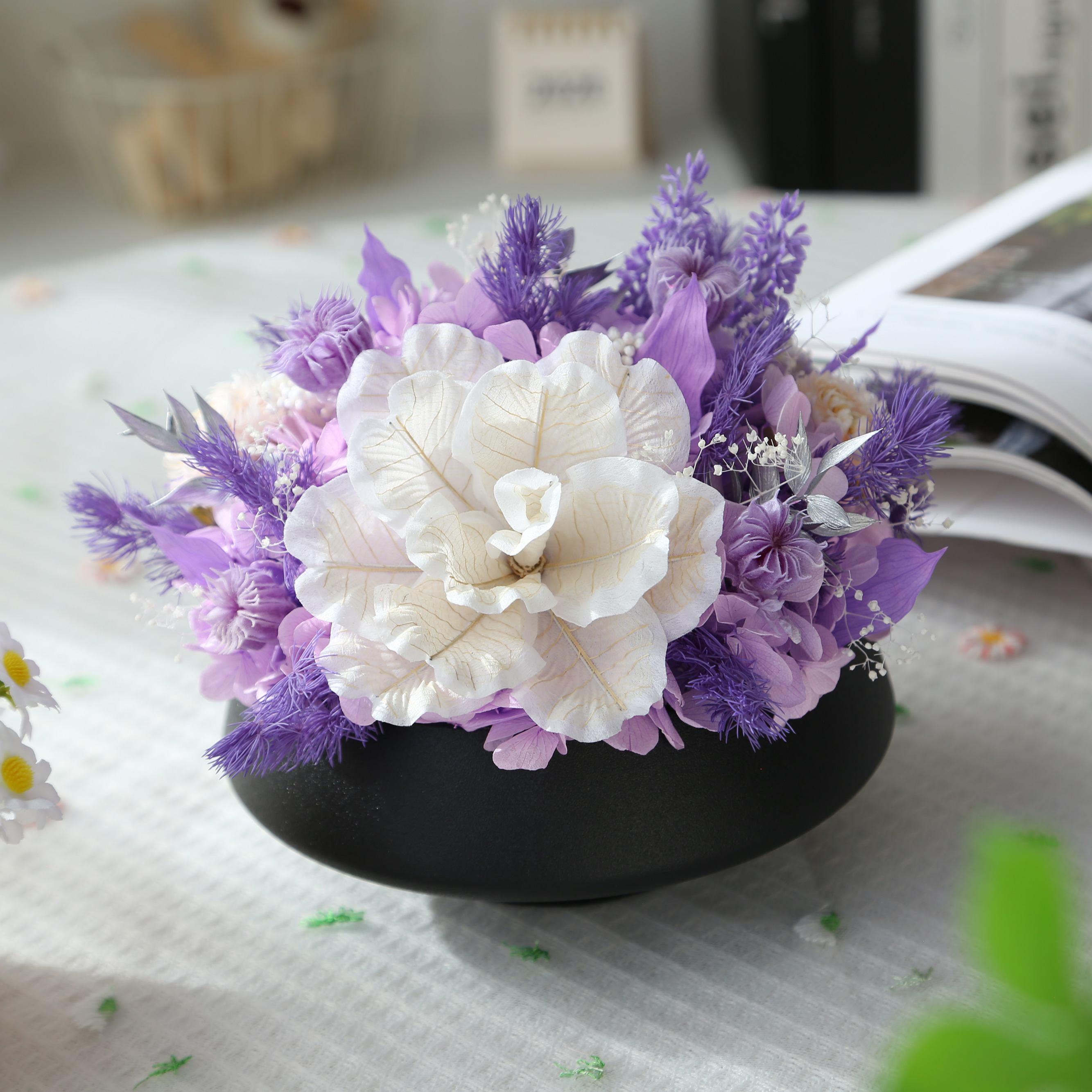
That soft, lazy curve you see in well-loved houseplants never comes from forcing a stem into submission. The moment you try to crease a branch like a folded piece of cardboard, you've already lost the battle — the plant will either snap, scar, or stubbornly spring back days later. Instead, think of reshaping as a slow conversation. Warm the tissue first by rubbing the stem between your palms for a minute. Then coax it into a gentle arc, holding the bend for a few seconds before releasing. Each session stretches the fibers a little further, teaching the stem to hold its new posture without ever feeling the shock of a hard fold.
Gravity is your quietest assistant here. For a cascading slouch, set the pot at an angle so the stems naturally lean sideways over a few days — no hands required. If you want a more deliberate droop, wrap the stem in a damp paper towel for half an hour to soften the outer layer, then use a soft plant tie or a strip of old cotton fabric to anchor it just shy of the target angle. Check the tie daily: the moment it starts cutting into the skin, loosen it. A slouch should look effortless, like the plant chose that direction itself, not like it's being held hostage.
The real trick is knowing when to stop. Over-bending in one session leaves microscopic fractures that invite rot or pests. Work in small increments over a week or two, and rotate the pot regularly so the shape stays three-dimensional rather than flat on one side. If a stem resists more than a slight spring-back, leave it alone for a day — some varieties are naturally rigid and will never take a deep curve without damage. Better to celebrate a subtle lean than to end up with a broken branch and a ruined silhouette.
Layer Like a Florist: Mixing Heights and Textures
A florist never settles for a flat arrangement. They build upward, tucking tall stems behind soft mounds, letting a few wild sprigs leap above the rest. Apply that same instinct to your space—whether it's a shelf, a garden bed, or a tabletop. Instead of lining up objects in a neat row, stagger their heights. A tall dried branch in the back, a cluster of medium-height greenery in the middle, and a low ceramic bowl up front instantly creates visual rhythm.
Height alone isn't enough. A florist knows that contrasting textures turn a simple bunch into a statement. Mix the fine, feathery leaves of asparagus fern with broad, waxy monstera foliage. Pair a rough terracotta pot with a silky trailing plant. Even in non-botanical vignettes, this works: smooth glass next to rough linen, a chunky knit throw under a polished stone vase. The eye lingers longer when surfaces don't match perfectly.
Don't be afraid to break the rules a florist would bend. Allow one tall element to arch forward, as if reaching for light, rather than standing stiffly at attention. Let a vine spill over the edge of a shelf to soften a hard line. These small rebellions keep the arrangement feeling alive and unstudied—like something you gathered on a walk, not arranged for a photo shoot. That ease is what separates a decorated space from a designed one.
The Underrated Power of Faux Water and Dried Accents
Most people reach for fresh flowers or a live plant when they want to add life to a room, but faux water and dried stems quietly do something those choices can't. A clear resin pour in a simple glass vase catches light exactly like the real thing, yet never evaporates, never clouds, and never demands a refill. Paired with a few sculptural dried grasses or bleached ruscus, it delivers that same sense of calm without the weekly upkeep.
There's also a textural payoff that gets overlooked. Dried botanicals bring a muted, papery quality that fresh greenery often lacks, and the faux water adds a subtle reflection that makes the arrangement feel anchored rather than floating. It works especially well in spots where real water would be impractical—high shelves, rental staging, or any corner that gets forgotten between cleanings.
What makes the combination feel less like a compromise is the control it gives you. You can use branches with interesting bends, seed pods, or even preserved leaves, and the faux water holds each stem exactly where you place it. There's no wilting to manage, no cloudy vase to scrub, just a still composition that keeps its shape for months.
Color Blending: How to Avoid That Plastic Shine
One of the quickest ways to end up with that plastic sheen is to rely too heavily on pure white for highlights. Real surfaces rarely reflect a clean, unbroken white—light bouncing off skin, fabric, or wood picks up tints from the surroundings. Swap out the white for a very light version of your base hue, warmed or cooled depending on the scene. Even a tiny shift toward yellow, blue, or pink will kill the synthetic gloss and make the material feel tactile.
Another culprit is over-blending. When every edge gets smoothed into a perfect gradient, the surface starts to read as manufactured. Let some brush strokes or transitions stay slightly uneven. Introduce subtle hue variation within the same value range—think a faint green in the shadow of a red apple or a whisper of violet in the reflection on a ceramic mug. These small interruptions break up the uniformity that our eyes associate with cheap plastic.
Finally, pay attention to saturation. Plastic objects often hold a consistent, high-chroma color across their entire surface. Natural materials lose saturation in bright light and gain it in the midtones and shadows. Reduce the intensity of the highlight area and push a bit more pigment into the darker planes. This shift in chroma, even if barely noticeable, anchors the object in a believable lighting environment and removes that airbrushed, toy-like finish.
The Dust-Proof Secret That Keeps Blooms Looking New
Most people assume faded petals or drooping stems are the first signs of aging, but dust is the real thief of vibrancy. A thin, almost invisible layer settles into every crease and fold, muting colors and making even the freshest arrangement look tired. The trick isn't to soak the blooms or blast them with compressed air—it's a gentle wipe with a barely damp microfiber cloth, folded into a soft point to reach between layers without tearing delicate edges.
For silk or preserved flowers, static is your enemy because it pulls dust back within hours. Run a dryer sheet lightly over the petals once after cleaning, and you'll create a subtle anti-static barrier that keeps particles from clinging. Another overlooked step is placing the arrangement where air doesn't stagnate—near a gentle fan or an open window on a calm day—so dust never gets a chance to settle thickly in the first place.
Deep inside clustered blooms, a soft-bristled makeup brush works better than any cloth. Use short, flicking strokes from the center outward, as if you're sweeping crumbs off a table. This habit, done every ten days or so, is what keeps a display looking like it was just unboxed, with that crisp, untouched brightness most people assume comes only from the florist.
FAQ
Focus on the petals and leaves. High-quality stems often have subtle color variations, not one flat tone, and the edges may have slight irregularities. Give them a gentle bend; if the wire inside feels flimsy or the fabric looks shiny under natural light, skip them.
Treat each stem like a fresh cutting. Bend the wires slightly, angle the heads at different heights, and let a few leaves droop naturally. Real flowers never stand at perfect attention, so stagger the blooms and allow some to face sideways or even downward.
Yes, and it often improves the overall effect. Use real foliage for texture and scent, then place high-quality faux blooms among it. The key is to match the color intensity and avoid plastic-looking stems; wrap any visible joints with florist tape.
Opaque or textured vessels hide the stems and any filler material, which instantly makes an arrangement look more convincing. If you use clear glass, add real water and a few drops of food coloring to mimic the slight cloudiness of flower water.
Dust them every two to three weeks with a soft brush or a hair dryer on a cool, low setting. For deeper cleaning, wipe each petal with a damp microfiber cloth and mild soap, then let them air dry completely before rearranging.
They crowd too many blooms into one spot. Real bouquets have breathing room between flowers, with some stems shorter and others leaning outward. Start with fewer stems than you think you need, then add gradually until the silhouette looks balanced.
Rub a tiny amount of matte clear spray or even a bit of cornstarch on shiny leaves to cut the gloss. You can also lightly mist them with water and reshape while damp. Most convincing are stems with fabric leaves that have visible veins and irregular edges.
Swap out accent elements rather than the main flowers. Add dried seed pods, berry picks, or a few branches in autumn shades for fall. For spring, tuck in some faux buds or fresh pussy willow. Changing the vase or ribbon color also shifts the mood instantly.
Conclusion
The secret to artificial arrangements that pass for fresh starts with petal texture. Manufacturers now use real-touch coatings that mimic the slight give and matte surface of living blooms, so the eye and hand do not catch the difference immediately. But even the best petals look stiff if you leave stems as they come out of the box. Bend them gently at the joints, create a slight droop, and let each stem find its own angle instead of standing at attention. Layering matters just as much as in a florist's cooler: mix tall stems with shorter filler, tuck in a few textured leaves, and let some pieces lean outward so the silhouette feels gathered, not arranged.
A cheap look usually comes from too-perfect color and too-shiny surfaces. Blend two or three shades within the same color family and rub a little matte powder or a dry brush of lighter tone over petals to knock back that plastic gloss. Small props do heavy lifting: add a shallow dish of clear resin to suggest water, or slip in dried grasses and seed pods for contrast. Finally, keep dust from settling into crevices by hitting arrangements with a cool hair dryer once a month, or use a soft makeup brush on stubborn spots. These are the same tricks the factory uses for showroom displays, and they hold up at home far longer than fresh stems.
Contact Us
Contact Person: Mr. Luo
Email: [email protected]
Tel/WhatsApp: 86 18100895505
Website: https://www.feiliyaflowers.com/en/