
Autonomous Forklift Factory: Streamlining Production with Self-Driving Technology
2026-06-25
Walk into a factory where forklifts navigate without drivers, weaving through aisles with quiet precision. This isn't a distant vision—it's happening now, and HANGCHA is behind the wheel. As self-driving technology reshapes industrial logistics, HANGCHA's autonomous forklift factory is proving that smarter material handling means faster, safer, and more efficient production from the ground up.
The Rise of Self-Driving Forklifts in Modern Warehousing
Walk through a busy distribution center these days and you might notice something missing: the driver's seat. Autonomous forklifts are quietly taking over repetitive lifting and moving tasks, once the exclusive domain of human operators. It's a shift driven by a tight labor market, rising operational costs, and the sheer volume of goods moving through e-commerce channels. Warehouse managers are increasingly viewing these machines not as futuristic novelties but as practical tools to keep pace with demand.
What makes today's self-driving forklifts so effective is their ability to learn and adapt. Using a blend of lidar, cameras, and advanced software, they map their environment on the fly, dodging obstacles and recalculating paths without needing floor magnets or fixed routes. This flexibility means they can slot into existing operations with minimal downtime, working alongside human teams who focus on more complex tasks like sorting or quality checks. The technology has matured to the point where a forklift can unload a trailer, navigate tight aisles, and precisely stack pallets—all while the facility manager monitors progress from a tablet.
Beyond the tech specs, there's a cultural change happening on the floor. Veterans who spent years behind the wheel are now overseeing fleets of these machines, shifting from manual labor to supervision and troubleshooting. Companies are reporting fewer accidents and less product damage, which isn't surprising when you remove human fatigue from the equation. For many, the real eye-opener is the consistency: a self-driving forklift never calls in sick, never takes a break, and performs the same maneuver with millimeter precision every single time. That reliability is rewriting how warehouses measure productivity and plan their growth.
How Autonomous Forklifts Boost Production Efficiency
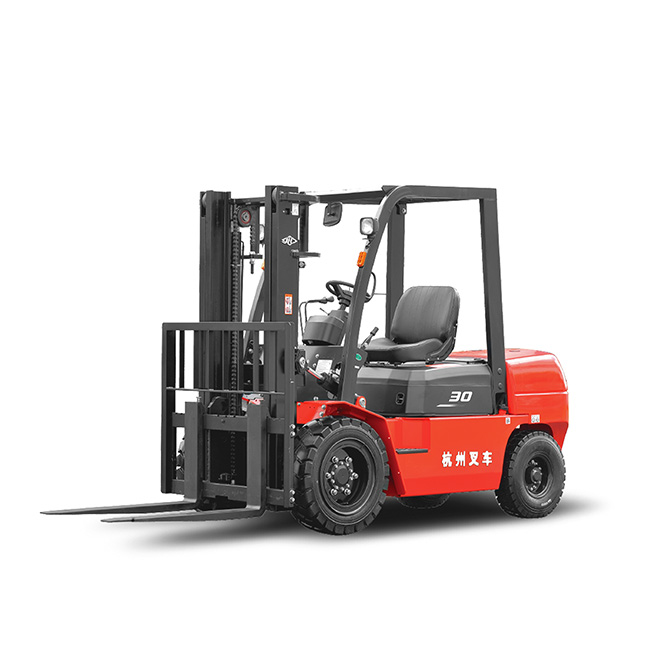
Autonomous forklifts reshape warehouse workflows by eliminating the inconsistencies tied to manual operation. Instead of relying on human judgment for load handling and navigation, these vehicles follow precise, programmed routes every time. This consistency slashes the error rate—fewer misplaced pallets, less product damage—and keeps the line moving without the halt-and-correct cycles that eat into productive hours. Over a standard shift, the cumulative minutes saved per task translate directly into more orders processed.
Round-the-clock availability is where the efficiency gain becomes stark. While a human-operated fleet is bound by shift schedules, breaks, and fatigue, autonomous units only pause for recharging or maintenance. Paired with fast-charging infrastructure, they can deliver near-continuous operation across three shifts, dramatically boosting throughput without proportional increases in labor costs. This uptime advantage is especially valuable during peak seasons, when demand spikes and every extra hour counts.
The real edge comes from data-driven orchestration. Autonomous forklifts don't just move loads—they gather and respond to real-time information about inventory locations, traffic patterns, and task priorities. This allows the system to dynamically adjust routes, cluster trips, and sequence tasks in ways that minimize empty travel and idle time. The maze of a busy distribution center becomes a coordinated flow, slashing cycle times and shifting the focus from merely moving goods to continuously refining the entire material-handling rhythm.
Safety First: Reducing Workplace Accidents with Smart Navigation
Every year, countless workplace injuries stem from something surprisingly simple: people moving through spaces where they shouldn't be. Forklifts crisscrossing pedestrian zones, employees stepping into blind corners, or maintenance crews wandering into active hazard areas—these are the daily risks that smart navigation can quietly eliminate. Instead of relying on faded floor tape or occasional safety briefings, facilities are now embedding real-time location awareness into the very fabric of their operations. With discreet wearable tags and low-energy beacons, the environment itself becomes a watchful partner, alerting workers when they stray too close to danger and automatically slowing machinery when someone steps into its path.
What makes this approach stick isn't the technology—it's the way it fades into the background. No one wants another screen to watch or buzzer to ignore. Modern smart navigation works more like a gentle nudge: a slight vibration when you near a high-traffic intersection, an audio cue that matches the direction you're heading, or a simple light that changes color when a forklift is around the next rack. Over time, these cues reshape behavior without feeling intrusive. Managers notice patterns too—hotspots where near-misses cluster, times of day when congestion spikes—so they can redesign layouts or adjust workflows before an accident happens. The result isn't just fewer incidents on paper; it's a workplace where people genuinely feel protected, and that sense of safety has a way of boosting everything else, from morale to productivity.
Seamless Integration: Pairing Autonomous Forklifts with Existing Systems
Bringing autonomous forklifts into a warehouse doesn’t have to mean throwing out the systems you already rely on. The real value emerges when these machines slip into daily operations without a hitch, talking to your warehouse management software just like a human operator would. Instead of isolated islands of automation, they become a natural extension of your current setup, moving pallets in sync with inventory updates, order queues, and picking schedules.
This compatibility often comes through lightweight middleware or direct API connections that translate between the forklift’s navigation logic and your WMS or ERP. Rather than demanding a custom-built control tower, the integration layer simply maps tasks—like “move SKU 4521 to dock 3”—into a language the fleet understands. The result is a quiet efficiency bump: the forklifts orchestrate their own movements, yet they never step outside the boundaries your existing rules have defined.
Over time, that tight coupling pays off in ways that go beyond basic automation metrics. Supervisors can still use their familiar dashboards to monitor activity, and floor managers don’t need to learn a new command language. The autonomous units handle the repetitive lifting and traveling, while your legacy systems keep doing what they do best, and the handoff between the two feels almost invisible.
Cost Savings and ROI: The Financial Case for Automation
When you first examine a workflow, the most visible cost is often the hours spent on repetitive manual tasks. Automation strips away that line item by handling data entry, invoice processing, or report generation without fatigue or a paycheck. But the real story lies in the hidden expenses that quietly drain budgets—things like error correction, overtime during peak periods, and the opportunity cost of skilled employees stuck doing low-value work. Once these are factored in, the monthly savings often far exceed the initial setup cost, turning automation from a distant project into an immediate priority.
ROI here isn’t just a percentage on a spreadsheet; it’s the speed at which your team can pivot to higher-impact projects. A marketing department that automates lead qualification not only saves 20 hours a week but also cuts the lead response time in half, directly boosting conversion rates. That dual impact—lower cost plus increased revenue—makes the financial argument compelling. In many cases, the payback period is measured in months, not years, especially when you account for compliance risk reduction and the scalability it unlocks without proportional headcount growth.
To build an airtight financial case, shift the conversation from simple cost-per-task to metrics that resonate with stakeholders: customer retention improvements, faster time-to-market, or the capacity to handle 3x the order volume without hiring. Pilot a single process on a small scale, track both the obvious and subtle benefits, then extrapolate using conservative assumptions. That approach transforms skepticism into buy-in, because the numbers no longer feel theoretical—they're grounded in the daily rhythm of your own operations.
Beyond the Factory Floor: The Future of Autonomous Material Handling
The traditional image of autonomous material handling—conveyor belts and robotic arms locked inside manufacturing plants—no longer captures the full picture. Today, fleets of self-navigating vehicles are moving goods through dim warehouse aisles, across busy hospital corridors, and even along city sidewalks. These systems blend lidar, computer vision, and real-time data streams to respond to dynamic environments that were once considered too unpredictable for automation.
This shift is not just about relocating hardware; it demands a rethinking of operational logic. Software platforms now orchestrate thousands of mobile units, balancing load, traffic, and energy consumption in living facilities that never stop. The result is a quieter, less wasteful flow of materials—one that reduces reliance on fixed infrastructure and human oversight in places where both are scarce.
As autonomy pushes further into last-mile logistics, ports, and even airfields, the line between indoor and outdoor handling blurs. Developers are tackling weather, uneven terrain, and regulatory gaps, yet the momentum is unmistakable. What began as a way to move pallets across a factory floor is evolving into a distributed nervous system for the global supply chain.
FAQ
Autonomous forklifts significantly reduce downtime and errors by operating continuously without breaks, while also lowering the risk of workplace accidents. They enable more precise inventory handling and can adapt to production peaks without the need for temporary staff.
They rely on a combination of LiDAR sensors, cameras, and onboard intelligence to map the facility in real time. The system identifies people, equipment, and unexpected objects, then recalculates routes instantly to maintain safe, efficient movement.
Multiple layers of protection include emergency stop zones, speed limits in pedestrian areas, and visual or auditory alerts. The forklifts also use predictive algorithms to anticipate human movement, and can seamlessly hand off control to a remote operator if needed.
Yes, they typically offer APIs and communication protocols that connect directly with WMS and ERP platforms. This integration allows for real-time task assignments, status updates, and inventory synchronization without manual intervention.
Most facilities see ROI within 12 to 24 months by reducing labor costs, product damage, and equipment wear. Additional savings come from optimized space utilization and the ability to run lights-out operations.
The mapping software learns and updates the facility layout on the fly. When new racks, machinery, or temporary obstructions appear, the fleet self-corrects its paths and shares that data instantly across all units.
Industries with repetitive material movement and high throughput see the greatest gains—like automotive manufacturing, food and beverage, pharmaceuticals, and large-scale e-commerce fulfillment centers.
Rather than replacing workers, it shifts their roles toward more technical tasks such as fleet supervision, maintenance, and process analysis. Many companies retrain operators for these higher-skill positions, leading to better job satisfaction and safety.
Conclusion
Self-driving forklifts are reshaping factory operations, moving beyond simple automation to become intelligent partners in production. By leveraging advanced sensors and real-time mapping, they navigate dynamic environments with precision, eliminating the need for fixed guide paths. This adaptability lets them handle material movement more fluidly, cutting down idle time and keeping assembly lines consistently supplied. In busy warehouses, these forklifts react instantly to changes, avoiding collisions and rerouting around obstacles without human intervention. The result is a noticeable uptick in throughput, as tasks that once required manual coordination now happen smoothly in the background.
What makes this shift practical is how easily autonomous forklifts mesh with existing warehouse software and racking layouts. They plug into inventory systems, updating stock levels in real time as they move pallets, which closes data gaps and reduces errors. On the safety side, their smart navigation dramatically lowers the risk of accidents, taking over repetitive and hazard-prone duties from human operators. Financially, the upside goes beyond labor savings: fewer damaged goods, lower insurance premiums, and optimized energy use contribute to a strong return on investment. Looking ahead, the same technology is spilling into outdoor yards, ports, and last-mile hubs, pointing toward a future where autonomous material handlings weaves through entire supply chains, not just factory floors.
Contact Us
Contact Person: Liuxue
Email: [email protected]
Tel/WhatsApp: +86-19084200370
Website: https://www.hf-ec.com/