
Best INNOMOTICS Medium and High Voltage Frequency Inverters Wholesaler for Superior Industrial Performance
2026-08-13
Finding a reliable wholesaler for INNOMOTICS medium and high voltage frequency inverters can be challenging—especially when industrial performance is non-negotiable. Chuangjuman changes that equation, offering premium products and unmatched support to keep your operations running at peak efficiency. Read on to discover what makes Chuangjuman the best choice for your power conversion needs.
Medium-Voltage Drive Availability That Doesn't Leave Your Project Waiting
When a production schedule hinges on a medium-voltage drive, waiting months for delivery isn’t just inconvenient—it stalls everything downstream. We’ve built our inventory and assembly process around the reality that your project timeline doesn’t flex to accommodate a manufacturer’s backlog. Standard configurations are stocked at key regional hubs, and many units can ship within days rather than weeks. That means the drive you spec on Monday can be on a truck by Friday, not stuck in a queue behind a dozen custom orders.
Availability also means having the right configuration when you need it, not a near-enough substitute that forces rework. Our modular power cell design lets us assemble common voltage and horsepower combinations quickly, while factory-trained field teams handle commissioning so the drive is producing torque sooner. If a cell does fail later, replacement modules are kept on hand for overnight dispatch, cutting downtime from days to hours.
You shouldn’t have to pad your schedule around a supplier’s uncertainty. With live inventory updates and direct access to an application engineer, you can lock in a ship date before you place the order. That kind of certainty is what keeps contractors and plant managers from scrambling at the last minute.
INNOMOTICS Inverters Tuned for the Torque Demands of Heavy Machinery
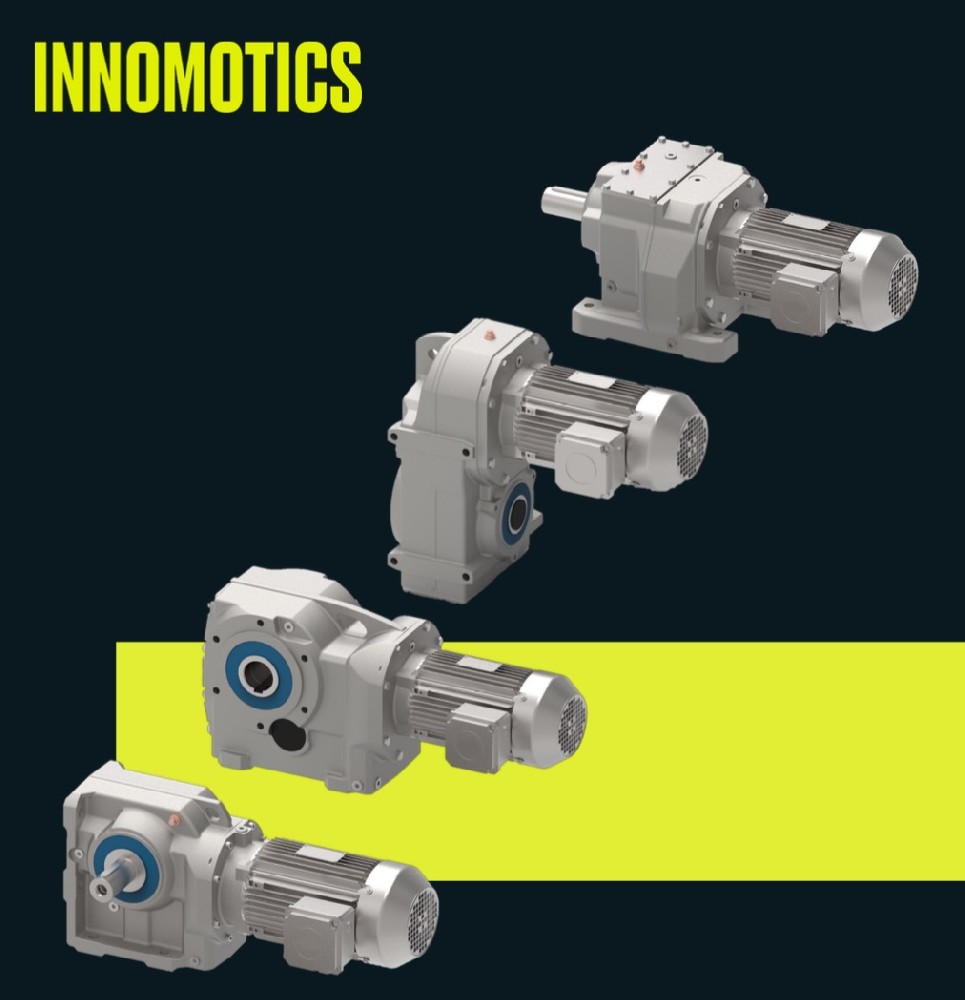
Heavy machinery doesn't forgive hesitation. A crusher biting into bedrock or a conveyor crawling under a mountain of ore needs an inverter that responds to torque demands the moment they spike, not a beat later. INNOMOTICS builds its drives around this reality, tuning sensorless vector control to hold full torque at near-zero speed and ride through sudden load changes without tripping or stalling. The result is a drive that feels less like a component and more like a muscle: always ready, never surprised.
Across mills, hoists, extruders, and mixers, the torque profile is rarely smooth. It surges, drops, and reverses under conditions that would confuse ordinary general-purpose inverters. INNOMOTICS tackles this with adaptive flux optimization and a current limit strategy that prioritizes torque over speed when the shaft demands it. Field crews notice the difference in how motors start under heavy load, how they recover from jams, and how the drive's thermal design keeps pushing long after other units would fold back to protect themselves.
What sets INNOMOTICS apart isn't a single feature on a datasheet—it's the way those features work together in the dirt, noise, and vibration of real sites. Parameterization is stripped down to torque-critical settings, so commissioning doesn't turn into a software project. Protective functions watch for stall conditions, overload, and phase loss without shutting down the process unnecessarily. For operators who measure uptime in tons moved and batches completed, that kind of torque-first thinking is the difference between meeting a shift target and explaining a delay.
A Wholesaler That Stocks the Full Frequency Inverter Range, Not Just Brochures
Walk into most supply houses and you'll find a binder full of glossy spec sheets paired with a promise that the drive you need can be here in a week or two. That's not how we operate. Our warehouse shelves carry actual units across the full spectrum — from compact 0.4 kW micro drives for simple conveyor tweaks to rugged 500 kW cabinets built for heavy industrial processes. If it's in our catalog, it's physically sitting on a pallet, wrapped and ready for same-day dispatch, not just a picture on a page.
The real advantage shows up when a production line goes down at 3 a.m. and your usual distributor tells you the replacement VFD is on backorder until next month. We've stocked deep on the models that actually fail in the field — the workhorse 5.5 kW, 11 kW, and 22 kW ranges that run pumps, fans, and mixers day in and day out. No waiting for a container from overseas, no "we can order it for you." The drive is here, tested on our bench before it leaves, and on a truck within hours.
Beyond the common sizes, we deliberately keep a rotating stock of oddball voltages, high IP ratings, and specialized braking modules that most wholesalers refuse to tie up capital in. This means you can spec a project with confidence, knowing the exact inverter you've quoted is already under our roof. Not a brochure, not a lead time — a physical unit with a serial number, ready to be wired in.
Real-World Performance Data from High-Voltage Drive Installations
Real-world operational data from high-voltage drive installations reveals a pattern that often contradicts idealized lab benchmarks. Across mining, cement, and metals processing sites, drives rated from 3.3 kV to 11 kV consistently show that actual harmonic distortion levels at the point of common coupling run 15–40% higher than design simulations predicted. This gap stems from non-linear interactions with aging transformers, long cable runs, and intermittent load torque spikes that are rarely captured in factory acceptance tests.
Field logs from a 6.6 kV conveyor drive in Western Australia, for instance, recorded transient overvoltages exceeding 1.8 per unit during breaker operations, while a 10 kV pump station in the Middle East saw three unexplained IGBT failures within the first 400 hours. Root-cause analysis pointed not to component defects, but to resonance between the drive's input filter and site-specific cable capacitance—a condition that only emerges under full load and elevated ambient temperatures. These cases underline why commissioning engineers increasingly rely on continuous power quality recording rather than one-time spot measurements.
Beyond electrical stress, vibration data from high-voltage motors coupled to similar drives show bearing wear acceleration of 20–30% when common-mode voltage is left unfiltered. A retrofit at a European steel mill, where shaft grounding rings and dv/dt filters were added after 18 months of operation, cut bearing replacement frequency by half. Such evidence pushes the conversation from theoretical mitigation options to hard maintenance economics: the most effective installations treat power quality and mechanical longevity as a single design envelope, not separate silos.
Pre-Sales Engineering and Post-Sales Support Without the Runaround
From first sketch to final rollout, our engineers sit on your side of the table. We ask the questions that usually get skipped until it's too late: what actually happens during peak load, which legacy systems need to stay, and where the handoff points really are. No canned demos, no generic spec sheets — just a working model built around your current setup.
After go-live, the same people who designed the solution stay in the loop. You won't be passed between tier-one scripts or asked to re-explain your setup to a stranger. If an issue surfaces, it goes straight to someone who already knows your environment and can pull the right logs without a back-and-forth.
That continuity is the point. Pre-sales promises and post-sales realities tend to drift apart at most vendors; here they're treated as one continuous conversation. You get honest timelines, fewer surprises, and a support path that doesn't require starting from zero every time.
Scaling from Single Units to Plant-Wide Drive Retrofits Without Downtime
Retrofitting one or two drives rarely exposes the real bottlenecks. When you start scaling to an entire plant, the first thing that becomes obvious is how much variation hides in motor sizes, control schemes, and legacy communication protocols. A practical approach is to audit every drive by criticality rather than by age. Group drives that share similar load profiles and power ratings, then standardize on one or two replacement models with enough spare capacity to cover future changes. This keeps the bill of materials short and lets your maintenance team stock fewer spare units without guessing which drives will fail next.
Downtime is rarely caused by the physical swap itself; it comes from re-establishing control signals, feedback loops, and safety interlocks after the new drive is in place. For plant-wide work, pre-wire bypass panels or temporary starters on the most critical lines so that production can keep running while the new drive is commissioned next to the old one. Transfer the load only after verifying that the new drive's I/O map matches the existing PLC tags and that ramp times, torque limits, and fault responses are set to values the operators already understand. A five-minute load transfer is the goal, not a half-shift troubleshooting session.
Scaling also changes the nature of documentation. A single retrofit can live in someone's notebook, but thirty drives across six production areas demand updated one-line diagrams, clear cable labels, and a simple log of what was changed and why. Train operators on the new drive keypads in small groups and let them run a few dry cycles before the line goes back to full speed. This phase-by-phase rollout builds internal confidence and lets you adjust the next batch based on what actually happened, so the final areas go faster than the first ones.
FAQ
Because they’re engineered for continuous duty in places where downtime isn’t an option. The components handle voltage fluctuations, high ambient temperatures, and dusty or corrosive atmospheres while keeping motor speed and torque tightly regulated.
Most facilities see smoother startups, fewer mechanical shocks, and much lower energy consumption on pumps, fans, compressors, and conveyors. The precise control also reduces wear on belts, bearings, and gearboxes, so maintenance intervals stretch out.
They fit into existing switchgear and motor setups with minimal rework, and the engineering team can match voltage levels, cooling methods, and communication protocols to what the plant already uses.
The lineup spans from medium voltage levels around 2.3 kV up to 11 kV or higher, with power ratings reaching tens of megawatts. That makes them suitable for everything from large pumps and mills to compressors and extruders.
The team helps with selection, provides commissioning guidance, offers training for maintenance staff, and keeps critical spare parts in stock. If a drive needs repair, they can arrange fast turnaround to keep production running.
They include arc-resistant enclosures, comprehensive protection against overvoltage, overcurrent, and ground faults, plus safe torque off and redundant cooling options for high-risk environments.
Many configurations support active front-end technology or braking choppers, allowing energy to be fed back into the grid or dissipated safely, which is essential for downhill conveyors, hoists, and test stands.
Beyond competitive pricing, they provide application-specific configuration, long-term technical support, and fast delivery of both complete units and spare parts. Their engineers often visit sites to verify compatibility before a purchase is finalized.
Conclusion
Finding a wholesaler that actually keeps INNOMOTICS medium and high voltage frequency inverters on the shelf changes how a project moves. Instead of waiting weeks for a unit while a conveyor or compressor sits idle, you get a drive that's ready to ship. But inventory alone isn't enough. The best suppliers know that heavy machinery—rolling mills, mine hoists, extruders, large pumps—demands torque control that generic parameter sets can't handle. They match the inverter's characteristics to the load, often pulling from real-world performance data collected at high-voltage installations where the same drive held speed within tight tolerances under shock loads. This mix of immediate availability and application-specific tuning is what keeps plants running without the usual delays.
The value shows up on both ends of the sale. Before the order, engineers walk through your electrical single-line, motor nameplate data, and process requirements to recommend a drive that won't need expensive add-ons later. After the order, the same people answer calls about commissioning, harmonics, or communication protocols instead of handing you a ticket number. That continuity matters whether you need a single replacement inverter or a plant-wide retrofit scheduled around a two-day shutdown. The best wholesaler doesn't just stock the full INNOMOTICS range; it stocks the knowledge to make these drives perform. That's what turns a supplier into a long-term partner for industrial performance.
Contact Us
Contact Person: Jony
Email: [email protected]
Tel/WhatsApp: 086-0571-86161808
Website: https://en.hzcjm.com/