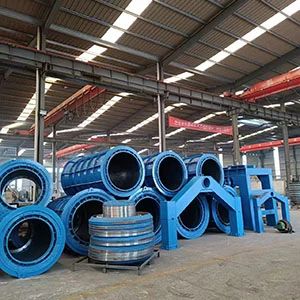
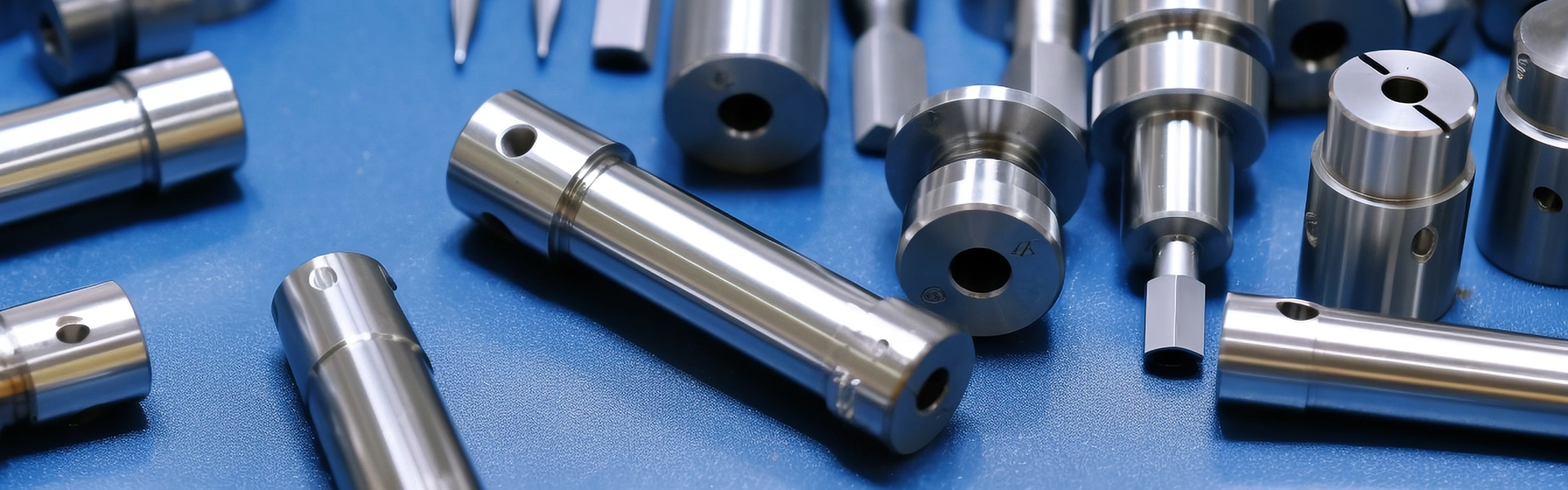
Best Precast Concrete House Mold Factory Delivers Unmatched Durability and Design Flexibility
2026-09-11
Most precast concrete house mold factories promise either strength or creativity—rarely both. The difference shows up in the details: joint tolerances, surface finishes, and how easily a mold adapts to custom layouts. Qianfeng Electromechanical Equipment has taken a different route, treating durability and design flexibility as two sides of the same engineering problem. What that means in practice might change the way you spec your next project.
How Mold Precision Extends the Service Life of Precast Panels
When mold tolerances are held tight, the panel comes out with edges that mate cleanly and surfaces that shed water instead of trapping it. Small gaps or uneven lips from a sloppy mold invite moisture to sit at joints, and that is where freeze-thaw cycles do their worst. Over time, a panel with a poorly formed edge starts spalling long before its design life is up. A precise mold keeps those weak points out of the equation from the start.
There is also a less visible effect: draft angles and corner radii that are exactly as specified allow the panel to release without micro-cracking. Those hairline fractures may look harmless on day one, but they give chlorides and carbon dioxide a path toward the reinforcement. By controlling the mold geometry, you control the long-term passivation of the steel, which is often what decides whether a panel lasts 30 years or 60.
Custom Molds That Let Architects Move Beyond Rectangular Boxes
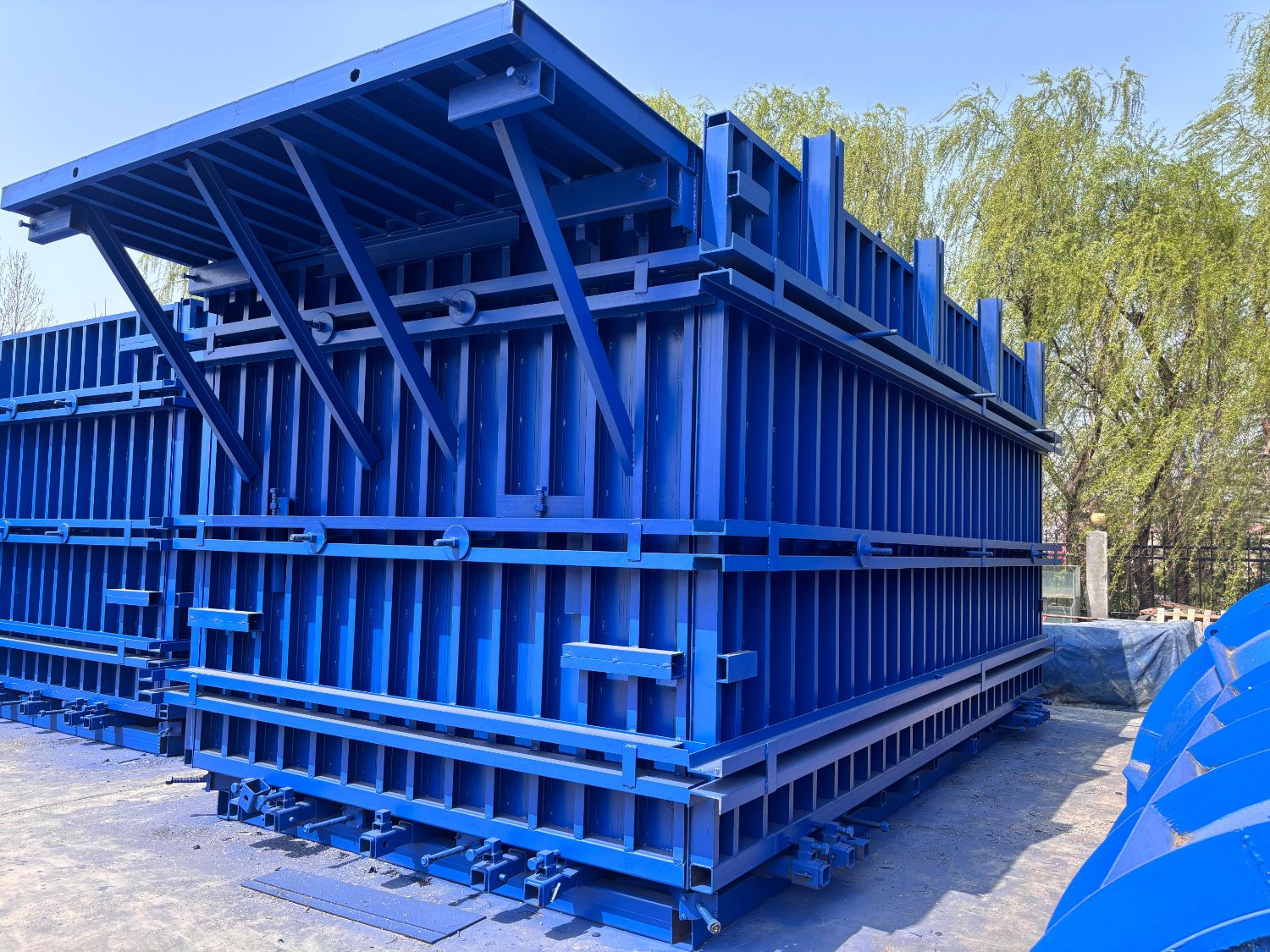
Concrete doesn't have to pour into right angles. Custom molds give architects a way to shape facades, columns, and entire wall systems with curves, folds, and irregular textures that standard formwork could never achieve. The real shift isn't just visual—it changes how a building meets the ground, catches light, and holds shadow.
A well-designed mold becomes a reusable tool rather than a one-off expense. Firms working with glass-fiber-reinforced concrete or ultra-high-performance mixes can now justify these forms across multiple panels, which brings complex geometry closer to standard budgets. The result is less about novelty and more about giving a structure a distinct identity without doubling the construction schedule.
Most of the work happens before the pour. Digital modeling has to account for shrinkage, release angles, and joint alignment, or the panel won't fit the way it was drawn. That upfront coordination is what separates a facade that reads as intentional from one that looks forced.
What Actually Happens on the Factory Floor Before the First Pour
Before any concrete ever hits the formwork, the factory floor runs through a quiet but deliberate sequence that most visitors never see. It starts with the line lead walking the entire pour path twice, checking that every embedded anchor is torqued to spec and that no stray welding slag has landed where the mix will flow. Then the vibrator heads get pulled from their racks and tested against a wooden bench, not just for spin but for the exact hum that tells an experienced hand whether the bearings are about to give out.
Meanwhile, the batch plant operator is on the radio with the mixer driver, verifying slump from the last load and adjusting water content for the ambient temperature that morning. Forms are sprayed with a release agent in long, overlapping passes, and someone runs a gloved finger along the bottom corner to make sure the film hasn't pooled. It's slow, physical work that has little to do with pouring and everything to do with not having to tear it all out later.
Only when the rebar cage passes a final shake test and the emergency shut-off switch on the pump is tripped and reset does the first wheelbarrow of grout get mixed to lubricate the line. That's the real start signal, and even then the crew hovers for a few seconds, listening to the pump build pressure against the closed valve, before anyone gives the nod to open it up.
Why Consistent Wall Thickness Is a Mold Engineering Problem
In injection molding, wall thickness dictates how molten plastic flows, cools, and shrinks. When a part design calls for uniform walls, it sounds simple on paper. But in the mold itself, every variation becomes a thermal and hydraulic puzzle. The steel has to extract heat at the same rate across the cavity, and the melt has to reach every corner before freezing off. A slight thickening in one rib or a thinning near a boss doesn't just change the local geometry—it changes the pressure drop, the fill time, and the way the part grips the core during ejection.
Mold engineers don't get to redesign the part for ideal flow. They're handed a CAD model with nominal thickness, then asked to compensate for reality: draft angles, gate location, venting, and cooling line placement all interact with wall stock. If the wall isn't consistent, the mold has to work harder. You end up with differential shrinkage that pulls surfaces out of tolerance, sink marks where a thick section meets a thin one, or warpage that only shows up after the part sits in a hot warehouse for a week. The mold becomes a detective story—chasing thermal imbalances that start in the steel and end in scrap.
The real problem is that consistent wall thickness is a design ideal, but molding is a dynamic process. Plastic doesn't care about your CAD dimensions; it cares about resistance. A thicker wall is an easier path for flow, so it steals melt from thinner regions. That creates hesitation, premature freezing, and weak knit lines. A mold engineer has to actively fight that tendency with runner sizing, gate placement, or even changing the steel's cooling capacity locally. When someone says "just make the walls uniform," they're asking the mold to ignore its own physics. That's why it's an engineering problem, not just a design rule.
Mold Designs That Stay True After Hundreds of Casts
A mold that holds its shape after hundreds of pours rarely happens by accident. It starts with the choice of material—high-density urethane rubber for flexible captures, or machined aluminum for rigid, high-volume runs. Each has a different failure pattern: rubber tears at sharp undercuts, metal wears at ejector pin contact points. Anticipating those stress zones before cutting the first block changes how the cavity is drafted and how the parting line is positioned.
Beyond material, the geometry itself needs forgiveness. Shallow draft angles, rounded internal corners, and uniform wall thickness spread the force of each cast more evenly. A mold that relies on a single thin rib or a sharp 90-degree transition will eventually crack there, no matter how careful the casting crew is. Many long-lasting designs also include replaceable wear inserts at high-friction locations, so a ten-dollar part can be swapped instead of retiring the entire tool.
Finally, storage and cleaning habits quietly extend mold life. Demolding agents build up in micro-crevices, resins leave behind trace films, and moisture sneaks into porous surfaces during off-hours. A quick wipe with the wrong solvent can etch a polished face. The molds that stay true are the ones treated as precision instruments—inspected after every batch, lightly oiled when idle, and never forced open with metal tools.
Adjustable Molds for Projects That Change Mid-Stream
Rigid tooling falls apart the moment a client asks for a late design tweak. Adjustable molds flip that equation, letting you shift cavity dimensions, swap insert blocks, or rework gate locations without burning the budget on a brand-new setup. The real advantage shows up in prototyping runs where tolerance targets drift as testing uncovers material quirks, or in low-volume production where each batch has slightly different wall thickness specs. Instead of machining steel every time a spec sheet updates, you loosen a set of bolts, reposition the core or cavity plate, and lock it back down, keeping the same base while accommodating the revision.
What makes these molds practical is modular thinking: standardized frame sizes paired with interchangeable inserts, adjustable side cores, and split cavities that slide along hardened guide rails. For example, a family mold with two product variants can use a movable divider to reallocate space, or a threaded insert can adjust the shot volume for parts that shrink differently after cooling. The trade-off is precision; adjustable features introduce more potential tolerance stack than a fully dedicated tool, so most teams reserve them for parts where ±0.1 mm is acceptable rather than tight aerospace-grade tolerances. That said, a well-built adjustable mold with positive locks and calibrated index marks can hold surprisingly consistent results across multiple changeovers.
The real payoff is timing. When a project shifts mid-stream, the alternative is a three-to-six-week wait for a new mold, plus another round of setup and validation. An adjustable mold can often be reconfigured in a single shift, letting you run the revised part the next morning. That speed turns what would be a stalled launch into a rolling adaptation, especially useful for consumer products where packaging dims or material substitutions arrive late in the game. It also extends the life of your tooling investment: instead of retiring a mold after one product iteration, you keep the frame and only machine new insert sets as the design evolves, which quietly lowers the total cost per part over the project's lifespan.
FAQ
The best factories use high-grade steel and precision welding, along with reinforced ribs, so the molds withstand thousands of casting cycles without warping or cracking.
A good supplier offers modular and customizable mold designs, allowing for various wall panel sizes, architectural details, and even integration of openings for doors and windows without sacrificing structural integrity.
Precast concrete panels are produced in a controlled environment, which leads to more consistent quality, faster on-site assembly, and better thermal and acoustic performance compared with pouring concrete directly at the building site.
Look for molds made from thick steel plates, CNC-machined edges, hard chrome plating, and sturdy locking mechanisms. Regular maintenance and proper handling also extend the mold's lifespan significantly.
Yes. Leading factories work closely with architects and builders to create custom profiles, textures, and dimensions, so the molds can produce anything from minimalist flat panels to detailed facades with stone or wood grain finishes.
Precision molds produce panels with tighter tolerances, which means less grinding, patching, and material waste on site. Faster demolding and fewer rejects also cut labor time and keep the project on schedule.
Steel with high tensile strength resists deformation under the pressure of concrete pouring and vibration. Using lower-grade steel can lead to bulging, misalignment, and surface defects over time.
Request references from previous projects, ask for a detailed engineering drawing and material certificate, and if possible visit the factory to inspect the welding, machining, and quality-control processes.
Conclusion
The best precast concrete house mold factories don't just sell steel forms—they sell the confidence that each panel will fit, hold, and last. That confidence starts with precision. When mold dimensions are held tight, wall thickness stays uniform, which directly extends the life of the panels. A mold that drifts by a few millimeters might still produce a wall, but it will be one with weak spots, uneven curing, and early cracking. The factories worth your time treat consistency as an engineering problem, not an afterthought. They verify every edge, corner, and connection before the first pour, checking that the form won't flex under vibration or leak under pressure. This kind of pre-pour discipline means the mold doesn't just work once—it stays true after hundreds of casts.
Design flexibility is where top factories separate themselves. Architects are tired of rectangular boxes, and the right mold maker gives them curves, slants, reveals, and shadow lines that used to require costly site work. Custom molds are built around the project, not the other way around, so a precast house can have deep window returns, textured feature walls, or even non-standard corner angles. And when a design changes halfway through—because it always does—adjustable molds let you shift panel widths or add openings without scrapping the entire form. That saves time and money, but more importantly, it keeps the builder in control. A factory that combines this kind of flexibility with long-term mold durability is delivering something rare: precast concrete that feels custom-made, yet stands for decades.
Contact Us
Contact Person: Bill
Email: [email protected]
Tel/WhatsApp: 8615063653526
Website: https://www.qianfengjd.com