Best Solar Charging Benches for Parks and Public Spaces
2026-08-21
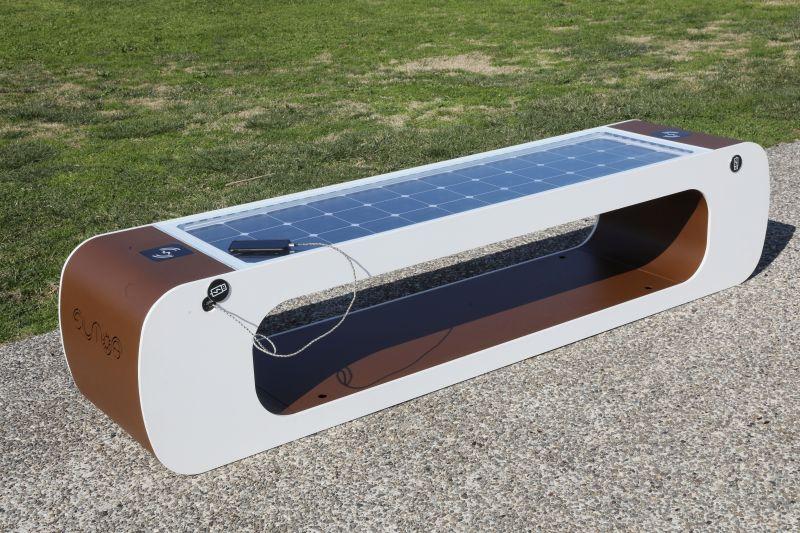
Picture this: you're relaxing in a park, phone battery dying, and the nearest outlet is nowhere in sight. That's where solar charging benches come in—and zemso is redefining what these smart public amenities can do. In this guide, we break down the best options for parks and public spaces, from durability to charging speed, so you can choose a bench that actually earns its spot in the sun.
What Actually Makes a Solar Bench Worth the Investment
The real cost of a solar bench hides in the battery. A panel can look identical across cheap and premium models, but the difference shows up after a week of cloudy weather. Benches worth paying for use lithium iron phosphate cells with active charge management, so the ports stay live even when sunlight is inconsistent. Cheaper units often pair a decent panel with a tiny lead-acid battery that loses capacity within a year, turning the bench into an ordinary seat with dead USB sockets.
Frame material is the next quiet differentiator. Powder-coated aluminum or marine-grade stainless steel will shrug off rain, salt, and vandalism, while painted mild steel starts rusting at the welds by the second season. Look for hidden cable routing, sealed connectors, and a top surface that does not become a frying pan in summer. If the bench has exposed screws and open seams, it will demand more maintenance than the energy it produces is worth.
Finally, judge it by what actually happens after installation. A worthwhile solar bench should go months without attention, keep charging ports clean, and offer at least two common connector types plus wireless charging if possible. If the manufacturer cannot tell you the battery chemistry, the replacement cost, or the expected cycles, walk away. The investment pays off only when the bench keeps working on its own, not when someone has to babysit it every week.
Materials That Survive Graffiti, Rain, and Park Life
Urban parks expose every surface to a punishing mix of spray paint, pooled rainwater, and constant physical contact. Powder-coated aluminum and stainless steel have become default choices for benches and signage because they shed most tags with a simple solvent wipe, and they resist corrosion long after cheaper metals begin to blister. High-density polyethylene lumber is another workhorse: it doesn't absorb paint the way wood does, and it won't rot or splinter through freeze-thaw cycles.
For flat surfaces like tabletops and panels, compact laminate and solid phenolic sheets outperform standard plywood. Their dense, non-porous faces keep graffiti from bonding deeply, and commercial cleaners or light abrasives remove paint without leaving ghost marks. In paved areas, sealed concrete with a penetrating silane or siloxane treatment repels water and makes latex spray paint easier to lift, while retaining enough texture to stay slip-resistant in wet weather.
No material is completely graffiti-proof, but the ones that survive longest share a common trait: they tolerate aggressive cleaning as well as the weather itself. A park bench that can be scrubbed with a stiff brush and mild solvent every week without losing its finish will outlast a more delicate surface that looks better on day one. That balance of toughness and cleanability is what keeps public spaces looking decent through years of hard use.
Charging Speed vs. How People Really Use Public Spaces
The whole conversation around public charging tends to fixate on pushing kilowatts higher and higher, as if every plug needs to mimic a gas pump. But step back and watch how people actually move through plazas, parks, and shopping streets, and the mismatch becomes obvious. Nobody strolls into a community garden or a weekend market expecting to leave in eight minutes. They browse, they sit, they let the afternoon stretch. A charger that fills a battery in half an hour is solving a problem that most public-space visitors don't have.
What those settings really call for is unobtrusive, low-power infrastructure that matches the rhythm of the place. Think of the car parked under a shade tree while its owner queues for a coffee, or the delivery van idling by a curb as the driver chats with a regular customer. In these moments, a trickle charge over two or three hours is not a compromise; it's simply aligned with how long people were going to stay anyway. The hardware can fade into the background instead of turning every stop into a rushed charging event.
There's also a quiet economic logic here. Slower chargers cost less to install, put less strain on local grids, and free up faster units for highway corridors where they actually belong. Designing for dwell time rather than peak charge rate means public spaces keep their character, and the energy gets where it's needed without forcing people to build their day around a cable.
Placement Strategies for Maximum Sun and Foot Traffic
Morning light is gentler, so put tender or flowering plants on east-facing edges where they catch the first hours. Reserve the harsher western exposure for drought-tolerant varieties or movable racks that can be rolled into partial shade by noon. If you're working with fixed beds, test how shadows from walls, signs, and neighboring buildings shift across the space before committing.
Foot traffic rarely moves in straight lines. People drift toward wide pathways, slow down at corners, and pause near entrances or shade trees. Place your most eye-catching displays at those natural stopping points instead of lining everything along the main walkway. A cluster of colorful pots at a decision point—where a side path meets the main route—often gets more attention than a straight row in full sun.
Rotate placements every couple of weeks, especially in summer. What works in June might bake by August, and pedestrian flow shifts when schools reopen or outdoor seating expands. Keep a few lightweight, wheeled carts or tiered stands so you can chase the sun and the crowd without redesigning the whole space.
The Maintenance Routine That Keeps Panels Productive
A quick glance at the panels every two weeks catches most problems before they eat into output. Dust and bird droppings don't just block sunlight—they bake onto the glass and become harder to remove later. A soft brush or a hose with a gentle spray is usually enough; skip the pressure washer and abrasive sponges, which leave micro-scratches that trap grime.
The inverter's display tells you more than most owners realize. If the daily kilowatt-hour reading dips on a clear day with no obvious shading, something is off. Compare it against the same week last year, not just yesterday, because temperature and cloud cover swing the numbers. A drop of more than ten percent without a weather excuse usually points to a failing panel, a loose connection, or a tripped breaker.
Twice a year—once after pollen season and once before winter—walk the array and check the mounting hardware. Tighten any bolts that have worked loose, and look for critter nests under the rails. Squirrels and birds love that space, and their chewing destroys wires faster than weather does. Trimming back overhanging branches at the same time prevents the slow creep of shade that quietly robs production month after month.
When a Low Upfront Cost Turns Into a Long-Term Expense
The initial price tag rarely tells the whole story. A product or service with an appealingly low entry fee often hides costs that appear only after the purchase—replacement parts, subscription add-ons, higher energy consumption, or repairs that quickly outpace the savings. It's a common pattern: the budget option feels like a win on day one, but the real cost is spread across months or years.
This shift happens because manufacturers and providers know that buyers anchor to the sticker price. Once you're committed, the ongoing expenses are harder to avoid. A cheap printer, for example, may require expensive ink cartridges every few weeks. A low-cost subscription platform might lock essential features behind a paid tier. Over time, those recurring charges add up, often surpassing what a more robust, higher-priced alternative would have cost upfront.
Recognizing this pattern before buying requires looking past the initial number. Ask what the item will cost to maintain, upgrade, or replace in the first two or three years. Sometimes paying more now is the frugal choice—not because the higher price is inherently better, but because it eliminates the slow leak of long-term expenses.
FAQ
Focus on panel wattage (at least 20W for reliable phone charging), battery capacity (10,000mAh or more), and rugged materials like powder-coated steel or marine-grade aluminum. A bench that offers both USB-A and USB-C ports will serve a wider range of visitors, and an IP65 rating means it can handle rain and dust without issues.
Most built-in solar benches deliver between 5V/2A and 5V/3A, so expect a standard smartphone to gain around 20-30% in 30 minutes under full sun. Some higher-end units include quick-charge 3.0 or PD ports, which can push that closer to 50% in the same time if the battery reserve is full.
It depends on foot traffic and placement. A single unit often ranges from $3,000 to $8,000 installed, so if the bench is in a busy plaza or transit stop it pays off through public goodwill and longer dwell times. For a low-traffic park, a simpler solar table or pole charger might be a better use of funds.
Very little day-to-day. The main tasks are wiping down the panel surface to keep efficiency high and checking cable connectors for wear every few months. Batteries in quality units are typically rated for 3-5 years and can be swapped without replacing the whole bench.
Look at EnGoPlanet's StreetCharge series for heavy-duty urban use, Strawberry Energy's Smart Benches for robust public data features, and Include's Solar Bench for a cleaner design with modular battery access. The Zano Street Charge is another solid pick if you want a simple, no-screen unit that just works.
Yes, but with lower yield. Panels still generate power on overcast days, though output can drop by 60-80%. If the bench is under tree cover, pair it with a larger battery reserve (20,000mAh or more) or consider a hybrid model that can also draw from grid power when needed.
Look for short-circuit protection, overcharge protection, and temperature cutoffs inside the charging module. The bench itself should have no exposed wiring and use tamper-resistant screws. Some models also include a battery management system that shuts down ports if the internal temperature gets too high.
Many do. Common extras include LED lighting for evening use, Wi-Fi hotspots, environmental sensors for air quality, and digital displays for local announcements. If you only need charging, skip the extra features—they add cost and maintenance without always being used.
Conclusion
A truly worthwhile solar bench earns its keep through smart engineering rather than gimmicks. Look for monocrystalline panels paired with lithium iron phosphate batteries; they tolerate partial shade and hundreds of discharge cycles without losing capacity. The frame should use powder-coated aluminum or stainless steel, while the seating surface needs an anti-graffiti coating and a slight slope so rain and spilled drinks roll off instead of pooling. Charging speed matters less than people assume—most visitors plug in for ten to twenty minutes, so a 15W USB-C port that actually works beats a 60W spec that throttles in the heat. Position the bench where morning sun hits the panels but avoid wide-open plazas that become unusable at noon; near playgrounds or bus stops gives both sun and steady foot traffic. And skip the bargain unit with a tiny lead-acid battery: replacing it twice in three years plus labor wipes out any upfront saving.
Maintenance is the invisible half of performance. A monthly wipe with a damp microfiber cloth removes pollen, dust, and bird droppings that can cut panel output by 15% or more. Check the charge controller and cable glands every quarter for moisture or corrosion, especially in coastal parks. If the bench has a companion app for monitoring, use it to catch a failing cell before it drags down the whole bank. Finally, treat the bench as public furniture first and a gadget second: rounded edges, tamper-resistant bolts, and a drainage channel under the seat prevent most vandalism and weather damage. The best models are boringly reliable, not flashy—they sit there for years, quietly keeping phones alive while dogs bark and kids climb on them.
Contact Us
Contact Person: Leo
Email: [email protected]
Tel/WhatsApp: +86 18901905138
Website: https://www.zemsogroup.com/