
Best Water Jet Sewer Machine Sourcing Guide for Reliable Equipment Choices
2026-10-14
Sewer lines don't fail on a 9-to-5 schedule, and sourcing the right water jet sewer machine shouldn't feel like an emergency either. Yet too many contractors end up with equipment that underperforms when it matters most—too little pressure, fragile hoses, or zero local support. The problem isn't a lack of options; it's the overwhelming number of specs, claims, and price points that blur together. This guide cuts through that noise. We'll walk you through the key factors that separate reliable machines from risky investments, from pump longevity to nozzle versatility. Along the way, we'll spotlight proven brands like AMJET, which has built a reputation for rugged, field-ready systems. If you're tired of second-guessing equipment choices, keep reading—you're about to get a clear, no-nonsense framework for making a confident purchase.
Why Build Quality Shows Up in the Details Most Buyers Overlook
Most people judge a vehicle by its spec sheet, but the real story is in the way a door latch feels when you pull it, or how the seat stitching holds up after years of sliding in and out. Those small things never make it into a brochure, yet they're what separate a car that still feels solid at 100,000 miles from one that starts rattling at 20,000. Build quality doesn't announce itself on a test drive; it accumulates in the background until one day you realize nothing has ever gone loose.
Consider the gaps between body panels. A buyer might run a finger along a dashboard seam and think nothing of it, but a wide or uneven gap usually means the factory tolerances were loose elsewhere too. The same goes for the click of a switch or the weight of a door closing. Automakers that sweat these details tend to also use better clips, tighter fasteners, and more robust weather stripping, so the quietness and solidity last long after the new-car smell fades.
Pressure Ratings Don't Tell the Whole Story
The pressure rating on a data sheet comes from a controlled test: steady flow, clean media, room temperature. Real systems rarely behave that politely.
A line that runs at 80% of its listed pressure can still fail early if it sees thermal cycling or water hammer. Those transient spikes don't show up in a catalog number.
Material compatibility and installation stress matter just as much. A fitting torqued slightly off-axis or exposed to mild corrosion can lose pressure capacity long before the rating suggests it should.
What a Good Dealer Won't Try to Hide From You
A good dealer won't try to hide the real cost of the car. That means the advertised price is not just a teaser to get you in the door; it includes all the mandatory fees, or at least they are clearly listed before you sign. No surprise reconditioning charges, no last-minute "market adjustment" slipped into the paperwork. If you ask for a breakdown, they hand it over without hesitation.
They also won't hide the vehicle's past. A clean Carfax isn't enough. The dealer should walk you through the actual service records and any accident damage, even if it was repaired properly. Hiding that a car had a fender bender might help them make a sale today, but it kills trust and brings the car back tomorrow. Good dealers know that.
Honest financing is another area. They'll tell you if the lender's buy rate is lower than what you're being offered, or at least they won't dodge the question. A good dealer doesn't stuff your loan with hidden warranties or gap insurance without asking. They present the numbers in plain English and let you decide.
Matching the Machine to the Mess, Not the Brochure
The glossy brochure shows a machine swallowing neat piles of uniform scrap. Then it arrives at your facility, where the scrap includes half a sofa, a barrel of grease, and something that used to be a filing cabinet. That gap between the demo and the daily mess is where most equipment decisions go wrong.
Spend a shift next to the feed conveyor. You will see surge loads at shift change, wet cardboard compressed into bricks, and the occasional crowbar that nobody admits to. These are the conditions your machine actually faces, not the lab-sorted material in the vendor's video. A good match starts with that reality, not with horsepower or throughput on a PDF.
Ask the manufacturer to run your worst sample, not their best. If they hesitate, you have your answer. The right machine will have accessible wear points, simple clearing procedures, and maybe a little extra torque for the days when the mess wins. It will not look impressive in a brochure, but it will still be running when the brochure is in a landfill.
The Maintenance Routine That Predicts a Long Service Life
The most telling sign of a machine's future isn't found in its spec sheet or warranty booklet. It's in the quiet rhythm of its upkeep. Equipment that gets a consistent, thoughtful maintenance routine—where filters are swapped before they clog, fluids are changed on time, and fasteners are checked even when nothing rattles—tends to outlast its neglected counterparts by years. These small, repeated acts aren't just chores; they're a form of listening. Each inspection reveals how the machine is aging: a slight vibration here, a faint discoloration there. Catching those whispers early is what separates a unit that needs a major overhaul at year five from one that runs smoothly past year fifteen.
A good maintenance schedule also builds a paper trail of trust. When every oil change, belt adjustment, and calibration is logged with a date and a set of eyes, patterns emerge. You start to see which components wear faster under your specific conditions—maybe the dust in your facility eats seals quicker, or the voltage dips are stressing the capacitors. That knowledge lets you shift from reactive fixes to preventive tweaks, extending the service life not through expensive upgrades but through informed, gradual care. The machine becomes less a black box and more a familiar partner whose quirks you've learned to manage.
Ultimately, the routine that predicts a long life is boring on purpose. It doesn't chase the latest diagnostic gadget or wait for warning lights. It simply shows up, week after week, with a rag, a torque wrench, and a checklist. Over time, that consistency compounds. A machine that is cleaned regularly doesn't just look better—it sheds heat more efficiently, resists corrosion more stubbornly, and tells its operator when something is off through subtle changes in sound or feel. Longevity isn't a mystery. It's a habit, practiced until it becomes second nature.
Signs a Sewer Jetter Is Built for Daily Work, Not Just the Showroom
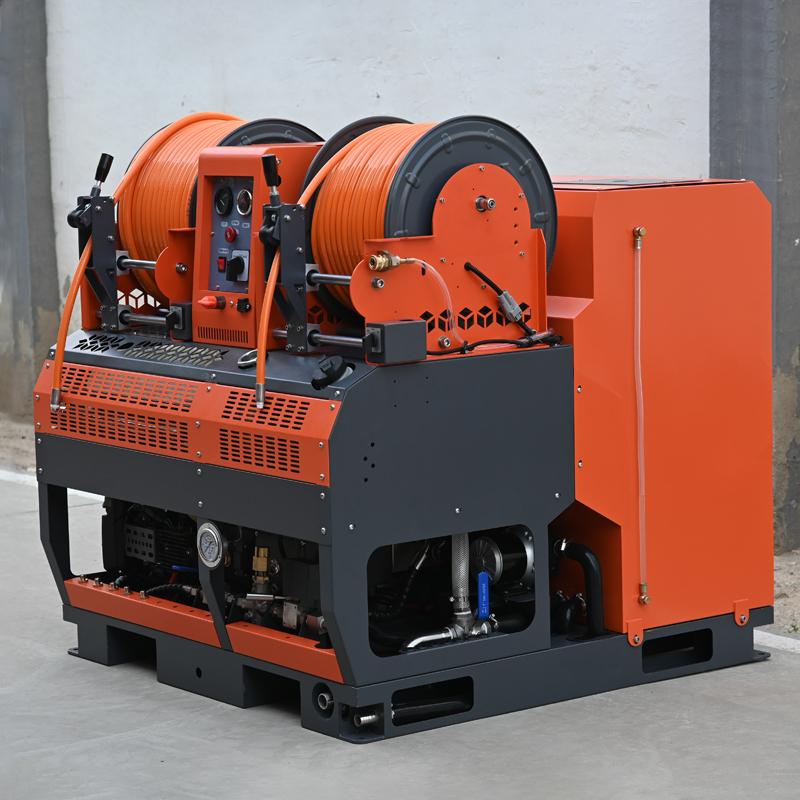
A tool that spends its life on a trailer looks nothing like one that goes into the ground every morning. The first thing you notice on a work-grade sewer jetter is the frame—welded, gusseted, and heavy enough to take a hit from a backhoe bucket without twisting. Showroom units often have thin powder-coated rails and plastic covers that crack after the first month. Daily-use machines show their bones: bolted access panels, hose reels mounted on greasable bearings, and controls that don't require a soft touch to operate with wet gloves.
Look at how the pump is mounted and plumbed. A jetter meant for daily work has a pressure gauge you can actually see from the operator's position, a bypass loop that won't deadhead when the trigger is released, and fittings that are NPT or JIC—not some proprietary quick-connect that fails when a little grit gets in. The hose reel should spin freely under load, not bind when you're pulling 150 feet of stiff jetter hose back through a greasy cleanout. If the reel has a hand crank that feels like it came off a garden cart, you're looking at a weekend toy.
The difference also shows in the small parts: nozzle tips that are hardened and threaded for replacement, a swivel that doesn't leak after twenty hours, and a chemical injector that can be bypassed without tools. Work jetters have wear marks on the skid plate, chipped paint on the hose guide, and a control panel that's been labeled with a paint marker because the factory stickers wore off. That's not neglect—that's proof it earns its keep. A showroom model stays pretty because it hasn't done anything yet.
FAQ
Look beyond peak pressure claims and inspect the pump's duty cycle, seal materials, and frame construction. A machine rated for continuous operation with ceramic plungers and a powder-coated steel frame tends to outlast units built around light-duty triplex pumps. Ask the seller for real-world runtime data from existing municipal or contractor fleets.
Pressure alone will not clear heavy debris in large-diameter pipes. Flow rate, measured in gallons per minute, carries the loosened material downstream. For lines over 12 inches, a 4,000 PSI machine with 18 GPM will usually outperform a 5,000 PSI unit pushing only 8 GPM because the higher volume flushes solids instead of just cutting a path.
Flush the pump with clean water after every job and check the inlet filter for grit that can scratch ceramic plungers. Grease the hose reel bearings weekly and inspect high-pressure fittings for micro-cracks. Storing the unit with the pump crankcase filled to the correct level prevents condensation from corroding internal parts.
Trailer-mounted units give you flexibility to dispatch one jetter across multiple trucks, but they require extra parking space and a dedicated tow vehicle. Truck-mounted systems reduce setup time and keep the operator closer to controls, which pays off when you handle several stops per day. If your crew works in tight urban alleys, a compact trailer or van package often wins.
Flusher nozzles with rear-facing jets work best for grease and sand because they push debris downstream. Spinning or rotating nozzles break up scale and roots with less risk of pipe damage. For small lateral lines, a penetrating nozzle with a forward jet opens a path before the rear jets widen the clean.
Call the parts desk with a common failure scenario, such as a blown hose or a failed pressure switch, and time how long it takes to get a price and availability. Ask for the nearest authorized service center and whether loaner pumps are offered during rebuilds. A vendor that answers technical questions without routing you through a call center is a stronger long-term partner.
Look for a pressure relief valve that dumps flow back to the tank rather than dead-heading the pump, a pneumatic or electric hose reel brake, and an emergency stop within arm's reach of the operator station. Machines with an anti-backflow device on the water inlet prevent contaminated water from siphoning into the potable supply.
If your crew regularly encounters heavy sludge, debris beds, or roots that require vacuum removal, a combination unit saves a second trip and keeps the worksite cleaner. Standalone jetters are cheaper and lighter, which is fine for preventive flushing and grease control. Choose the combo when more than 30 percent of your jobs involve solid debris extraction rather than simple line clearing.
Conclusion
When buyers start comparing water jet sewer machines, they often chase the biggest pressure number on the spec sheet and ignore the quieter signals of long-term reliability. Solid frame welds, the thickness of hose guides, the placement of control valves, and the quality of swivel fittings reveal far more about a machine's daily performance than any marketing chart. A dealer who lets you inspect the pump's bypass system or explains why a particular nozzle set works with your pipe diameter is worth more than one who only quotes peak PSI. Pressure ratings don't capture how the jetter behaves under partial clog conditions or how quickly it loses cleaning power as the nozzle wears. The real test is whether the plumbing layout minimizes heat buildup, whether the reel bearings are shielded from grit, and whether the filter protects the pump without choking flow. Honest sellers will point out these details unprompted because they know you'll discover them anyway after a few months in the truck.
Matching the machine to the actual debris you face matters far more than buying the most powerful unit on the brochure. A jetter tuned for grease in restaurant lines will struggle with sand and scale in storm drains, and vice versa. Look for models where you can swap nozzles quickly, adjust flow without shutting down, and tell at a glance whether the pump is cavitating. The maintenance routine that predicts a long service life starts before the first job: easy access to the oil fill, a drain point that doesn't spray water onto electrical connections, and a pressure gauge that's actually readable in daylight. Machines built for daily work show their bones in small ways—reinforced hose reels that don't wobble, quick-connect fittings that don't seize, and a frame that doesn't flex when you drag it over a curb. If a unit only looks impressive on a showroom floor but hides its wear points behind plastic covers, it will likely spend more time in the shop than clearing lines. Trust the details you can touch, not the numbers someone typed into a datasheet.
Contact Us
Contact Person: Mike
Email: [email protected]
Tel/WhatsApp: +86 19545555505
Website: https://www.amjeting.com/