
Boron Carbide Powder Supplier: How to Choose the Right One for Your Application
2026-10-29
Choosing a boron carbide powder supplier isn’t just about price—it’s about performance, consistency, and knowing your application inside out. Whether you’re in abrasives, armor, or nuclear shielding, the right partner can make or break your production line. At HUAYI TECH, we’ve seen too many buyers focus on specs alone and miss the hidden factors that matter most. This guide cuts through the noise to help you evaluate suppliers with a sharper eye—so you can pick a source that truly fits your process, not just your purchase order.
Pinpointing Supplier Expertise in Boron Carbide Processing
Real expertise in boron carbide processing shows up in the details that marketing sheets rarely mention. A supplier with genuine depth can discuss how they manage the sintering cycle for consistent density without introducing excessive grain growth, or how they hold tight tolerances on ground surfaces despite the material's extreme hardness. Ask about their approach to edge retention and microcracking during machining; the answers reveal whether they rely on standard abrasives or have developed custom tooling and coolant strategies.
Another practical marker is the ability to work across a range of boron carbide grades and forms—hot-pressed plate, sintered tubes, or reaction-bonded near-net shapes. Skilled processors adjust feedstock selection and binder chemistry depending on the part's end use, whether that's neutron shielding, blast protection, or wear components. They also tend to have in-house metrology for verifying density, porosity, and hardness, not just a certificate from an outside lab.
Traceability matters more here than with many engineering ceramics because minor shifts in boron-to-carbon ratio alter both mechanical properties and performance under radiation. Competent suppliers keep lot-specific records from raw powder through final grinding and can explain how they control oxygen pickup during milling and sintering. If a vendor can walk you through their contamination controls and show actual microstructure images, that's a stronger signal than any polished capability statement.
Matching Powder Characteristics to Your End Use
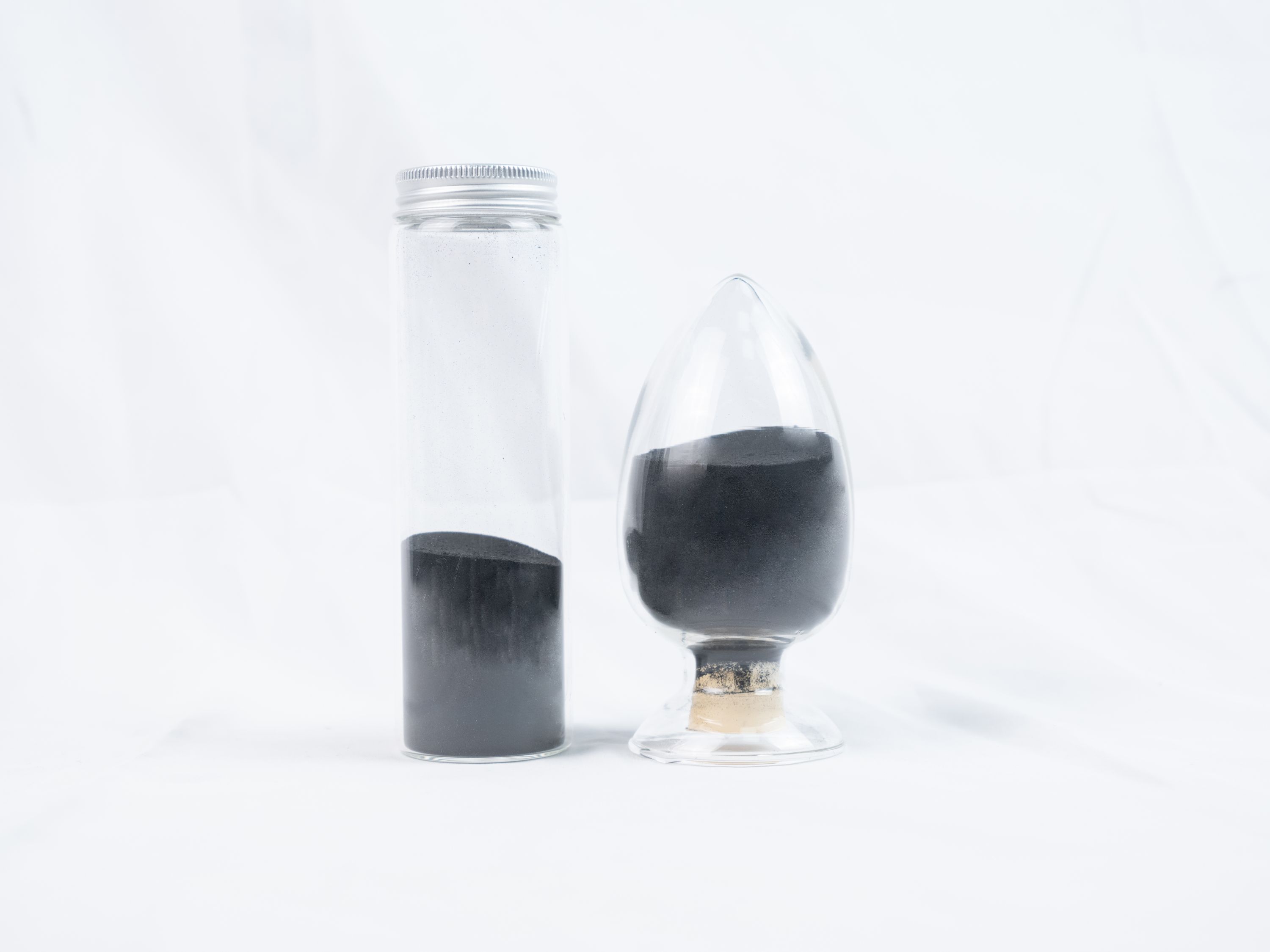
Particle size distribution sets the baseline for almost every powder application, but the ideal range depends heavily on the downstream process. In metal injection molding, a D90 below 20 microns is usually non-negotiable because larger particles create porosity that weakens the sintered part. Thermal spray operators, by contrast, often prefer a narrow 15–45 micron spherical cut to maintain stable feed rates and consistent coating thickness. Dry powder inhalers demand micronized particles in the 1–5 micron aerodynamic diameter range, yet such fine powders are notoriously cohesive—so formulators may add larger carrier particles to improve flow without sacrificing lung deposition.
Bulk behavior often matters more than a single size parameter. High-speed food packaging lines need seasonings that resist caking under vibration and humidity, which means low moisture content, controlled fat levels, and a small addition of flow aids like silicon dioxide. Ceramic press molding depends on free-flowing spray-dried granules with a specific binder content; too much binder causes lamination defects, while too little leads to weak green strength and edge chipping. Surface area and porosity also play a role—activated carbon filters require high surface area for adsorption, but the same porosity would ruin a powder metallurgy part by trapping lubricants and causing blowholes during sintering.
A powder that performs well in a lab funnel test can still jam a vibratory feeder or segregate in a storage silo, so characterization should mirror actual handling conditions. Recycled additive manufacturing powders show a gradual increase in deformed particles and satellites, which slows spreading and creates inconsistent layer thickness even when the original size distribution looks unchanged. Similarly, a pharmaceutical blend that passes blend uniformity tests in a 5 kg bin may separate during transfer to tablet press hoppers due to differences in particle density and shape. Matching powder characteristics to end use therefore means testing the powder in the same stress states, humidity levels, and time scales it will encounter on the production floor.
Reading Beyond the Data Sheet: Purity and Traceability
A certificate of analysis often lists purity as a single percentage, yet that number alone tells only part of the story. How the material was purified, what trace impurities linger at parts-per-billion levels, and whether the batch history is fully documented can matter more in real applications than a headline figure. For chemists working with sensitive syntheses or analytical standards, the difference between 99.5% and 99.9% purity may come down to a single troublesome metal residue that no standard assay flags.
Traceability relies on an unbroken chain of evidence from raw starting material to final container. Look beyond the stamp of a quality system: ask for lot-specific impurity profiles, verification of analytical methods against certified reference materials, and retention samples that can be re-tested years later. A supplier who hesitates to share this level of detail may be hiding variability between production runs, not just minor deviations.
In practice, reading beyond the data sheet means treating each batch as its own entity. Two lots of the same nominal compound can behave differently under catalysis, crystallization, or biological assay, simply because impurity A and impurity B swapped concentrations. Smart labs build internal threshold checks for known troublemakers and periodically cross-check supplier data with independent analysis—not because they distrust the paperwork, but because subtle drift often announces itself long before a formal specification is breached.
Quality Systems That Signal Consistent Batches
A batch record that reads like a story of small, deliberate choices tells you more than any certificate of analysis. When operators note ambient humidity shifts and adjust mixing time by a few minutes, or when the same raw material lot is quarantined twice in a row without drama, you are seeing a quality system that treats consistency as a living practice rather than a checkbox. These signals hide in the margins: a line-out with initials, a calibration logged six minutes early, a supervisor who walks the floor without a clipboard.
Look for redundancy that feels almost wasteful. In the most reliable plants, a second person independently verifies the same critical measurement, not because an auditor might show up, but because the team has learned that fatigue and habit eat away at precision. Batch-to-batch consistency rarely comes from tighter specs alone; it emerges when the system builds in gentle friction against complacency, such as rotating operators between lines or randomly pulling retained samples for blind testing.
The strongest signal is often what is not said. A quality system that quietly tracks non-conformances by shift, supplier, and weather pattern, then shares those trends without blame, produces batches that stay boringly identical. When you visit a facility and the conversation drifts to the last time a batch surprised them, that pause before they answer tells you whether the system has real memory or just good documentation.
Logistics, Lead Times, and Supply Reliability
Logistics isn’t just about moving boxes across borders; it dictates whether production lines keep humming or grind to a halt. We map every route against seasonal port congestion and inland trucking capacity, not just shortest distance. That includes backup lanes through alternate hubs when primary corridors get tight.
Lead times get quoted in days or weeks, but the real number lives in the variance. A supplier that promises 30 days with a 2-day swing is more dependable than one that quotes 20 days and slips by 15. Our planning uses rolling forecasts and decoupling points to absorb that variance without padding inventory everywhere.
Supply reliability is earned through visibility and redundancy, not just contracts. We monitor upstream sub-tier suppliers for raw material constraints, hold safety stock at strategically placed regional warehouses, and use carrier scorecards tied to on-time, in-full delivery. When disruptions hit, we already know which SKUs can switch origins or substitute components within days.
Technical Support and Customization Potential
Support starts before deployment. Our engineering team reviews your current stack, flags integration points, and helps you plan data migration or hardware compatibility tests. Once live, you get direct access to the people who built the system—not a call center script. Most questions receive a substantive reply within a few hours, and if a bug is confirmed, a patch typically ships in the next weekly release.
Customization goes beyond changing colors or adding a logo. The platform uses a modular core with well-documented extension APIs, so you can replace the default recommendation engine, connect a proprietary database, or add new input formats without waiting for a vendor roadmap. We also maintain a set of example plugins that cover common patterns like ERP syncing and custom reporting.
When a standard extension doesn't fit, our team can scope a one-off module with you. This starts as a short technical workshop, then moves into a shared repository where your developers and ours collaborate on the same branch. You retain full ownership of the code, and there are no licensing surprises if you later decide to take it in-house.
FAQ
Look for direct evidence that the supplier understands your process. Ask which industries they regularly serve—ballistic armor, nuclear shielding, abrasive waterjet cutting, or refractory linings—and how their powder behaves in each. A supplier that can discuss sintering temperature windows, oxygen pickup during handling, and batch-specific grain size data is far more valuable than one that only quotes price per kilogram and a generic purity number.
Request a third-party certificate of analysis rather than relying on an in-house COA alone. Pay attention to common metallic impurities like iron, silicon, aluminum, and calcium, plus free boron and free carbon content, because these affect sintering and final hardness. If the application is nuclear or defense-related, ask for a full ICP-MS trace element report. Better yet, send a sample to an independent lab yourself and compare it against the supplier's numbers before committing to larger volumes.
Average particle size hides the tails of the distribution, and those tails often control packing density, sintering shrinkage, and final microstructure. For hot-pressed or spark plasma sintered parts, a narrow distribution around a fine D50 usually gives better densification. For abrasive applications, a wider or coarser distribution can improve cutting efficiency. Always request D10, D50, and D90 values, and ask how the supplier controls the powder during milling and classification, because that tells you whether the distribution is stable or just a coincidence.
At minimum, you should see a certificate of analysis, a safety data sheet, ISO or equivalent quality management certification, and a clear batch traceability system. For regulated applications, request documentation on heavy metal limits, radioactive impurity levels, and export control classification such as ECCN or equivalent local regulations. If the supplier hesitates to provide any of these, treat it as a warning sign rather than a minor paperwork delay.
Ask how they store retain samples and whether they can share data from three to five consecutive production lots. Then place a small trial order and run identical tests on every container you receive—check tap density, laser diffraction particle size, oxygen content, and phase composition by XRD. If the supplier cannot explain normal variation between lots or refuses to share historical batch data, they probably have weak process control and will cause problems when you scale up.
Surface area affects how much oxygen and moisture the powder picks up during handling, which changes sintering behavior and final properties. Irregular particle shapes can improve green strength and mechanical interlocking, while spherical or blocky particles may flow better in automated systems. Ask for BET surface area data and scanning electron microscope images, then test the powder in your own process—don't assume a high surface area is always good or bad without seeing how it interacts with your binder or sintering cycle.
Yes, always start with a sample, but remember that a hand-picked sample does not represent future production. Run the sample through your actual process—pressing, extrusion, spray drying, or whatever you use—and compare green density, sintered density, hardness, and fracture toughness against your current material. Do a blind comparison if possible, because knowing the supplier can bias your judgment. If the sample performs well, order a small commercial lot and repeat the tests before signing a long-term agreement.
Watch for suppliers that focus almost entirely on low price, use vague descriptions like 'nano-grade' without giving a specific particle size range, or cannot furnish independent test reports. Frequent changes in raw material source, unexplained delays in providing batch data, and sample-to-production discrepancies are major warnings. Also be cautious if they promise any particle size or purity without discussing the trade-offs—real boron carbide powder always involves compromises between cost, purity, particle size, and consistency.
Conclusion
Choosing a boron carbide powder supplier goes far beyond simply checking material availability. Start by examining how the supplier actually processes the material—experience with crushing, milling, and classification directly affects particle size distribution, morphology, and overall batch consistency. A supplier who truly understands your application, whether it involves ceramic armor, abrasive blasting, or nuclear shielding, will ask detailed questions about particle size, surface area, and stoichiometry instead of pushing a generic product. Look closely at the certificate of analysis: trace metallic impurities like iron or silicon can quietly degrade performance in demanding environments, and a clear lot-to-lot traceability chain shows that the supplier treats reproducibility as a core responsibility rather than an afterthought.
Consistent quality never happens by accident. Seek out suppliers with documented quality systems—ISO 9001 is a useful baseline, but internal statistical process control data, batch records, and in-process testing reveal far more about everyday reliability. Logistics deserve just as much attention: regional warehousing, realistic lead times, and dual sourcing of raw materials can protect you from supply shocks. Finally, do not overlook technical support and customization. A supplier willing to fine-tune particle size ranges, adjust surface treatments, or modify packaging specifications can help you solve production bottlenecks before they escalate. The right partner treats your application as a collaborative engineering challenge, not a simple transaction.
Contact Us
Contact Person: Junting Leo
Email: [email protected]
Tel/WhatsApp: +86 18615009766
Website: https://www.huayimaterial-china.com/