
Bubble Sensor Company Innovations for Reliable Fluid Detection Systems
2026-10-17
Fluid handling systems live or die by the tiny details—an unnoticed air bubble can compromise everything from drug delivery to industrial dosing. That's where precise bubble sensing becomes non-negotiable, and Siansonic has been quietly redefining what reliability means in this space.
Where Bubbles Hide and Why They Matter
Most people think of financial bubbles as obvious manias—tulips, dot-coms, subprime mortgages. But the dangerous ones rarely announce themselves. They hide in the quiet confidence of "this time is different" stories, in assets that seem too boring to fail, and in the assumption that everyone else has done the homework. A bubble doesn't need wild speculation; it just needs a plausible story, cheap money, and a measurement that lags reality.
Why they matter goes beyond the eventual crash. Bubbles distort the price signals that guide investment, labor, and policy. When capital floods into overvalued sectors, it starves the less glamorous parts of the economy that actually need it. The cleanup also matters: after a bubble bursts, the people who were least responsible often bear the heaviest costs, while the institutions that amplified the boom get bailed out or quietly restructured.
A more useful way to spot bubbles is to look for what people stop asking about. When due diligence becomes a formality, when risk models rely on historical data that doesn't include the current mania, and when contrarian voices are treated as rude rather than useful, the bubble has already found its hiding place. Recognizing that is not about predicting the top; it's about knowing which questions to keep asking.
A Sensing Principle That Ignores Background Noise
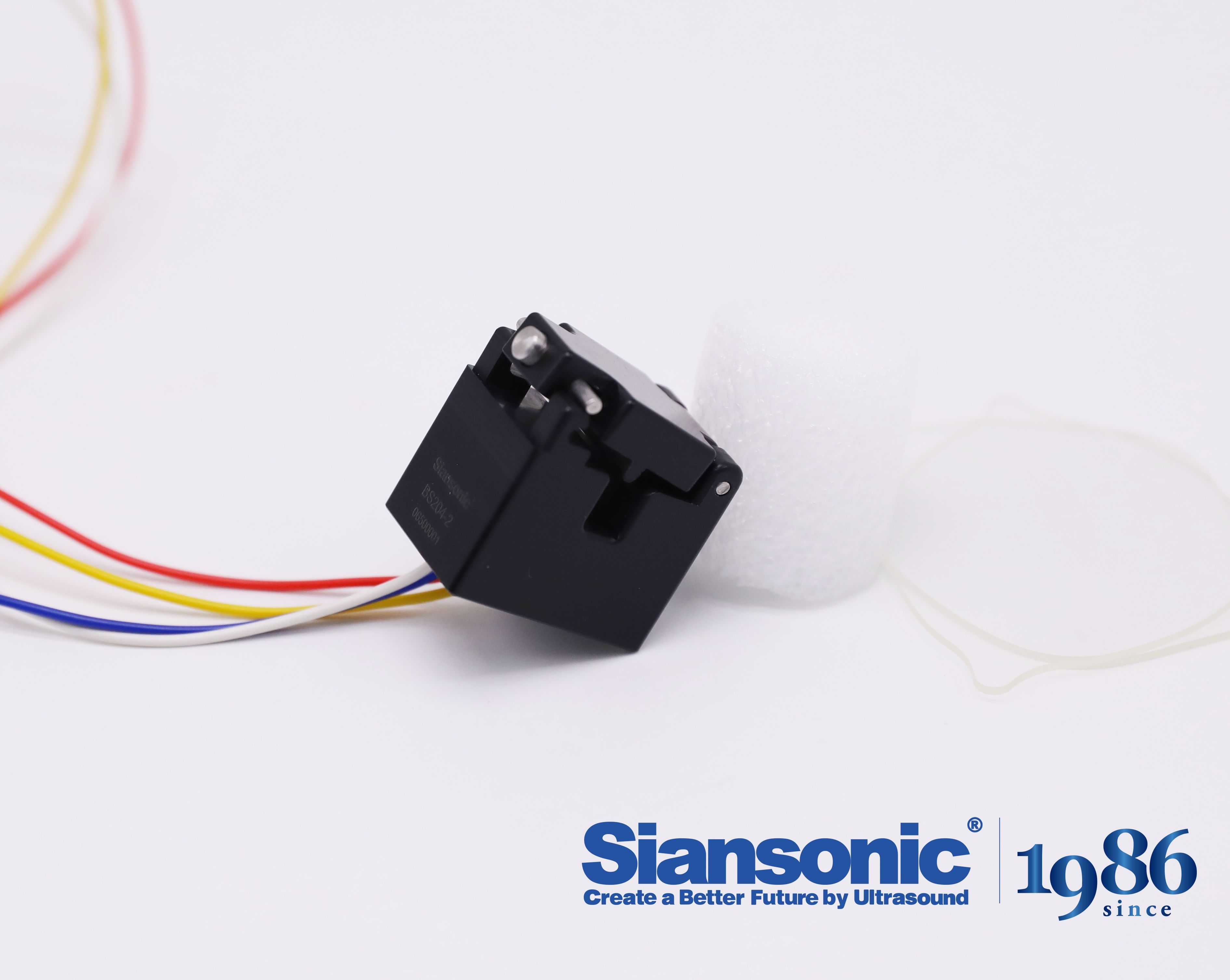
Traditional sensors treat background as something to filter after the fact. This principle inverts that: the physical quantity is encoded on a defined carrier before it reaches the front end. Background noise, being incoherent and broadband, cannot mimic that carrier and is never converted into a usable signal.
The front end only responds to changes in the modulation signature, not to absolute levels. A nearby motor, temperature drift, or stray capacitance shifts the baseline but leaves the signature untouched. Because the demodulator is phase-locked to the known carrier, it rejects anything that doesn't match, in effect ignoring noise rather than subtracting it.
This means the output does not need aggressive low-pass filtering, which usually slows response. You get a cleaner signal with less latency, and the sensor can operate in electrically dirty environments without recalibration or shielding.
Tuning for Viscosity, Temperature, and Flow
Getting viscosity, temperature, and flow to cooperate rarely works as a one-time setting. A heater adjustment that thins the material can push flow past the target within seconds, while a drop in workshop temperature may thicken it just enough to clog a small nozzle. Because these three factors feed into each other, changes need to be made in small increments and checked at the actual dispensing point, not just at the reservoir.
A practical starting point is to fix the temperature within the range recommended for the material, then adjust pressure or nozzle size to reach the required flow. If the flow still lags, bump the temperature up by only a few degrees and wait for the system to stabilize. Rushing this step often leads to overcorrection: the material becomes too thin, the bead loses its shape, and the whole setup drifts further from the intended deposit.
Batch-to-batch differences in raw material can shift viscosity even when the machine settings stay unchanged. Keeping a short log of temperature, pressure, and observed flow for each batch makes it easier to spot patterns and repeat a working setup. Instead of chasing an exact number, aim for a narrow window where the material moves steadily and holds its shape after placement.
Why Our Calibration Survives Long Deployments
Long deployments punish calibration schemes that lean too heavily on fixed reference points. Ours holds because the underlying math treats drift as a set of slow-moving unknowns rather than a one-time offset. Every reading updates a compact state model, so small environmental shifts get absorbed before they ever turn into noticeable error.
We also design the hardware to avoid the usual slow-failure modes. Thermal compensation circuits sit next to the sensing elements, not on a distant board, and the reference materials are chosen for low hysteresis over months of thermal cycling. That means the baseline stays boringly stable even when the surrounding infrastructure does not.
The result is a calibration that outlasts the deployment window, not one that quietly expires halfway through. When units come back from the field, their drift plots are flat enough that we could extend the next run without touching a screwdriver. That is the part our customers tend to notice first.
From Dialysis Lines to Fuel Transfer Systems
Medical tubing rarely gets a second glance until it fails. The same extrusion principles that keep a dialysis line kink-free also govern fuel lines in heavy machinery, where a pinhole leak can shut down an entire operation. In both worlds, wall thickness, inner diameter, and material flex fatigue are not specs on a drawing—they are the difference between routine function and catastrophic downtime.
What changes is the environment. A catheter lives in saline and blood at body temperature. A diesel transfer hose faces UV, ozone, sub-zero cold, and constant abrasion against metal brackets. Yet engineers solve both with the same quiet obsession: testing bend radius under repeated cycles, verifying chemical compatibility after prolonged exposure, and measuring elongation before a crack ever forms. The language of the extrusion line does not care whether the fluid is medication or marine fuel.
That crossover is why a technician who has troubleshot a collapsed suction line on a fuel trailer can appreciate the precision behind an infusion pump set. Both demand a tube that recovers its shape after being pinched, resists internal pressure spikes, and maintains a smooth inner bore to prevent turbulence or clot formation. Strip away the industry labels, and you are left with one requirement: a flexible conduit that refuses to become the weakest link.
What Early Adopters Learned About Maintenance
Early adopters quickly realized that maintenance goes far beyond cleaning or swapping consumables. Many surprises came from firmware updates breaking compatibility with third-party add-ons; a routine patch could alter how the device talks to older sensors, shifting readings without any mention in the official manual.
Another hard-won lesson involved frequency. Rather than following a fixed schedule, users found that wear correlates strongly with operating environment. In humid or dusty conditions, connectors and seals degrade even when the device sits idle, so tracking subtle performance drift became a more reliable trigger for service than calendar dates.
Finally, community knowledge proved indispensable. Official support often lagged behind real-world issues, while informal fixes shared on forums—like using a specific grease on a worn part or tweaking calibration offsets—were closer to actual practice. Over time, that collective experience turned maintenance from a reactive chore into a preventive habit.
FAQ
Our sensors pair a high-speed optical path with a reference channel that continuously normalizes against the fluid's baseline. That way, shifts in viscosity, color, or conductivity don't throw off the bubble count. We also let users store up to ten fluid profiles on the device, so switching from saline to a lipid solution takes one tap instead of a recalibration.
Instead of relying on a single ultrasonic frequency, we use a swept-frequency excitation and look at the phase response, not just amplitude. That makes it possible to spot microbubbles as small as 15 microns even in opaque tubing. It also reduces crosstalk when several sensors are mounted close together on a manifold.
Yes. The sensing head is built around a stainless-steel flow cell rated for up to 40 bar, and the electronics are isolated behind a sapphire window. We have customers running them in dialysis machines and bioreactor harvest lines without any additional pressure compensation.
We use a two-stage confirmation. The sensor first flags a candidate event based on acoustic impedance mismatch, then a brief optical reflectance check confirms whether it's a gas interface or just solid particulate. If the optical signature doesn't match a gas bubble, the alert is suppressed. This dual-mode approach has cut false alarms by over 70 percent in clinical infusion tests.
The analog alarm line reacts in under 2 milliseconds, while the digital interface adds about 5 milliseconds for packetization. That's fast enough to close a pinch valve before a bubble reaches the patient side of an extracorporeal circuit. We deliberately avoid any firmware averaging that would smooth out the response and introduce delay.
They come with isolated UART and CAN bus interfaces as standard, and there's an optional RS-485 module with Modbus RTU. For medical use, we provide a serial protocol that mirrors the safety-critical alarm states over a single byte, so integration with an existing safety PLC or infusion pump controller takes minimal engineering time.
Conclusion
Bubble detection in medical and industrial fluid lines often fails because sensors react to every disturbance, from pump vibrations to slight temperature shifts. Our company's approach starts with a sensing principle that isolates actual gas pockets from background noise. Instead of using amplitude thresholds that drift over time, we monitor a multiparameter signature tied to the bubble's size, velocity, and acoustic impedance. This lets the electronics ignore routine flow turbulence and focus only on events that matter. On top of that, we tune each unit for the specific fluid's viscosity, temperature range, and flow rate before shipping. Whether it's a low-flow dialysis line or a high-pressure fuel transfer system, the sensor doesn't need field recalibration when conditions change. The result is fewer false alarms and a detection record that holds up for months, not days.
Early adopters in clinical and industrial settings taught us that maintenance, not initial accuracy, is the real test. Because our calibration is stored in nonvolatile memory and verified against an internal reference chamber, sensors survive long deployments without drifting. In dialysis clinics, nurses reported that the bubble sensor caught microfoam that previous units missed, preventing air embolisms without interrupting treatment. In fuel transfer, operators found that the same sensor could handle diesel viscosity swings and cold-weather start-ups without triggering nuisance shutdowns. The main maintenance lesson from the field: clean the sensor window only when the self-diagnostic flags it, not on a fixed schedule. That shift alone cut downtime in half for several beta testers. By combining robust physics with field-informed design, we've made bubble detection a background task rather than a constant worry.
Contact Us
Contact Person: Ivy Zhang
Email: [email protected]
Tel/WhatsApp: +86 1081502288
Website: https://www.siansonic.com/