
China B4C Supply Chain Strengths and Emerging Global Demand
2026-09-23
When a material stops being just an abrasive and starts appearing in ballistic plates, reactor control rods, and next-generation wear parts, buyers pay attention. Boron carbide (B4C) is at that inflection point. China's supply chain has become the default answer for many global orders—but the reasons are more interesting than low cost alone. HUAYI TECH, a supplier that has built its B4C line around consistency and traceability, illustrates how the country's advantage is shifting from volume to verified quality. This post breaks down the structural strengths of China's B4C supply chain and the demand signals now pulling it into new markets.
Scale Economics That Undercut Every Rival Producer
When a producer locks in volume discounts on raw materials, freight, and packaging, the math shifts in a way smaller players simply cannot copy. Their per-unit overhead keeps dropping while everyone else watches margins compress.
This isn't just buying power. A facility running three shifts spreads depreciation, maintenance, and skilled labor across far more output. Rivals stuck with lower volumes end up paying more for every single unit even before they think about marketing or distribution.
The result is a quiet trap: any attempt to match price bleeds cash, while ignoring it surrenders shelf space. Over time, the large operator can fund better tooling and automation from those same savings, widening the gap further.
Mined to Micron: The Integration Advantage Nobody Talks About
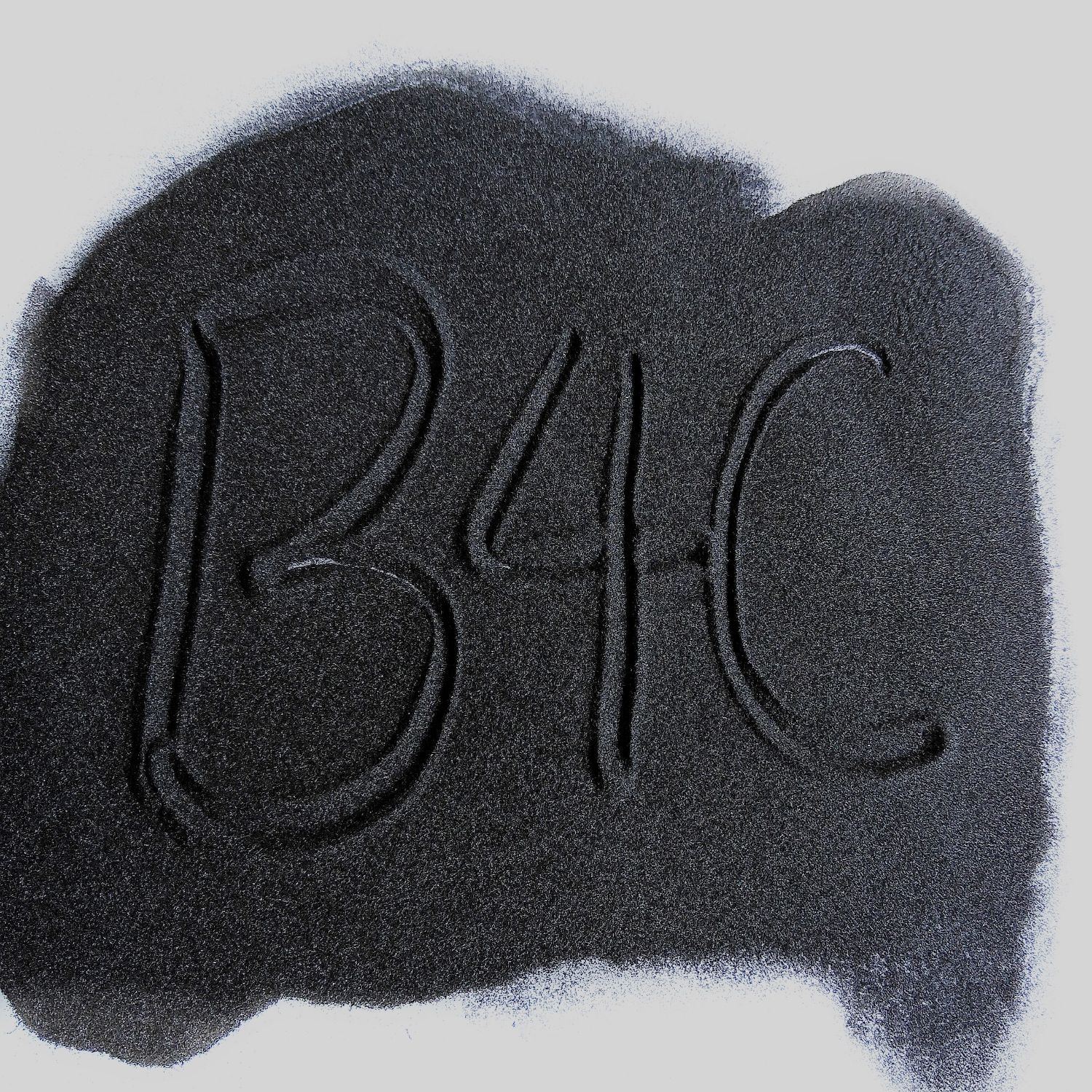
Raw material sourcing and micron-level processing are usually treated as separate worlds, each with its own supply chain friction and quality blind spots. When a single operator controls both ends, the real edge isn't just cost savings—it's the ability to trace a particle's behavior from the moment ore leaves the ground to the final grind specification. That continuity removes the finger-pointing between supplier and processor, turning variability into a dial you can actually turn.
Most integration stories stop at logistics, but the hidden lever sits inside the mill itself. Feedstock that arrives with consistent mineralogy lets you push grinding parameters harder without risking contamination or batch rejection. Over time, that compounding knowledge becomes a proprietary recipe: not a patent, but a process rhythm competitors can't copy by buying the same equipment. It's the difference between operating a line and owning the entire cause-and-effect chain.
The market rarely rewards this quietly, because it doesn't show up on a spec sheet. Yet customers notice when lead times shrink and reject rates stay flat month after month. That's the integration advantage nobody talks about—not the machinery or the margin, but the accumulated intuition that only comes from seeing a mineral through every micron of its journey.
Why 'Cheap Chinese B4C' Is Becoming an Outdated Label
The phrase “cheap Chinese B4C” used to conjure images of low-grade boron carbide powder with inconsistent particle sizes and questionable purity. But that perception is rooted in a past era when manufacturing capacity and quality control lagged behind international benchmarks. Over the last decade, Chinese producers have invested heavily in advanced furnaces, real-time process monitoring, and stricter raw material sourcing, narrowing the gap with long-established suppliers in Europe and North America. Today, many batches ship with certificates of analysis that match or exceed what buyers expect from higher-priced alternatives, making the old label more a relic of memory than a reflection of current capability.
What often gets overlooked is the role of application-driven innovation. Chinese manufacturers now tailor B4C grades for specific end uses—armor ceramics, nuclear shielding, abrasive blasting, and refractory linings—rather than offering a one-size-fits-all commodity. That means buyers can specify tight distributions of particle size, low free carbon, and controlled oxygen content without paying a steep premium. In several defense and industrial procurement cycles, Chinese B4C has passed rigorous qualification tests on the first attempt, something that would have been rare a decade ago. The label persists mainly in older supply-chain documents and among buyers who haven’t re-evaluated recent production data.
Cost still matters, but the conversation has shifted from “cheap” to “cost-effective with verifiable consistency.” Independent labs now routinely confirm that mid-tier Chinese B4C delivers 95–98% of the performance of top-tier imports at 60–70% of the price. As more long-term contracts include on-site audits and batch-locked traceability, the outdated label is likely to fade further. Supply chains that continue to dismiss Chinese B4C based on reputation alone risk missing out on a maturing source that can meet both technical and budgetary requirements without compromise.
Nuclear and Armor Demand Pulling Harder Than Most Forecasts Show
The resurgence in nuclear power and military armor procurement is moving far faster than most industry projections have captured. Lead times for reactor pressure vessels, high-assay low-enriched uranium, and specialized steel plate have stretched to levels not seen in decades, while order books at a handful of niche foundries and fuel fabricators are effectively closed through the end of the decade. This is not a gentle demand curve; it is a step-change driven by rearmament cycles and an electricity load growth that grid planners simply did not anticipate even three years ago.
On the nuclear side, the push is no longer about large, decade-long conventional builds alone. Small modular reactors and advanced fuel cycles are pulling on the same constrained suppliers that serve the legacy fleet, but with much shorter delivery expectations. Utilities and hyperscale data center operators are signing fuel bank agreements and co-investing in enrichment capacity, yet the available separative work units remain tight. The result is that spot prices for conversion and enrichment services have drifted upward without any single headline event—just a steady grind of demand against fixed capacity.
Armor demand tells a parallel story. Modern main battle tanks, infantry fighting vehicles, and active protection systems require advanced ceramics, composite backings, and ultra-high-hardness steel that only a small number of mills can roll. As replenishment orders stack from multiple NATO-aligned countries, the wait for certified armor plate has gone from months to multiple years in some grades. Defense contractors are quietly pre-buying raw tungsten, boron carbide powder, and specialty alloys, which is pulling forward demand that most published market outlooks have still not fully priced in.
Export Patterns Shifting as New Buyers Bypass Traditional Hubs
For decades, export flows moved through a small set of gateway cities that acted as gatekeepers for global trade. That pattern is now eroding as importers in places like Poland, Colombia, and the Philippines deal directly with factories in China, India, and Brazil. The old transshipment points still see container traffic, but their role as essential middlemen has become far less automatic.
A major force behind this is the rise of cloud-based freight platforms and regional shipping alliances. A buyer in Manchester no longer needs a Hong Kong agent to consolidate a container from Guangdong; the same shipment can be arranged through a few clicks and a direct line to Yantian or Nansha. This cuts both cost and lead time, making the detour through a traditional hub look like a legacy habit rather than a necessity.
Regional trade agreements are accelerating the shift. As tariffs within blocs like RCEP or the African Continental Free Trade Area drop, smaller importers gain confidence to buy direct. Meanwhile, second-tier ports are investing in customs digitization and cold-chain capacity, so goods can move from factory to final market without ever touching the old anchor hubs.
Next-Gen Capacity Plans That Could Redraw the Global Cost Curve
The next wave of capacity additions is quietly abandoning the old assumption that bigger always means cheaper. In energy-intensive sectors, developers are now weighing the carbon intensity of the grid, water access, and the risk of retroactive environmental rules as heavily as labor rates or proximity to ports. That shift is fragmenting the cost curve: instead of one clear low-cost frontier, we're seeing a handful of regional cost basins emerge, each with its own trade-offs.
A project built near cheap renewables might slash electricity expenses but face steeper logistics bills and a thinner pool of skilled operators. Meanwhile, legacy hubs that used to dominate on unit economics are getting repriced as stricter emissions standards bite into their advantage. The result is a more jagged, less predictable cost landscape where location-specific factors can swing a plant's competitiveness by double digits before a single unit rolls off the line.
For anyone tracking global supply, the implication is clear: nominal capacity announcements matter less than the conditions attached to them. A gigafactory on paper isn't the same as one that can ramp to full utilization without blowing its cost model. The plans that actually redraw the curve will be the ones that lock in low-cost, low-carbon inputs early and design for flexibility, not just scale.
FAQ
China's boron carbide supply chain draws resilience from a few less obvious factors. Domestic access to boron-rich raw materials and carbon sources, combined with decades of accumulated smelting, crushing, and classification know-how, allows capacity adjustments faster than most competitors. Industrial clusters in provinces like Henan and Liaoning make auxiliary materials, equipment maintenance, and skilled workers easy to share, which reduces the risk of a single point of failure. Unlike countries that depend heavily on imported feedstock, most Chinese producers can reallocate internal resources to maintain deliveries.
Abrasive and ballistic armor applications still account for large volumes, but the quickest growth is coming from nuclear control rods and shielding, ceramic nozzles, and precision lapping in semiconductor manufacturing. The restart of nuclear power programs and construction of Generation III reactors have noticeably increased demand for high-density B4C components. Military and nuclear buyers also place a premium on supply continuity and certification, which pushes them to look beyond price.
Leading Chinese manufacturers now routinely use finer particle classification and acid or water washing to reduce impurities, with some high-end products reaching total boron plus carbon content above 99.5 percent. For semiconductor-grade demand, special milling processes lower metallic contamination, and a number of suppliers provide batch consistency data. However, the number of producers that genuinely meet nuclear-grade standards remains limited, so buyers often need on-site audits rather than relying on certificates alone.
Worth watching are environmental production restrictions on smaller smelters, reliance on imported high-quality boron ore, and electricity price swings. Nuclear and defense orders frequently require long-term capacity locking, so if ordinary industrial demand spikes, short-term delivery delays can appear. Certain specialty particle sizes of B4C powder also have limited capacity and may need to be booked months in advance.
Electric vehicles rarely consume B4C directly, but indirect demand is growing through silicon carbide power device processing, high-performance ceramic bearings, and lightweight ballistic or protective materials used in related infrastructure. In renewable energy, the revival of nuclear power as baseload capacity and some fusion research programs are increasing B4C use in shielding and neutron absorption roles.
China applies export controls to certain dual-use items, and while B4C is not fully embargoed, buyers have become more sensitive to compliance screening. Tariffs and sanctions risks push some overseas users to seek small-volume backup sources outside China, but replacing China's cost and capacity in the short term is difficult. Trade friction has also encouraged Chinese producers to improve documentation transparency, which eases compliance concerns for importers.
The cost advantage still exists, but it is no longer the only driver. Rising electricity, environmental compliance, and labor costs have eroded part of the low-price edge, yet economies of scale and a complete industrial chain keep China ahead in lead times and product variety. High-end users increasingly care about quality stability, technical support, and customization, and these are becoming the new selling points for Chinese suppliers.
The industry will likely consolidate around larger, more efficient capacity, while small outdated producers exit due to environmental and energy-intensity standards. The product mix should shift from ordinary abrasive grades toward nuclear, semiconductor, and composite ceramic grades. At the same time, overseas buyers may adopt a China-plus-one sourcing strategy, but China will remain the core of global B4C supply, especially in providing flexible capacity when demand fluctuates.
Conclusion
China's boron carbide dominance isn't simply about low wages; it's about scale economics that make every rival producer look structurally uncompetitive. The industry has moved far beyond selling cheap abrasives. A less visible advantage is vertical integration from raw boron-rich mined material to micronized powders, allowing tighter control over stoichiometry and particle distribution. This "mined to micron" control has made the old label of "cheap Chinese B4C" increasingly outdated: leading mills now routinely hit purity levels and lot-to-lot consistency that Western defense buyers once assumed only Japanese or European suppliers could deliver. Meanwhile nuclear and armor demand is pulling harder than most published forecasts show, driven by reactor shielding upgrades and next-generation body armor programs.
Export patterns are shifting too. New buyers in Southeast Asia, the Middle East, and Latin America increasingly bypass traditional trading hubs in Europe and North America, contracting directly with Chinese producers for tailored grades. This direct sourcing compresses lead times and lets buyers specify exact particle sizes or sintering aids. At the same time, next-generation capacity plans—including continuous furnaces, closed-loop acid recycling, and pressureless sintering expansions—could redraw the global cost curve once again. Rather than simply adding volume, the new plants are engineered for higher yield and lower boron loss, widening the margin between Chinese producers and would-be competitors. The result is a supply chain that couples extreme scale with technical iteration, leaving rivals chasing a moving target.
Contact Us
Contact Person: Junting Leo
Email: [email protected]
Tel/WhatsApp: +86 18615009766
Website: https://www.huayimaterial-china.com/