
China Cutting Picks Manufacturer: Premium Quality Tools for Mining and Tunneling
2025-12-18
Deep beneath the earth’s surface, every tunnel and mine demands tools that won't back down. When precision meets brute strength, that’s where PULANKA cutting picks come into play. As a top-tier China cutting picks manufacturer, we craft premium quality tools that redefine durability in the harshest mining and tunneling environments. But what truly sets a pick apart—just sharp teeth, or something far more engineered? Read on, and you might discover the unseen edge that keeps projects on track when the ground gets tough.
Forged in the Heart of Industry: Where Precision Meets Power
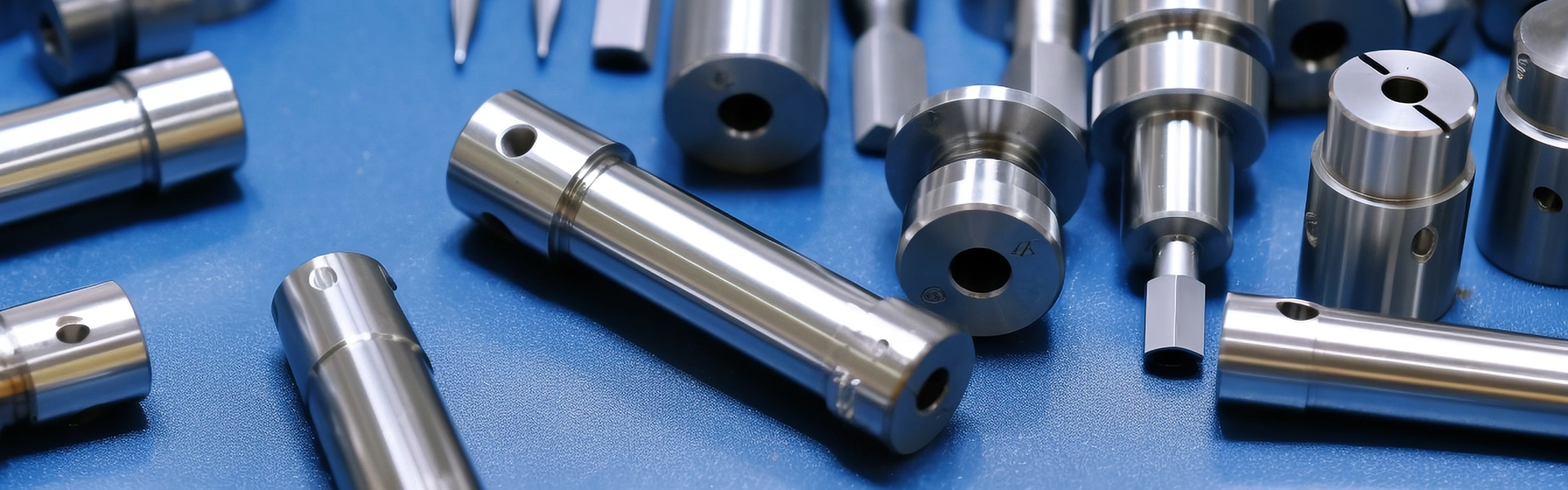
Every shaft, gear, and housing that leaves our facility carries the imprint of an industrial heritage spanning decades. It’s not just about metal and machinery—it’s about the relentless pursuit of exactness, where tolerances are measured in microns and every surface tells a story of controlled force.
In an environment where steam, sparks, and pressure are constant companions, our craftsmen fuse time-tested metallurgy with modern automation. The result is components that don’t just perform under stress—they thrive in it, channeling raw power into seamless motion without sacrificing the fine detail that prevents failure.
From the rhythmic hum of CNC mills to the final hard-turning pass, precision isn’t an afterthought—it’s the engine of our process. We understand that true strength lies not in brute mass alone, but in the marriage of rugged durability with the kind of accuracy that turns a forging into a workhorse capable of outlasting the demands placed upon it.
Beyond the Tip: Decoding the Anatomy of a Reliable Cutting Pick
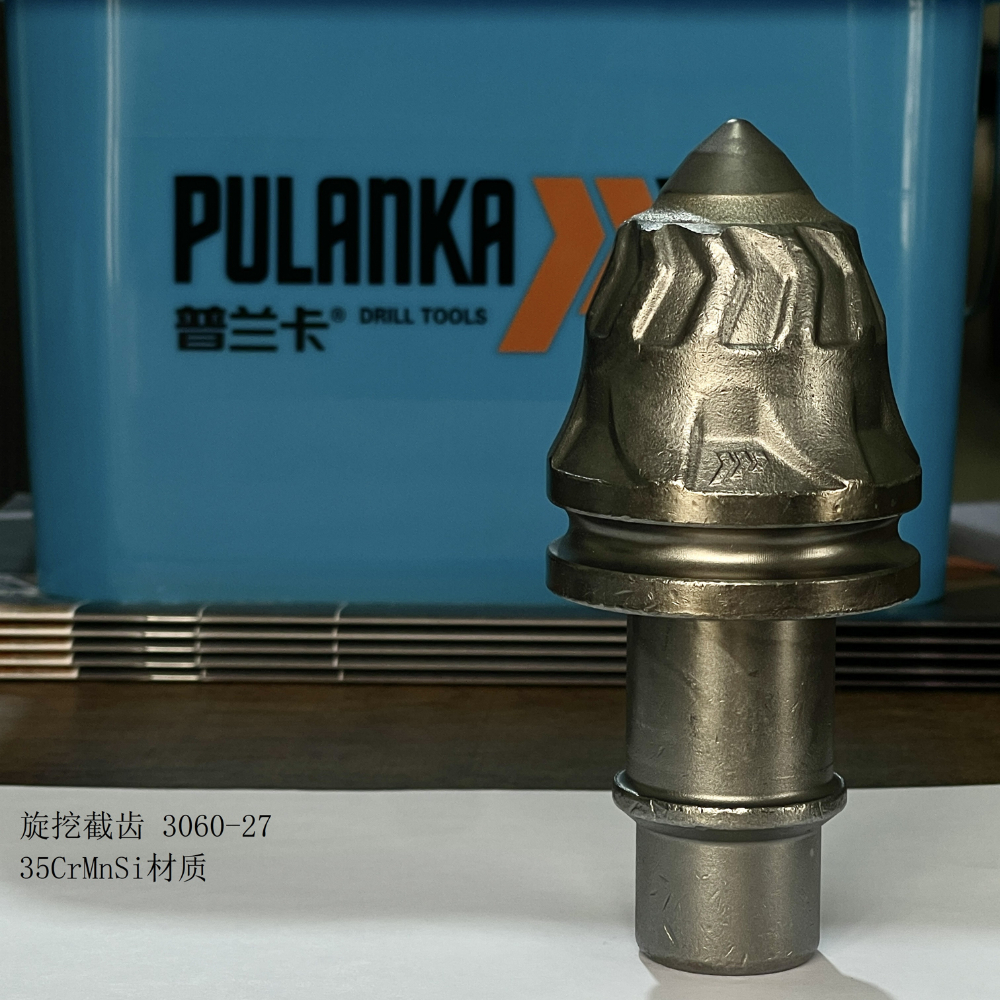
A cutting pick is far more than a sharpened piece of steel. Its true reliability lies in the subtle interplay between geometry, metallurgy, and the often-overlooked internal components that keep it anchored. While the tip initiates the cut, the real story unfolds beneath the surface, where the shank, shoulder, and retaining mechanism work in concert to manage stress and resist premature ejection. Understanding this deeper structure reveals why two picks that look identical at a glance can perform vastly differently under the same drum.
Metallurgical choices at every stage of the body create a gradient of properties that pure hardness tables miss. The tip is typically a cemented carbide grade selected for abrasion resistance, brazed onto a steel body that must be tough enough to flex without snapping. Between them, the braze alloy acts as a thermal buffer and stress distributor. Even slight variations in braze thickness or alloy composition can shift the failure point from gradual wear to catastrophic tip loss. The best picks are those where this transition zone is treated as a deliberate design element, not an afterthought.
Then there’s the retention sleeve, a component that rarely gets the credit it deserves. A reliable pick isn’t just one that stays sharp—it’s one that stays in the holder. Modern sleeves use a combination of precise interference fits and engineered spring characteristics to accommodate thermal expansion and vibration without collapsing. When the bore tolerance is matched to the shank finish with obsessive attention, the pick rotates as intended, wearing evenly around its circumference. It’s this even wear, enabled by an often invisible union of details, that ultimately defines long-term reliability in the cut.
From Coal Faces to Tunnel Boring: Tools That Adapt to the Environment
The evolution of mining and excavation tools is a story of relentless adaptation to the physical world. Early miners working narrow coal seams needed equipment that could function in cramped, unpredictable conditions, so they relied on handheld picks, shovels, and simple machinery that could be maneuvered by human muscle. These tools were inseparable from the miner’s own senses and judgment, allowing quick adjustments when the rock changed or a pocket of gas appeared. The environment dictated every move, and the tools were extensions of that dance between effort and hazard.
As demands grew, so did the machinery, but the principle remained: the environment still calls the shots. Tunnel boring machines (TBMs) seem like a leap into a different world, yet they embody the same responsive design on a massive scale. A modern TBM doesn’t just grind through rock; it constantly monitors ground pressure, water inflow, and shifting geology, adjusting its cutting speed and shield pressure in real time. Whether it’s soft soil under a city or hard granite deep under a mountain, the machine is built to mold its behavior to the conditions, just as a miner once changed the angle of a pick.
What ties these technologies together isn’t just the goal of digging, but the deep recognition that a tool is only as good as its ability to listen to the world around it. From the coal face to the tunnel face, success has always depended on giving the environment a voice in the process. The shift from handheld tool to automated giant only amplifies that relationship, proving that true engineering progress means designing for dialogue, not domination.
The Silent Role of Metallurgy in Reducing Downtime
When a production line grinds to a halt, the immediate suspects are usually electronics or human error. But often, the real culprit is hidden in the materials themselves—a fatigued gear, a corroded pipe, or a bearing worn beyond its expected life. Metallurgy plays a quiet but decisive part in preventing these failures. By refining alloy compositions and heat treatment processes, engineers can dramatically extend the service life of components that operate under extreme stress, temperature, or corrosive conditions. It’s not just about making things stronger; it’s about making them predictably durable, so maintenance can be planned instead of being an emergency.
Modern metallurgical advances have shifted the focus from reactive repairs to proactive resilience. For instance, the development of microalloyed steels with precisely controlled grain structures allows for parts that resist wear and fatigue far longer than conventional grades. In the petrochemical industry, duplex stainless steels are now specified for piping and vessels that must withstand both high pressure and aggressive chemicals, virtually eliminating unscheduled replacements. These materials are often invisible to the operator, but their contribution is measured in thousands of extra operating hours per year. The key lies in tailoring the metal’s microstructure to the specific failure modes it will face, turning potential breakdowns into non-events.
What’s more, the integration of predictive modelling with metallurgical knowledge is changing how industries approach reliability. By simulating how a component’s grain boundaries will evolve under cyclic loads, engineers can forecast the exact point at which a crack might initiate—and redesign the alloy to push that point far beyond the intended service interval. This silent partnership between data science and physical metallurgy means that many critical parts now outlive the machines they serve, slashing downtime in ways that factory floor metrics rarely attribute to metallurgy. It’s a reminder that the most effective solutions sometimes operate completely out of sight, inside the metal itself.
Crafting Solutions When Standard Just Won’t Do
Sometimes the pre-made templates and out-of-the-box tools leave more problems than they solve. They force your unique workflow into their rigid structure, and you end up compromising on what actually matters. That’s when the real work begins—designing something from the ground up that fits like a glove.
Custom approaches aren’t about reinventing the wheel for sport. They come to life when you realize the standard path is costing you time, money, or creativity. A tailored system can remove friction you didn’t even know was there, opening up possibilities that generic solutions simply can’t match.
Building your own way is rarely the easiest route at first, but it often becomes the only logical one. The result isn’t just a fix—it’s a strategic advantage that grows with you. Because when standard isn’t an option, craftsmanship steps in to fill the gap.
A Closer Look at the Bond Between Carbide and Steel
The connection between carbide and steel is more than a simple mechanical joint—it’s a metallurgical marriage that defines tool performance. When carbide tips are brazed or sintered onto steel bodies, the interface becomes a zone of intense stress concentration. The bond must withstand thermal cycling, impact, and shear forces without failing. How these two materials interact at the atomic level—particularly the diffusion of carbon and formation of intermetallic phases—determines the longevity of the tool. A poorly bonded carbide edge can peel away like a fingernail, rendering the tool useless.
At the heart of this bond is the compatibility of their thermal expansion coefficients. Steel expands and contracts with heat at a different rate than carbide, setting up persistent strain at the joint. When heat builds up during cutting, the carbide tip stays relatively rigid while the steel body moves. This mismatch can cause micro-cracking if the braze alloy doesn’t absorb the stress. Skilled manufacturers often select specific grades of steel with thoughtful carbon content to promote a smooth transition layer, reducing abrupt property changes at the boundary. The filler metal acts as a buffer, but its chemistry must be precisely controlled—too brittle, and it shatters; too soft, and it flows under load.
In practice, the real test comes during sharpening and regrinding. A strong bond preserves the carbide’s cutting geometry even as the steel body endures clamping forces. Users often notice that cheaper tools fail not because the carbide wears out, but because the interface gives way. Examining a worn-out tool under a microscope reveals a story: oxidation creeping along the bond line, or small fractures propagating from thermal shock. Engineers continuously tweak the joint design, exploring grooved surfaces, intermediate layers, and new braze compositions to make this bond invisible—so the only thing you feel is the tool’s steady bite into the workpiece.
FAQ
Our cutting picks are forged from high-grade alloy steel and precision-machined to withstand extreme abrasion. The carbide tips are vacuum-brazed, ensuring exceptional bond strength and longer tool life even in hard rock conditions.
Absolutely. The design and material composition are optimized for a wide range of strata, from soft shale to granite. They deliver consistent performance whether you're driving a tunnel or extracting coal.
We run each batch through rigorous hardness testing, impact resistance checks, and dimensional inspections. In-house metallurgical labs monitor every step, so you get the same dependable quality every time.
That depends on the ground conditions, but our clients typically see a 20–30% longer service life compared to standard picks. The reinforced carbide geometry and optimized heat treatment minimize premature fracturing and erosion.
Yes, we work directly with your engineering team to match shank dimensions, tip angles, and collar styles. Whether it's a continuous miner or a roadheader, we can tailor the pick to your exact specifications.
They are designed to fit standard OEM blocks and sleeves without modification. We keep tight tolerances on the shank and shoulder to prevent wobble and uneven wear inside the holder.
Our technical team stays in touch to track field performance. If you run into unexpected ground changes, we can recommend adjustments—sometimes even a different carbide grade or tip profile—to get you back on track quickly.
You get access to advanced manufacturing at a more competitive price without sacrificing quality. Our facility is equipped with CNC forging lines and robotic brazing stations, and we ship directly to your site, which cuts out middleman markups and lead times.
Conclusion
China’s cutting pick manufacturers don’t just forge tools—they forge reliability deep underground. In the heart of industrial centers, precision engineering meets raw power, producing picks that bite through coal faces and tunnel boring machine heads with equal tenacity. The process begins with metallurgy that silently shapes uptime: carefully selected steels and proprietary heat treatments create a body tough enough to withstand constant impact, while hard-wearing carbide tips are bonded through advanced brazing techniques. This bond isn’t just physical; it’s a metallurgical promise that stays intact when vibrations and abrasive forces would tear lesser tools apart. From soft coal to hard rock, the same core adaptability emerges. Whether it’s a tapered point for clean shearer cuts or a heavy-duty conical profile for brutal boring conditions, each pick is designed to read the geology and respond without complaint.
But what truly sets premium manufacturers apart is the anatomy beneath the tip. A reliable cutting pick is a system—a precise lamination of carbide grade, flute geometry, and steel collar design. When standard catalogs fail to match a specific seam thickness or machine RPM, engineering teams step in to craft bespoke solutions, reshaping everything from tip diameter to shank configuration. This willingness to go beyond off-the-shelf options reduces downtime in ways that spreadsheets can’t always capture. Every hour that a drum doesn’t stop to replace a pick is an hour of muck moving, of progress measured in meters rather than minutes. It’s a quiet partnership between carbide and steel, between the miner and the tool, forged not just in fire, but in the shared pursuit of uninterrupted extraction.
Contact Us
Contact Person: Elma
Email: [email protected]
Tel/WhatsApp: +86 13738628777
Website: https://www.pulankagroup.com/