
China DC Combiner Box: Essential Buying Guide for Solar Installers
2026-09-01
A solar array is only as reliable as its weakest link—and for many rooftop or ground-mount projects, that weak link hides inside the DC combiner box. Installers sourcing from China quickly discover a crowded market where specs look identical but real-world performance varies wildly. Overheating, loose terminals, and failed inspections can erase your margin in a single service call. This buying guide strips away the guesswork, showing you what separates a dependable enclosure from a costly shortcut. Along the way, we spotlight manufacturers like Chang Song, whose build quality and consistency have earned repeat orders from installers who can't afford callbacks.
Reading Chinese Combiner Box Specs Like a Field Installer, Not a Desk Buyer
You don't read a Chinese combiner box datasheet front to back like a novel. You start at the busbar rating, glance at the fuse holders, and mentally trace the wire bending space. Spec sheets from Chinese suppliers often bury the real numbers in a table that hasn't been updated since the last production run — field installers know to flip straight to the derating notes and ambient temperature curves before trusting anything on page one.
When I'm on a roof or in a muddy solar farm, I check three things first: the actual width of the DC disconnect enclosure, the torque values printed inside the lid, and whether the glands will take the cable size the designer actually specced — not the one the sales engineer assumed. A 1000V DC rating means nothing if the spacing between the negative busbar and the grounded steel backplate is barely a finger's width after you add a surge protector from a different brand.
The trick is reading between the lines of the test certificates. Look for the temperature rise test at full load with all strings active, not just one. Check if the IP65 claim survives a real monsoon, not a lab mist. And always, always multiply the claimed maximum fuse rating by 0.8 if you plan to run the box at 50°C ambient — because the factory in Guangdong tested it at 25°C with a fan blowing sideways, and your rooftop in Arizona won't have that luxury.
Where Low-Cost DC Combiner Boxes Typically Compromise Safety
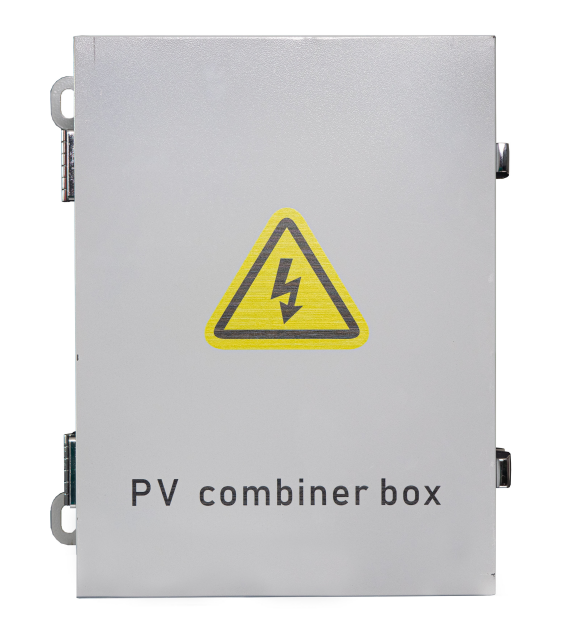
Cheap DC combiner boxes often skimp on the busbar insulation and clearance distances. Inside the enclosure, crowded terminals and thin insulating sheets leave high-voltage DC paths dangerously close to grounded metalwork. A single loose strand or a bit of accumulated dust can bridge that gap, causing an arc flash that no standard breaker will stop in time. In many budget units, the positive and negative busbars are separated by less than half the clearance recommended for 1000V systems, and the standoffs are made of brittle plastic that cracks after a few thermal cycles.
Another common failure point is the surge protection device (SPD) selection and wiring. Low-cost boxes use metal oxide varistors with a low thermal disconnector rating, or they wire the SPDs without dedicated fusing. When a surge event happens, the SPD can fail short and sit there smoldering inside the plastic enclosure. Because the enclosure itself is often made of non-flame-retardant ABS or polycarbonate, the heat distorts the case, exposes live parts, and eventually ignites nearby cabling. No one notices until the array underperforms or a site inspection flags the melted box.
Finally, the fuse holders and touch-safe covers get compromised. In premium combiner boxes, each string fuse sits in a finger-safe holder with a visible indicator and a dedicated disconnect. In low-cost versions, the fuses are often cheap cylindrical types clamped between brass screws, with no protective shrouds. Maintenance technicians working on a live array can easily touch an energized terminal while replacing a fuse. Worse, the enclosure door may have no interlock or warning label, and the grounding lug is sometimes painted over, leaving the entire metallic frame floating at a dangerous potential during a ground fault.
Checking for Real Certifications Instead of Relying on Supplier Claims
Suppliers love waving a glossy certificate in front of you, but a scanned PDF or a photo from a trade show booth doesn't prove much. Ask for the certificate number, the name of the issuing body, and the exact validity dates, then check those details directly against the registrar's public database. If the supplier stalls, says the certificate is "confidential," or offers a different document than the one you requested, walk away or demand a third-party audit before signing anything.
Also pay attention to what the certificate actually covers. A factory might have ISO 9001 for quality management but completely lack the electrical safety or organic material certification your product requires. Request the full certificate with annex pages and scope statements, and confirm that the audited facility address matches the one that will produce your goods. Dates matter too—many certificates expire mid-contract, and a lapsed certificate is no better than none. If the supplier can't provide a current, verifiable certificate tied to the exact products you're buying, treat that as a deal-breaker.
How Enclosure Design Can Speed Up or Slow Down Your Rooftop Crew
A poorly thought-out enclosure can turn a straightforward rooftop job into a slow crawl. If the access panels are tucked behind ductwork or the fasteners require a specialized bit that nobody brought up the ladder, your crew wastes valuable minutes just getting to the components they need to service. On the flip side, a well-designed enclosure puts the most frequently touched items—filters, drain ports, electrical disconnects—right at the front, with simple quarter-turn latches or tool-less doors. That kind of consideration means a technician can complete a routine inspection in half the time, leaving more hours for other calls.
Size and weight also play an outsized role in crew efficiency. An enclosure that arrives as a single welded unit may be cheaper to fabricate, but getting it onto a roof often demands a crane and extra hands just to maneuver it into place. Modular designs that break down into liftable sections let two workers handle the job with a hoist and some planning. Similarly, enclosures that pre-integrate wiring, mounting brackets, and weather seals reduce the number of trips up and down the ladder for forgotten parts—a common hidden delay on rooftop projects.
Finally, think about how the enclosure ages. If access doors warp after one season or the finish corrodes around the hinges, every future maintenance visit starts with a fight against rusted hardware. Choosing materials and hinge placements that stay smooth over time keeps the crew moving quickly, not wrestling with a stuck latch while the sun beats down. Good design isn't just about the first install; it's about preserving speed on every visit for the life of the unit.
What to Ask Suppliers About Surge Protection and Fuse Coordination
Start by pinning down the measured limiting voltage, not just the surge current rating. Have the supplier show test results from each protection mode under the same waveform you expect on site. Then ask how the upstream fuse rating changes that performance—many SPDs list a maximum fuse to avoid sacrificing the internal thermal protection, but the real question is what happens when a branch circuit already has a larger fuse installed. Ask for time-current coordination curves between the SPD disconnect and specific fuse classes, and look for any gap where the fuse clears after the SPD has already failed.
Next, dig into the short-circuit current rating and end-of-life behavior. Ask whether the SPD can be safely installed on a panel with a high available fault current if the upstream fuse is a current-limiting type, and whether the supplier will stand behind that combination with a written coordination statement. Also ask what really happens at end of life: does the unit disconnect cleanly, or can it leave terminals energized while showing a green status? A supplier that hesitates on these details usually hasn't done the coordination testing.
Finally, request exact fuse recommendations for the expected installation—class, amp rating, voltage, breaking capacity, and even a preferred manufacturer part number. Then ask about nuisance operation: will a fast-acting fuse open during common voltage sags or capacitor switching bursts? If they suggest a smaller fuse than your panel branch breaker, clarify how that affects code compliance and physical space. Also ask for any available remote alarm contacts, because a coordinated protection scheme is only useful if someone knows when the SPD has left the circuit.
Negotiating Lead Times and Spare Parts Before You Place the Order
Treat lead times as a negotiation point, not a spec sheet. Ask your supplier what happens if they miss the date—do they cover air freight, discount the invoice, or just apologise? Put the answer in writing. If they won't commit to a penalty, consider splitting the order among two vendors until one proves reliable.
For spare parts, don't let the supplier hand you a generic recommendation list. Walk your own production floor with the maintenance lead and flag the five or six parts that would stop the line if they failed. Then ask the supplier to stock those specific items locally or hold them on consignment, so you can pull them within 24 hours without owning the inventory.
You can also trade a slightly longer lead time on the bulk of the order for a guaranteed express shipment of the first 10%. Some suppliers will happily agree to this because it smooths their production schedule, and you get the critical items on time while the rest arrives by sea or rail.
FAQ
Look at the busbar material and thickness. Many suppliers list copper busbars, but some use tinned aluminum or thin copper to cut costs. Ask for a cross-sectional photo or a spec sheet showing the busbar dimensions. For a 1000V DC system, you want at least 3mm thick copper; for 1500V, go thicker. This single detail can prevent hotspots and nuisance tripping later.
Yes, but you need to specify exactly what you need. Some Chinese factories default to components aimed at smaller residential strings, like 15A fuses, even when you tell them it's for a 20A commercial string. Provide a single-line diagram and ask for a compliance matrix showing each component rating. Utility-scale boxes should also have separate terminal compartments so you don't have to open the live busbar area for routine fuse checks.
Request third-party test reports, not just the factory's own declaration. Reputable suppliers will have TUV or SGS reports for IP65 or IP66. Also check the construction details: cable glands should be nylon or metal with rubber inserts, and the door gasket should be a continuous molded seal, not foam tape. If the factory hesitates to share test reports, assume the rating is optimistic.
For Europe, look for EN 61439-2 compliance and a CE declaration, though CE alone is weak. Many buyers also want TUV or Intertek certification. For North America, the box needs UL 1741 or UL 508A listing if it contains breakers, and the enclosure itself may need UL 508 or NEMA ratings. Always ask for the certificate number and verify it on the certifying body's database—some Chinese suppliers photoshop expired certificates.
One big mistake is relying on the supplier's standard fuse size. Chinese factories often stock 10x38mm fuses rated up to 32A, but if your strings run 15A at 70°C ambient, you may need 14x51mm or 10x85mm with higher breaking capacity. Ask for the fuse holder's rated voltage and the DC breaking capacity. Also insist on fuse holders that can be opened without tools for field replacement.
For small quantities, buying from China is usually cheaper even after freight and import duties, but the savings shrink when you factor in rework. Local builds give you control over component quality and lead time, but Chinese suppliers can assemble a custom box for 30-40% less if you order 50 units or more. The real cost advantage comes when you standardize on one design and order in batches.
Many Chinese manufacturers install Type 2 surge protective devices as standard, but the quality varies wildly. Ask for the SPD's maximum discharge current and voltage protection level. A cheap SPD might survive one small surge and then fail silently, leaving the inverter unprotected. For critical sites, specify replaceable SPD modules with visual status indicators, and ask for a wiring diagram that shows the SPD connected close to the main busbar, not tucked in a corner.
If the design is simple and all components are in stock, 2-3 weeks is possible. But if you need special fuses, custom labels, or non-standard cable glands, plan for 4-6 weeks. Add another 2-3 weeks for sea freight to Europe or North America, plus customs clearance. Rush orders often come with wrong labels or missing spare parts, so avoid them unless you have a boots-on-the-ground inspector.
Conclusion
When you open a Chinese DC combiner box quote, don't read it as a desk buyer checking boxes—read it as the person who will kneel on a rooftop in July. Look past the glossy nominal ratings and check whether the busbar actually has enough cross-section for the stated current without heating, whether there is real physical space to land 10mm² PV wire without a fight, and whether the terminals have a torque spec printed on the inside of the enclosure. Low-cost units almost always hide their compromises in places you can't photograph for a warranty claim: copper that turns out to be copper-clad aluminum, fuse holders that loosen after ten thermal cycles, or plastic covers that warp in direct sun. Ask the supplier for a sample, remove the dead front, and inspect the connection points yourself—if you wouldn't trust your apprentice to wire it hot, it's not safe. For certifications, don't accept a PDF with a TUV or CE logo. Demand the actual certificate number and test report, then check it on the issuing lab's public database. Many Chinese factories are happy to send a real IEC 61439-2 test report for a reference design, then ship you a modified unit with a different busbar layout. Ask for a signed declaration that the delivered model matches the tested sample, and request photos of the internal label showing the exact model code and rated short-circuit withstand.
Enclosure design is not cosmetic—it's your crew's labor cost. A combiner box with pre-punched knockouts that actually align with standard cable glands, a removable gland plate, and a hinged cover that can be closed with one hand will save twenty minutes per unit on a two-story roof. Low-profile boxes force installers to make sharp bends or use extra junction boxes; boxes with sharp edges inside will cut their hands. Surge protection and fuse coordination are where suppliers get vague. Ask specifically: What is the SPD's voltage protection level (Up) and does it coordinate with the upstream inverter's SPD? What is the fuse's breaking capacity (kA) at the string voltage, and is there a thermally protected SPD disconnect so a failed varistor doesn't leave live parts exposed? Finally, negotiate lead times and spares before you place the order, not after a batch arrives with three missing gland nuts. Lock in a realistic ship date with a penalty clause, and require the supplier to include spare fuse links, one spare surge module, extra cable glands, and a spare enclosure key or latch. Ask for the name and WeChat of the factory's after-sales engineer, and test that contact before your payment clears. These details turn a cheap grey box into a piece of field equipment you can stand behind.
Contact Us
Contact Person: Tonglun Chen
Email: [email protected]
Tel/WhatsApp: 8618906642555
Website: https://www.cncsele.com