
China H Beam Shot Blasting Machine Exporter: Your Guide to Top-Quality Surface Preparation
2026-08-03
When it comes to achieving flawless surface preparation for H beams, the choice of equipment can make or break your project. PuHua, a trusted name in China's shot blasting machine export sector, delivers precision-engineered solutions that rejuvenate steel surfaces with unmatched efficiency. But with so many options flooding the market, how do you identify a machine that truly meets industrial-grade demands? This guide cuts through the noise, offering insider insights into selecting top-quality machinery that balances performance, durability, and cost-effectiveness—starting with the technology that sets PuHua apart.
Why H Beams Need Shot Blasting Before Coating
Surface preparation plays a decisive role in coating durability, and H beams are no exception. Mill scale, rust, and contaminants naturally form on the steel during production and storage. If left untreated, these layers undermine adhesion, causing premature peeling or flaking—even with high‑quality paints. Shot blasting physically removes these impurities, creating a uniformly roughened anchor profile that allows the coating to grip securely rather than merely sitting on top.
Beyond adhesion, the process exposes hidden defects such as pitting or lamination that might otherwise go unnoticed until corrosion has already spread beneath the paint. The high‑velocity abrasive impacts also relieve surface stresses introduced during rolling or welding, reducing the risk of micro‑cracking later. This mechanical cleaning is fast and consistent across complex beam geometries, leaving a surface that is not just clean but optimally textured for whichever protective system follows.
Coating failures on structural steel rarely start in the middle of a web—they begin where contamination was missed. By incorporating shot blasting right before coating, fabricators ensure that every flange edge, weld seam, and bolt hole receives the same treatment, eliminating weak points. The result is a predictable, long‑lasting bond between steel and coating, which translates directly into extended maintenance intervals and lower lifecycle costs for the structure.
Inside the Chinese Manufacturing Edge for Blasting Equipment
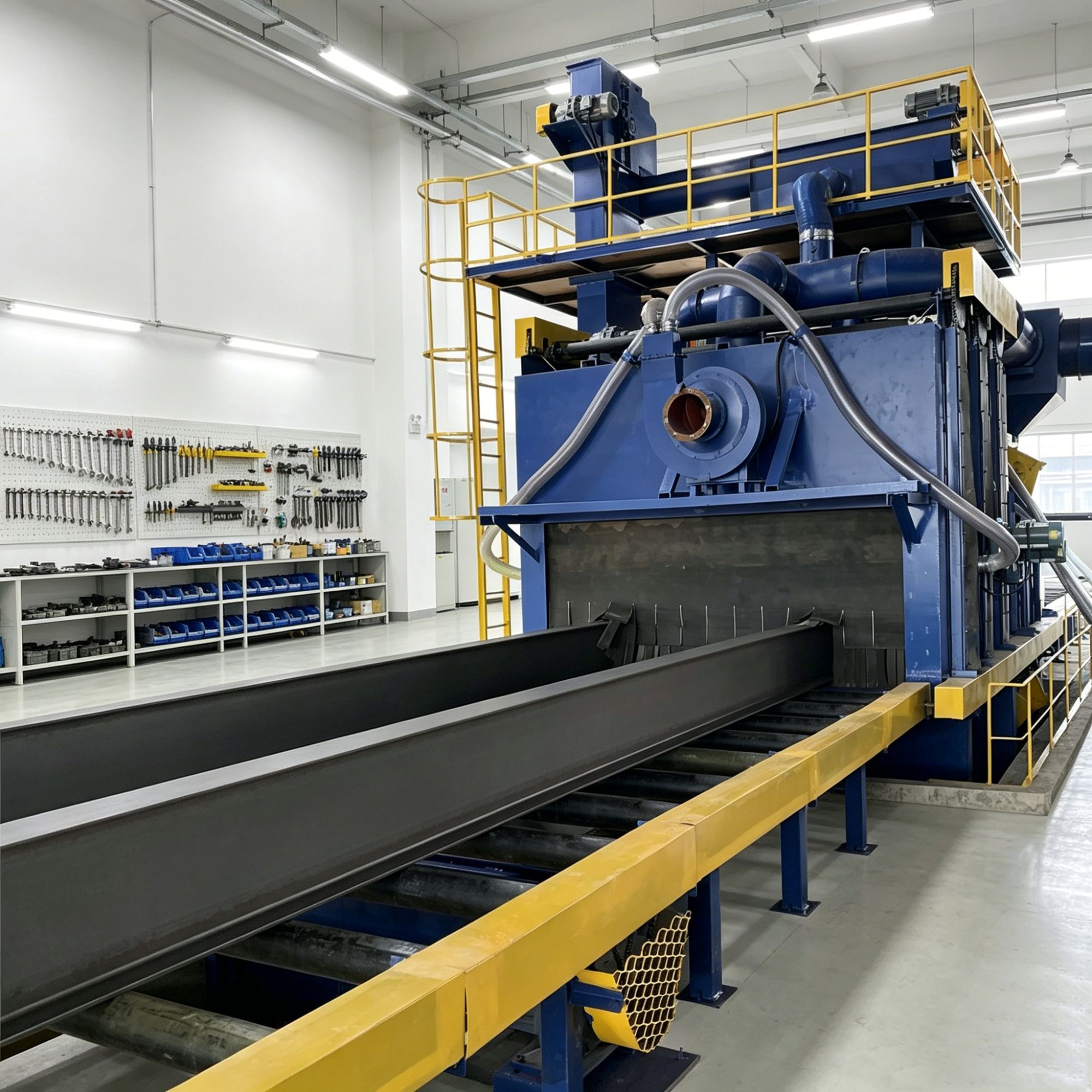
When you strip away the marketing fluff, Chinese blasting equipment manufacturers have quietly built a supply chain muscle that few Western buyers fully grasp. It’s not just about cheaper labor anymore—entire industrial clusters like those in Shandong and Zhejiang have perfected a vertical integration model where foundries, CNC workshops, and assembly lines sit within a 50-kilometer radius. This proximity slashes logistics friction and allows for rapid design tweaks without the multi-week back-and-forth you’d endure with distant suppliers. The result is a machinery ecosystem that can iterate on component quality—from hardened nozzles to precision valve blocks—at a pace that makes global competitors uneasy.
Beyond the hardware, there’s a less obvious advantage: an almost obsessive focus on tear-down engineering. Chinese engineers regularly dismantle premium European and American blasting units to reverse-engineer wear patterns, valving logic, and ergonomic touches that manuals never reveal. But they don’t just copy; they adapt for local materials and user habits, often strengthening frames for rougher worksite handling or tweaking blast patterns for abrasive media that’s unusually coarse in Asian markets. This practical, shop-floor-driven innovation creates machines that often outlast their theoretical lifespan in unforgiving conditions, and it’s done without the overhead of bloated R&D departments. The real edge isn’t a single breakthrough—it’s a systematic, decentralized problem-solving culture that turns everyday production feedback into incremental hardware wins.
The Real Difference Between Standard and Heavy-Duty Models
It’s easy to assume the only distinction is size or raw power, but that barely scratches the surface. Standard models are engineered for routine, predictable workloads, balancing efficiency and moderate durability—think everyday hauling or light commercial use. They prioritize fuel economy, smoother rides, and lower upfront cost. Heavy-duty versions, on the other hand, are fundamentally reworked to withstand relentless stress. The frame gets thicker gauge steel, axles are upsized, and cooling systems expand to cope with constant high-load operation. Even the software tuning in transmission and engine management shifts torque delivery curves to favor sustained grunt over top speed. You’re not just buying a bigger engine; you’re buying a platform designed from the ground up to handle abuse that would shear the mounts off a lighter chassis.
The hidden gap widens when you look at lifecycle costs and long-term behavior. A standard model might handle occasional peak loads, but components wear exponentially when pushed beyond design limits—bushings sag, seals weep, and transmissions hunt for gears. Heavy-duty variants solve this with sealed bearing assemblies, hydraulic dampers instead of simple rubber stops, and reinforced pivot points that shrug off gravel, salt, and shock loading. Braking systems aren’t just larger; they often switch to air over hydraulic or full air setups with drums that stay cooler during descents. This engineering philosophy means heavy-duty units often feel less lively when empty, yet they remain composed precisely when lighter models begin to feel squirrelly. It’s less about the badge and more about how the machine ages under stress.
What often seals the decision isn’t the spec sheet but the operational context. If your work cycle includes long hours at high ambient temperatures, constant PTO use, or mounting aftermarket tools that sip hydraulic flow, a standard frame simply wasn’t bred for that. Heavy-duty chassis often include auxiliary ports and pre-wired circuits ready for those demands, avoiding the slow death of overloaded relays and melted connectors. Suspension geometry changes too—shackle angles and track bar designs are altered to keep wheel hop minimal when traction is marginal. So the real difference manifests as confidence over years: the heaviest model might cost 30% more upfront but deliver triple the service life in a punishing environment, turning a purchase into a strategic investment rather than a recurring headache.
From Raw Steel to Ready-to-Paint: The Blasting Process
Raw steel arrives with mill scale, rust, and surface contaminants that compromise coating adhesion. The blasting stage isn't just about cleaning—it transforms the surface profile, creating microscopic peaks and valleys that anchor paint or powder coating. Without this step, even premium coatings fail prematurely. The choice of media, whether angular steel grit for aggressive profiling or glass beads for a smoother finish, directly impacts the final texture and longevity of the coating system.
Operators dial in pressure and nozzle distance to achieve the specified surface prep grade, often checking standards like SSPC or ISO 8501. It's a balancing act: too little blasting leaves contaminants behind, while overblasting can warp thin metal or close up the surface profile, reducing mechanical grip. Skilled technicians watch for telltale signs—the uniform matte appearance that signals a properly blasted surface ready to accept primer within hours before oxidation sets in.
Modern blasting systems incorporate dust collection and media recycling to minimize waste, but the real artistry lies in adapting the process to each steel batch. Variables like humidity, steel composition, and the condition of the blast media influence the outcome. The goal is always the same: a meticulously prepped surface that lets the coating bond tenaciously, ensuring decades of corrosion protection even in harsh environments.
How to Spot a Reliable Exporter in a Crowded Market
Spotting a reliable exporter isn't about chasing the lowest price or the flashiest website—it's about digging into the details that most buyers overlook. Start by checking how they handle communication. A trustworthy partner answers questions directly, admits what they don't know, and follows up without badgering you. If they dodge specifics about materials, certifications, or past clients, treat that as a red flag. Real reliability shows up in consistency, not just charisma.
Don't rely solely on reviews or third-party platforms, as these can be curated. Instead, request a live video walkthrough of their facility or a sample production run—without notice if possible. Observe the workspace: is it organized, or does it look staged? Ask about their quality control process and see if they can explain it without jargon. The exporters who are genuinely confident in their operations won't hesitate to show you the messy, real side of production because they have nothing to hide.
Finally, test their problem-solving skills before you commit. Introduce a small, intentional change to your order—like a packaging tweak or a tighter deadline—and see how they react. A reliable exporter will either adapt swiftly or explain clearly why it's not feasible, instead of overpromising and underdelivering. This approach reveals far more than any certificate or sales pitch ever could.
Real-World Demands: Where Precision Surface Prep Matters Most
In aerospace manufacturing, a single microscopic flaw in a turbine blade's coating can trigger catastrophic failure under extreme heat and pressure. Technicians rely on laser ablation and automated grit blasting to achieve the exact surface profile needed for thermal barrier coatings to adhere without compromise. Here, precision isn't just a specification—it's a matter of life and safety.
Medical device production presents another unforgiving arena. When crafting titanium bone implants, the surface must encourage osteoblast integration while resisting bacterial colonization. Subtle variations in roughness, measured in microns, determine whether the body accepts or rejects the implant. Advanced techniques like electropolishing and passivation are calibrated not merely for aesthetics but for biological compatibility.
Even in automotive restoration, the line between a showroom finish and a rework is drawn by surface prep. Paint adhesion on a vintage chassis depends on removing decades of rust without altering the metal's temper. Master craftsmen use dry ice blasting or chemical dips with timed precision, knowing that the final coat's mirror shine is earned long before the first spray of color.
FAQ
It’s a specialized piece of equipment that propels abrasive material at high speed to clean, descale, or strengthen the surfaces of H-shaped steel beams. This process removes rust, mill scale, and contaminants, creating a profile that improves paint adhesion and extends the lifespan of structural steel.
Reputable exporters integrate rigorous quality control at every step, from sourcing high-grade steel and wear-resistant components to performing comprehensive pre-shipment testing. They often follow international manufacturing standards and can provide certifications, detailed inspection reports, and even real-time video of the machines in operation before shipping.
Look beyond price alone—evaluate the exporter’s track record with H beam machinery, technical support responsiveness, availability of spare parts, and customization capabilities. It’s also wise to check client testimonials, visit their factory if possible, and confirm that they can handle the specific dimensions and throughput your projects demand.
They’re widely used in steel fabrication, bridge construction, shipbuilding, heavy machinery manufacturing, and structural engineering. Any industry that relies on large H beams for frameworks or load-bearing structures benefits from thorough surface preparation to prevent corrosion and ensure safety.
Chinese manufacturers often combine advanced automation with competitive pricing due to economies of scale and a mature supply chain. You can also expect a wide range of models, flexible customization, and shorter lead times, all backed by an expanding global service network.
Regular inspection of blast wheels, liners, and dust collection systems is vital. Keep abrasive levels optimal and clean the machine daily to avoid buildup. A proactive maintenance schedule, including timely replacement of wear parts and lubrication of moving components, prevents unexpected downtime and preserves finish quality.
Depending on the abrasive type, blast intensity, and conveyor speed, you can achieve finishes from near-white metal (SA 2.5) to a commercial blast (SA 2) with a uniform anchor profile typically between 50–75 microns. This prepares the steel perfectly for coatings or further processing.
Absolutely. Many Chinese exporters offer fully customized solutions—adjusting tunnel openings, adding extra blast turbines, or engineering special material handling systems. You can specify the beam width, height, length, and desired throughput to create a machine that fits your exact operational needs.
Conclusion
Effective corrosion protection for H beams starts well before any paint touches the surface. Mill scale, rust, and surface contaminants must be removed entirely to create the anchor profile that coatings need for adhesion and longevity. Shot blasting delivers this uniformly, unlike manual methods that often leave weak spots. Chinese manufacturers have refined the machinery behind this process, combining aggressive R&D with cost-efficient production to offer equipment that ranges from pre-fabrication standard lines to heavy-duty blasters capable of handling massive fabrications at high throughput. The distinction between standard and heavy-duty models lies not just in component ratings but in engineering choices—reinforced blast wheels, advanced abrasive recirculation, and dust collection systems that maintain consistent performance under continuous operation.
In practice, the blasting sequence transforms raw, scaly steel into a uniformly profiled, ready-to-paint surface through a series of abrasive impingement, recovery, and filtration stages. When sourcing from China, a reliable exporter stands out through transparent technical documentation, on-site testing capabilities, and a clear understanding of international surface preparation standards like SSPC or ISO. Beyond the equipment, true value emerges in sectors where precision is non-negotiable: bridge construction, marine engineering, and heavy infrastructure demand finishes that endure decades of exposure. The right machine paired with a credible exporter ensures that H beams meet those expectations without compromise, anywhere in the world.
Contact Us
Contact Person: Bruce
Email: [email protected]
Tel/WhatsApp: +86 15166629468
Website: https://www.povalchina.com/