
China Laser Hair Removal Glasses: The Ultimate Buyer's Guide
2026-06-21
Navigating China’s booming market for laser hair removal glasses can feel like staring into a blinding light—especially when safety and effectiveness are non-negotiable. Whether you’re a clinic owner stocking up or a DIY beauty enthusiast, choosing the right protective eyewear is the first step toward fearless treatments. With a dizzying array of suppliers, materials, and certifications, how do you separate genuine quality from clever copycats? Enter LASERPAIR—a brand that’s quietly redefining industry standards with precision-tested, CE/FDA-certified lenses built for real-world laser sessions. In this guide, we’ll cut through the noise and walk you through everything from wavelength compatibility to frame ergonomics, so you can protect your vision without second-guessing.
Your Eyes Aren't Replaceable: The Real Cost of Skipping Protective Glasses
Most of us take our vision for granted—until a split-second accident reminds us there’s no backup pair waiting on a shelf. Corneal lacerations, retinal burns, or a splinter lodged in the eye don’t just ruin an afternoon; they can permanently rewrite how you experience the world. Unlike a scratched phone screen, your retina won’t regenerate, and a transplant, if even possible, comes with a lifelong battle against rejection. The real cost isn’t just the emergency room bill; it’s the faces you’ll never see clearly again.
Skipping protective glasses often starts with the illusion that “it won’t happen to me.” Maybe the task seems too brief, or safety gear feels like an overreaction. But emergency rooms see the same stories daily: a flying shard from a lawnmower, a droplet of cleaning chemical, a grinding spark that missed the cornea by millimeters. The financial toll can reach tens of thousands in surgeries and follow-ups, but the deeper cost is the quiet loss of independence—no longer driving at night, struggling to read, or giving up hobbies that demand sharp sight.
Goggles and safety glasses aren’t just accessories; they’re a minute investment against irreversible damage. A decent pair costs less than a dinner out, yet it can block 99.9% of debris and UV radiation. The real price of ignoring them is paid in moments you can’t get back: witnessing a grandchild’s first steps, seeing a sunrise without halos and floaters, or simply recognizing a friend across the street. Once those details blur, no amount of regret brings them into focus.
Laser Types and the Right Lens: Navigating Optical Density
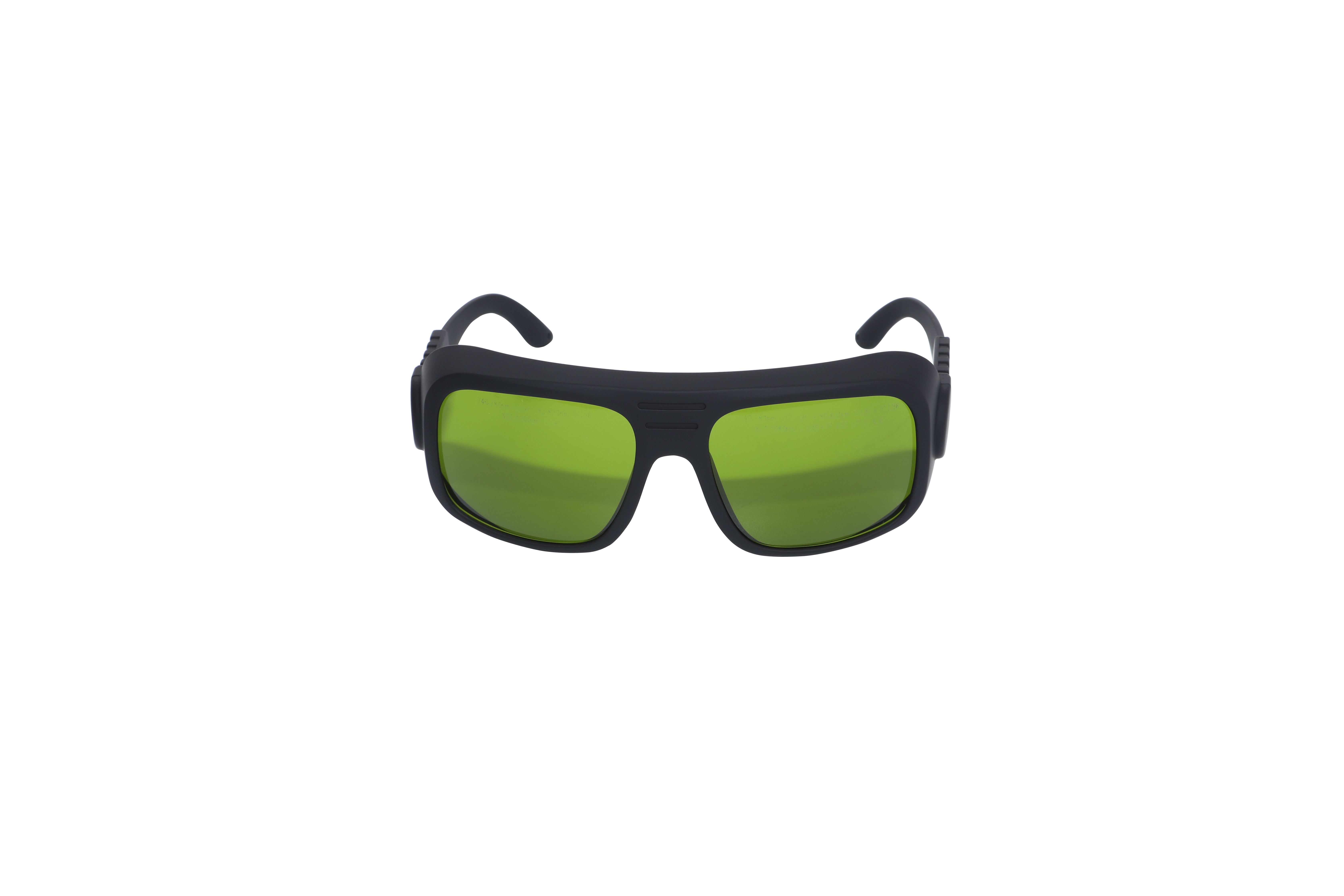
Different lasers emit light at distinct wavelengths and operate under varying power levels, which directly influences the optical density (OD) required in protective lenses. Continuous wave (CW) lasers, for instance, demand steady-state attenuation over prolonged exposure, while pulsed lasers produce high peak powers in nanoseconds or femtoseconds, requiring lenses that can withstand instantaneous energy without degrading. Understanding your laser's mode of operation, whether it’s a diode, solid-state, or gas laser, helps in selecting eyewear that balances visibility with sufficient blocking. For example, a 1064 nm Nd:YAG laser used in industrial cutting needs a higher OD than a low-power HeNe alignment laser, even if both fall in the infrared spectrum.
Wavelength-specific absorption is not just a matter of lens tint—it’s about matching the material’s attenuation curve to the laser’s emission line. Polycarbonate, glass, and dielectric coatings each have advantages; glass offers high optical clarity and resistance to scratching but can be heavy, while polycarbonate is lighter and impact-resistant, though it may attenuate less efficiently at certain wavelengths. Multilayer coatings can fine-tune OD for narrow wavelength ranges, which is critical when dealing with tunable lasers or multi-wavelength systems. A lens that shows high OD at 532 nm might be almost transparent at 800 nm, so misidentification can lead to severe ocular damage.
Navigating optical density also means considering real-world use: comfort, fit, and visual task demands. Overly dark lenses reduce visibility and can cause eye strain or unsafe working conditions if the user is tempted to remove them. Lab environments with multiple laser sources require either purpose-built combo lenses or reliable swap systems. Always verify the lens’s OD rating at the exact wavelength and pulse duration you’re working with, and inspect for pinholes, cracks, or delamination before use. In the end, the right lens is not the one with the highest OD number, but the one that provides adequate protection without compromising the ability to perform the task safely and precisely.
Not All Glasses Are Created Equal: Build Quality and Lens Material
When you pick up a pair of glasses, the first thing you notice is the weight and feel. Frames made from cheap plastic or flimsy metal often feel hollow and unbalanced, while high-quality acetate or titanium sits comfortably and distributes weight evenly. Beyond initial impressions, material choice directly impacts daily durability — thin, poorly welded hinges can loosen after a few months, whereas sturdy barrel hinges and flexible temple arms withstand years of taking glasses on and off. Even the nose pads matter: silicone ones grip better but wear down faster than ceramic or titanium alternatives. Paying attention to these details keeps your glasses fitting securely without constant adjustments.
Lens material is just as crucial, yet it’s often overlooked. Standard plastic lenses (CR-39) offer decent optics at a low cost, but they’re thicker and can shatter under forceful impact. Polycarbonate, originally developed for aerospace visors, provides outstanding impact resistance and built-in UV protection, making it a go-to for children’s eyewear and safety glasses. High-index plastics bend light more efficiently, resulting in noticeably thinner lenses for strong prescriptions — though they can feel heavier and produce more reflections without a top-grade anti-reflective coating. Then there’s Trivex, a mid-index marvel that combines lightness, toughness, and optical clarity, often outperforming polycarbonate in visual sharpness.
Build quality and lens material work together in ways that aren’t immediately obvious. A heavy lens in a lightweight frame can cause the glasses to constantly slide forward, while a brittle frame paired with shatter-resistant lenses still leaves you vulnerable if the frame snaps and the lens pops out. The best combinations come from brands that match materials thoughtfully: for example, pairing a flexible titanium frame with high-index 1.74 lenses reduces overall weight and thickness without sacrificing strength. Even the smallest components — screws, end caps, and temple tips — reveal the true quality. Investing in well-engineered materials on both fronts means fewer replacements and sharper, more comfortable vision in the long run.
From Factory to Salon: The Journey of a Chinese-Made Laser Glass
Laser glass doesn’t just appear in a salon—it starts life in a sprawling factory on the outskirts of Shanghai, where engineers obsess over micron-level tolerances. Each piece is cut from raw optical crystal, then ground and polished in a sequence that takes weeks. The workers here treat the glass almost like a living thing, checking it under harsh lights for any hint of distortion. A single invisible flaw could scatter a laser beam and ruin a treatment, so quality control is borderline paranoid. Once it passes, the glass gets a sleek coating that boosts durability, and a serial number is etched into the edge—a quiet mark of its origin.
From there, the journey gets less glamorous: foam-lined crates, cargo planes, and customs paperwork. The glass might bounce through a half-dozen logistics hubs before reaching a salon in Berlin or Los Angeles. It’s strange to think of something so precisely crafted being handled by forklifts, but the packaging is clever—suspension systems inside the crate absorb shocks that would otherwise turn a multimillion-dollar instrument into a paperweight. Occasionally, a shipment gets stuck in a warehouse for days, and the salon owner starts sending anxious emails, but most of the time it arrives on schedule, still cold from the high-altitude hold.
The final handover happens in the back room of a salon, where a technician carefully unboxes the glass under the watchful eye of a clinic owner. Installation takes less than an hour, but it’s a ritual: cleaning the mount, aligning the glass with the laser head, running a test pattern on thermal paper. When the first client sits down, they have no idea their smooth skin depends on a slab of crystal that traveled halfway around the world. The laser hums, the glass holds steady, and that’s it—the journey ends in a quiet, flawless pulse of light.
Standards That Matter: ISO, ANSI, and the Fine Print
When a product carries an ISO or ANSI mark, it’s often seen as a shorthand for quality. But what that really signals is a quiet agreement between manufacturers and users about performance, safety, and durability. ISO standards, born from international consensus, aim to harmonize expectations across borders. They cover everything from the thread of a screw to the data protocols that keep your devices talking. Meanwhile, ANSI, rooted in the American context, often digs into the gritty details that affect daily work—like how bright an emergency light should be or the exact strength rating on a carabiner. These are not just arbitrary sets of rules; they are living documents shaped by decades of real-world mishaps, lab tests, and committee debates.
The real test, however, hides in the fine print. A standard can look impressive on a spec sheet, but its value shrinks if the testing method is outdated or the certification is self-declared. Many people glance at a logo and assume third-party scrutiny, yet some marks rely only on a manufacturer’s own word. That’s where the lines blur between genuine compliance and clever marketing. Dig into the accompanying documentation, and you might find that the standard referenced is a watered-down version, or that it applies only under ideal conditions that rarely exist in practice. This is where ANSI’s role as a coordinator—not a certifier—can trip up the uninformed. Knowing which standards bodies actually send auditors, and which simply publish guidelines, can prevent expensive assumptions.
Beyond the jargon, these frameworks shape products in subtle ways. The choice of one ANSI rating over another might affect the heft of a tool or the glare of a computer screen. ISO’s environmental management standards have quietly pushed companies to cut waste, even when no regulator is watching. The fine print, read carefully, tells you whether a product was designed for a niche or for the masses, and whether its creators prioritized long-term resilience over passing a one-time test. In the end, standards matter not because they are on a label, but because they encode lessons that industries often learn the hard way.
The Devil's in the Details: Hinges, Headband, and Fog Resistance
When it comes to protective eyewear, the true measure of quality often hides in the small, seemingly mundane components. Hinges, for instance, are more than just pivot points—they’re the silent workhorses that determine how fluidly a pair of glasses folds and fits. A well-designed hinge, crafted from durable materials like stainless steel or reinforced polymer, ensures consistent tension and prevents that dreaded loosening over time. Without a reliable hinge, even the most optically perfect lenses become a nuisance, slipping down your nose or failing to align properly with your line of sight.
Equally critical is the headband, especially in performance settings where stability is non-negotiable. A headband that’s too tight creates pressure points that can become unbearable after an hour, while one that’s too loose invites constant readjustment. The best designs incorporate adjustable, moisture-wicking straps with silicone beading to grip without pulling. This kind of thoughtful engineering means you can focus on the task at hand—whether it’s navigating a tricky descent or working under harsh lights—without the distraction of your gear shifting out of place.
Then there’s fog resistance, a feature that’s easy to claim but hard to get right. Anti-fog coatings need to strike a delicate balance: they must resist moisture buildup without compromising optical clarity or peeling under cleaning. The most effective solutions go beyond a simple spray-on layer, using dual-pane lenses or a permanent hydrophilic film that spreads water molecules into an invisible sheet rather than letting them bead up. When combined with well-placed ventilation channels, these treatments keep your vision crisp in steamy environments, proving that the devil really is in the details.
FAQ
They're protective eyewear designed to shield your eyes from intense pulsed light (IPL) or laser beams during at-home hair removal sessions. Unlike the bulky goggles used in clinics, these glasses are compact, often with a tinted lens that filters harmful wavelengths while letting you see what you're doing.
Absolutely not. Regular sunglasses lack the specific optical density needed to block the exact wavelengths emitted by IPL and laser devices. Using them could lead to serious eye damage over time. The specialized glasses from reputable Chinese manufacturers undergo testing to ensure they meet safety standards for these devices.
Focus on the wavelength range they block—usually 200nm to 2000nm is standard—and the optical density rating. A higher OD number means better protection. Also check for certifications like CE or FDA, and look for comfortable, wraparound designs that prevent light leakage from the sides.
China has a deep supply chain for optical components and electronics, which keeps costs down without necessarily sacrificing quality. Many international brands source or produce there. The key is to buy from suppliers with transparent testing reports and actual user feedback, not just flashy listings.
Some models are designed with an oversized fit that can accommodate prescription glasses underneath, but not all. If you need this, look for terms like 'over glasses' or 'OTG' in the description, and check the inner width measurements before ordering.
Most quality laser safety glasses cover a broad spectrum, so they work with home IPL devices, diode lasers, and even professional machines. But always verify that the glasses' protection range matches your device's output spectrum. A mismatch could leave your eyes vulnerable.
Wipe the lenses with a soft, lint-free cloth and mild lens cleaner. Avoid harsh chemicals that can degrade the coating. Store them in a hard case when not in use to prevent scratches, as even small scratches can compromise the light-blocking capability.
Conclusion
Your eyes aren't replaceable—a fact that hits home when you realize just how quickly unprotected exposure to scattered laser beams can cause permanent retinal damage. It's not about a split-second mishap; the real cost of skipping protective glasses slowly accumulates into a silent loss of vision that no surgery can restore. Different hair removal lasers—whether it's diode, alexandrite, or Nd:YAG—operate at distinct wavelengths, each requiring a specific optical density to block harmful radiation while still letting you see skin reactions clearly. Chinese manufacturers have become adept at navigating these nuances, producing lenses with precisely calibrated OD ratings that match the exact laser type in use, ensuring that technical specs translate into real-world safety without sacrificing visibility.
Still, a solid optical density number stamped on a frame means little if the glasses themselves don't hold up under salon conditions. Build quality separates the reliable from the disposable: polycarbonate lenses resist shattering, while glass offers superior scratch resistance, and the frame must survive daily disinfection without degrading. The journey from a Chinese factory to your salon involves more than just assembly lines; it reflects a discipline of adhering to ISO and ANSI standards that dictate impact resistance, marking durability, and wavelength coverage. Yet even certified gear can become a daily curse if details aren't right—hinges that loosen after a hundred folds, a headband that slips mid-procedure, or a fog-resistant coating that quits halfway through a humid session. The best Chinese-made laser glasses tackle these bread-and-butter issues head-on, combining obedient compliance with the kind of thoughtful design that turns mandatory protection into a seamless, almost forgettable part of your workflow.
Contact Us
Contact Person: Jenny
Email: [email protected]
Tel/WhatsApp: +86 13537713281
Website: https://www.laserpair-safety.com/