
China N52 Magnet Delivers Unmatched Strength for Modern Devices
2026-08-19
When it comes to powering today’s compact yet high-performance devices, the China N52 magnet stands in a league of its own. With a magnetic strength that outclasses standard grades, it enables engineers to push boundaries in everything from medical implants to drone motors. At the heart of this innovation is DAWA, a manufacturer that doesn’t just sell magnets—it crafts precision solutions for the demands of modern technology. But what exactly makes N52 the go-to choice, and why are leading device makers turning to DAWA for their supply? The answers may surprise you.
The Pull That Powers Precision Instruments
Magnets inside precision instruments do more than stick to metal. Their unseen force guides delicate needles, holds calibration weights steady, and keeps moving parts aligned without physical contact. A well-tuned magnetic field acts like an invisible hand, nudging components into exact positions where mechanical springs or gears would introduce friction or drift.
In devices that measure voltage, current, or even seismic tremors, the pull of a permanent magnet converts tiny fluctuations into readable motion. The strength and orientation of that pull are never left to chance. Engineers shape pole pieces, adjust air gaps, and select alloys with specific coercivity, all so the magnetic circuit responds identically on a Monday morning or after months of continuous operation.
This quiet force also suppresses vibrations that could blur a reading. A suspended coil or moving vane sits inside a stable magnetic field, and any external jolt gets absorbed by the field’s restorative pull. The result is a reading that stays true, even when the environment tries to throw it off. Remove the magnet, and the instrument becomes a collection of loose parts. Keep it precisely aligned, and every measurement carries the confidence of an invisible, tireless partner.
Why N52 Became the Default Choice for High-End Motors
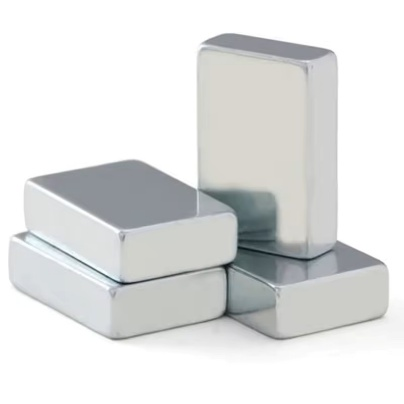
N52 didn't rise to prominence overnight. It earned its place through a rare combination of raw magnetic strength and stubborn resilience. Engineers quickly noticed that when other grades buckled under thermal stress or began shedding performance after repeated cycles, N52 held its ground. That consistency quietly shifted the conversation from "what's the strongest magnet available" to "what's the strongest magnet we can actually rely on in the real world."
Beyond the spec sheet, N52 offered something quieter: design freedom. Its higher energy product meant smaller volumes could deliver the same force, letting motor builders shave weight without sacrificing torque. In applications where every gram matters—drones, surgical tools, high-response actuators—that margin isn't a luxury. It's the difference between a prototype that works on a bench and a product that survives in the field.
The shift wasn't driven by a single breakthrough, but by a slow accumulation of trust. Suppliers refined coating processes to fight corrosion, machinists learned to handle the brittle material without microfractures, and assembly lines adapted to stronger demagnetization resistance. By the time the broader market caught on, N52 had already become the quiet default for anyone serious about high-end motor performance—not because it was exotic, but because it simply didn't give engineers a reason to settle for less.
China’s N52 Production Line Balances Cost and Extreme Tolerance
The N52 production line in China has moved well past the old either-or debate between affordability and precision. Instead of relying on manual sorting or post-machining corrections, the line uses in-process laser gauging and closed-loop pressing feedback to hold dimensional tolerances within a few microns while keeping scrap rates under two percent. That combination matters because it reduces expensive rare earth waste, which is often the hidden driver of cost in high-grade magnets.
What makes the balance work is a shift toward smaller batch sizes and adaptive tooling. Rather than running oversized lots that drift as dies wear, the line tracks die wear in real time and adjusts press force automatically. Operators monitor statistical process control charts that flag variance before it reaches the tolerance limit. The result is an N52 magnet that hits the same tight flatness and parallelism specs as premium Japanese or German suppliers, but at a price that still reflects China's material and labor advantages.
A Tiny Magnet That Lifts 600 Times Its Own Weight
Imagine a sliver of metal no longer than a grain of rice, yet capable of hoisting a steel bolt heavier than a handful of coins. This isn't a scene from a sci-fi film—it's the everyday reality of certain rare-earth magnets. Their secret lies not in size, but in the nearly flawless alignment of magnetic domains at the microscopic level, a feat achieved through precise sintering and magnetization processes.
What makes the 600-to-1 ratio so striking is how it defies our intuitive sense of scale. A paperclip-sized magnet can grip a wrench or suspend a small toolbox, all without any external power source. The force comes from the material's high coercivity and energy product, which means once magnetized, it resists demagnetization and maintains a dense, far-reaching field. Engineers exploit this in everything from miniature grippers for delicate electronics to anchoring mechanisms in space probes.
However, such strength demands respect. The same magnet that lifts with ease can pinch skin or shatter if allowed to snap onto a metal surface uncontrolled. Using it safely means planning the load path and keeping it away from pacemakers or magnetic storage. It's a reminder that the most unassuming objects often hold the most concentrated power.
How Modern Devices Stay Slim Yet Strong with N52
N52 magnets pack more magnetic energy per cubic millimeter than any other commercially available grade, so a wafer-thin disc can still exert a surprisingly firm grip. That raw strength lets designers shave down brackets, housings, and alignment components without losing the snap or hold users expect. In earbud charging cases, for instance, a tiny N52 puck in the lid keeps it sealed against pocket jostling, while the case itself stays pocketably slim.
The trick isn't just using a stronger magnet—it's shaping the field to do more with less depth. Many slim devices arrange N52 magnets in alternating polarity patterns or pair them with thin steel flux guides, which pulls the magnetic field closer to the surface instead of letting it sprawl through the chassis. This focused flux lets a phone's wireless charging coil lock onto a mount through a case, or a tablet's keyboard connector snap into place with almost no added bulk.
Durability also benefits from that space savings. Because N52 handles the same holding force in a smaller footprint, there's more room for battery, sensors, or simply a more rigid internal frame. The result is a device that feels dense and well-made rather than hollow, with magnetic clasps, kickstands, and detachable modules that work reliably after thousands of open-close cycles—no thicker shell required.
Durability Meets Magnetic Density in N52 Alloy
Most strong magnets force you to choose between raw pull force and a coating that survives real-world abuse. N52 alloy sidesteps that trade-off entirely. The nickel-copper-nickel triple layer isn't just a shiny finish—it actively resists chipping, oxidation, and the slow surface decay that plagues lesser grades. Even after months of sliding contact or exposure to humid workshop air, the edge stays intact and the field strength doesn't sag.
That longevity matters because N52 represents the highest commercially available energy product for neodymium magnets. You get the densest magnetic flux per cubic centimeter of any standard grade, which means a smaller magnet can replace a much larger one from an older alloy. In practice, that lets designers shrink motor housings, sensor mounts, and holding fixtures without giving up the gripping force they need. Fewer failures, less bulk, and no need to over-spec just to compensate for weak spots.
The real advantage shows up in dynamic applications—door catches, magnetic couplings, or tool holding strips that see daily impact and vibration. Here, a magnet that holds its rated pull while resisting micro-fractures and corrosion becomes a quiet reliability upgrade. N52 doesn't just survive the test bench; it keeps performing in the field long after cheaper magnets have started to flake and fade.
FAQ
N52 is the highest grade of neodymium magnet that is commercially available, offering a maximum energy product of around 52 MGOe. That means it produces a stronger magnetic field in a smaller volume compared to lower grades like N35 or N42. For compact modern devices, this extra strength allows designers to shrink components without losing performance.
China controls a large share of the rare earth supply chain, including the mining, separation, and magnet production stages. Because of that vertical integration, Chinese manufacturers can frequently offer N52 magnets at lower prices and with faster lead times. Many factories also have specialized expertise in producing high-grade magnets that meet strict tolerance and coating requirements.
You will find them in miniature sensors, smartphone vibration motors, wireless earbuds, drone motors, medical implants, and high-performance electric vehicle components. Basically, any device that needs a strong magnetic field in a tiny footprint is a good candidate for N52. Their strength-to-size ratio is what makes them so valuable in portable electronics.
Standard N52 magnets can lose strength permanently if they are exposed to temperatures above about 80 degrees Celsius. For hotter environments, manufacturers offer variants like N52M or N52H that use different rare earth blends to improve heat resistance. It is critical to check the actual operating temperature of the device before choosing a specific N52 grade.
Common coatings include nickel-copper-nickel, zinc, epoxy, and parylene. The coating protects the magnet from corrosion because the neodymium material itself oxidizes quickly. For medical or wearable devices that touch skin, a parylene coating is often preferred for biocompatibility, while nickel coatings are common for general consumer electronics due to their durability and low cost.
Yes, Chinese manufacturers routinely produce custom shapes such as arcs, rings, discs, blocks, and even very thin wafers. The key is to provide a detailed drawing with dimensions, tolerance, magnetization direction, and coating specification. Because N52 is brittle, extremely thin or complex shapes may require special handling during machining and assembly.
Absolutely. N52 magnets are strong enough to snap together suddenly and can pinch skin or shatter on impact. They can also interfere with pacemakers, erase magnetic strips, and damage certain electronics if brought too close. Proper storage with non-magnetic spacers and clear warning labels is essential in any workspace.
The most reliable method is to request a batch-level test report that includes BH curve data, not just a certificate of conformance. Independent testing with a gaussmeter or fluxmeter on received samples can also catch inconsistencies. Reputable suppliers will provide traceable material certifications and allow third-party inspection before shipment.
Conclusion
The shift to N52-grade neodymium magnets did not come from a single breakthrough but from a slow tightening of tolerances inside China's production hubs. For precision instruments, the pull has to be both predictable and fierce—medical scanners, optical stages, and servo feedback systems rely on magnetic fields that don't drift under load. N52 delivers that consistency at a strength most standard grades cannot touch, letting designers shrink actuators without losing response. At the same time, high-end motor builders now treat N52 as the baseline because it allows thinner rotors and stators while still hitting torque targets. Chinese manufacturers have figured out how to hold extreme dimensional tolerances at volumes that keep unit costs from ballooning, which is why the material shows up in everything from drone gimbals to robotic joints.
What often gets overlooked is how much force fits into a fingertip-sized part. An N52 magnet can lift well over 600 times its own weight, and that ratio changes how engineers think about portable hardware. Slim phones, wearables, and foldable devices need strong latching and alignment forces without adding bulk, so the high magnetic density of N52 becomes a quiet enabler. The alloy also resists demagnetization better than many alternatives, meaning the performance does not fade after repeated thermal cycles or mechanical shocks. China's ability to combine that durability with consistent magnetic output—batch after batch—has turned N52 from a specialty option into a default ingredient for modern compact devices.
Contact Us
Contact Person: Kelvin Lo
Email: [email protected]
Tel/WhatsApp: 0769-88561131
Website: https://dawamagnetic.com/