
China TIJ Inkjet Printer Technology Improves Packaging Efficiency
2026-10-12
In China’s fast-moving packaging sector, every second on the line counts—and so does every drop of ink. TIJ inkjet printer technology is quietly reshaping how manufacturers meet tight deadlines without sacrificing print clarity or flexibility. From lot codes on pharmaceutical cartons to vibrant QR codes on snack pouches, the shift toward thermal inkjet is more than a trend; it’s a practical leap in efficiency. Danmajet has been at the forefront of this evolution, engineering compact, high-resolution systems that plug directly into existing workflows. But what exactly makes TIJ a smarter choice for modern packaging, and where do the hidden bottlenecks still lie? Let’s unpack the technology behind the speed.
Why Thermal Inkjet Is Quietly Rewriting Packaging Speed Standards
For years, packaging lines leaned on continuous inkjet or thermal transfer overprinting, each carrying its own bottlenecks—drying time, ribbon swaps, clogged nozzles. Thermal inkjet slipped into production floors without much fanfare, mostly because it removed those pain points at the source. The printhead fires thousands of droplets per second without touching the substrate, so there is no ribbon to replace and no solvent evaporation wait. That alone lets coders match faster conveyor speeds without adding drying tunnels or sacrificing code legibility.
The real shift, though, isn't just raw throughput. It shows up in accumulated minutes saved during changeovers and routine cleaning. A line that used to stop for ten minutes to swap a thermal transfer ribbon or clear a blocked CIJ nozzle can now switch graphics on the fly. Operators stop treating batch coding as a pacing constraint and start seeing it as a background function.
Sealed, disposable cartridges also cut out most mid-shift tuning. That quiet reliability lifts overall equipment effectiveness in ways that don't make headlines but do show up in smoother shift reports. Packaging speed standards are being reset not by louder machines, but by fewer interruptions.
Inside the Chinese Printhead Designs That Cut Waste and Wait Times
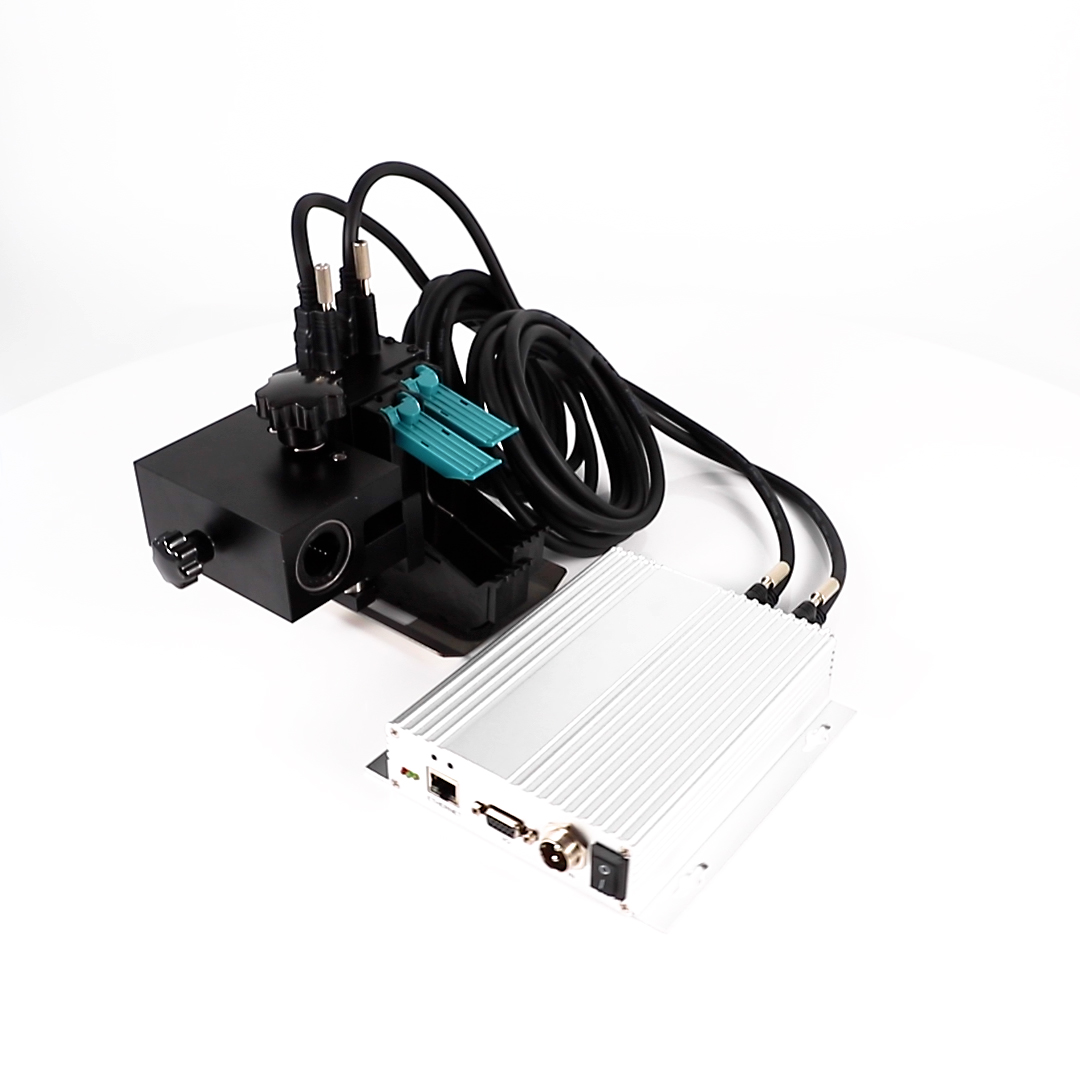
In Shenzhen’s hardware labs, engineers have rethought the inkjet printhead from the nozzle plate up. Instead of the conventional single-row layout, they use a staggered multi-row architecture that lets each pass deposit more ink without raising droplet volume. This keeps print resolution sharp while slashing the number of physical passes a page needs. The result is a shorter path from print command to dry output, and noticeably less ink lost to priming cycles between jobs.
A big source of waste in older designs is the purge-and-wipe routine that happens every time a printhead sits idle for more than a few minutes. Newer Chinese printheads integrate a recirculating ink channel directly behind the nozzle array. Ink keeps moving even when the head is parked, so pigments never settle and nozzles stay open. On average, the automatic maintenance events drop by over sixty percent, which means less ink ends up in the waste pad and more ends up on the page.
Wait times also shrink on the software side. The latest controller boards paired with these printheads use a predictive waveform generator that adjusts firing pulses based on real-time ink viscosity and temperature. Instead of stopping to recalibrate, the printer fine-tunes on the fly. For high-volume label and packaging lines, that translates into fewer halts, faster job changeovers, and a dramatic reduction in the half-printed sheets that used to pile up whenever a nozzle check failed.
A Closer Look at Ink Precision on Fast-Moving Lines
When production speeds climb, even the smallest deviation in ink deposition becomes visible. On fast-moving lines, the window for droplet placement shrinks dramatically, and what looks precise at low throughput often falls apart under acceleration. The challenge isn't just hitting the substrate—it's controlling the exact shape, volume, and spread of each mark before it has a chance to smear or feather.
Engineers tend to focus on nozzle geometry and pressure curves, but the real differentiator is often in the microseconds between ejection and impact. Tiny variations in surface tension or viscosity, magnified by air drag at high line speeds, can shift a dot by half a millimetre or more. That's enough to break fine text, distort barcodes, or blur a logo's edge. Precision here isn't a static property; it's a continuous negotiation between fluid dynamics and motion timing.
Some lines compensate by overdriving the printhead or adding extra drying zones, but those fixes introduce their own trade-offs—higher energy use, more maintenance, or ghosting on lightweight films. The cleaner approach is to treat ink precision as a system-level problem: match the ink's rheology to the substrate's surface energy, then tune the firing algorithm to the line's acceleration profile. When all three align, you get crisp prints even at speeds that would normally turn routine coding into a blurry guess.
When Less Maintenance Translates to More Cartons Per Hour
Every unplanned stop on the line chips away at your hourly carton count. When maintenance shifts from reactive firefighting to a slim, targeted routine, machines spend less time waiting for a technician and more time moving boxes. Simple changes—like switching to self-lubricating bearings or scheduling quick visual checks during shift handoffs—can recover hours of lost throughput each week without adding headcount.
The real leverage often hides in the small, repetitive adjustments operators used to make by hand. Replacing those manual tweaks with calibrated, low-wear components means the line holds its settings longer. One beverage plant documented a 12% rise in cartons per hour after cutting weekly belt tensioning and blade swaps from the schedule, simply because the new parts held tolerance across three shifts.
Smarter maintenance is not about doing more, but about doing less of what does not matter. Teams that map failure patterns and eliminate root causes find that spare parts inventories shrink and changeover windows tighten. The result is a line that hums through breaks and shift changes, pushing out cartons at a pace that reactive upkeep could never sustain.
The Substrate Flexibility That Keeps Packaging Lines Moving
Packaging lines rarely run a single material all day. A film that handles polyethylene in the morning might need to switch to laminated foil or recycled PET after lunch. The real bottleneck isn't the sealing unit or the cutter—it's how quickly the substrate path adapts to different thicknesses, slip coefficients, and tension limits without manual recalibration.
That flexibility shows up in small design choices: floating dancer arms that compensate for uneven roll profiles, interchangeable vacuum belts that grip coated and uncoated surfaces alike, and edge guides that tolerate slight width variations from supplier to supplier. When these elements work together, operators can swap materials in minutes instead of stopping the line for a half-hour setup.
The payoff is less downtime and fewer rejected runs. Instead of locking a line into one narrow material spec, converters gain room to take on shorter runs, experimental substrates, or whatever the next shipment brings—without losing the steady throughput that keeps the whole operation profitable.
How Smaller Ink Drops Are Driving Big Efficiency Wins
For years, printheads pushed out droplets large enough to guarantee solid coverage, but that brute-force approach came with a quiet tax. Every oversized drop meant extra ink landing where it wasn’t needed, and over a full production run, that surplus added up to real money. Switching to smaller, tightly controlled droplets changes the math: the same job now uses measurably less ink without any visible loss in density or sharpness.
Smaller drops also let the printer place ink with far more precision, especially in fine text, thin lines, and edge detail. Instead of flooding a boundary and hoping for the best, the system can put exactly the right amount exactly where it belongs. That precision reduces bleeding and feathering on uncoated stocks, which in turn cuts down on reprints and wasted substrate.
The efficiency gain isn’t limited to consumables either. With less ink sitting on the surface, drying times drop, allowing faster turnaround between passes or between sheets. Press operators can push higher throughput without sacrificing quality, and the reduced liquid load means less energy needed for drying systems. In the end, a change that sounds microscopic on paper delivers a compounding advantage across the entire workflow.
FAQ
Thermal inkjet printers use water-based inks and simple cartridges, which cuts down on cleanup and keeps changeovers quick. On a busy packaging line that means less downtime and fewer operator errors.
Many Chinese manufacturers have pushed print speeds up while keeping resolution high enough for barcodes and batch numbers. Their systems often include auto-velocity matching so the print stays crisp even as the conveyor accelerates.
Generally yes. The hardware has a lower upfront cost than some continuous inkjet units, and because there are no complex solvent lines or pumps, maintenance is simpler. Ink cartridges are more expensive per liter, but lower waste makes it economical for moderate volumes.
It depends on the coating. Standard water-based inks may smear on glossy plastics, but many Chinese suppliers now offer quick-dry or high-adhesion cartridges formulated for common films like BOPP and PET. Testing on your own substrate is still wise.
Modern TIJ controllers can pull data directly from a plant database, so operators aren't typing batch codes by hand. That removes a major source of mislabeling and helps meet traceability requirements without slowing the line.
They often deliver reliable print quality at a price point that undercuts legacy brands. Local support networks and faster spare part delivery have also improved, making them a viable option for export-oriented packaging facilities.
It's mostly cartridge replacement and occasional printhead wiping. Since the printhead is integrated into the cartridge on many models, a clogged nozzle usually means swapping the cartridge rather than calling a technician. That keeps scheduled maintenance to a few minutes per shift.
Expect better ink formulations for a wider range of substrates, faster drying times, and more integration with vision inspection systems. Some Chinese developers are also working on higher-resolution heads for micro-text and 2D codes that remain scannable on curved surfaces.
Conclusion
The quiet rise of thermal inkjet in Chinese packaging lines is less about a single breakthrough and more about several practical refinements stacking up. Printhead designs coming out of China now pair tighter nozzle control with drop volumes small enough to keep codes sharp even as conveyor speeds climb. That matters because a legible lot number or expiry date printed at high velocity used to mean slowing the line or accepting smudges. Instead, today's TIJ cartridges place 5-picoliter dots with enough consistency that fast-moving film, cartons, and labels all get clean marks without a separate drying step. The result is a noticeable jump in throughput, often achieved by retrofitting existing lines rather than replacing them.
What often gets overlooked is how these printheads reduce idle time. Fewer clogged nozzles and a snap-in, snap-out cartridge format mean operators spend minutes, not shifts, on upkeep. That directly translates to more cartons per hour, especially on lines that switch between coated board, shrink film, and kraft paper. The ink itself is formulated to grab onto porous and non-porous substrates alike, so a single printer can handle multiple packaging types without recalibration or priming delays. Add in the fact that smaller ink drops dry almost instantly, and you get less smearing, less rewash, and fewer rejected units. Taken together, these are not dramatic headlines but steady operational wins, which is precisely why Chinese TIJ technology is becoming the default choice for packagers trying to do more with the equipment they already run.
Contact Us
Contact Person: Jacky
Email: [email protected]
Tel/WhatsApp: 086 15000607053
Website: https://www.danmajet.com