
China Water Pipe Cleaning Machine Factory: Advanced Equipment for Clean Pipes
2026-05-31
Clean water starts with clean pipes. Meet AMJET, the China-based factory redefining pipe maintenance with cutting-edge cleaning machines built to tackle the toughest blockages effortlessly. Discover what sets their equipment apart—and why clean pipes matter more than you think.
Revolutionizing Pipe Hygiene: Inside China’s Premier Cleaning Machine Manufacturer
In the sprawling industrial landscape of eastern China, one manufacturer has quietly redefined what it means to keep critical pipeline systems clean. Their approach isn't just about selling equipment—it's about engineering solutions that anticipate the grimiest challenges before they even arise. From food processing plants battling stubborn residue to municipal networks facing decades of scale buildup, this company’s machines have become the invisible backbone of hygiene standards.
Walk through their R&D center and you’ll see prototypes being tested under conditions most factories would consider nightmares: corrosive chemicals, extreme temperatures, and dense sludges that cripple ordinary devices. The engineers here treat pipe hygiene less as a maintenance task and more as a science, blending fluid dynamics with robotic precision to create systems that adapt on the fly. It’s this refusal to accept “good enough” that has earned them loyal clients across three continents.
What truly sets them apart, however, is how they’ve turned a narrow industrial niche into a platform for custom innovation. Rather than pushing a standard catalog, their teams embed with clients, studying the quirks of each pipeline network before proposing a solution. The result is a portfolio of machines that rarely look alike—each one a response to a unique, real-world problem. In an age of mass production, this manufacturer proves that the future of pipe hygiene lies not in uniformity, but in mastering the messy details.
From Factory Floor to Flawless Flow: Crafting High-Tech Solutions for Clean Water Pipes
In the gritty din of the factory floor, where raw materials meet precision engineering, the journey toward immaculate water begins long before the first drop flows through a household tap. Here, polymer blends are meticulously tested, their molecular structures tweaked to resist the relentless assault of chlorine, sediment, and microbial growth. Automated quality checks scan every millimeter of extruded piping, using laser micrometry to catch imperfections invisible to the naked eye. It’s not just about meeting specifications—it’s about anticipating the myriad ways water, over decades, can degrade even the toughest materials. The philosophy is simple: if you want pipes that stay clean, you start with a foundation that refuses to compromise.
That foundation evolves through a symphony of advanced coating technologies, applied in hermetically sealed chambers where airborne contaminants dare not intrude. Plasma-enhanced chemical vapor deposition lays down glass-smooth internal linings that repel biofilm adhesion, while silver-infused nano-layers act as silent sentinels against bacterial colonies. Every pipe exits the line only after a battery of hydrodynamic simulations—water hammer tests, turbulent flow scenarios, and pressure cycling that mimics fifty years of urban supply stress. Technicians interpret the data not as mere pass/fail metrics, but as a story of resilience: does the material remember its shape after a surge? Does the inner surface stay slick when mineral-rich water slows to a trickle? The answers dictate whether a spool earns its place underground.
Yet, for all the laboratory rigor, the true test lies in the subterranean labyrinth where pipes disappear from sight. Monitoring systems embedded at critical junctions send real-time signals to cloud-based analytics platforms, flagging subtle shifts in flow acoustics that precede blockages. Field crews, equipped with augmented reality interfaces, can visualize the hidden infrastructure in real time, overlaying maintenance histories onto the physical landscape. It’s a radical shift from reactive patchwork to predictive guardianship—a recognition that flawless flow isn’t a one-time achievement but a continuous contract between maker and medium. From the first pellet fed into the extruder to the final data point logged decades later, every choice is a stitch in the fabric of public health, woven on the factory floor and tested in the quiet rush of water beneath our feet.
Engineered for Excellence: The Machines That Keep Pipelines Spotless
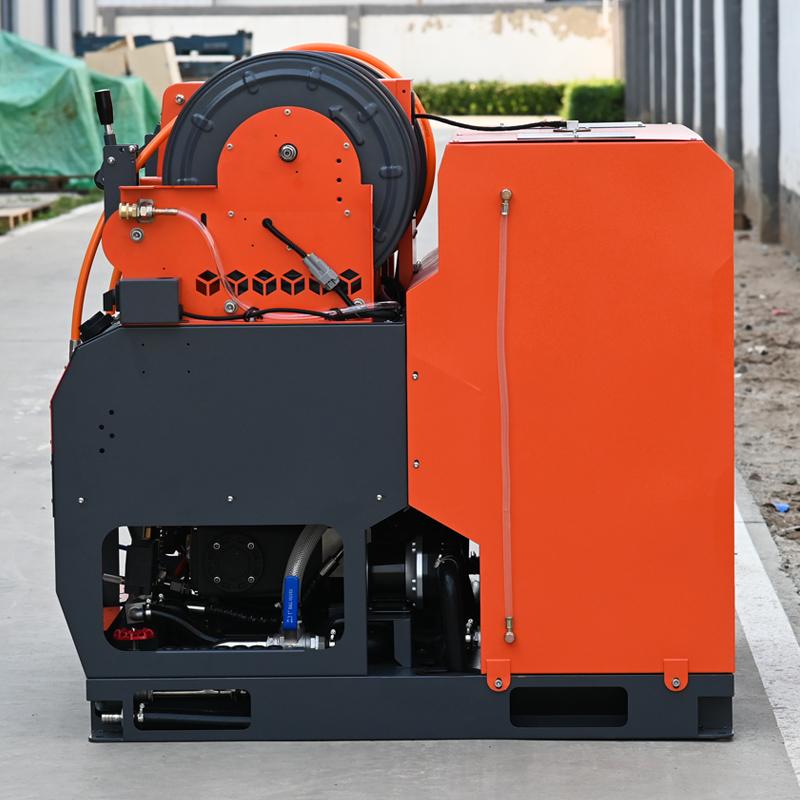
Precision cleaning starts with intelligent design. Each machine is built around the specific demands of pipeline maintenance—tight bends, abrasive residues, and continuous operation cycles. Instead of one-size-fits-all solutions, the engineering team focuses on customizable pressure controls, self-adjusting nozzles, and debris recovery systems that minimize downtime. This attention to detail means pipelines come clean without the collateral wear and tear often caused by less adaptive equipment.
Durability isn’t an afterthought; it’s built into every weld and circuit. The structural frame uses corrosion‑resistant alloys that shrug off chemical exposure and high‑moisture environments. Sealed bearings and shielded electronics keep internal components safe, even when the job demands submersion or dusty, confined spaces. Field operators notice the difference quickly: fewer interruptions for repairs, less need for backup units, and a steady rhythm that keeps the work on schedule.
Beyond raw power, the machines communicate what matters. Onboard diagnostics relay real‑time data about water temperature, pump pressure, and filter saturation, allowing crews to fine‑tune settings without guesswork. Training is straightforward because the controls are laid out logically—no confusing menus or buried functions. That blend of rugged reliability and user‑centric engineering ensures that even the toughest pipeline cleaning tasks feel routine, not risky.
Behind the Scenes: How Chinese Innovation Powers Superior Pipe Cleaning
Deep within the manufacturing hubs of China, researchers are rethinking an age-old challenge with fresh perspectives. They’ve moved past traditional mechanical scrubbing and harsh chemicals, instead harnessing ultrasonic waves, laser ablation, and smart sensor arrays that detect blockages before they become a problem. One standout approach combines high-frequency vibrations with a proprietary fluid dynamics model, loosening stubborn deposits in pipelines without damaging sensitive inner linings. This isn’t just trial and error—it’s a disciplined fusion of materials science, data analytics, and automation, refined through rapid prototyping cycles that turn months of development into weeks.
What makes these solutions truly stand out is how they’re tailored for diverse environments, from serpentine industrial tubing to municipal water mains. Engineers embed self-adapting algorithms into the cleaning heads, allowing them to adjust pressure and velocity in real time based on the residue type—whether it’s wax, scale, or biofilm. The result is a dramatic drop in water and energy usage, which resonates with global sustainability demands. By quietly iterating away from the spotlight, Chinese teams are crafting a new playbook for pipe maintenance, proving that innovation often happens in the unglamorous corners of infrastructure, far from the showroom floor.
Quality Meets Precision: Unveiling the Tech Behind Pristine Pipes
Creating flawless pipes demands more than just material selection—it’s a fusion of advanced monitoring, adaptive control systems, and rigorous inspection protocols. Laser-based measurement tools continuously track wall thickness and diameter deviations down to the micron, feeding real-time adjustments into the extrusion line. This dynamic interplay prevents common defects like eccentricity or surface irregularities before they take shape.
Behind the scenes, proprietary cooling algorithms synchronize thermal gradients with production speed, ensuring uniform crystallization and stress distribution. This method sidesteps the brittleness often introduced by rapid cooling, resulting in pipes that maintain integrity under high pressure and temperature extremes. Every parameter, from melt flow index to vacuum calibration, is calibrated against historical performance data rather than generic benchmarks.
Automated vision systems then scan each millimeter of the finished surface, cross-referencing with digital twins of ideal geometries. Subtle inconsistencies that evade human inspectors trigger immediate containment, while machine learning models refine the line’s predictive thresholds over time. It’s this layered, self-correcting approach that transforms raw polymers into pipeline components with near-zero defect rates—no manual sampling can match that consistency.
Pioneering Clean Water Systems: A Look at Cutting-Edge Manufacturing
In the realm of clean water systems, manufacturing has undergone a quiet revolution. No longer content with simply filtering out visible impurities, modern facilities now employ precision engineering that borders on the microscopic. Techniques such as electrospinning create membranes with nano-scale pores, capable of sieving out viruses and heavy metal ions that traditional methods miss. These materials are not just functional; they are designed for longevity, resisting fouling and chemical degradation in ways that extend operational life cycles by years. It’s a shift from reactive treatment to proactive, materials-led purification.
Beyond the filter itself, the assembly lines tell a story of intelligent integration. Sensors and automation have crept into every stage of production, ensuring consistency down to the micron while slashing waste. Robotic arms handle delicate membrane sheets, laser systems weld components with airtight precision, and real-time quality checks catch defects human eyes might never spot. This isn’t mass production for its own sake—it’s a deliberate move toward customizable, modular designs that can be tailored for remote villages or dense urban centers without retooling entire factories. The result is a flexible manufacturing paradigm that can pivot quickly as new contaminants emerge.
Perhaps most striking is the shift toward circular thinking in how these systems are built. Manufacturers are now sourcing biopolymers and recycled materials, turning agricultural waste into activated carbon blocks or using post-industrial plastics for housing units. Energy recovery systems built into the production lines capture heat and reuse water, cutting the carbon footprint dramatically. This isn’t just green branding—it’s a fundamental redesign that acknowledges clean water and environmental health are inseparable. In the quiet hum of these factories, the next generation of water technology is taking shape, one where innovation means leaving no trace behind.
FAQ
The factory manufactures high-pressure water jetting units, mechanical rodding machines, and vacuum-assisted cleaning systems. There are also specialized models for descaling, drain unblocking, and industrial pipeline maintenance, catering to both light-duty and heavy-duty operations.
The machines use adjustable water pressure up to 500 bar and multi-angle rotating nozzles to reach every inner surface. Some models incorporate real-time camera monitoring to verify cleanliness, while smart sensors prevent pipe damage by automatically adapting to blockages.
Absolutely. The factory offers modular designs where nozzle types, hose lengths, and power settings can be tailored to diameters from 50mm to over 1000mm. Material compatibility covers PVC, cast iron, concrete, and steel pipes, with special coatings to avoid scratching delicate interiors.
These machines are widely used in municipal water supply, petrochemical plants, food processing facilities, and residential building maintenance. They are particularly valued in sectors where hygiene and minimal downtime are critical, such as pharmaceutical piping and brewery line cleaning.
Each machine undergoes a rigorous testing protocol: burst pressure tests on hoses, endurance runs on pumps, and full-system checks under simulated field conditions. Components from trusted suppliers like Interpump and Siemens are used, and final assembly is inspected by certified technicians.
Yes, several models include water recycling systems that filter and reuse water, reducing consumption by up to 80%. Low-noise electric motors and biodegradable hydraulic fluids are also available options to minimize environmental impact.
International customers receive comprehensive support including installation guidance via video call, a two-year warranty on major components, and a spare parts inventory shipped from regional hubs. Additionally, there’s a 24/7 technical hotline and optional on-site training for large orders.
Compared to manual rodding or chemical treatments, these machines reduce labor time by at least 60% and eliminate the risk of chemical residue. They also clear blockages more effectively without damaging pipes, making them a safer and more cost-effective long-term solution.
Conclusion
At the heart of modern pipeline maintenance lies a China-based factory that has redefined pipe hygiene through state-of-the-art machinery. This premier manufacturer merges innovative engineering with rigorous quality control to produce equipment that leaves water pipes flawlessly clean. Every machine is designed from the ground up to tackle stubborn deposits, biofilm, and scale, ensuring flawless flow in municipal, industrial, and residential systems. The factory's approach goes beyond simple cleaning—it's a full-scale revolution in pipe hygiene, driven by a commitment to protecting public health and extending infrastructure lifespan.
Behind the seamless operation is a meticulous manufacturing process that transforms raw materials into high-precision cleaning tools. Advanced CNC machining, automated assembly lines, and strict testing protocols guarantee each unit meets exacting standards. The integration of smart sensors and adaptive pressure controls illustrates how Chinese innovation powers superior cleaning performance. By prioritizing both durability and ease of use, the factory delivers equipment that not only keeps pipelines spotless but also supports sustainable water management. From concept to final calibration, every step reflects a fusion of technical mastery and practical design—cementing the factory's role as a pioneer in clean water system technology.
Contact Us
Contact Person: Mike
Email: [email protected]
Tel/WhatsApp: +86 19545555505
Website: https://www.amjeting.com/