
Choosing the Right Calcium Chloride 94% Powder Manufacturer for Your Industry
2026-11-24
Calcium chloride 94% powder may look like a standard industrial chemical, but the manufacturer behind it can make or break your deicing, dust control, or production schedule. Purity variations, inconsistent particle size, and unreliable shipments are still common pain points for buyers across industries. This guide walks through the factors that separate a dependable supplier from a costly risk—and why many procurement teams now turn to Shouguang Golden Chemical for tighter quality control and steadier supply.
Start With the Purity and Impurity Profile You Can Live With
Most purification projects stall because the target profile gets treated as an afterthought. Settling early on the exact impurity limits and the analytical routine you can tolerate changes how every later decision gets made. A method that looks fast on paper often falls apart when a barely visible shoulder in the chromatogram forces a rework.
It helps to anchor the specification to reality instead of ambition. Pick limits that your current instrument can confirm, not limits borrowed from a literature reference or a regulatory note that does not match your sample matrix. Once the profile is fixed, small adjustments in column temperature, gradient slope, or diluent become easier to judge because the pass/fail line is already visible.
That early clarity also keeps the project from drifting. When a new impurity appears late in development, the existing profile gives you a place to test whether it matters, rather than reopening every earlier assumption. A workable profile is rarely the tightest one available; it is the one your team can defend with data from the first run onward.
Consistency Across Lots Tells You More Than a Single Sample
One clean test result is easy to overrate. A single sample can be pulled from a sweet spot, stored exactly right, or run on a well-calibrated instrument that day. When you look across multiple lots, though, that narrow snapshot stops mattering so much. The pattern of results tells you whether the good number was typical or just convenient.
Repeated lots expose things that isolated testing cannot. Supplier substitutions, seasonal changes in raw materials, minor equipment wear, and operator habits all leave traces in the data. They rarely announce themselves in one report, but they become hard to ignore when the same small shift appears again and again. That kind of sequence carries more weight than a single strong result ever will.
There is also the problem of false confidence. A passing sample can quietly sit next to a wider trend of rising moisture, fading potency, or creeping contamination. If you are only looking at one point, you miss the slope. Consistency across lots gives you that slope, and with it, a much clearer reason to trust or question what you are buying.
Match Packaging and Handling to Your Real-World Workflow
Packaging decisions should start with what actually happens on your floor, not with a stock catalog. Watch how your team moves, stores, opens, and reseals items during a normal shift, and you'll often spot friction points that a one-size-fits-all solution misses. If a workstation processes dozens of small orders each day, for example, individually wrapped pieces may slow things down more than a single tray or bundle that can be split open in seconds.
Handling conditions deserve the same attention, from lifting height and stacking weight to temperature swings and how often someone needs to reach inside. A corrugated box that holds up fine in a dry stockroom can soften within hours in a cold storage area or near a washdown zone. Choose materials based on how they behave during your busiest, least forgiving shifts, not just under controlled test conditions.
When your workflow changes, the packaging should be reassessed too. New equipment, a rearranged line, or a shift in order profiles can make the old box size or cushioning pattern either excessive or inadequate. Instead of sticking with what used to work, review the match between packaging and real handling every quarter, and let damage reports or return reasons point you to the gaps.
Dig Into Sourcing, Capacity, and Delivery Reliability
Most sourcing conversations stay at the surface: a supplier says yes, a price gets agreed, and everyone moves on. That's where problems breed. A factory might have impressive samples but no real plan for raw material access when orders spike. Asking how they actually secure components, which secondary vendors they keep on standby, and what happens when a key input goes missing reveals far more than any certificate. You want the awkward details, not the polished pitch.
Capacity is the gap between what a supplier claims and what their floor can physically handle. A line running at 95% utilization cannot absorb your rush order without breaking something else. Look at shift patterns, equipment age, and how they schedule maintenance. If they can't show you a live production board or explain how they'd free up 20% more output in two weeks, they're probably improvising. Real capacity planning includes buffers, not just theoretical maximums.
Delivery reliability falls apart when nobody owns the handoffs. A truck leaves late because packaging wasn't ready; a port delay becomes a week-long silence. Strong suppliers track milestones and flag deviations before you have to ask. They share carrier performance data and have backup routes for the inevitable snag. The best test is simple: ask what went wrong on their last three shipments and how they fixed it. If the answer is vague or defensive, expect the same treatment on yours.
Look for Technical Support That Extends Past the First Order
A surprising number of suppliers become hard to reach once the invoice is paid. Before committing, ask for a real example of a problem they solved after the sale, not just during the pitch. The best teams can point to a specific client issue, what they changed, and how long it took. That kind of answer tells you more than any support SLA paragraph.
It also helps to test their follow-through early. Send a technical question about integration or operating conditions and see whether they ask for your full system context or just send a generic datasheet. Support that extends past the first order usually looks like a back-and-forth conversation, with the vendor flagging edge cases you hadn't mentioned. If every reply feels like a script, that's a warning sign.
Before you sign, clarify what ongoing help actually includes. Some companies treat firmware notes, compatibility warnings, and quick design reviews as paid consulting, while others see them as part of the relationship. When a technical partner stays curious about your long-term results, you spend less time firefighting and more time improving the product.
Total Cost Hides in Places a Price Quote Won't Show
A quote tends to list what a supplier wants you to compare—unit cost, delivery, maybe a basic warranty. It rarely mentions the cost of keeping the thing alive. For a machine, that might be energy draw, specialized consumables, calibration visits, or software subscriptions that only surface after the first invoice. For a service, it can be the hours your own team spends chasing updates, correcting errors, or redoing work that was assumed to be included.
Some of the heaviest expenses sit in transitions and compatibility. Moving data, training staff, reworking processes to fit a new system, or dealing with downtime during installation can outpace the headline savings before any measurable benefit appears. There are also quieter liabilities: disposal fees at end of life, penalty clauses, price escalation after an introductory period, or support that becomes slower without a premium tier.
A more honest comparison treats the quote as the starting point, not the total. List the resources you will consume over the expected life of the purchase, including time, maintenance, training, and the cost of failure. Then the quote becomes one small piece of a much larger picture.
FAQ
Look closely at the impurity profile rather than the headline number. Magnesium, sodium, iron, and insoluble matter can vary between sources and affect downstream processes. Request batch-level data for these trace elements and ask how often the manufacturer rechecks raw materials, not just finished product.
Ask for a particle size distribution curve and, if possible, a small dissolution test under your own water conditions. Fine material dissolves faster but creates more dust, while coarser granules handle more cleanly but take longer. The right balance depends on your mixing equipment and batch cycle.
A site visit reveals things certificates cannot, such as how raw materials are stored, whether equipment is maintained, and how rejected batches are handled. It also gives you a chance to review the lab setup and talk with the people who actually run the quality checks.
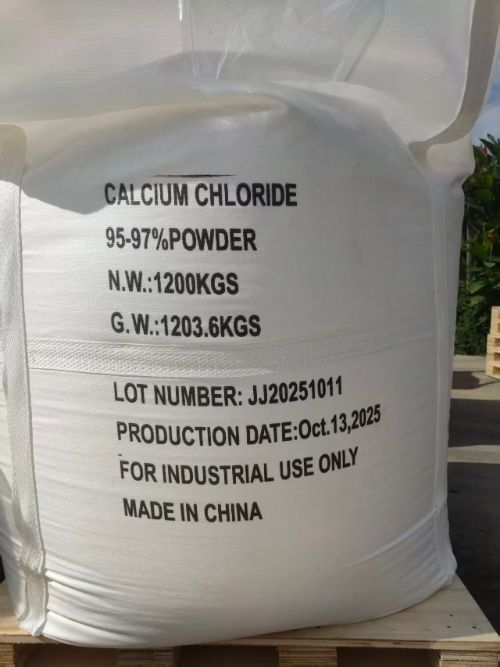
Moisture-proof inner liners, heat-sealed valve bags, and properly closed discharge spouts on bulk bags make a measurable difference. Ask whether pallets are wrapped for weather resistance and whether the manufacturer offers smaller repack options if your crew cannot safely handle full supersacks.
Request information on raw material sourcing, production capacity, and typical lead times during peak demand. A dependable manufacturer will explain how they allocate inventory to contract customers, what their maximum monthly output is, and how they handle transportation disruptions.
Third-party testing adds a layer of accountability, especially for impurity limits and moisture content. In-house lab data is useful for routine control, but an occasional independent check against your own retained samples helps confirm the manufacturer's methods are not drifting.
Not always, but it should trigger deeper questions. Some low quotes come from leaner logistics or nearby raw material sources. Others come from cutting corners on drying, packaging, or segregation of non-conforming lots. Compare the full cost including freight, handling, and the risk of a failed batch.
Beyond answering basic questions, they should help with application-specific issues such as anti-caking treatment, dust control, brine preparation, or storage layouts. A knowledgeable supplier will ask about your equipment and operating conditions before recommending a grade or packaging format.
Conclusion
Finding a supplier for calcium chloride 94% powder starts with what is not in the specification. A 94% assay only tells you the main content; the remaining 6% can include magnesium chloride, sodium chloride, or iron that quietly alters freeze-thaw performance, dust control, or food-grade compatibility. Request a full impurity profile and compare it against your tolerance limits before price enters the conversation. Then look past a single certificate. One clean lot means very little. Ask for retained-sample data or production logs covering several quarters; that history reveals whether the manufacturer can hold particle size, assay, and moisture within a narrow band. Packaging deserves equal weight because calcium chloride picks up moisture quickly. If the bags are flimsy, poorly sealed, or too large for your crew, you will pay for that in clumping, lost material, and slower batching long before a spec sheet flags a problem.
Beyond the material itself, check where the manufacturer gets its feedstock and whether it has more than one production line or finished-goods warehouse. That kind of redundancy shapes delivery reliability more than a promised lead time. Also test their technical response after the first order: a supplier who can help troubleshoot brine concentration, corrosion limits, or storage practices saves more money than a slightly lower invoice. Finally, read the quote with an eye on total cost—freight, minimum order quantities, waste from hardened product, rework, and the labor spent babysitting inconsistent deliveries. Those costs rarely show up in the unit price, but they are usually what make a cheap supply chain expensive.
Contact Us
Contact Person: Tom Cui
Email: [email protected]
Tel/WhatsApp: +8618663670626
Website: https://www.jinjigoldenchem.com