
Contact Plate Freezer Original Manufacturer: Expert Insights and Buying Guide
2026-08-11
In the world of industrial freezing, the contact plate freezer stands out for its efficiency and precision. Whether you're preserving delicate seafood or flash-freezing baked goods, choosing the right original manufacturer is critical. This guide dives into expert insights and practical buying tips to help you make an informed decision. At Worldbase, we combine decades of engineering expertise with a customer-centric approach, ensuring you get a solution that truly fits your needs.
What Sets Original Manufacturers Apart in Plate Freezer Design
Original manufacturers bring an intimate understanding of thermal dynamics that generic suppliers often miss. They don't just weld plates together—they engineer the precise refrigerant path, the spacing, and the material thickness to shave minutes off freeze cycles while keeping energy consumption low. That kind of nuance comes from years of iterative testing in real-world processing plants, not from a catalog of one-size-fits-all components.
Another underrated advantage lies in the support ecosystem. A true OEM designs with the end user's maintenance reality in mind, so you get access to proprietary diagnostic tools, firmware updates that improve defrost logic, and spare parts that actually fit without on-site modification. When a plate flexes under heavy loads or a gasket starts leaking, having the original design team on call means the difference between a quick fix and a week of downtime.
Finally, there's an accountability that copycat suppliers simply don't carry. Original manufacturers stake their reputation on every unit, which translates to better weld integrity, stricter cold chain compliance, and a genuine interest in how their equipment performs five years down the line. It's the quiet confidence of a team that knows every bolt pattern and hydraulic circuit by heart, and that's what keeps the seafood frozen solid when the ambient heat is doing its worst.
Core Engineering Principles Behind Rapid Contact Freezing
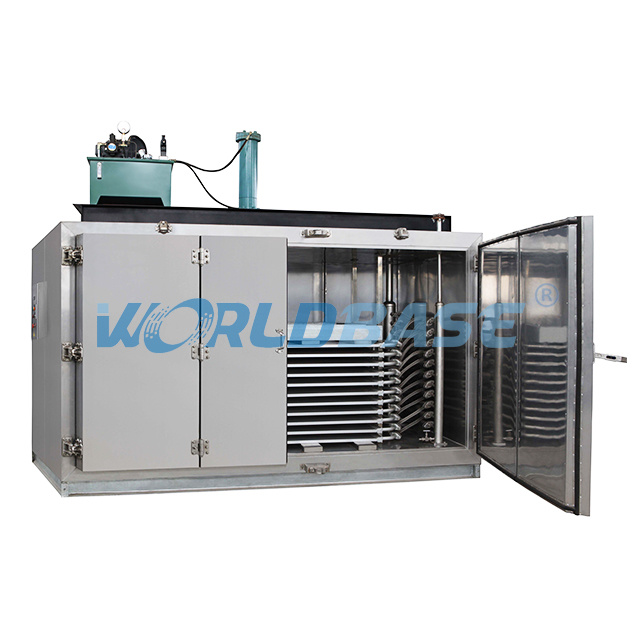
Rapid contact freezing hinges on maximizing the temperature gradient at the product surface while minimizing thermal resistance. The key is to bring a highly conductive, extremely cold plate into uniform, full-surface contact with the item. Plate materials are often aluminum or copper alloys, chosen for their thermal diffusivity. Even a slight gap or frost layer can act as an insulator, so engineering focuses on precise pressure application and sometimes a flexible membrane that conforms to irregular shapes, squeezing out air pockets. The refrigeration loop behind the plate must deliver cooling capacity exactly where it's needed, often using pumped liquid refrigerant directly behind the contact surface to maintain a stable, ultra-low temperature despite the sudden heat load.
Phase-change dynamics are exploited to accelerate the process. Instead of relying solely on sensible cooling, many systems pre-chill the plates well below the target freezing point, so the initial contact triggers immediate nucleation and rapid ice crystal growth. This prevents the formation of large, tissue-damaging crystals. In addition, some designs incorporate a thin film of low-freezing-point brine or alcohol between the plate and product, initially acting as a conformal thermal interface that freezes solid and becomes part of the heat transfer path. The engineering of this interface layer—its thickness, viscosity, and freezing point—is critical and tuned to each product category.
System-level controls play a defining role. Real-time monitoring of surface temperatures and contact pressures allows dynamic adjustment of clamping force and refrigerant flow. The goal is to avoid surface thawing during the cycle while preventing excessive energy waste. In high-throughput environments, cascaded heat exchangers and hot-gas defrost cycles are timed to ensure the plate surface is perfectly clean and dry between batches. This careful orchestration of thermodynamics, materials science, and precision mechanics is what separates true rapid contact freezing from simple plate cooling.
Material and Build Quality: The Long-Term Value Perspective
When you pick up a product that's meant to last, the initial tactile impression often reveals more than any spec sheet ever could. It's not just about heft; it's the subtle absence of give when you press a seam, the way a metal surface feels cool and uniform against your skin, the nearly inaudible whisper of a well‑machined hinge. These qualities speak to a truth that discounts and trend cycles rarely capture: durability is a quiet luxury. A device or tool that feels reassuringly solid in hand tends to migrate with you through life’s chapters, accruing memories rather than replacement receipts. This isn't about avoiding change—it's about choosing companions that don't demand to be swapped out before you're ready.
The real measure of material selection is rarely visible at a glance. It’s in the grain structure of a cast alloy that resists micro‑fractures after years of thermal cycling, or the woven nylon that stiffens slightly with use but never tears. Designers who chase long‑term relationships with their customers tend to obsess over these quiet details, sometimes specifying a slightly more expensive polymer not for its marketing cachet, but because it doesn’t leach plasticisers and turn brittle in daylight. That backlog of care means the object evolves more gracefully than we do—its surface developing a patina instead of peeling, its tolerances remaining snug well past the warranty's expiration. In a culture that normalises disposability, such objects become quiet acts of rebellion, grounding us in a rhythm of use that feels increasingly rare.
There’s also an economic reckoning hidden in the seams. An item priced at double the typical rate but enduring four times as long redistributes cost over a span that reshapes what “expensive” actually means. Yet beyond the numbers, the psychological dividend is even greater: familiarity without frustration. When a zipper never snags, a clasp never loosens, a case never warps enough to expose internals, the relationship shifts from wary user to contented partner. This shift is what turns a mundane tool into a personal heirloom, something you’d loan a friend without a second thought or keep within arm’s reach for decades. It is, ultimately, the material world’s version of trust—earned silently, proven over time, and almost impossible to fake with marketing alone.
Tailored Solutions: Matching Freezer Specs to Production Needs
Every production line has its own rhythm, and off-the-shelf freezing equipment rarely keeps pace. We start by dissecting your throughput targets, product characteristics, and facility layout. Whether you’re handling delicate pastries or dense protein blocks, the freezer’s belt type, airflow pattern, and temperature curve are tuned to preserve texture and minimize dehydration. The goal isn’t just to freeze—it’s to integrate a system that feels custom-built for your floor, your people, and your peak-season surges.
Retention time, fan placement, and coil geometry get dialed in based on what you actually produce, not what a brochure promises. For products prone to clumping or breakage, we engineer gentle handling zones and adjustable vibration settings. Capacities are matched to your real-world shift patterns, so you’re not paying for idle horsepower or bottlenecking during batch changeovers. These aren’t abstract specs; they’re the difference between a freezer that limps along and one that lifts your entire line’s reliability.
What seals the fit is ongoing responsiveness. As your recipes evolve or order profiles shift, the system’s controls allow quick parameter changes without mechanical rework. Remote diagnostics give us a window into performance, often flagging drift before it touches final product quality. It’s a partnership approach—not just delivering a machine, but ensuring the freeze stays locked to your production reality month after month.
Operational Efficiency and Energy Consumption Realities
Behind every factory's polished efficiency metrics lies a messier truth about energy. Many plants boast impressive output-per-kilowatt figures, but these numbers often mask the hidden costs of idling equipment, outdated motors, and compressed air leaks that quietly drain resources around the clock. The reality is that even in well-managed facilities, 20 to 30 percent of energy use can be traced to systems that aren’t actively producing anything—simply maintaining pressure, temperature, or standby readiness for peaks that rarely come. When you walk the floor, the hum of transformers and the hiss of forgotten valves tell a different story than the one on the dashboard.
Dig deeper and you’ll find that energy audits rarely capture the full picture. Standard monitoring tools track main production lines but overlook auxiliary processes like exhaust ventilation, water treatment, or lighting retrofits that were never recommissioned after installation. One plant I visited had a “high-efficiency” HVAC upgrade that actually increased overall consumption because the new system fought constantly with legacy zones that were never rebalanced. These mismatches are common, but they persist because they require cross-departmental effort to diagnose—electrical engineers don’t typically tinker with mechanical systems, and production managers prize uptime over tweaking setpoints. The outcome is a stubborn gap between theoretical efficiency and the numbers on the utility bill.
Then there’s the human factor. Operators may bypass energy-saving protocols to meet rushed orders, night crews leave equipment running because “that’s how it’s always been,” and maintenance teams prioritise breakdowns over preventive checks on insulation or steam traps. Technology alone can’t fix this; it requires a shift in daily habits and accountability that doesn’t show up in a capital expenditure proposal. Real progress comes when energy tracking is granular enough to pinpoint a specific shift or machine, and when the data is shared openly so that a pump drawing twice its rated current becomes not just an engineering issue but a shared embarrassment. Until then, efficiency remains a paper exercise, disconnected from the physical reality of pipes, fans, and the people who keep them spinning.
Navigating Purchase Decisions: Warranties, Support, and Hidden Costs
When you’re about to make a significant purchase, it’s easy to fixate on the price tag and overlook what happens after you hand over your credit card. Warranties and customer support can dramatically shape your satisfaction down the line. A cheaper product with a flimsy warranty or nonexistent help desk might end up costing far more in time and frustration than a pricier alternative that stands firmly behind its gear. Dig into the warranty terms—does it cover accidental damage, or only defects? Is support reachable via a real person, or are you stuck with a chatbot that loops endlessly? These details aren’t just fine print; they’re the safety net you’ll lean on when something goes sideways.
Beyond the upfront cost, hidden charges often lurk in the shadows. Think about mandatory subscriptions for features you assumed were included, pricey accessories that are essential for basic use, or maintenance costs that only surface after a few months. Even something as simple as shipping fees for warranty repairs can blindside you. Before swiping your card, add up the total cost of ownership over a realistic timeframe—say, two or three years. Ask the seller point-blank what isn’t covered and what you’ll need to buy separately. The most honest retailers won’t hesitate to walk you through the potential extras, and that transparency is a good sign you’re making a sound choice.
FAQ
A contact plate freezer is a type of industrial freezing equipment that uses direct contact with cooled metal plates to rapidly freeze products. The plates are typically filled with a refrigerant or brine and are hydraulically pressed against the product, ensuring efficient heat transfer without any air gap. It's ideal for flat or block-shaped items like meat, fish fillets, and ready meals, as it minimizes dehydration and preserves texture.
Going directly to the original manufacturer gives you direct access to engineering expertise, customization, and genuine spare parts. You avoid middleman markups and get more transparent pricing. Plus, manufacturers typically offer better post-sale support because they built the machine and understand every component—no passing the buck if something goes wrong.
A lot of people underestimate their peak production capacity and end up with a freezer that can't keep up during busy times. Others overlook site conditions—like available floor space, ceiling height, or power supply—which can cause major installation headaches. And forgetting to plan for future expansion often leads to costly retrofits later.
Start with your desired output in kg/h and the type and thickness of the product you'll freeze. Thicker items need longer dwell times, so you might need more plates or larger surfaces. It's wise to consult with the manufacturer's technical team—they can run heat transfer calculations and even do sample freezing tests to guarantee the specs match your reality.
Daily: check hydraulic oil levels and listen for unusual noises. Weekly: inspect plate surfaces for damage or buildup that could affect contact. Monthly: verify refrigerant charge and clean the condenser coils. And never ignore the manufacturer's recommended oil and filter change intervals—cutting corners there will shorten the compressor life drastically.
For flat, uniform products, contact freezers typically run a lower energy bill because they don't rely on moving large volumes of cold air. They also cause less product weight loss, which can save you thousands over time. But if your product line includes irregular shapes or you need very versatile freezing, a blast freezer might be a better fit—it's all about matching the technology to your product portfolio.
Don't just focus on the warranty period in years; examine what's actually covered. Are compressor seals and hydraulic parts included? What's the typical response time for a technician visit? Get clarity on whether remote troubleshooting is free and if software updates are provided. A good manufacturer will also offer training for your operators right after installation to prevent mishaps.
Conclusion
When sourcing a contact plate freezer, partnering directly with an original manufacturer fundamentally changes the design conversation. True OEMs bring decades of iterative engineering that generic suppliers simply cannot replicate. Their in-house teams fine-tune plate geometry, refrigerant flow paths, and hydraulic clamping systems to achieve the kind of uniform, ultra-fast freezing that preserves product texture and minimizes drip loss. This expertise stems from a deep understanding of thermodynamics and material behavior under extreme thermal cycling, ensuring that every component—from the laser-welded plates to the insulation panel seals—contributes to consistent core-to-surface temperature drop. Moreover, original manufacturers don’t just sell equipment; they evaluate your specific production line, weighing factors like product thickness, packaging type, and desired throughput to propose a configuration that genuinely fits. This consultative approach eliminates the costly guesswork of adapting a standard model and instead delivers a system that integrates seamlessly with your existing workflow.
Long-term ownership tells the real story. The build quality inherent in OEM machines—often featuring thicker marine-grade aluminum plates, corrosion-resistant stainless steel frameworks, and robust hydraulic rams—directly translates to reduced deformation, fewer leaks, and decades of dependable service. Claims of energy efficiency can be misleading; genuine manufacturers provide transparent data on specific energy consumption per kilogram of frozen product, validating their designs with real-world duty cycles rather than ideal laboratory conditions. By controlling the entire manufacturing chain, they also offer meaningful customizations without the markup of a middleman, and their service agreements typically include field-verifiable performance guarantees. When comparing proposals, shifting focus from upfront price to total lifecycle cost reveals the hidden value: fewer unplanned downtime events, longer intervals between rebuilds, and a partner who takes full ownership of both equipment and technical support, not just a warranty that disappears when a third-party reseller changes brands.
Contact Us
Contact Person: Mr Yang
Email: [email protected]
Tel/WhatsApp: +8613809083091
Website: https://en.worldbase.cn