
Continuous Still Factory: A Look Inside the Future of Distillation
2026-06-11
The hum of machinery echoes through the gleaming halls of the continuous still factory, where tradition meets cutting-edge innovation. In the world of distillation, the shift from batch to continuous processes is more than just a trend—it's a revolution that promises unmatched efficiency and consistency. At the forefront of this transformation is DYE, a name synonymous with advanced continuous distillation systems. As we step inside this futuristic facility, we explore how DYE is redefining what's possible, from sustainable production to unparalleled flavor precision. Join us on a journey into the heart of modern distilling, where every drop tells a story of ingenuity.
The Dawn of Perpetual Distillation
Long before copper coils and steam gauges became ubiquitous, the concept of distillation was a batch affair—laborious, intermittent, and often wasteful. The dawn of perpetual distillation didn't happen overnight; it evolved through a series of quiet refinements, where alchemists and early industrialists nudged the process toward continuity. What began as a trickle of innovation slowly carved pathways for systems that could run ceaselessly, redefining how we extract purity from complexity.
Perpetual distillation operates on a simple yet profound principle: feed, strip, and collect in an unbroken loop. Unlike traditional methods that require halting to reload and reset, this approach turns separation into a flowing conversation between heat, material, and time. The energy savings alone are substantial, but the real shift lies in how it changes production rhythms—factories no longer march to the stop-start beat of old kettles, but to a steady, almost meditative hum of ongoing refinement.
Today, this methodology threads through countless industries, from fuel processing to pharmaceuticals, often unnoticed by those who rely on its outputs. Its evolution mirrors our broader move toward systems that sustain themselves, minimizing human intervention while maximizing output. The dawn was less a single event and more a gradual awakening—one that continues to shape how we think about efficiency and resourcefulness in a world that rarely pauses.
Beyond Batch: How Continuous Stills Are Redefining Production
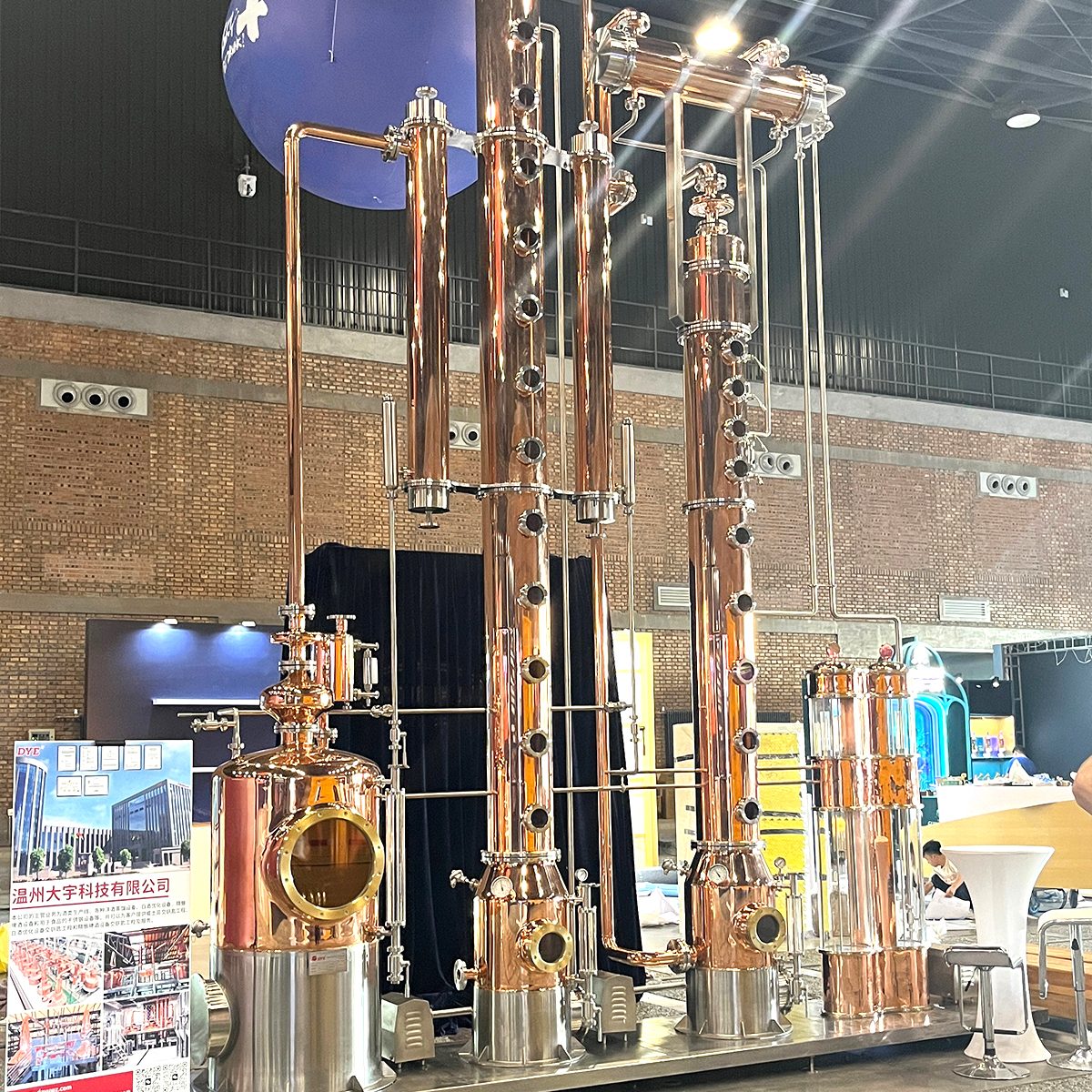
Traditional batch distillation has long been the backbone of spirit production, but it comes with inherent limitations—downtime between runs, inconsistent flavor profiles across batches, and significant energy waste during heat-up and cool-down cycles. Continuous stills flip this model on its head by maintaining a steady-state operation, where fermented wash flows in one end and spirit flows out the other without interruption. This shift isn’t just about throughput; it’s about achieving a level of precision and repeatability that batch systems struggle to match, all while slashing energy consumption and labor costs.
The real magic of continuous distillation lies in its ability to fine-tune separations in real time. By controlling temperature gradients and reflux ratios across a tall column, distillers can dial in exact congener profiles, pulling off heads, hearts, and tails with surgical accuracy. This doesn’t just make production more efficient—it opens up new creative possibilities. For instance, a distillery can consistently produce a lighter, cleaner spirit for vodka or a richly textured rum with specific ester concentrations, all from the same base material, simply by adjusting operational parameters on the fly.
Beyond efficiency and control, continuous stills are quietly reshaping the economics of craft distilling. Smaller producers who once couldn’t justify the footprint or capital cost of multiple pot stills can now access scalable, modular continuous systems that grow with demand. Waste heat recovery and integrated distillation-dehydration setups further reduce the environmental footprint, making it a practical choice for a new generation of distillers who see sustainability not as a buzzword but as a baseline requirement. The technology isn’t just an upgrade—it’s a fundamental rethinking of what a distillery can be.
Precision Engineering in the Spirit of Automation
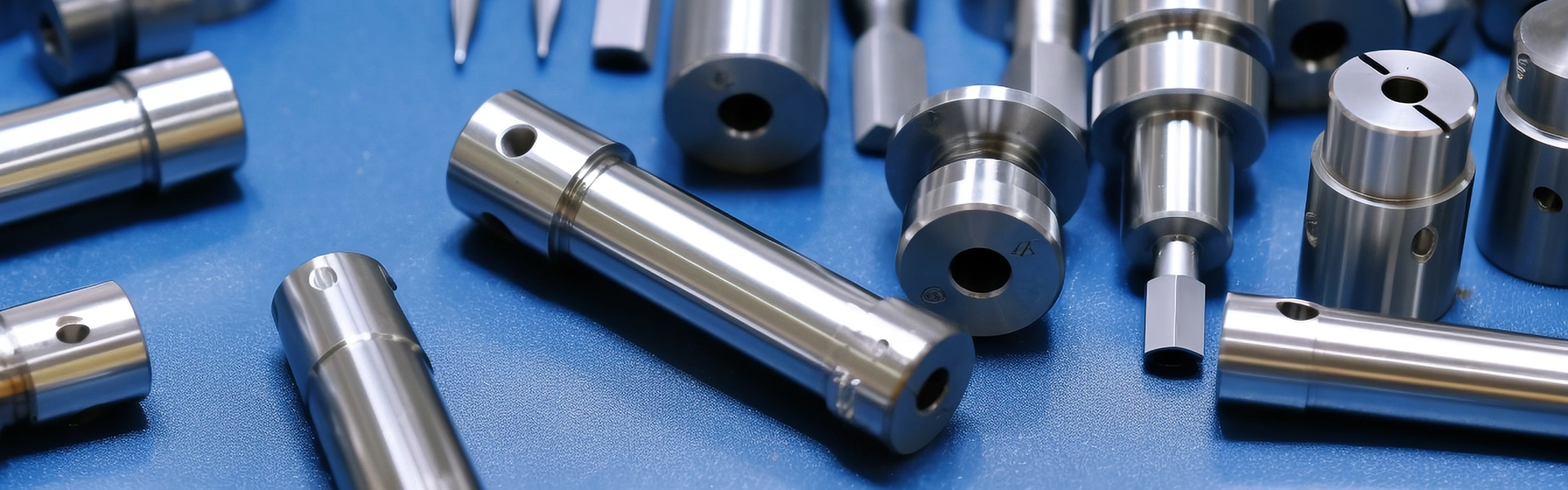
Automation transforms precision engineering from a careful craft into a self-correcting dialogue between machine and design. Every micron matters when automated systems constantly measure, adjust, and refine processes without fatigue or ego. The spirit here isn't just about replacing hands—it's about embedding relentless exactitude into the rhythm of production, where real-time feedback loops make perfection a repeating pattern rather than a lucky strike.
In this world, the engineer's role shifts from operator to architect of trust. They design the rules, but the machines execute with a consistency that human hands can only envy. The beauty lies in how sensors and actuators negotiate thermal drift, tool wear, and material variance autonomously, preserving geometry to fractions of a hair's breadth. It's engineering that never blinks, never forgets a tolerance, and continuously learns from its own output.
The real magic happens when this automated rigor becomes almost invisible—when parts flow out with surfaces so true they seem inevitable. This isn't cold technology; it's a dedication to integrity expressed through motion. Each component carries the history of its making, a story of quiet discipline where every pass of a cutting edge or burst of a laser was a deliberate act, proof that precision isn't a goal you reach but a standard you sustain.
Sustainable Spirits: Cutting Waste with Continuous Flow
In traditional batch distillation, waste isn’t just a byproduct—it’s baked into the process. Every cycle leaves behind leftover heat, half-used solvents, and rinse water that gets poured down the drain. What’s worse, the stop-and-start rhythm often forces producers to toss out the “heads” and “tails” of each run because they lack the control to recycle them safely. Continuous flow flips this script entirely. By keeping the feed moving in a steady, closed loop, distilleries can reclaim spent grain water, recover solvents like ethanol from thin stillage, and redirect process heat back into upcoming cycles. The result isn’t just a tidier operation—it’s a fundamental shift from linear use to circular thinking, where almost nothing leaves the system unused.
There’s a quiet elegance in watching a continuous column work: raw mash enters, clean spirit exits, and in between, a network of heat exchangers and side draws pulls off fusel oils, water, and other impurities at precisely the right temperature and pressure. Because the separation is happening all the time, operators can dial in cuts with surgical accuracy, pulling out only what’s needed and sending the rest back upstream. One mid-sized gin distillery in Scotland cut its water usage by nearly half after switching, simply by capturing vapor condensate for the next batch of steeping botanicals. It’s not magic; it’s just letting the streams talk to each other instead of isolating every run like an island.
Of course, the real win shows up in the warehouse. When you’re not tossing out eight percent of every batch as unusable waste alcohol, your grain bill stretches further, your energy footprint shrinks, and you stop paying to treat and dispose of material that could have been product. Craft distillers, in particular, are finding that smaller continuous rigs let them experiment with heirloom grains without the guilt of heavy waste streams. A rye revivalist in Kentucky told me they now ferment with a closed-loop water system that recycles nutrients back into the mash, making each ton of grain go 15% further. That’s the kind of efficiency that doesn’t just cut costs—it rewrites what “sustainable” means in the spirits world.
Inside the Brain of a Smart Distillery
Walk into a modern distillery and you might expect the scent of oak and barley, but the real engine hums with data. Every vat, every coil, every drop of spirit is monitored by sensors that feed into a central nervous system of algorithms. It’s not about replacing the distiller’s intuition—it’s about sharpening it. The system tracks temperature fluctuations, fermentation progress, and even the subtle chemical shifts that veteran distillers once judged by taste and smell alone. This quiet, constant stream of information allows the team to make adjustments before a batch drifts off course, marrying old-world craftsmanship with real-time precision.
What sets a truly intelligent setup apart is its ability to learn. Over seasons, the system builds a memory of what worked and what didn’t, recognizing patterns that human operators might miss. If a particular barley harvest ferments faster, or a change in humidity alters angel’s share, the system flags it. It doesn’t issue commands—it offers whispers, nudging the team toward consistency without stifling creativity. This digital brain doesn’t tire or forget, yet it stays humble enough to ask for human confirmation when the unexpected happens, blending machine logic with the art of the possible.
The result is a distillery that feels less like a factory and more like a living organism. Decisions aren’t made in isolation; they ripple through a network that connects the stillhouse to the warehouse, the lab to the tasting room. When a visitor samples a new release, they’re tasting the outcome of a dialogue between roots and wires. It’s a place where tradition isn’t erased but amplified, and every bottle carries the signature not just of a place, but of a mind that never stops paying attention.
The Flavor Alchemy of Constant Creation
There’s a quiet magic in the kitchen that has little to do with recipes and much to do with instinct. It’s the reason a forgotten jar of smoked paprika can transform a simple stew into something that hums with memory, or why the reckless addition of citrus zest to a rich dessert can feel like a discovery rather than a mistake. This is the alchemy of flavor in a state of constant creation—never static, always a conversation between what you know and what you haven’t tried yet.
In this space, ingredients speak in metaphors. A pinch of cumin might carry the weight of a childhood market; a drizzle of honey can soften the edge of a bitter green, turning confrontation into harmony. The act of cooking becomes less about following a map and more about navigating by taste, intuition, and a willingness to let accidents become signatures. Each meal is a draft, never final, because there’s always another version waiting in the wings—one that might swap sage for thyme, or dare to fold miso into brown butter.
What makes this process truly alchemical is that it mirrors a larger creative rhythm. The cook evolves alongside their pantry, learning that contrast—salt against sweet, crunch against silk—is a form of storytelling. A dish born from leftovers on a Tuesday can eclipse anything meticulously planned, simply because it allowed spontaneity to lead. In the end, the real ingredient is curiosity, endlessly transforming the familiar into something that tastes like it was invented just for this moment.
FAQ
A continuous still works nonstop, feeding in fermented wash while drawing off spirit at the same time. Pot stills, on the other hand, process in batches — fill, heat, empty, repeat. The continuous setup uses tall columns with plates that separate alcohol more efficiently, giving you a steady stream of high-proof output. It's not just about speed; the separation is far more precise, letting distillers pull off exactly the compounds they want.
It's mostly about energy savings, consistency, and scale. A continuous plant uses far less steam and cooling water per liter of alcohol because it doesn't keep reheating and cooling down. You also get a product that's rock-steady from hour to hour, which is a big deal if you're blending or need to hit a tight spec. Plus, with craft producers watching their carbon footprint, the efficiency gains are hard to ignore.
That's the fear, but it's not that simple. You can absolutely make flavorful spirits on a continuous still — think of how many rums and whiskies are column-distilled. The trick is in the cut points and the number of plates. If you strip out too much, yes, you end up with neutral alcohol. But dial it back and you can capture a lot of character. Some distilleries even pair continuous and pot stills to get the best of both.
In theory, yes. Many giant plants run for months between cleanings. But in practice, you need to manage fouling, yeast buildup, and routine maintenance. Modern designs include clean-in-place systems and smart monitoring that let you go weeks without stopping. The real challenge is feedstock logistics — keeping the wash supply steady — but if you've got that, the still itself can chug along indefinitely.
We're already seeing smaller, modular continuous stills hitting the market, which puts the tech within reach of craft distillers. There's a push toward fully automated, sensor-driven control where you can tweak flavor profiles on the fly. Sustainability is huge too — think closed-loop water systems and heat recovery. The line between batch and continuous is blurring, and I wouldn't be surprised if hybrid setups become the norm.
Not anymore. Traditional column stills were massive, but now you can find compact continuous units sized for microdistilleries. They're not cheap, but they're becoming more affordable. The real barrier used to be the skill to run them — continuous distillation demands a different mindset than pot distilling. But with better training and simpler interfaces, a small team can pull it off.
That it's just about churning out neutral grain spirit with zero character. Honestly, that's outdated. A well-run continuous still can produce a spirit with distinct notes — it's all in the operation. Another one is that it's fully automatic and you can walk away. Something always needs attention, from condenser temps to pressure swings. It's a constant balancing act, just at a steady flow.
Conclusion
Continuous still factories are reshaping distillation, trading the old pulse of batch runs for an uninterrupted symphony of raw spirit. Inside these plants, fermentation never idles; wash flows steadily into towering columns where precision sensors and automated valves hold temperatures and pressures within razor-thin margins. The result isn't just speed—it's consistency. Where traditional pot stills demand cuts made by a skilled hand, continuous systems lean on data streams and predictive algorithms to separate heads, hearts, and tails with clinical accuracy. Engineers now spend as much time debugging control loops as distillers once spent tasting spirit runs. It’s a world where the boundary between machine and craft blurs, and the term "stillman" may soon need a reboot.
Yet this tech overhaul carries a quiet promise that goes beyond output. By recycling process heat, capturing CO₂, and slashing water use, these factories shrink the environmental footprint of every bottle. Energy that once vented skyward now preheats incoming feedstock. Waste streams become co-products—spent grain to animal feed, residual heat to greenhouses on site. Add in flavor engineering at the molecular level, where inline instrumentation lets producers tweak congener profiles without waiting for a new batch, and you get a new kind of alchemy. It’s sustainable, responsive, and nerdily elegant. For an industry steeped in heritage, the future is a flowing, intelligent blueprint where tradition gets remixed rather than replaced, and the heart of the distillery ticks to a digital clock.
Contact Us
Contact Person: Ada Xu
Email: [email protected]
Tel/WhatsApp: 0577-86806088
Website: https://www.dayuwz.com/