
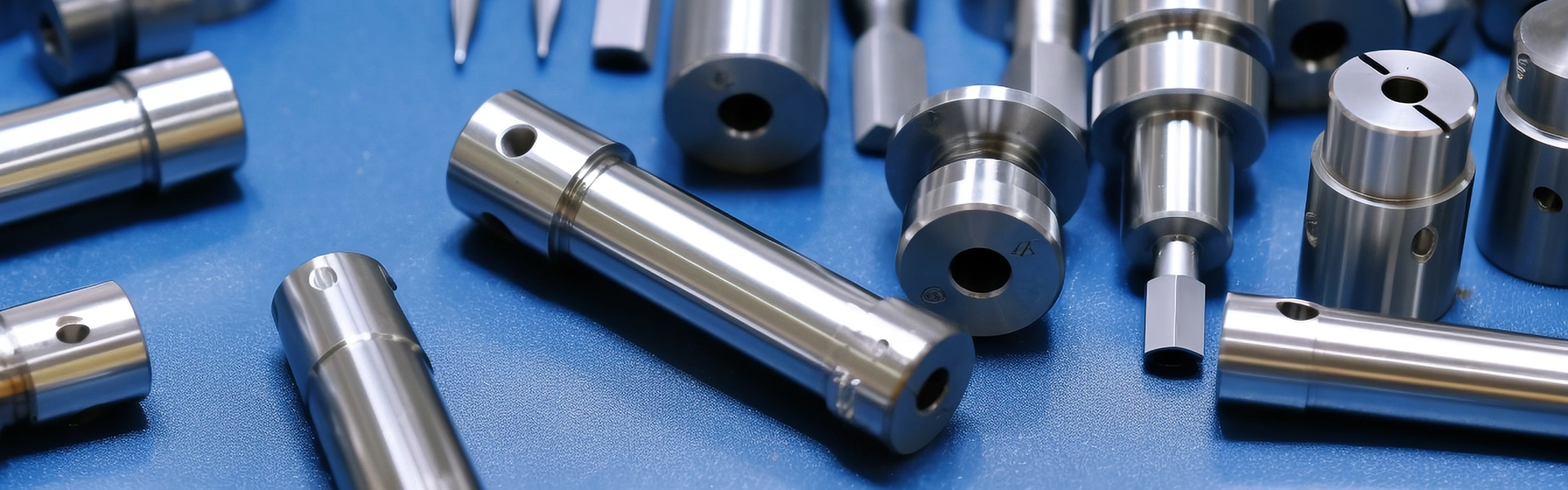
Custom Sliding Head Lathe: Advanced Precision Turning for Complex Components
2026-07-25
When it comes to machining intricate, high-precision components, traditional lathes often fall short. Enter the custom sliding head lathe—a game-changer for complex turning operations. At WINNRUI CNC, we’ve seen how this technology redefines what’s possible, delivering unmatched accuracy and efficiency for even the most demanding parts. Curious about how it can transform your production? Let’s dive in.
Mastering Complexity with Multitasking Machining
Multitasking machining redefines how complex components come to life by integrating turning, milling, drilling, and other processes into a single setup. This consolidation dramatically slashes part handling, alignment errors, and idle time, allowing manufacturers to produce intricate geometries with a level of precision that sequential operations simply cannot match. The result is not just faster throughput, but a fundamental shift in what is achievable on the shop floor, opening doors to designs that were once deemed too cumbersome or costly to attempt.
Beyond the hardware, mastering complexity hinges on intelligent software and process orchestration. Advanced CAM systems now simulate the entire machining sequence, optimizing toolpaths to avoid collisions and balance tool wear across multiple axes. Combined with real-time monitoring and adaptive control, the machine becomes a responsive system that adjusts feeds, speeds, and cutting strategies as the part evolves. This synergy turns chaotic multi-step jobs into fluid, predictable cycles, where the machine itself handles the burden of complexity so engineers can focus on innovation rather than firefighting.
Practical mastery also demands a rethink of shopfloor culture and skill sets. Operators are no longer just button-pushers—they become process architects who interpret data from spindle probes, temperature sensors, and vibration analysis to fine-tune every operation. By pairing deep material knowledge with the versatility of multitasking platforms, teams can conquer challenges like exotic alloy distortion or sub-micron tolerance stacks, consistently delivering parts that blend complexity with reliability. Ultimately, it’s this human-machine collaboration that turns a sophisticated piece of equipment into a true competitive edge.
Precision Beyond Conventional Limits
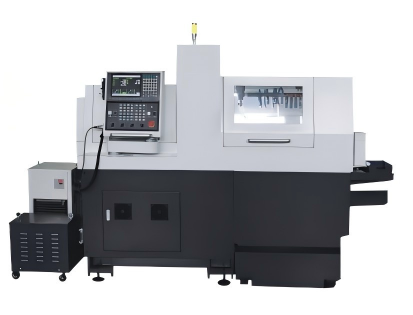
For decades, manufacturing tolerances were comfortably nestled within the boundaries of what mechanical tools and human oversight could achieve. Parts fit together well enough, and products functioned as intended. But then the world asked for more—smaller features, tighter fits, zero room for error. The familiar guardrails of precision engineering suddenly felt like walls closing in, and the old ways of measuring and cutting were no longer enough to push through.
The leap beyond these conventional limits didn't come from simply refining existing methods. It demanded a radical rethinking of how we interact with materials at their most fundamental level. Instead of fighting against thermal drift or vibration, some systems now harness these forces, using real-time compensation that adjusts a cutting path thousands of times per second. Laser interferometry and atomic-scale surface mapping have turned inspection from a post-process checklist into a live, guiding conversation between the machine and the workpiece.
What emerges from this shift is a quiet, almost invisible kind of perfection. Components come off the line with geometries that mirror their digital twins down to the nanometer, no benchmarking rounds or iterative loops needed. The result isn't just a number on a metrology report—it's a new standard where the phrase "good enough" loses its meaning entirely, and the only remaining limit is the creative ambition of those who design the next impossible thing.
How Guide Bush Systems Redefine Stability
Guide bush systems may seem like simple components, but they fundamentally alter how machinery handles motion and load. Unlike rigid bearings that force precise alignment, guide bushes introduce a controlled degree of flexibility. This subtle shift allows for minor misalignments and thermal expansion without sacrificing overall stability. The result is smoother operation and reduced wear over time, especially in applications with reciprocating or oscillating movements.
Traditional systems often rely on heavy-duty guides that prioritize stiffness above all else. While that works in ideal conditions, reality brings vibration, heat, and imperfect mounting surfaces. Guide bush systems absorb these inconsistencies rather than fighting them. They distribute stress more evenly, which prevents localized fatigue and extends the lifespan of connected components. In high-cycle machinery, this approach transforms stability from a static property into a dynamic, adaptive quality.
Manufacturers are rethinking stability itself—not as the absence of movement, but as the ability to return to a desired state consistently. Guide bush systems enable this by maintaining a consistent preload and damping vibrations on the fly. This redefinition matters most in precision automation, where even microscopic deviations can cause failures. By embracing controlled motion rather than eliminating it, guide bushes create a new standard for reliable, long-lasting performance.
Unattended Production: The Autonomy Advantage
Shifting to unattended production isn't just about running machines after hours—it's a fundamental rethinking of how manufacturing operates. When a process is fully autonomous, the entire workflow adapts to sustain itself without constant human oversight. This means equipment capable of self-diagnosis, material handling systems that replenish supplies proactively, and software that makes real-time adjustments based on sensor data. The result is a production line that doesn't just run overnight; it runs intelligently, learning and adapting to keep output consistent and quality high.
The real advantage of this autonomy lies in freeing human talent for higher-value work. When operators aren't tied to monitoring screens or troubleshooting repetitive issues, they shift toward process improvement, creative problem-solving, and innovation. Meanwhile, the factory gains the ability to respond instantly to changing demands without the lag of human decision-making. Production schedules become truly dynamic, scaling up or down based on live orders and predictive analytics, all while maintaining seamless coordination between different stages.
For many manufacturers, the journey toward autonomy also uncovers hidden inefficiencies. Processes that seemed reliable under manual supervision reveal small, accumulating flaws when observed by sensors 24/7. By addressing these, operations become not just automated but remarkably resilient. The outcome is a factory that can run for days without intervention, consistently hitting output targets while continuously refining its own performance.
Material Versatility Without Compromise
The range of materials we work with isn't just a list—it's a deliberate selection that empowers diverse applications without forcing trade-offs. From aerospace-grade alloys to advanced polymers, each material is chosen for its ability to meet strict performance requirements while opening up new design possibilities. This means you can rely on the same source for components that must survive extreme temperatures, resist chemical corrosion, or maintain precise tolerances, all without compromising on quality or lead times.
Achieving true versatility means more than just offering a wide catalog; it requires deep expertise in how materials behave under real-world stresses. Our team doesn't simply process orders—we collaborate on material selection, suggesting alternatives that might better suit a project's unique demands. Whether you need a lightweight composite that minimizes fuel consumption or a conductive alloy for sensitive electronics, we ensure that the chosen material integrates seamlessly into your manufacturing flow, delivering consistent results at any scale.
This approach turns material versatility into a strategic advantage. Instead of juggling multiple suppliers or compromising on specification, you gain access to a streamlined supply chain that maintains rigorous standards across the board. The result is a design process that's limited only by imagination, not by the available materials—and a finished product that performs exactly as intended, no matter the environment it faces.
Real-World Applications Driving Innovation
In healthcare, machine learning models are now routinely deployed to analyze medical images, catching early signs of diseases like cancer that human eyes might miss. These tools aren't just theoretical—they're embedded in hospital workflows, giving radiologists a second set of eyes and dramatically reducing diagnostic delays. The pressure to deliver better patient outcomes is pushing developers to make models more interpretable and robust, directly shaping the next wave of algorithmic research.
The shift toward renewable energy has turned grid management into a high-stakes optimization problem. Algorithms that predict solar and wind output, then balance it against real-time demand, are no longer experimental. Utilities are using them to prevent blackouts and integrate distributed resources like home batteries. This operational necessity is driving innovation in time-series forecasting and reinforcement learning, far removed from academic benchmarks.
Autonomous vehicles have become rolling testbeds for edge AI. Cars need to fuse sensor data and make split-second decisions without cloud connectivity, forcing breakthroughs in model compression and on-device learning. Every mile driven on public roads generates edge cases that expose weaknesses, and the iterative fixes ripple into broader fields like robotics and industrial automation. The road, quite literally, is redefining what's possible.
FAQ
A sliding head lathe uses a moving headstock to feed bar stock through a fixed guide bushing, which supports the material very close to the cutting tool. This design drastically reduces deflection and vibration, allowing you to turn long, slender parts with tight tolerances that a conventional lathe would struggle to hold.
You'll typically find them in medical device manufacturing, aerospace, watchmaking, and automotive sectors—anywhere small, intricate components like bone screws, hydraulic fittings, or connector pins are needed. Their ability to handle complex geometries in a single setup makes them indispensable for high-mix, low-volume production.
Absolutely. We configure everything from the number of axes and tooling options to specialized attachments like thread whirling or polygon turning units. If you share your component drawings, our engineers will propose a layout that eliminates secondary operations and reduces cycle times for your exact application.
Depending on the configuration and material, you can reliably maintain tolerances within +/- 0.005 mm. Factors like temperature control and tooling quality play a role, but the inherent rigidity of the sliding head design gives you a significant advantage for high-precision work.
Yes, these machines excel at both. Quick-change tooling systems and automated bar feeders make short runs efficient, while the same setup can run lights-out for thousands of parts without operator intervention, keeping your cost per piece low across any volume.
We don't just deliver a machine and walk away. Our team provides on-site training, assistance with first-run programs, and ongoing remote diagnostics if you need a quick tune-up. We've also built a library of reference programs to help you ramp up faster.
Chip control can be tricky, especially in deep drilling or grooving operations. We address this with customizable high-pressure coolant delivery right at the cutting edge and chip-breaking cycles built into our post-processors. Tool clearance in tight work envelopes is another factor we optimize during the machine design phase.
Conclusion
Custom sliding head lathes have reshaped what's achievable in the machining of intricate components, merging multitasking prowess with an almost obsessive level of precision. Rather than merely turning, these machines mill, drill, and thread in a single setup, eliminating the inefficiencies of part transfers and secondary operations. The guide bush—a defining feature—anchors the workpiece mere millimeters from the cutting tool, virtually banishing deflection and allowing aggressive cuts on slender shafts, miniature medical parts, or delicate electronic connectors. This stability isn't just a spec-sheet boast; it translates to micron-level tolerances and surface finishes that consistently surpass those of conventional lathes, even when dealing with exotic alloys or free-machining plastics.
Beyond precision, the autonomy of modern sliding head lathes fundamentally changes production economics. With robust bar feeders, tool monitoring, and chip management systems, they thrive in lights-out environments, grinding through complex batches while operators sleep. Material flexibility is another quiet strength: stainless steels, titanium, brass, and even PEEK or PTFE are all handled with equal confidence, often without sacrificing cycle times. Real-world impact surfaces in sectors like orthopedics, where bone screws and spinal implants emerge in a single pass, or in automotive fuel system components that demand zero-defect flows. This isn't just faster turning; it's a reimagining of how complexity is mastered, shifting the conversation from "can we make this?" to "how efficiently can we make it flawless?"
Contact Us
Contact Person: Tim
Email: [email protected]
Tel/WhatsApp: +86 15522553731
Website: https://www.winnrui-cnc.com/