
Dust Suppressant for Road Construction That Delivers Reliable Dust Control
2026-10-31
Dust from road construction can stop work, trigger complaints, and eat away at your bottom line. You need a suppressant that actually holds up—not one that washes out after the first rain or loses grip under traffic. MST tackles that problem head-on with a formula built for long-lasting, reliable dust control. Here’s how it keeps your site cleaner, safer, and moving forward.
Why Traditional Water Sprays Fall Short on Unpaved Haul Roads
A water truck makes a pass over a dry haul road and for a few minutes the dust settles. Then the sun and wind go to work. On most unpaved roads the moisture evaporates or drains away within half an hour to an hour, leaving the surface as loose as before. In hot, arid, or windy conditions the window is even shorter, so operators end up running trucks almost constantly just to keep visible dust down.
Over-wetting creates its own set of problems. Repeated applications turn the surface into mud, which heavy haul trucks then rut and puddle. Those ruts force drivers to slow down or weave, and the standing water softens the base. As the road dries, the fine particles that were suspended in the mud get thrown into the air or washed off to the shoulder, stripping away the very material that helps bind the surface together.
This cycle rarely solves the underlying issue. Water suppresses dust only while it lasts. It does not stabilize the road base or bind loose particles, so the same stretch needs attention again and again. On large mine sites or long private roads, the cost in fuel, labor, and equipment hours climbs quickly, and in regions where water is scarce, relying on it as the primary dust control method becomes operationally fragile.
How Polymer-Based Suppressants Lock Down Fine Particles
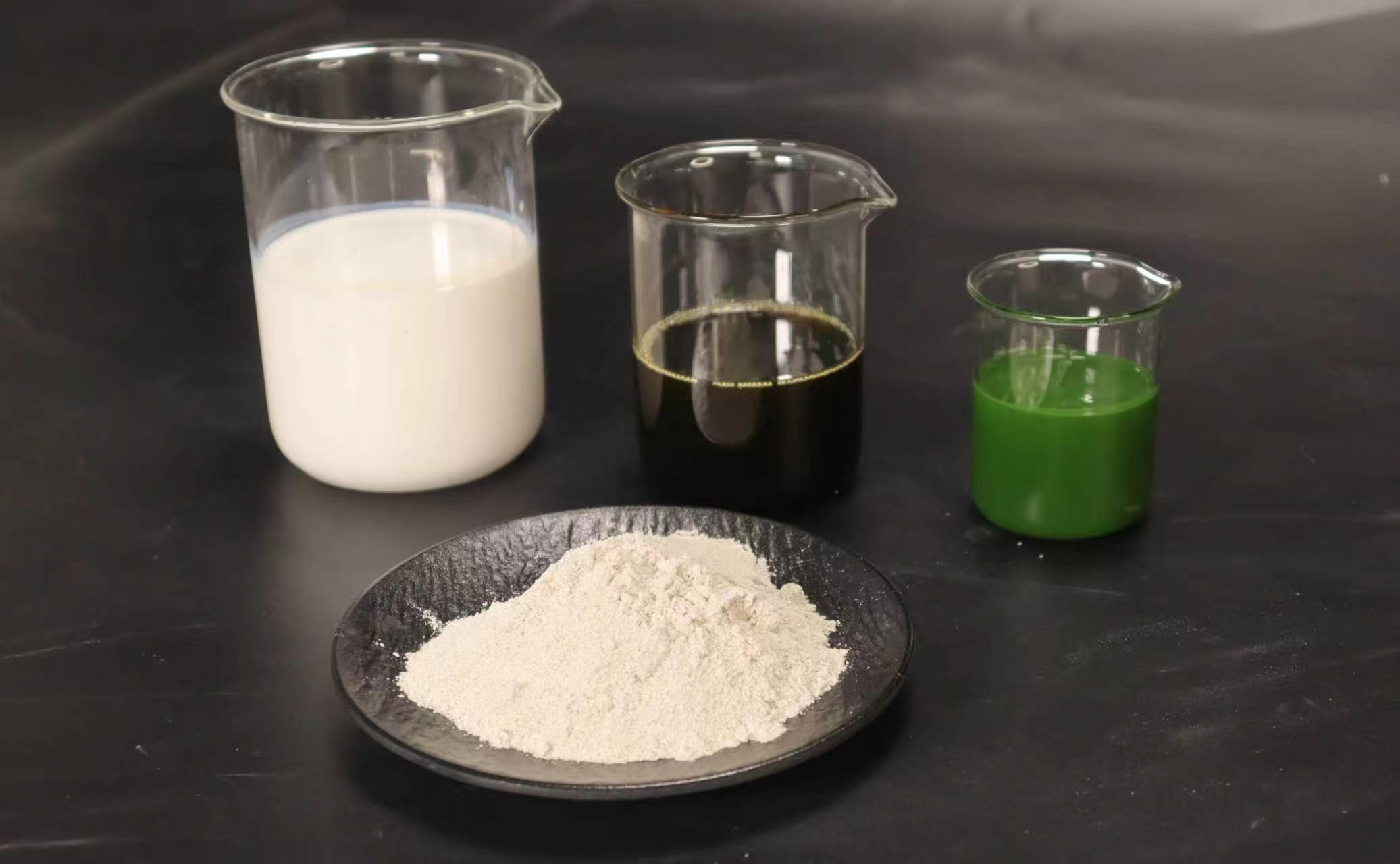
Fine particles below 10 microns are notorious for staying airborne because their low mass lets even slight air currents keep them aloft. Polymer-based suppressants don't just wet the surface—they form long molecular chains that reach out and grab individual particles, pulling them into a tacky network. Once captured, the fine dust is no longer free to become respirable, and the treated surface stays sealed well after plain water would evaporate.
The key is the polymer's ability to bridge gaps between particles. As the suppressant dries, its chains contract and lock the aggregated mass into a crust that resists wind shear and traffic vibrations. Unlike salt-based or surfactant-only treatments that rely on repeated application, polymer binders create a semi-permanent matrix. This crust can flex slightly without cracking, which keeps ultra-fine particles trapped even when the surface is disturbed.
Comparing Application Methods for Long-Lasting Results
The way you apply a product often matters just as much as the product itself. People tend to focus on the formula, but the tool and technique you choose can dramatically shift how the result holds up over weeks or months. What looks even at first can reveal patchiness, streaks, or premature wear once it’s been through a few cycles of use and cleaning.
Take brushes versus rollers, for example. A brush gives you precision in corners and edges, but it can leave fine lines that become more visible as the finish ages. Rollers cover large areas quickly and tend to distribute the product more evenly, yet they may push it too thin in spots if you rush. Spraying puts down a flawless, smooth layer with almost no texture, but it requires more prep and a steady hand to avoid overspray. None of these is automatically superior; each has a context where it shines.
For truly long-lasting results, the best approach is often layered. Use a brush to cut in the edges first, then a roller or sprayer for the main surface, and don't skip the light sanding or priming step that helps everything bond. The more effort you put into the application rhythm—maintaining a wet edge, not overworking the material—the less likely you are to see failures down the line.
What Makes a Dust Suppressant Safe for Nearby Vegetation and Water
The core of a safe dust suppressant lies in its ingredients. Products built around magnesium chloride or calcium chloride, for example, pull moisture from the air to keep road surfaces damp, but their salt content can leach into soil and raise conductivity in nearby streams, stunting root growth and harming aquatic insects. A safer route uses lignin sulfonate, a natural byproduct of wood pulping, which binds fine particles without drawing excess salts. These organic binders break down slowly, acting like a thin glue that holds dust in place rather than altering the soil's chemistry.
Application rate and timing matter just as much as the chemical profile. Spraying a suppressant right before a heavy rain may wash it downhill into a pond, even if the product is benign in a lab setting. To protect vegetation, the suppressant should be applied when the road base is already slightly damp, allowing it to penetrate and form a crust instead of running off. Keeping the spray away from the drip line of trees and using a lower concentration near buffer zones reduces the chance of leaf burn or root zone contamination.
Long-term safety also depends on how the suppressant interacts with local microbial life. Some synthetic polymers form a hard shell that suffocates soil bacteria, weakening the entire plant community over time. In contrast, a plant-based oil or a humic substance can feed the soil food web while still controlling dust. Regular monitoring of nearby water pH and simple bioassays with cress seeds offer a practical way to confirm that a suppressant is truly gentle on the landscape, not just effective on the road.
Cost per Mile When You Stop Reapplying Every Few Hours
The sticker price rarely matches the per-mile cost once reapplication enters the picture. A $20 spray that claims a fresh look for three hours might only survive about 150 miles of mixed driving before it needs another coat. Two reapplications on a 450-mile day push the real expense to $60—triple the shelf price—without accounting for the time spent waiting for it to dry.
Switch to a product designed to last through rain, sun, and road grime for 600 miles, and the equation flips. Even at $45 a bottle, that works out to 7.5 cents per mile. The short-lived option, reapplied every 150 miles, lands at 13.3 cents per mile. Over a month of daily commuting, the gap is enough to matter.
What most drivers notice first isn't the math, though. It's the mental load. When you stop pulling into a parking lot to reapply, you also stop treating the product like a recurring fee. That shift—from constant upkeep to a one-time application—changes how you judge value, and the cost per mile finally reflects what the product actually delivers.
Real-World Performance in High-Traffic Construction Zones
Every project team claims their solutions hold up under pressure, but few actually test them where dump trucks, commuters, and paving crews share the same narrow corridor. In high-traffic construction zones, the real measure isn't a lab spec sheet—it's how well materials and equipment handle constant vibration, sudden stops, and the relentless back-and-forth of delivery vehicles. Field data from recent interstate widening jobs shows that standard temporary barriers lose alignment within days, while heavy-duty precast units with interlocking joints stay within a half-inch tolerance after six weeks of daily impact from errant side mirrors and loose gravel.
The difference often comes down to design details that don't make it into marketing brochures. Take portable rumble strips, for example. The cheap rolled-plastic versions flatten into useless pancakes by the second shift change, forcing crews to replace them nightly. Meanwhile, modular steel-rubber hybrids retain their profile after 50,000 axle passes, cutting setup time by 40% and keeping confused drivers from drifting into work areas. Similarly, temporary traffic signals that rely on radar detection fail when dust clouds from milling operations coat the sensors—inductive loops embedded in a shallow saw-cut trench prove far more reliable, with fewer false triggers and no daily cleaning routine.
Crews who work these zones know that real-world performance also hinges on how fast you can move equipment in and out without stopping traffic. A hydraulic quick-attach system for barrier lifters might seem like a luxury, but when a semi clips a jersey wall and you've got 20 minutes to clear the lane, that tool pays for itself in avoided citations and angry honking. Smart contractors now track failure rates and repair times across full project seasons, not just a two-week trial. Their logs show that investing in puncture-resistant signage, vibration-damped light towers, and high-visibility channelizers with UV-stable coatings reduces unplanned maintenance by at least a third compared to the budget alternatives—and that's the metric that actually matters when the evening rush hits.
FAQ
A dependable product binds fine particles together at the surface rather than just wetting them. It resists evaporation, holds up under truck traffic, and often includes polymers or organic binders that create a thin, stable crust without turning the road into a sticky mess.
Expect anywhere from a few weeks to a couple of months depending on traffic volume, rainfall, and the product's concentration. Well-maintained sections may only need a light refresh after heavy rain or grading.
Yes, many are formulated specifically for high-load construction traffic. They strengthen the road surface by binding aggregates, which reduces raveling and potholes while keeping dust from kicking up.
Look for a biodegradable, non-toxic product that meets local environmental standards. When applied correctly, the suppressant stays bonded to the road material, so runoff risk is minimal and surrounding plants are not harmed.
Use a standard water truck with a spray bar or hose. The surface should be graded and slightly damp before application. A slow, even pass at the recommended dilution gives the best coverage without pooling.
In most cases yes. Watering needs constant refills, labor, and fuel. A suppressant reduces the number of trips and extends the interval between treatments, which cuts overall maintenance costs significantly over a long project.
That is exactly when it shines. Once cured, it forms a wind-resistant layer that keeps fine particles from becoming airborne, so you get reliable control even when conditions are at their worst.
Yes, many products are designed to break down over time or with normal soil activity. They can improve safety and visibility during the construction phase without leaving lasting residue after the road is decommissioned.
Conclusion
Unpaved haul roads have a way of punishing anyone who relies on water alone. The spray knocks down dust for a few minutes, then the surface dries and traffic grinds it back into a cloud. Polymer-based suppressants take a different route: they coat fine particles and bind them into a firm, resilient crust that doesn't lift with every tire pass. Application still matters. A light surface spray can handle lighter traffic, but heavy construction zones often need deeper penetration or a second pass to lock the roadbed down properly. Done right, the treated section stays stable for weeks instead of hours, and that changes how crews plan their day.
The practical side goes further than just keeping dust out of the air. A good suppressant is formulated to be low in toxicity, so runoff near vegetation or drainage channels doesn't create a new problem. That matters when the job is next to wetlands, crops, or a stream. Then there is the cost angle: when you stop sending a water truck out every few hours, the per-mile expense drops noticeably. Fuel, labor, and water hauling add up quickly, and a single treatment can replace dozens of re-sprays. In high-traffic construction zones, this kind of product holds up under continuous hauling, improves sight lines for equipment operators, and reduces downtime from complaints or air-quality stops. Reliable dust control becomes less about constant intervention and more about choosing a suppressant that works with the road surface instead of against it.
Contact Us
Contact Person: Helen
Email: [email protected]
Tel/WhatsApp: 86 18630661160
Website: https://www.roadmilestone.com/