
Glass Filled PTFE Tube Wholesaler: Your Trusted Partner for Premium Tubing
2026-10-20
Looking for a glass filled PTFE tube wholesaler that won't let you down? Whether you're sourcing for chemical processing, electrical insulation, or high-wear mechanical parts, the quality of your tubing can make or break your project. That's where TAIFNO comes in—a partner that understands the difference between 'good enough' and truly premium. But what sets a reliable supplier apart from the rest? And why should glass filled PTFE be your first choice when standard PTFE falls short? Stick with us as we unpack what to look for, what to avoid, and how a trusted name like TAIFNO is quietly redefining the wholesale tubing game.
Glass Filled PTFE vs. Virgin: Where the Differences Show Up
Load-bearing components reveal the split early. Virgin PTFE creeps under sustained pressure, especially above 150°F, while glass-filled grades hold dimension far longer. A valve seat in pure PTFE might deform enough to leak after a few hundred cycles; the same seat with 15% glass fiber still seals after thousands.
Wear behavior is another tell. Run a shaft bushing dry or in abrasive slurry, and virgin PTFE smears or grooves quickly. The glass fibers interrupt that smearing, creating a harder surface that resists scoring. You give up a little chemical inertness, but in pumps and mixers the trade usually pays for itself within months.
Machinists notice it during fabrication. Glass-filled stock cuts cleaner, with less burr and deflection, because the fibers stiffen the matrix. Virgin rod tends to flex away from the tool. If your shop keeps tight tolerances on thin walls or long parts, the filled grade will hold ±0.001 inches where the unfilled variant drifts.
Tolerances and Wall Thickness That Hold Up in the Field
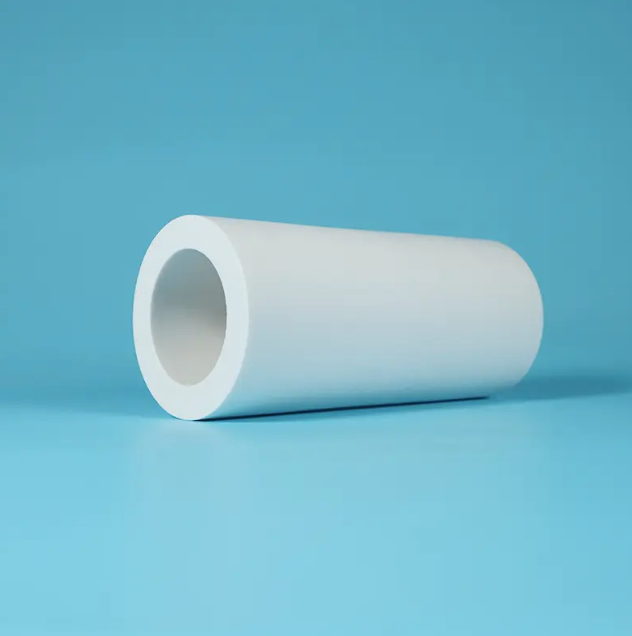
In real-world installations, the difference between a part that fits and one that fights you often comes down to how tolerances are specified. Rather than chasing unrealistic precision across every surface, experienced designers focus on the critical interfaces where clearance or interference actually matters. Our standard tolerances are tuned to match common manufacturing processes, so what you see on the drawing is what you get in your hand—no surprises when components meet on site.
Wall thickness plays a quiet but decisive role in how a part behaves under load, vibration, and thermal cycling. Too thin, and you invite warping or cracking long before the product reaches its expected life. Too thick, and you pay for material and weight without adding real strength. We recommend thickness ranges that balance stiffness, moldability, and cost, and we always flag areas where a sharp transition could create a stress riser.
What holds up in the field is never just about hitting numbers on a spec sheet. It’s about knowing which tolerances can be relaxed and which walls need a little extra meat, based on how the part is actually installed and used. That practical judgment gets built into every design review, so the final component survives the journey from prototype to production without rework or field failures.
What's Actually in Stock for Wholesale Buyers
Forget the glossy catalogs and “available upon request” placeholders. The stock sheet we send out every Monday morning reflects what’s sitting on pallet racks right now: 1,100 units of double-wall kraft mailers, 340 ceramic diffuser sets in matte charcoal, and a rotating surplus of glass spray bottles that moves fast once restaurant supply buyers catch wind. If a SKU drops below 50 units, it disappears from the wholesale portal by noon, no exceptions.
Some categories are intentionally shallow but replenished weekly—think linen-blend tea towels and stoneware ramekins. Others, like unscented soy wax and amber dropper bottles, stay deep because contract manufacturers order them in predictable waves. We don’t pad the list with “coming soon” items; if it’s not physically counted and tagged in the warehouse, it doesn’t make the cut. That means occasional gaps, but it also means no one places a $4,000 order only to find out the supplier actually has 12 pieces left.
Buyers who log in on Wednesday afternoons usually see the freshest adjustments: overstock markdowns, mixed-lot pallets from cancelled retail programs, and small-batch overruns that never made it into the seasonal lookbook. Those lots come and go within hours, so the stock list reads less like a static menu and more like a live tally.
Chemical, Temperature, and Pressure Ratings Without the Guesswork
Most rating charts only tell half the story. A valve may handle 300 psi at room temperature, but pair it with a hot acid stream and that number collapses. Instead of juggling separate chemical compatibility tables, temperature de-rating curves, and pressure class limits, the data should be cross-referenced so you see the actual safe operating window for the exact media and conditions you are running.
This means moving beyond generic maximums. We test combinations that reflect real installations—like chlorinated solvents at elevated temperatures or steam lines with fluctuating pressure spikes—and map the results into clear envelopes. Each rating accounts for interactions: how temperature weakens seals, how certain chemicals accelerate stress cracking under pressure, and how cycling loads reduce long-term endurance.
The payoff is straightforward. You get a rating that holds up in the field, not just on a datasheet. No extrapolating from a room-temperature baseline, no hidden footnotes. Just the pressure and temperature limits that keep your process running safely with the chemicals already in your pipes.
Custom Cuts, Flaring, and End Work Shipped From One Roof
Every order starts with your exact measurements—no rounding up to the nearest stock length. Our saws cut tube, pipe, and bar stock to tolerance bands as tight as ±0.005", and the same work order carries through to flaring and end finishing, so there is no second shop re-reading a faxed spec.
Flaring is done on the same floor, whether you need 37-degree single flares, double flares, or custom angles for hydraulic and instrumentation lines. End work includes deburring, chamfering, grooving, and threading, all checked against the print before the pieces move to packing.
Because cutting, flaring, and end work happen under one roof, your parts ship as a single kit instead of arriving in three staggered deliveries. That means fewer receiving hours on your dock and no mismatched lot numbers when it is time to trace a batch.
Upgrade Signs: When Standard Tubing Isn't Enough Anymore
If you find yourself reaching for a replacement coil more often than your maintenance schedule accounts for, that's a signal. Hairline cracks at the bend points, a tacky surface after exposure, or walls that feel thinner when pinched—these aren't quirks. They're the tubing telling you it's nearing the end of its useful life.
Standard tubing tends to fail quietly under fluctuating pressure. Watch for a slight ballooning near fittings after a high-flow cycle or a permanent set after bending that wasn't there before. Upgrading to reinforced or multi-layer tubing restores the internal diameter under stress, so you're not losing flow capacity when conditions spike.
Chemical attack is often the final straw. Even a faint haze or a surface that turns slick after cleaning cycles means the base resin is degrading. Moving to a fluoropolymer or lined option might feel like overkill until you realize the cost of one contaminated batch outweighs the price difference.
FAQ
Glass fibers give the PTFE much better compressive strength and creep resistance compared to unfilled grades. You get less deformation under load, which makes it a solid choice for seals, valve seats, and thrust washers.
Anything that involves chemicals, high pressure, or friction. We see it a lot in petrochemical plants, hydraulic systems, aerospace components, and even food processing equipment where dimensional stability matters.
Absolutely. We work from your drawings or specs and can hold tolerances down to a few thousandths of an inch. Cutting, chamfering, and special surface finishes are all on the table.
Stock sizes usually ship within a few business days. For custom diameters or wall thicknesses, plan on two to four weeks depending on the quantity and any secondary operations.
We trace each lot back to the raw resin and glass fiber source, then run dimensional checks and mechanical tests before anything leaves. You can request a certificate of conformance with every shipment.
Continuous use from -200°C to +260°C is standard, with short excursions above that. The glass filler doesn’t lower the thermal rating much, but it does improve heat deflection under load.
Yes, sample lengths are available for evaluation. We typically ship small quantities free of charge, though you may need to cover express freight if your timing is tight.
Keep them in a clean, dry area away from sharp edges and direct sunlight. PTFE doesn’t absorb moisture, but the glass filler can make the surface slightly more sensitive to scratches, so avoid stacking heavy items on top.
Conclusion
When standard PTFE tubing falls short in high-load or abrasive environments, glass-filled versions earn their place. The added glass fiber raises compressive strength and reduces dimensional creep compared to virgin PTFE, though it trades some elongation and dielectric performance. A wholesaler that stocks both materials lets you make that call without waiting on special runs. What separates a dependable source from a simple distributor is the range of wall thicknesses and diameter tolerances held in inventory—tight enough to seal properly, consistent enough to avoid rework on the line. Buyers should expect actual cut lengths ready to ship, not just mill-run coils that force you to cut and waste material.
Ratings matter when a tube sees aggressive acids, steam, or cryogenic service. Glass-filled PTFE generally holds its shape better under load, but the chemical resistance stays close to virgin grade for most fluids, with careful attention to pressure derating at elevated temperatures. A supplier that publishes those limits plainly saves you from guesswork. Custom flaring, skiving, or precision end finishing done under one roof also reduces lead time and miscommunication. If you are pushing standard tubing to its creep limit, seeing deformation at fittings, or replacing tubes more often than your maintenance schedule allows, that is the signal to move up to a filled grade—and to choose a wholesaler who can back the transition with actual stock, not just a catalog listing.
Contact Us
Contact Person: Tommy Xiao
Email: [email protected]
Tel/WhatsApp: 8615651509888
Website: https://www.ptfe-factory.com