
Gorras Factory Redefining Quality in Custom Hat Manufacturing
2026-09-13
If you think all custom hat factories are alike, think again. Gorras Factory has been quietly redefining what quality means—from yarn selection to final stitch—and the results are turning heads. At 4ugear, we've followed their rise closely, and it's a shift worth paying attention to.
Stitching That Holds Up When Others Fray
The thread you choose matters more than the stitch itself. While most seams give way under tension, a properly tensioned lockstitch with a high-quality polyester core keeps its grip even when the fabric around it starts to tear. The secret lies in the thread's twist and the needle's scarf depth—when those two align, the loop forms tight against the bobbin case, creating a seam that resists unraveling from either side.
But durability isn't just about the materials. The way you back-tack at the start and end of each run determines whether the thread holds or pops loose. A three-stitch reverse with a slight overlap beats a long reverse every time, because it locks the thread without creating a bulky weak point. And if you're working with stretch fabric, a narrow zigzag with a shortened stitch length lets the seam flex without snapping the thread.
Finally, the maintenance of your machine plays a bigger role than most sewers admit. A slightly burred needle plate or a dull needle can fray the thread as it passes through the fabric, weakening it before the seam even sees stress. Swap needles every eight hours of sewing, and wipe down the tension discs with a soft brush after every project. That way, your stitching stays intact long after other seams have pulled apart.
Custom Means Your Details, Not a Dropdown Menu
The word "custom" gets thrown around a lot, but most of the time it just means picking from a list someone else created. You choose a color, a size, maybe a material—and that's it. That's not customization. That's filtering. True custom work starts with your specific situation: how you move, what you carry, where you work, what annoys you, what you've always wished existed. It's not about giving you more options in a menu; it's about ignoring the menu entirely and building from your reality.
Details matter more than most businesses admit. When you tell someone you need a bag for daily commuting, they might offer you a backpack or a briefcase. But a real custom maker asks: do you carry a laptop plus a lunchbox? Are you left-handed? Do you walk through rain often? Do you hate digging for keys? Those answers shape the pockets, straps, zippers, and even the way the bag sits on your shoulder. A dropdown menu can't ask those questions. Only a conversation can.
Next time you see the word "custom," check what it actually means. If the process starts with a form and a set of predefined choices, you're not getting custom—you're getting configured. Real customization demands your input, your quirks, your unfinished sentences. It treats your details as the blueprint, not as data points to be matched against a catalog. That's the difference between feeling understood and feeling like a menu item.
Fabrics Chosen for the Way They Age
Some fabrics are picked not for how they look on day one, but for the way they fall apart slowly. Raw denim is the obvious example: the indigo wears away at the knees, along the creases behind them, around the pocket where a phone lives, turning a pair of jeans into a record of the person who wore them. Waxed cotton develops a web of lighter creases at the elbows and shoulders; linen softens and fades unevenly after a few summers, losing its stiffness while gaining a kind of sun-bleached ease.
The appeal isn't just nostalgia. It's that the material stops being a uniform surface and starts showing use as a texture. Wool pills in places that rub against coat sleeves, leather darkens where hands have touched it, and even plain cotton twill will pucker at the seams after enough washes. Choosing these fabrics means accepting that they won't stay pristine, and that the flaws are part of the design.
Every Cap Earns Its Gorras Tag
A cap is never just fabric and stitching. It carries a story from the first sketch to the final stitch, and the Gorras tag is the quiet mark of that journey. We don't hand out labels casually; each one has to prove itself through endless wear tests, sweat-soaked afternoons, and last-minute dashes through the rain.
You might not notice the tag at first. Tucked inside the sweatband or stitched under the brim, it waits for the moment someone asks where you got that cap. That's when the tag speaks for itself — not with loud branding, but with the confidence of a cap that earned its place. No shortcuts, no mass-produced sameness.
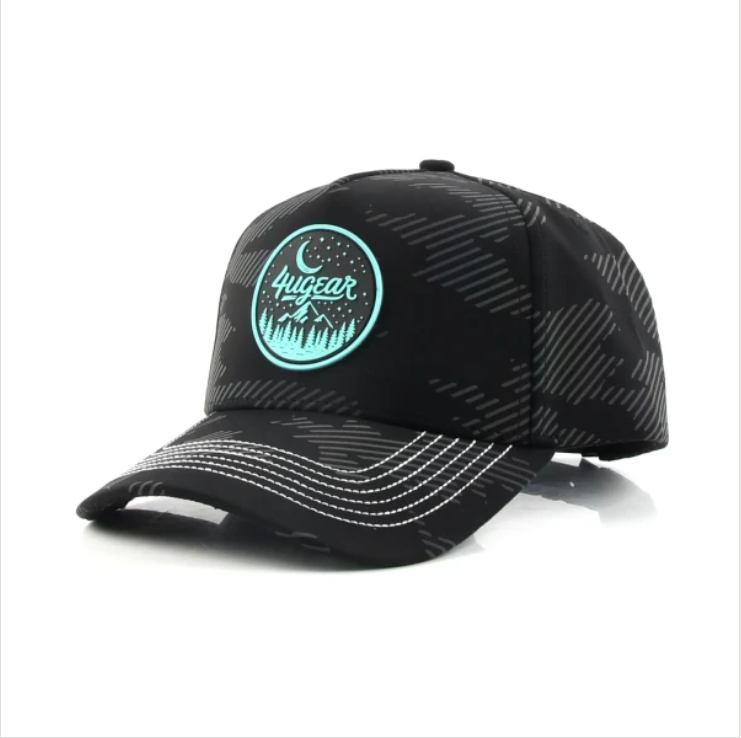
What sets a Gorras-tagged cap apart isn't a gimmick. It's the small decisions: reinforced eyelets that don't fray after a summer, a brim curve that holds its shape after being shoved in a backpack, and thread that outlasts trends. Every cap that carries the tag has been through its own rite of passage. If it didn't make the cut, it never leaves the workshop.
Design Tweaks Without the Back-and-Forth
You know the drill: a tiny spacing adjustment turns into three emails, a shared doc, and a meeting that could've been a message. The whole point of a design tweak is that it should feel light, but the process usually drags it into something heavy.
Here, changes happen right where the design lives. Click, adjust, leave a note, and everyone involved sees it instantly. No need to export versions, no waiting for approval chains. The work stays in one place, and so does the conversation about it.
That means less time chasing feedback and more time actually refining. You stop counting rounds and start seeing progress, because every tweak lands exactly as intended.
Small Orders Still Get the Full Quality Pass
Plenty of suppliers treat smaller orders as an afterthought, rushing them through the line without the same care. That’s not how this works. Every batch, no matter the size, moves through the identical quality checks from start to finish.
The team doesn’t reserve attention for high-volume accounts. Components get inspected, tolerances measured, and final products tested before they leave the floor. A modest order gets the same documentation and the same sign-off as a full container.
That consistency matters when you’re trying to build something reliable. You don’t have to earn better treatment by ordering more. The standard is already set, and it applies to the smallest cart without exceptions.
FAQ
We built our production line around small-batch precision. Instead of pushing bulk orders through generic templates, each hat is cut, sewn, and finished with a focus on stitch density and fabric alignment that most factories overlook.
Yes. Sample orders are treated like full production—same materials, same stitching, same quality checks. You get an exact preview of what your final run will look like.
You can choose from structured or unstructured crowns, flat or curved brims, custom labels, interior taping, and even custom eyelets. We also offer puff embroidery, 3D embroidery, and woven patches.
We keep a controlled dye lot for every order and run a spectrophotometer check on incoming materials. If a shade drifts beyond tolerance, we re-dye before cutting.
After artwork approval, production usually takes 10 to 14 business days for quantities up to 500 units. Larger orders may take longer, but we provide a clear timeline before you pay.
Startups are a big part of our work. We offer lower minimums and design guidance for new labels, so you can test the market without overcommitting inventory.
Each hat passes through three inspection points: after cutting, after sewing, and before packing. We check seam tolerance, brim curvature, and embroidery placement against the approved sample.
Conclusion
At Gorras Factory, the idea of custom hat manufacturing gets stripped down to what actually matters: materials that last, seams that don't give out, and a final check that treats every single cap like it carries the brand's name. The stitching is reinforced in stress zones where cheaper hats start to pull apart after a few months. Fabrics are selected not just for how they look on day one, but for the way they soften, fade, and hold their shape over time. There's no batch approval that skips over flaws quietly. Each finished hat has to pass a hands-on inspection before it earns the Gorras tag, which is why returns and reorders have become rare instead of routine.
On the customization side, the factory rejects the typical dropdown-menu approach. Instead of forcing buyers into a set of pre-approved combinations, Gorras asks for the details that actually define a hat: thread color in the logo, the exact pantone of the fabric, the width of the brim, the stiffness of the front panel. Design tweaks are handled directly with the production team, not through layers of email chains or revised mockups that add weeks to the timeline. Even a single-box order gets the same attention to seam alignment and logo placement as a bulk run, because the factory treats "custom" as a promise about the product, not just a price tier.
Contact Us
Contact Person: Tommy
Email: [email protected]
Tel/WhatsApp: 8613546956008
Website: https://www.4ugearsupply.com/