
High-Quality Concrete Laser Screed Makers: What You Need to Know Before Buying
2026-06-22
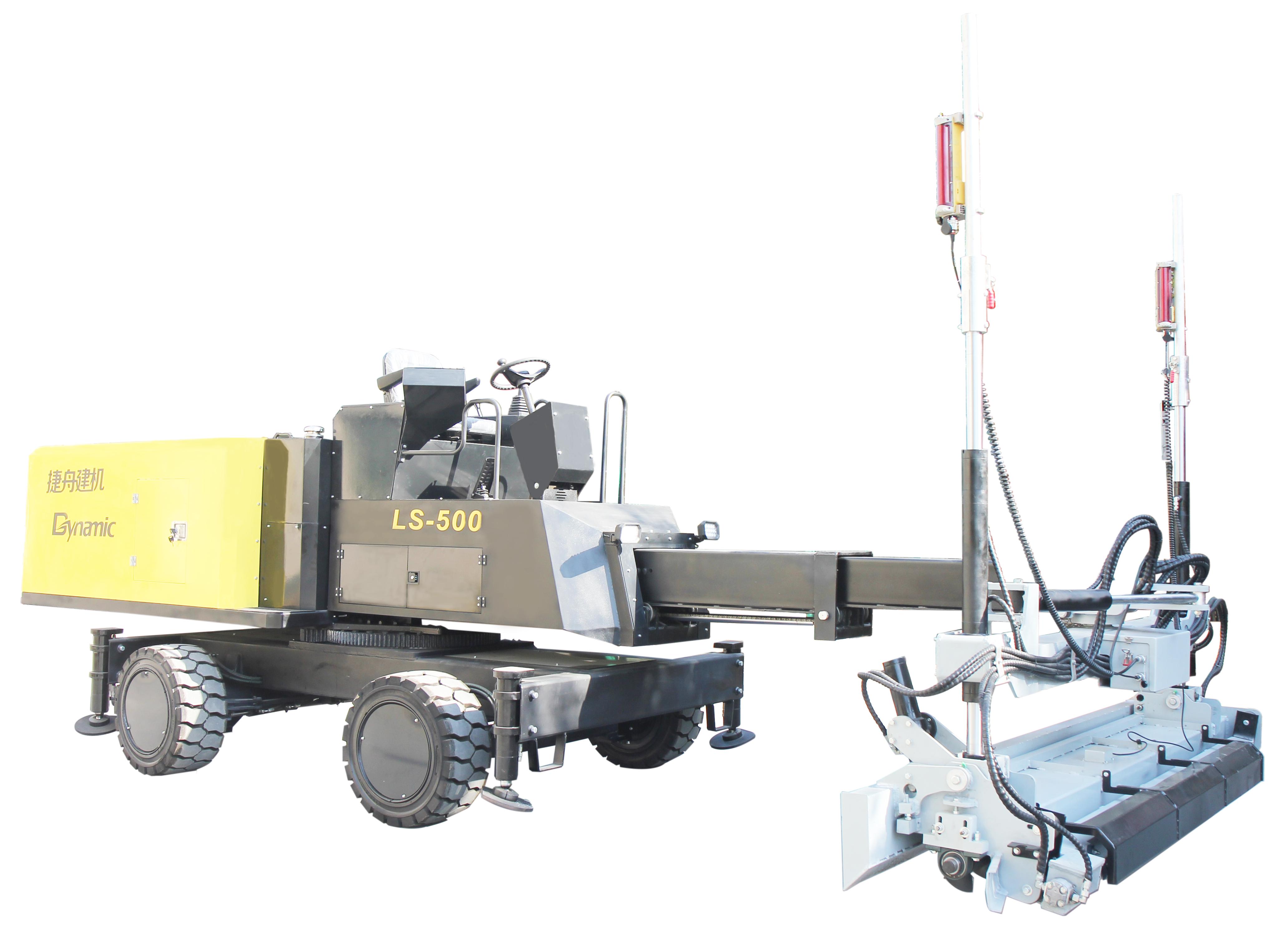
Choosing the right concrete laser screed can make or break your flooring project—uneven surfaces, costly delays, and poor durability are often the price of second-rate equipment. But with so many options flooding the market, how do you separate genuine performance from empty promises? Industry leaders like Dynamic have redefined precision and reliability, yet many buyers still overlook critical factors that determine long-term value. Whether you're tackling high-tolerance industrial floors or large-scale commercial slabs, understanding what sets top-tier machines apart is essential before you commit. Let’s unpack the key considerations that ensure your next investment delivers flawless results, not regrets.
Beyond the Surface: How Precision Defines Top-Tier Laser Screeds
On a construction site, the subtle distinction between a good floor and a great one often goes unnoticed at first glance. It's not about flashy add-ons or exaggerated promises—it's found in the unflinching consistency of the surface, measured in fractions of an inch. Top-tier laser screeds don't just level concrete; they embed a kind of mechanical intuition into the pour, sensing micro-variations in real time and adjusting with hydraulic subtlety that no manual strike-off can match. This precision transforms a utilitarian slab into a long-term asset, reducing the need for subsequent grinding or self-leveling compounds, and quietly raising the standard for everything built above it.
The real differentiator lives in how these machines handle the unexpected. When subgrade conditions shift or slump consistency varies mid-pour, lesser equipment reveals every imperfection, telegraphing waves and ridges that haunt facility managers for years. Elite laser screeds, however, operate with a near-paranoid attention to detail, their receivers and control units choreographing a continuous dance of elevation corrections. The result isn't just flatness that meets a specification—it's a surface that feels effortlessly uniform underfoot, the kind of quiet quality that makes warehouse vehicles glide and robotic systems perform without vibration-induced errors. It's a level of dependability that only comes when precision isn't a feature, but the core identity of the machine.
Who Stands Behind the Machine? Evaluating Manufacturer Reputation and Support
A machine’s specs can dazzle, but the true story lies in who built it. Long-standing manufacturers with a track record of consistent delivery often weave deep expertise into every weld and wire. Rather than relying on glossy brochures, savvy buyers dig into user forums, independent failure rate data, and how companies responded when things went sideways. A marred reputation—repeated complaints about premature wear or dismissive service—should outweigh any upfront cost saving.
Beyond the factory floor, the support ecosystem makes or breaks uptime. Imagine a critical breakdown at 2 a.m.: does the manufacturer offer a real person on the line, or just an automated ticket? Investigate spare parts availability in your region, average technician dispatch time, and whether warranty claims are honored without legal nudging. Some firms treat after-sales as an afterthought; others view it as the backbone of their brand. Your operation’s resilience hinges on that distinction.
Ease of Use Isn't Optional: What Real-World Operators Demand
When you're on a factory floor with production deadlines breathing down your neck, the last thing you need is a machine that demands a manual just to start up. Operators aren't looking for complexity hidden behind a sleek interface—they need controls that feel familiar the moment they touch them. A well-designed system doesn't force users to memorize abstract sequences; it aligns with their existing skills and lets them get the job done without second-guessing every tap or click. This isn't about dumbing things down, but respecting the reality that in high-pressure environments, every extra step is a potential failure point.
Real-world demands rarely match the idealized scenarios dreamed up in boardrooms. Operators work in noise, with gloves on, under time pressure, and often with minimal formal training. They don't care about the clever algorithms running behind the scenes—they care about whether the system recognizes a common error and offers a clear way forward, or whether it buries critical functions in submenus. The tools that earn trust are the ones that stay out of the way, providing immediate, unambiguous feedback. When a machine's operation becomes second nature, it stops being a barrier and starts being an extension of the worker's own capability.
Ease of use isn't a luxury; it's a direct contributor to uptime, safety, and output quality. Confusing interfaces breed hesitation and mistakes, while intuitive ones speed up troubleshooting and reduce the mental load on the operator. The best designs come from spending time on the actual worksite, watching how people naturally interact with equipment, and stripping away anything that doesn't serve that flow. When operators can focus on the task instead of the tool, everyone wins—and that's not just talk, it's what keeps production lines moving and companies competitive.
The Hidden Costs of Ownership: Maintenance and Downtime Factors
Many buyers fixate on the sticker price when evaluating a product, but the true cost of ownership rarely ends there. Over time, maintenance expenses can silently inflate the budget. Even well-built equipment requires regular upkeep—parts wear out, software updates become necessary, and unexpected repairs always seem to happen at the worst possible moment. Those seemingly minor costs have a way of compounding, turning a "great deal" into a financial drain if they aren’t accounted for early on.
Then there’s the issue of downtime, which is often overlooked until it’s too late. When a critical machine or system goes offline, the immediate disruption is just the start. Lost production hours, delayed deliveries, and anxious customers all pile up quickly. In some industries, even an hour of inactivity can erase a month’s worth of careful planning. The ripple effects frequently outlast the breakdown itself, damaging relationships and trust that took years to build.
Smart owners learn to see beyond the showroom price and factor in these silent budget eaters. It’s not about avoiding maintenance or pretending downtime won’t happen—it’s about preparing for them realistically. Building a buffer for ongoing care and having contingency plans for inevitable outages shifts the mindset from reactive scrambling to proactive stewardship. In the end, a slightly higher initial investment often saves far more when hidden costs are brought into the light.
One Size Doesn’t Fit All: Matching Screed to Project Demands
Every construction project brings its own set of challenges, and the screed you choose can make all the difference between a flawless finish and a costly redo. A thin-bonded screed might be perfect for a quick residential renovation, but it would buckle under the heavy traffic of a warehouse floor. The key is to look beyond generic recommendations and really think about what the space will endure—moisture, thermal stress, and load patterns all play a role in determining which screed formulation will stand the test of time.
Contractors often fall into the trap of reusing a favorite screed mix across every job, but that habit can backfire. A pump-applied self-smoothing screed, for instance, might slash labor time on a large retail project, yet it could prove disastrous in an outdoor area subject to freeze-thaw cycles. Understanding the substrate condition, the expected curing window, and even the finishing schedule helps narrow down whether a traditional sand-cement blend or a modified polymer option will deliver results that last.
Matching screed to the job also means considering how it interacts with the chosen floor covering. A tightly scheduled fit-out might demand a fast-drying screed that can receive vinyl or tile within 24 hours, while a heritage restoration could require a lime-based breathable mix to preserve older masonry. Details like these are often overlooked until they cause a delay, but taking the time to align screed properties with the project’s unique demands upfront saves headaches—and budget—down the line.
Future-Proofing Your Investment: Technology Trends You Can’t Ignore
It’s tempting to chase the shiniest new tools, but lasting value often lies in how systems connect rather than in standalone features. Focusing on interoperability means your infrastructure can evolve without expensive overhauls every few years. When components communicate seamlessly, you’re less tied to a single vendor’s roadmap and better positioned to adopt emerging standards without disruption.
Another shift worth watching is the move toward decentralized data ownership. Instead of funneling everything into centralized repositories, more architectures are enabling controlled, transparent sharing. This not only reduces legal and compliance headaches but also builds trust with users who care about how their information is handled. It’s a quiet transformation that turns a regulatory burden into a competitive advantage.
Beneath the hype cycles, we’re seeing a practical blending of physical and digital operations. Sensors, edge computing, and refined automation aren’t replacing human decision-making—they’re making it more informed. Investing in that layer doesn’t require betting on a single breakthrough; it’s about steadily shrinking the gap between observation and action, which consistently pays off across industries.
FAQ
A laser screed eliminates the guesswork from leveling concrete. It uses precise laser guidance to ensure flatness across large slabs, cutting down on manual labor and rework. For warehouses, factories, or any structure where floor evenness impacts functionality, it's a non-negotiable tool that speeds up the pour and improves finish quality significantly.
Look beyond the laser receiver. Pay attention to the screed head width range—wider options cover more ground but need more power. Hydraulic responsiveness matters for real-time adjustments, and onboard diagnostics can save hours of downtime. Also check if the model supports both wet and semi-dry concrete mixes, because job site conditions vary widely.
Don't rely solely on brochures. Ask for third-party test reports or on-site demonstrations. True accuracy—often within ±1.5 mm over 10 meters—should be provable with a profileograph or digital level. Productivity isn't just about square meters per hour; it's about consistent output throughout a full shift without overheating or requiring frequent calibration.
A cheap machine that cracks frames or wears out spindles in six months will cost you far more in delays and replacements. Look at the materials: high-strength steel on stress points, rust-resistant coatings, and sealed bearings. Ask about average lifespan of major components under heavy use. A reputable maker will disclose maintenance intervals openly.
A great manufacturer doesn't vanish after the invoice is paid. They offer rapid parts availability, local or remote technical training, and responsive troubleshooting. Some even provide on-site repair teams within 48 hours. Before buying, call their support line as a test—see how long it takes to reach a human who actually knows the machine.
Many novices fixate on laser technology and ignore the base machine's reliability, or they underestimate transportation costs for a heavy screed. Others buy a model that's too specialized, limiting future job types. To avoid this, talk to multiple operators who use the machine daily and rent a unit before committing—real-world feedback beats any spec sheet.
A used machine can work if it has a verified service history and low hours on critical wear parts. However, outdated electronics or a poorly maintained hydraulic system can turn into a bottomless expense. If you go this route, bring an independent technician to inspect it, and make sure replacement parts are still manufactured for that vintage.
Conclusion
Before investing in a concrete laser screed, look beyond glossy brochures and focus on what truly separates high-quality makers from the rest. Precision is non-negotiable: the best machines hold millimeter-level tolerances across large pours, thanks to robust laser receivers and responsive hydraulic controls that ensure a flawless flatness profile from edge to edge. Equally important is the manufacturer's track record—do they offer comprehensive training, readily available tech support, and a parts network that keeps you working? Operators won't tolerate complicated interfaces or awkward controls, so ease of use must be baked into every joystick movement, display layout, and daily maintenance routine. A machine that fights its crew leads to fatigue, mistakes, and slower cycles, no matter how impressive the specs appear on paper.
Yet the purchase price tells only part of the story. Smart buyers calculate total cost of ownership by considering fuel consumption, wear-part longevity, and the true cost of downtime when a supplier can't deliver a replacement sensor overnight. Every jobsite is different: a lightweight screed suited for high-rise post-tensioned decks might be useless on 10,000-square-foot industrial slabs, so matching the machine's width, weight, and power to your typical project scope is essential. Finally, keep an eye on technology trends that future-proof your investment, such as semi-autonomous grade control, telematics for fleet management, and compatibility with evolving 3D job-site models. The right manufacturer isn't just selling a machine—they're providing a collaboration that supports your growth, adapts to your challenges, and refuses to cut corners on the details that keep your floors flat and your reputation solid.
Contact Us
Contact Person: Annie
Email: [email protected]
Tel/WhatsApp: 8613391442963
Website: https://www.dynamic-eq.com