
High Strength Steel Soil Foundation Formwork: China's Innovative Construction Solutions
2026-07-15
In the ever-evolving world of construction, efficiency and durability are paramount. High strength steel soil foundation formwork is quietly revolutionizing how projects are built on challenging ground, offering a smarter alternative to traditional wood or plywood systems. This innovation, championed by LugongMachinery, is not just about shoring up foundations—it's about redefining speed, precision, and sustainability on site. What makes these steel forms truly stand out, and why are engineers across China and beyond making the switch? Let's explore the technology that’s shaping tomorrow’s skylines.
Redefining Foundation Engineering with High Strength Steel Formwork
High strength steel formwork is rapidly shifting the paradigms of foundation engineering, offering a leap in load-bearing capacity that traditional timber or aluminum systems simply cannot match. The material's innate resilience allows for the creation of slim, yet extraordinarily rigid panels, which translate directly into faster concrete placement cycles and a drastic reduction in the need for secondary bracing. On complex, deep foundation pours, this precision-driven rigidity ensures that vertical alignment and dimensional accuracy are maintained under extreme hydrostatic pressure, eliminating the distortion risks that often plague softer formwork materials when subjected to continuous, heavy lifts.
Beyond immediate structural gains, the adoption of these advanced steel systems is rewriting the operational playbook on site. The modular, engineered nature of the components means that formwork can be assembled in vast pre-fabricated gangs, lifted into position with minimal crane time, and stripped swiftly with integrated release mechanisms that protect the concrete finish. This approach decouples the formwork cycle from the curing timeline more effectively, enabling a rhythmic, almost assembly-line flow that compresses overall project schedules. Crews spend less time wrestling with battered, inconsistent panels and more time executing precision work, which naturally elevates both safety and morale in the harsh below-grade environment.
The long-term value narrative is equally compelling, as high strength steel formwork fundamentally alters the economics of foundation construction through extreme repeatability. With a service life that can span thousands of pour cycles, the initial investment is amortized across multiple projects, turning what was once a consumable cost into a durable, high-return capital asset. This endurance, combined with the flawless, blowhole-free concrete surfaces it consistently produces, eliminates post-pour patching crews and creates a substrate that is instantly ready for waterproofing application. It is this convergence of dimensional perfection, brutal durability, and programmatic acceleration that is redefining not just the tools, but the entire timeline and cost calculus of foundation engineering.
Why China’s Steel Soil Formwork Stands Out in Modern Construction
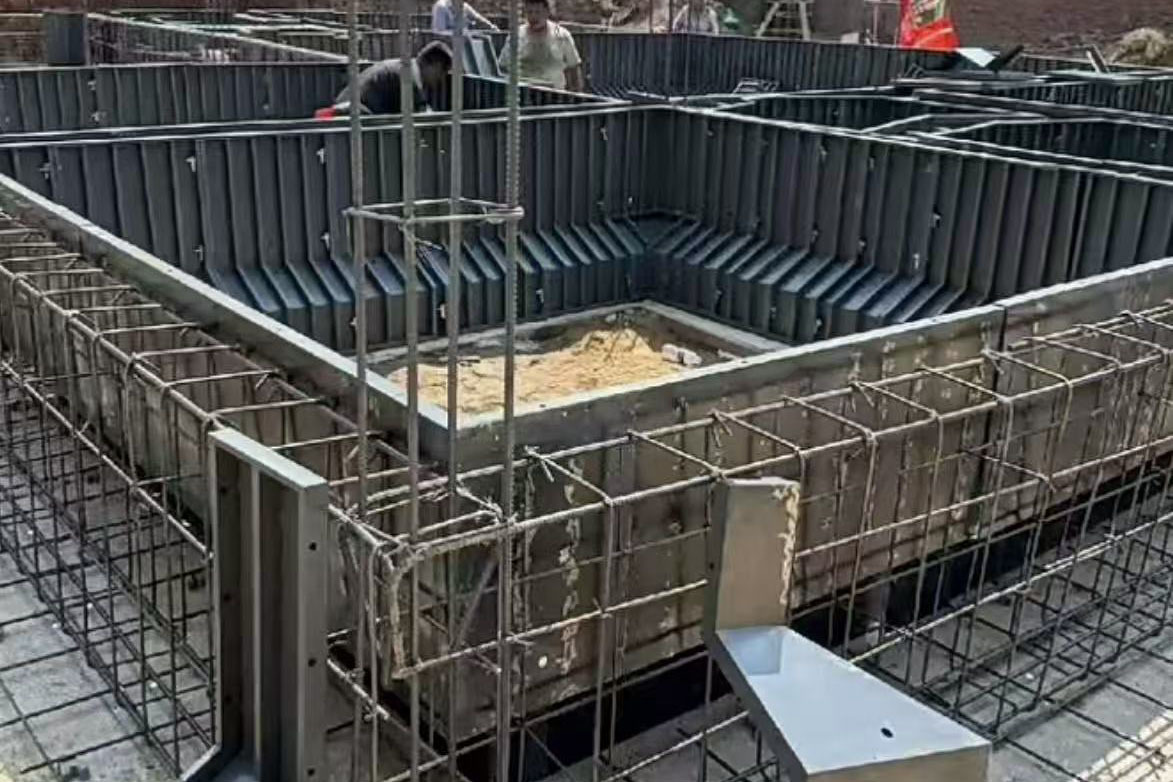
When you watch a high-rise climb steadily against the skyline or walk through a massive underground utility tunnel that feels effortlessly spacious, there's a good chance a quiet workhorse from China made it possible: steel soil formwork. Unlike the clunky timber or basic steel molds of the past, today's Chinese systems have evolved through decades of relentless, on-the-ground refinement. They aren't just containers for concrete—they're precision tools that handle the messy realities of soil retention, groundwater pressure, and the sheer scale of modern projects with a kind of practical intelligence that's hard to replicate elsewhere.
What sets this equipment apart isn't one single breakthrough, but a culture of adaptability baked into its design. Chinese manufacturers routinely customize panel sizes, connection angles, and load-bearing capacities for a specific jobsite's soil conditions, often within weeks. Walk through a production yard in Shandong or Henan and you'll see formwork getting tailored for sandy coastal subsurfaces one day, then for stiff clay in a mountain expressway the next. This flexibility comes from close collaboration between factories and construction teams, where feedback loops are short and improvements are implemented without layers of bureaucracy. Add to that a ruggedness born from dealing with extreme weather, seismic zones, and challenging logistics, and you get a product that doesn't just meet specs—it anticipates the unexpected.
The real proof, though, is in the pace of construction. Where conventional methods might need weeks of back-and-forth adjustments and bulky bracing, Chinese steel soil formwork often allows continuous, rapid-cycle pouring. Tunnels, retaining walls, and deep foundations take shape in days instead of months, and the finish quality minimizes costly rectification work later. It's a blend of material science, hands-on problem solving, and supply chain efficiency that turns a humble formwork panel into a strategic advantage. For contractors around the world who are tired of delays and surprises underground, this distinctly Chinese approach is becoming an increasingly obvious choice.
From Concept to Jobsite: How This System Slashes Project Timelines
Most construction projects follow a familiar, drawn-out rhythm: months of design revisions, lengthy permitting, and then a slow, weather-dependent build on-site. This system flips that script entirely. By front-loading critical decisions and leveraging a library of pre-engineered components, the design phase is compressed into days instead of weeks. What used to require back-and-forth between architects, engineers, and contractors now happens in real time on a shared digital platform, eliminating the bottlenecks that typically push timelines out by months.
Once the design is locked, the system takes over with precision manufacturing off-site. Wall panels, roof trusses, and even mechanical rough-ins are fabricated in a controlled environment while site work is still underway. This parallel production means that by the time the foundation cures, entire building sections arrive ready for assembly. The usual stop-start delays caused by material shortages or subcontractor scheduling vanish. Instead of a linear sequence, the process becomes an overlapping, synchronized flow that often trims 30–50% from conventional schedules without sacrificing quality or detail.
On the jobsite, crews work from clear, shop-like assembly instructions rather than deciphering complex blueprints on the fly. Components click together with a level of predictability that turns framing from an art into a process. The result isn’t just faster—it’s drastically quieter, safer, and less wasteful. Project after project, owners and contractors are discovering that the weeks saved translate directly into lower financing costs, earlier occupancy, and a competitive edge that traditional methods can’t match.
The Hidden Engineering Behind Super-Strong Foundation Molds
Creating foundation molds that can withstand immense pressure demands more than just thick steel plates. The real secret lies in the precise distribution of forces through a network of interlocking ribs and strategically placed gussets. Engineers use finite element analysis to map stress concentrations, then reinforce those specific areas with tapered stiffeners that blend into the mold’s primary structure. This approach prevents sudden failure points while keeping the overall weight manageable—a balance that comes from years of iterative refinement and on-site failure analysis.
Another often overlooked aspect is thermal management during concrete curing. Massive pours generate significant heat, and if the mold doesn’t account for thermal expansion, it can warp or crack. So designers embed cooling channels or use materials with matching thermal coefficients to maintain dimensional stability. Some advanced molds even incorporate a slight pre-camber, calculated to flatten perfectly under the load of fresh concrete, ensuring the final foundation meets tolerance specs without post-work.
Assembly and joint design also play a critical role. Rather than relying on simple bolted connections, high-strength foundation molds use precision-machined interlocking edges that self-align under pressure. These joints spread the load evenly and eliminate the need for excessive tightening, which can introduce stress points. Paired with a hydrophobic coating system that’s baked into the metal at a molecular level, the mold resists both mechanical fatigue and chemical attack, ensuring reusability across hundreds of cycles without degradation.
Sustainable Building Starts Below Ground: The Eco-Edge of Steel Formwork
The foundation of any structure holds the key to its long-term environmental footprint, yet this critical phase often gets overlooked in green building conversations. Steel formwork reshapes this narrative by bringing durability and reusability underground. Unlike timber, which splinters after a few uses and feeds the cycle of deforestation, steel panels can be reused hundreds of times without losing their shape. This slashes the demand for raw materials and keeps tons of wood waste out of landfills, directly lowering the carbon profile of the substructure.
Beyond material savings, steel formwork delivers exceptional concrete finish quality, reducing the need for surface treatments, patching, or additional layers that carry their own environmental costs. The precision of steel molds minimizes concrete overpour, curbing the waste of one of the most carbon-intensive materials on site. Fewer discarded formwork materials and less cleanup mean a leaner, quieter jobsite, where the ecological impact is measured not just in resources saved but in the avoided emissions from waste transport and processing.
The thermal properties of steel also play a role in the bigger sustainability picture. Steel formwork can accelerate curing in colder weather, shortening construction cycles and cutting energy consumption from temporary heating. And when the formwork finally reaches the end of its life, its steel is infinitely recyclable without degradation, turning a potential waste stream into a valuable raw material for future builds. In essence, the choice of formwork below ground becomes a quiet multiplier of a project’s green credentials, setting a responsible baseline from the very first pour.
What Global Construction Can Learn from China’s Formwork Innovation
China’s rapid urbanization has forced the construction industry to rethink traditional practices, and nowhere is this more evident than in its formwork systems. The widespread adoption of aluminum alloy formwork, for instance, has slashed cycle times and waste, while boosting precision to levels rarely seen on conventional sites. By turning entire floor slabs into repeatable, snap-together assemblies, Chinese builders have demonstrated that speed and quality need not be traded off—a lesson that could reshape how high-rise projects are delivered worldwide.
Beyond the hardware, it’s the seamless integration of digital planning tools that sets China’s approach apart. BIM-driven formwork design allows for real-time adjustments, clash detection, and just-in-time delivery, cutting down on-site improvisation and costly rework. Global contractors often still treat formwork as a temporary afterthought; adopting this data-backed, industrialized mindset could unlock significant productivity gains and reduce the reliance on scarce skilled labor in markets far beyond China.
Perhaps the most underappreciated lesson is the emphasis on whole-life costing and reuse. Chinese manufacturers have invested heavily in durable, modular systems that withstand hundreds of pours, challenging the throwaway culture prevalent in many Western markets. Pair that with the logistical prowess of controlled demolition and material recovery loops, and you have a blueprint for a circular economy in construction that the rest of the world is only beginning to explore seriously.
FAQ
It's a modular system made from high-tensile steel plates and frames, designed to mold and retain soil during foundation construction. Workers assemble the panels on-site to create a sturdy mold, then pour concrete directly against the soil side. The steel's strength allows it to handle heavy lateral earth pressures without bulging, making it ideal for deep foundations, retaining walls, and complex underground structures.
Steel doesn't absorb moisture, so it won't warp or rot like timber, which is a common problem in damp ground conditions. It also offers a much cleaner, smoother concrete finish because there's no grain transfer. Over time, steel panels can be reused hundreds of times, drastically cutting material waste and long-term costs, whereas timber forms often end up as landfill after just a few uses.
Chinese companies have focused on precision-rolled profiles that interlock with minimal bolts, speeding up assembly. They've also integrated lightweight alloys into non-load-bearing parts to reduce overall weight without sacrificing strength. Another key innovation is the development of adjustable corner pieces and flexible joints that accommodate irregular site geometries, something rarely seen in older European designs.
Absolutely. The system's rigidity prevents deformation under uneven pressure, and engineers can add internal bracing or tie-backs specifically calibrated for problematic soils. For expansive clays, the smooth steel surface reduces friction, allowing the soil to slide rather than grip and crack the hardened concrete. In sandy conditions, the tight-seal joints minimize leakage, ensuring a clean pour without soil contamination.
The real speed gain comes from the reusability and ease of handling. A crew can strip, relocate, and reassemble a steel form setup in a fraction of the time needed for timber—often in just hours instead of days. There's also no curing wait for the form itself, and integrated leveling jacks speed up alignment. On a large building complex, this can shave weeks off the foundation phase.
Upfront, steel formwork is a higher capital investment than timber, but the per-use cost drops dramatically after the first few projects. Routine maintenance is minimal—mostly just cleaning off concrete residue and applying a release agent. The steel is galvanized or powder-coated so rust isn't an issue under normal conditions. The main thing to budget for is proper storage space and occasional replacement of rubber seals, which are cheap and easy to swap out.
Conclusion
In the realm of foundation engineering, China's high-strength steel soil formwork is quietly rewriting the rulebook. This system brings a level of precision and brute durability that traditional timber or conventional steel alternatives simply can't match. The molds owe their strength to advanced metallurgy and clever modular design, allowing them to bear immense lateral soil pressures without distortion. On jobsites, it's a game of speed: crews assemble the panelized components with rapid-pin and wedge connections, slashing curing wait times and enabling continuous pours that telescope project schedules. There's a hidden elegance in the engineering—tapered edges prevent concrete lock-in, while integrated vibration lugs help consolidate mixes uniformly, minimizing honeycomb defects. The result is foundation walls that are plumb, dense, and built to last, all achieved with fewer man-hours and less material waste.
Beyond raw performance, the environmental footprint of this approach stands out. High-grade steel formwork can be cycled hundreds of times before refurbishment, starkly reducing the send of single-use form materials to landfills. Manufacturing improvements have lowered carbon intensity per reuse, and on-site, the absence of timber offcuts and reduced concrete spillage align with strict green building codes. Internationally, the lesson is clear: investing in reusable, high-tolerance formwork pays off in both schedule compression and lifecycle decarbonization. As contractors from Southeast Asia to the Middle East begin adapting these systems, foundry-level quality in below-grade structures is no longer an outlier—it's a replicable standard. The steel soil formwork approach doesn't just support buildings; it underpins a smarter, more sustainable way to build from the ground down.
Contact Us
Contact Person: Zhang Zhenlai
Email: [email protected]
Tel/WhatsApp: 8618563210000
Website: https://en.lugongmachinery.com/