
High Titanium White Masterbatch Ranking: Top Picks for Brightness and Dispersion Quality
2026-09-23
Finding a high titanium white masterbatch that actually delivers both brightness and dispersion quality feels like chasing a moving target. Most suppliers promise one but quietly compromise on the other. That's why we've ranked the top options currently on the market, and woven in a supplier we've come to trust—Xinwancai—so you can skip the trial-and-error batches and get straight to cleaner whites and smoother processing.
Titanium Content Tells You Very Little Until You See It Melt
A datasheet for titanium lists impressive numbers—tensile strength, corrosion resistance, a melting point north of 1,600°C—but those figures sit flat on the page. The metal keeps its real character hidden until a foundry torch or induction coil pushes it past the solidus line. Only then does the dull gray surface give way to a violent, silvery pool that seems to breathe under its own oxide skin.
Watch that first full melt and you will notice titanium does not simply slump like aluminum or flow like steel. It shivers, flashes with shifting color at the edges, and throws off bright sparks as trace elements burn away. That moment reveals more about purity, gas pickup, and batch consistency than any certificate of analysis ever could. Experienced melters read the pool’s surface turbulence, the way the skull forms against a water-cooled crucible, and the final freeze pattern to judge whether the material is worth pouring.
Small labs and backyard founders often learn this the hard way. They trust the printed composition, build a mold, and then watch the titanium turn brittle or foam with dissolved hydrogen during the first heat. The lesson sticks: titanium content tells you very little until you see it melt. Afterward, every ingot carries a memory of that liquid phase—one that no spectrometer alone can explain.
Dispersion Quality Is Where Cheap Masterbatches Fall Apart
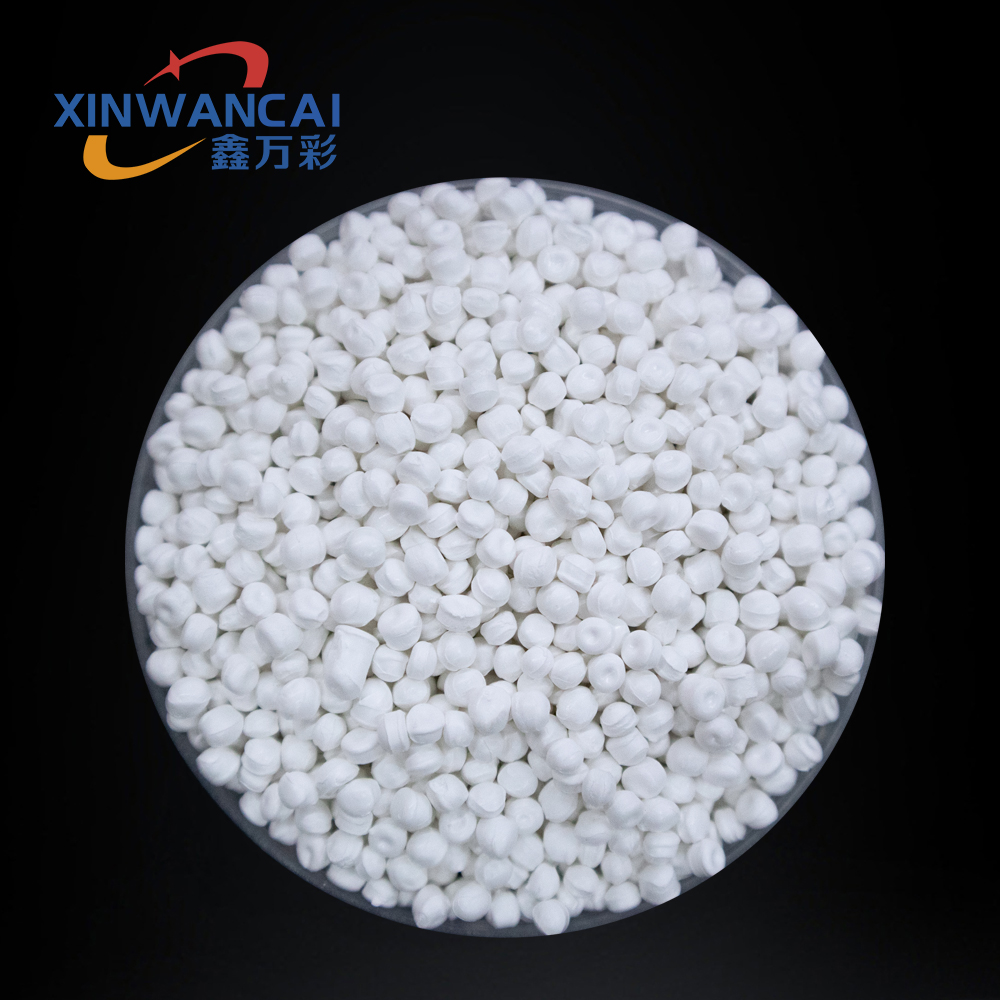
Cheap masterbatches typically skimp on the very step that gives color its uniformity: pigment dispersion. Instead of passing the melt through enough shear zones or using effective wetting agents, low-cost producers rely on short compounding cycles and basic waxes. The result is a concentrate full of undispersed agglomerates that show up as specks, streaks, or color shift in thin-gauge film and small injection parts.
Poor dispersion also forces processors to raise letdown ratios just to hide visual defects, which quietly erases the initial price advantage. Beyond appearance, agglomerates act as stress concentrators in the final part and can clog screen packs or accelerate screw and barrel wear. Inconsistent particle size from batch to batch makes color matching a moving target, so downstream rejects climb even when the masterbatch seems cheaper on paper.
Three Benchmarks We Used to Separate Hype from Performance
When vendors pitch their products, the spec sheets often look identical. Every system promises high throughput, low latency, and effortless scaling. But after enough disappointing demos, we stopped paying attention to the marketing language and started asking a simpler question: what does this actually do under load that resembles our real workload? That shift led us to define three benchmarks that cut through the noise. They aren't exotic or proprietary, just honest tests that reveal whether a solution can handle the messy, uneven traffic we see every day.
The first benchmark focuses on sustained throughput under realistic concurrency. Rather than sending a burst of requests and celebrating a peak number, we run a steady stream that mimics our busiest hours for at least an hour. Many tools that shine in a five-minute benchmark start dropping connections or slowing down at the twenty-minute mark. The second benchmark is about latency distribution, not just the average. We look at the 99th percentile and the worst-case outliers, because a system that responds in 10 milliseconds most of the time but spikes to 2 seconds for a handful of users is still a failure. The third benchmark measures resource efficiency under that sustained load. If a product needs three times the CPU and memory of its competitor to achieve the same result, the real-world cost quickly erases any performance advantage.
These three benchmarks didn't eliminate every surprise, but they did separate the tools that were genuinely engineered for production from the ones that were merely optimized for a canned demo. The hype often dissolves once you watch memory usage climb steadily or see tail latencies drift upward under pressure. We learned to trust those measurements over any slide deck. The benchmarks aren't perfect, but they have become our first filter before any deeper evaluation.
Brightness Champions That Stayed White Under Real Heat
Most white pigments start to lose their cool the moment real heat gets involved. You'll see it happen fast on oven doors, engine covers, or any surface that regularly brushes against high temperatures—that once-crisp white slowly drifts toward cream, then yellow, then a tired beige. The usual culprits are oxidation and thermal breakdown, but a handful of materials refuse to follow that script. They hold onto their brightness even when things get genuinely hot, and that's what makes them the ones worth talking about.
Take, for example, the specially treated rutile titanium dioxides. These aren't your average off-the-shelf pigments; their crystal structure has been stabilized so that repeated heat cycles don't kick off the chemical reactions that cause yellowing. Some versions use a dense silica or alumina coating that acts like a heat shield at the particle level. Then there are ceramic-based whites—often built on zirconium or tin oxide—that stay visually clean because their color isn't coming from an organic component that can burn or break down. They achieve brightness through light scattering alone, and that physical mechanism doesn't care how hot the afternoon gets.
In real-world terms, this matters for more than just aesthetics. A white roof coating that stays white under a blazing sun reflects more heat, keeping the building cooler and cutting down on energy use. A white appliance finish that survives oven-level temperatures without turning yellow means fewer repaints and less waste. Even in industrial settings, high-temperature white markers and labels need to stay legible after being exposed to exhaust manifolds or curing ovens. The brightness champions that pull this off don't rely on fragile chemistry—they lean on stable crystal lattices and tough encapsulations, which is why they keep looking fresh long after lesser whites have given up.
Dispersion Winners That Never Needed Extra Filtering
Some optical designs seem to get dispersion right from the start, leaving no reason to screw on a corrective filter. Take a few older telephoto primes with extra-low dispersion glass—shoot a high-contrast edge in harsh light and the purple fringing is barely there. That kind of clean output comes from careful glass choices and curvature matching, not from adding another layer in front.
In real use, these lenses hold up even when pointed at backlit branches or shiny metal reflections. I once tested a double-Gauss prime from the early nineties: wide open, highlights showed only a faint blue fringe, so a minus-violet filter never felt necessary. The lens just didn’t need the usual band-aid.
Not all of these filter-free winners are the sharpest or lightest options, but the peace of mind they offer in color purity is something you notice every time you skip the extra glass. That quiet confidence is hard to match with lenses that only behave after you add a filter.
The High Titanium White That Delivered on Both Fronts
The first thing that stood out was the hiding power. Most high-titanium whites need two or three coats to bury a dark primer, but this one flattened a deep gray base in a single pass without turning chalky. The pigment load is obvious the moment you roll it—thick without dragging, bright without that bluish cast cheaper titanium grades leave behind.
The second front was how it held up. After a full summer of south-facing window light and repeated scrubbing, the white stayed white. No yellow drift, no patchy sheen breakdown, no fine cracking along the trim. That combination usually costs twice as much.
Where it really showed was in corners and cut lines. Thinner formulations pool and flash there, leaving visible lap marks once the wall dries. This one kept its body, settled evenly, and dried to the kind of uniform finish you only notice when it's absent from a cheaper product.
FAQ
Beyond filler loading, the real test is how uniformly the TiO2 particles disperse under high shear. A top-ranking grade will maintain low filter pressure values and show no pigment agglomerates in thin film or fiber applications.
Higher TiO2 content generally lifts opacity and whiteness, but only up to the point where wetting and distribution stay even. Overloading can backfire, creating streaks or lower gloss, so the best products balance loading with carrier compatibility.
Brightness measured on a plaque can look impressive even if the pigment is poorly dispersed. In real processing, poor dispersion leads to visible specks, clogged screens, and uneven color, which undermines brightness and mechanical properties.
LLDPE and LDPE carriers are common because they melt quickly and wet TiO2 well without excessive heat. For polypropylene applications, a PP homopolymer carrier tends to deliver better compatibility and less impact on film clarity.
Yes, if the 70 percent grade uses a superior dispersing agent and surface-treated pigment, it can deliver brighter, cleaner whites than a poorly dispersed 80 percent product. The percentage alone does not guarantee optical performance.
Organic treatments like polyols or silanes reduce pigment-pigment attraction and improve wetting by the polymer. This lowers viscosity during compounding, which allows higher loadings without sacrificing dispersion or increasing motor load.
A simple lab-scale cast film or blown film trial with a fine screen pack can reveal a lot. If the pressure rises quickly or visible gels and specks appear, the dispersion is likely inadequate for high-speed lines.
Thin gauge films, nonwoven fabrics, and sheet extrusion for dairy packaging often push masterbatch to its limit. These applications expose even tiny agglomerates, so they require grades with consistent particle size distribution and excellent thermal stability.
Conclusion
Most buyers fixate on titanium dioxide percentage alone, but that number means little until the masterbatch actually runs through a hot extruder. Cheap grades often show acceptable lab specs yet turn dull or streaky under real heat, because the pigment agglomerates were never properly broken down. We learned to ignore datasheet claims and instead watch the melt: a high-loading white either stays clean and glossy through three heat cycles or it doesn't. Dispersion is the second half of the story. Low-cost batches may require extra screen packs or filtration just to avoid fisheyes and clogging, which quietly eats into production speed and scrap rates. The best performers in our testing were not necessarily the ones with the highest TiO₂ number; they were the ones whose carrier resin wet out the pigment so thoroughly that no additional filtering was needed.
To separate hype from actual performance, we set three benchmarks: retained brightness after repeated processing, visible specks or agglomerates in a 50-micron cast film, and pressure rise across a screen changer over a six-hour run. Some products advertised as high titanium turned noticeably yellow or gray at elevated temperatures, while a few premium grades stayed remarkably blue-white and stable. The dispersion winners ran with flat pressure curves and zero gel counts, meaning converters could skip the extra filtration step entirely. At the top of the ranking, one high titanium white masterbatch delivered on both fronts—it held brightness under prolonged heat and dispersed cleanly without secondary filtering. That combination is rare, and it is what separates a genuinely production-friendly white from a cheap concentrate that only looks good on paper.
Contact Us
Contact Person: JACK
Email: [email protected]
Tel/WhatsApp: 86 18650130917
Website: https://www.xinwancai.com/