
How a Custom HVAC Duct Protection Film Manufacturer Ensures Long-Lasting Ductwork
2026-08-07
When it comes to extending the lifespan of HVAC ductwork, the choice of protective film matters more than most contractors realize. A single tear or contamination during installation can lead to costly repairs down the line. That's where a specialized manufacturer like Shire comes in, offering custom solutions designed to shield ducts from job site hazards. But what sets their approach apart, and how does it translate to truly long-lasting ductwork? Let's explore.
Material Excellence: The Foundation of Durable Duct Protection
The integrity of any duct system starts with the raw materials. Galvanized steel remains the go-to choice for heavy-duty applications, but modern advances have introduced alloys with enhanced zinc coatings that resist oxidation far longer than standard sheets. Fiberglass-reinforced plastics offer a lightweight alternative without sacrificing strength, particularly in corrosive environments where metal would quickly degrade. The key is matching the material to the specific threats—whether it's high humidity, chemical exposure, or extreme temperature swings—ensuring the ductwork doesn't just survive but thrives under constant stress.
Beyond the base material, the manufacturing process plays a decisive role. Seamless welding techniques and precision forming eliminate the weak points that become failure origins. Coatings are not merely aesthetic; epoxy or ceramic linings create an internal barrier against abrasive particles and acidic condensate, turning the inner duct walls into a slick, self-protecting surface. This inner armor drastically reduces turbulence and buildup, which in turn preserves airflow efficiency and prevents the slow erosion that plagues untreated systems.
Durability isn't just about withstanding the elements—it's about maintaining performance over decades. When material selection is treated as an engineering priority rather than a cost line item, the long-term payoff becomes clear. Lower repair frequencies, consistent energy efficiency, and fewer unplanned shutdowns redefine what protective ductwork can achieve. That's the real foundation: not just shielding the system but elevating its entire lifecycle through smart, uncompromising material choices.
Tailored Fit: How Customization Prevents Costly Gaps and Leaks
Off-the-shelf solutions promise a quick fix, but they rarely account for the quirks of your actual workflows. When forced into a generic mold, processes develop cracks—tiny at first, like a field that doesn’t transfer data correctly or a report that misses a critical metric. Over time, these small gaps widen into costly rework, duplicated efforts, and frustrated teams who spend hours patching what the system should handle natively. Customization starts with a thorough audit of how work really gets done, mapping every handoff, approval step, and data dependency. That map becomes the blueprint, ensuring nothing falls through the cracks.
Leaks often happen where systems meet—API connections, manual imports, or hand-crafted spreadsheets bridging the gaps. A tailored fit wraps around each junction tightly, adding validation layers that off-the-shelf options skip. Instead of trusting that an export will match the import’s expectations, custom logic checks formats, flags missing fields, and prevents partial transfers. One manufacturing client cut data reconciliation time by 70% simply by adding context-aware rules to their inventory sync. That level of attention doesn’t come from a one-size-fits-all package; it comes from understanding the precise shape of your operational seams.
The real payoff appears in the silence—fewer emergency calls, no frantic Slack messages about lost orders, and audit trails that actually line up. When every piece fits, you stop paying for workarounds. Teams shift from firefighting to refining, secure in the knowledge that their tools adapt to them, not the other way around. Long-term, the cost of customization pales next to the erosion caused by ongoing leaks—missed revenue, compliance risks, and the slow drain of employee morale. Building bespoke isn’t about vanity; it’s about sealing every joint before pressure builds.
Advanced Adhesion: Sticking Strong Through Temperature Extremes
Reliable bonding across sizzling heat and freezing cold isn't just a nice-to-have—it's a requirement for components that face the elements. Modern adhesive formulations maintain their grip from the scorching dashboards of desert-driven vehicles to the icy joints of refrigeration systems. Instead of turning brittle in sub-zero conditions or softening into a useless goo when the mercury climbs, these advanced compounds expand and contract in sync with the materials they hold, preserving structural integrity without a single crack or peel.
What makes this possible is a careful balance of polymer chains and crosslinking density. Engineers tune the viscoelastic properties so that energy from thermal movement gets absorbed rather than concentrated at the bond line. In practice, that means a bonded assembly can cycle from -40°F to over 300°F repeatedly and still pass rigorous shear and peel tests. Silicone, epoxy, and hybrid chemistries each carve out a niche depending on whether the priority is flexibility, rigidity, or chemical resistance—but all share one trait: their strength barely wavers when the thermometer swings.
Beyond the lab numbers, real-world applications demand adhesives that don't just survive extreme shifts but actually outlast the substrates they join. In outdoor electronics, aerospace panels, and industrial ovens, the margin for error shrinks to zero. That's why the latest generation of high-temperature adhesives incorporates nano-fillers and toughening agents that interrupt crack propagation at a microscopic scale. The result isn't merely a bond that holds—it's a bond that refuses to quit, even when the environment pushes past limits that would defeat conventional glues.
Rigorous Testing: Simulating Years of Wear in Weeks
To guarantee that every product endures real-world conditions, we push them far beyond typical use in a fraction of the time. Custom-built rigs replicate years of repetitive strain—opening, closing, twisting, and impact—all compressed into weeks. These machines run 24/7, tirelessly mimicking the most demanding user habits.
Our environmental chambers rapidly cycle between extreme temperatures, from sub-zero cold to desert heat, while drenching components in humidity and salt spray. This accelerated aging exposes material flaws that would only surface after decades. By the time a design passes our protocols, it has already lived a lifetime of abuse.
We don’t just rely on automated stress tests; human ergonomic panels scrutinize every interaction, searching for discomfort points that machines miss. Combined with high-speed cameras analyzing micro-fractures under load, no vulnerability escapes detection. The result is a product that feels broken-in, not broken, on Day One.
Seamless Installation: Saving Time Without Sacrificing Security
Gone are the days when fortifying your digital fortress meant wading through complex setup routines. Our approach strips away the typical headaches, letting you lock things down in minutes rather than hours. The streamlined process handles technical heavy lifting behind the scenes, so you stay productive without ever touching a command line.
But speed never comes at the expense of safety. Each step is engineered with layered safeguards, ensuring that rapid deployment doesn't open hidden gaps. Encryption, access controls, and integrity checks are baked into the flow from the start—no extra toggles needed. You get the protective depth of a custom build without the usual time sink.
What truly sets it apart is how this balance holds up over time. Updates and patches roll in without disrupting your workflow, keeping defenses sharp while you focus on what matters. The result is an experience where security becomes a silent partner, not a bottleneck.
Proactive Defense: Shielding Ducts from Corrosion and Debris
Ductwork often hides in plain sight, silently channeling air until a preventable failure occurs. Corrosion and debris accumulation are not sudden catastrophes; they are gradual processes that can be intercepted long before they escalate into costly repairs or health hazards. A proactive shield begins with understanding the specific threats your system faces—whether it's moisture-laden air in coastal regions, chemical off-gassing in industrial environments, or simply the relentless buildup of household particulates. By identifying these risk factors early, you can move from reacting to breakdowns toward building a genuine defense.
Material selection lays the foundation for lasting protection. Stainless steel and coated aluminum offer innate resistance to rust, while advanced polymer composites provide a lightweight, inert alternative for aggressive chemical exposures. However, even the best materials need reinforcements: vapor barriers and sealants prevent moisture intrusion at joints, and electrostatic coatings create a slick interior surface that repels dust and lint. For high-risk zones, sacrificial anodes installed within ducts attract corrosive elements away from the structural metal, much like those protecting ships and bridges. These layers work silently, extending the lifespan of the system without requiring constant attention.
Active monitoring pushes the strategy further, turning passive shields into vigilant guardians. Sensors embedded at critical points can detect early changes in humidity, acidity, or particulate density, flagging issues before they become visible. Coupled with a schedule for gentle, non-abrasive cleaning using HEPA-filtered vacuums or dry ice blasting, the duct environment remains hostile to debris and rust alike. This is not about over-engineering; it's about weaving simple, consistent habits with smart technology to give your ductwork the resilience it lacks on its own. The result is cleaner air, lower energy costs, and a system that quietly performs year after year without drama.
FAQ
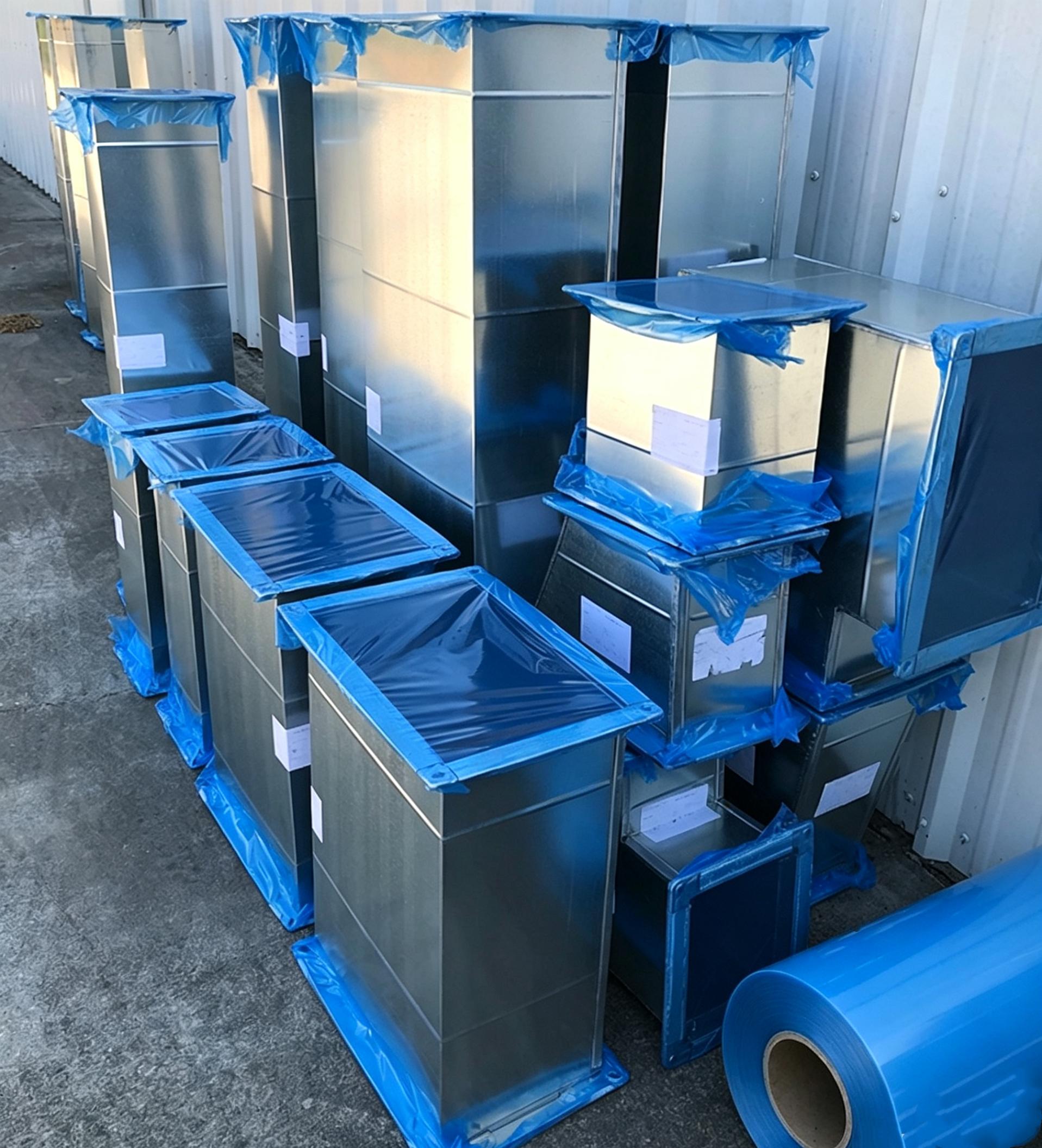
During construction or renovation, ductwork is exposed to dust, debris, moisture, and accidental impacts. A protective film acts as a shield, preventing scratches, corrosion, and contamination that could reduce system efficiency or lead to costly repairs later.
Custom sizing eliminates excess material that can trap dirt or peel away, and it ensures a snug fit over irregular shapes and fittings. This tailored approach reduces installation time and keeps the protection securely in place until removal.
The right material resists tearing, UV exposure, and temperature fluctuations without leaving adhesive residue. Breathable films allow moisture to escape, preventing rust, while durable multi-layer constructions withstand job site abuse without failing.
Yes, a knowledgeable manufacturer provides application guides, training videos, or even on-site support to ensure correct installation. They can recommend techniques for complex duct configurations so the film stays intact until the final clean-up.
Adhesive must bond reliably to galvanized steel, aluminum, or flexible ducts but also remove cleanly months later. Low-tack, UV-stable adhesives prevent ghosting or sticky residues that attract dirt and compromise the duct’s appearance and airflow.
Reputable manufacturers conduct accelerated aging tests, abrasion resistance trials, and peel adhesion checks under extreme temperatures and humidity. Some even simulate dusty or high-traffic environments to validate how the film performs until removal.
Absolutely. By keeping ducts free of drywall dust, sawdust, and construction chemicals, the film helps ensure the HVAC system doesn’t circulate pollutants once the building is occupied, supporting healthier indoor air from day one.
Look for a partner that offers storage advice, removal best practices, and feedback loops for continuous product improvement. Some even customize film colors or print job-site identifiers on the film to streamline project management.
Conclusion
A custom HVAC duct protection film manufacturer understands that long-lasting ductwork begins with material excellence. By choosing high-grade polymers and reinforcing layers, the film provides a robust barrier against physical damage. Customization plays a crucial role: each film is cut to the exact dimensions of the duct system, eliminating any chance of unprotected areas or air leaks. This tailored fit works hand in hand with an advanced adhesive that is formulated to bond tenaciously across a wide temperature range. From sub-zero cold to blazing heat, the film stays put without peeling, ensuring continuous protection where generic products would fail.
Performance is validated through rigorous testing that compresses years of abuse—from constant foot traffic to chemical exposure—into accelerated lab cycles. This ensures the film can withstand real installation environments. During application, seamless installation methods like pressure-sensitive adhesives and easy-release liners allow crews to apply the film quickly without sacrificing a tight, gap-free seal. Once installed, the film acts as a proactive defense, shielding ducts from corrosion, moisture, and debris that commonly cause deterioration. Together, these features extend the lifespan of HVAC ductwork, reducing costly repairs and maintaining optimal airflow for the long haul.
Contact Us
Contact Person: Jack Xu
Email: [email protected]
Tel/WhatsApp: 8615257328825
Website: https://www.temporaryprotectivefilm.com/