How a Leading Non Woven Tote Bag Manufacturer Crafts Durable Custom Bags
2026-08-04
In a world where reusable bags often fall apart after a few grocery runs, one name stands out for craftsmanship that truly lasts. CHALLENGE WOLVES has quietly revolutionized the way custom non-woven tote bags are made—blending cutting-edge production with an almost obsessive attention to durability. But what really goes into creating a bag that can carry your daily load without fraying, tearing, or losing its shape? This post takes you behind the scenes of their factory floor, revealing the materials, techniques, and quality checks that turn simple polypropylene fabric into a reliable everyday companion.
Material Mastery: The Secret Behind Long-Lasting Non-Woven Totes
The durability of a non-woven tote starts with the raw materials. Instead of relying on loosely bonded fibers, high-end totes use a dense web of spunbond polypropylene that's engineered to resist stretching and tearing. This material mimics the feel of fabric while retaining the lightweight, water-resistant properties that make non-woven bags practical. When you examine the texture closely, you'll notice a smooth, almost leather-like consistency that doesn't fray or pill over time, even with daily use.
Construction techniques play an equally important role. The secret lies in the way seams are reinforced and handles are attached. Rather than simple straight stitching, quality totes feature cross-stitched joints and bartack reinforcements at stress points. Some manufacturers use ultrasonic welding for a seamless bond that distributes weight evenly, preventing the handles from pulling away from the body. This attention to detail means a well-made bag can carry heavy loads repeatedly without failing.
Finally, the finishing treatments elevate ordinary non-woven fabric into something built to last. Many long-lasting totes undergo a calendering process that compresses the fibers further, increasing strength and giving the surface a subtle sheen. Others receive a UV-resistant coating to prevent degradation from sunlight, or a water-repellent finish that doesn't crack after folding. These enhancements ensure the bag maintains its structural integrity and appearance, whether it's used for grocery runs, beach outings, or daily commutes.
From Thread to Tote: A Peek Inside the Production Line
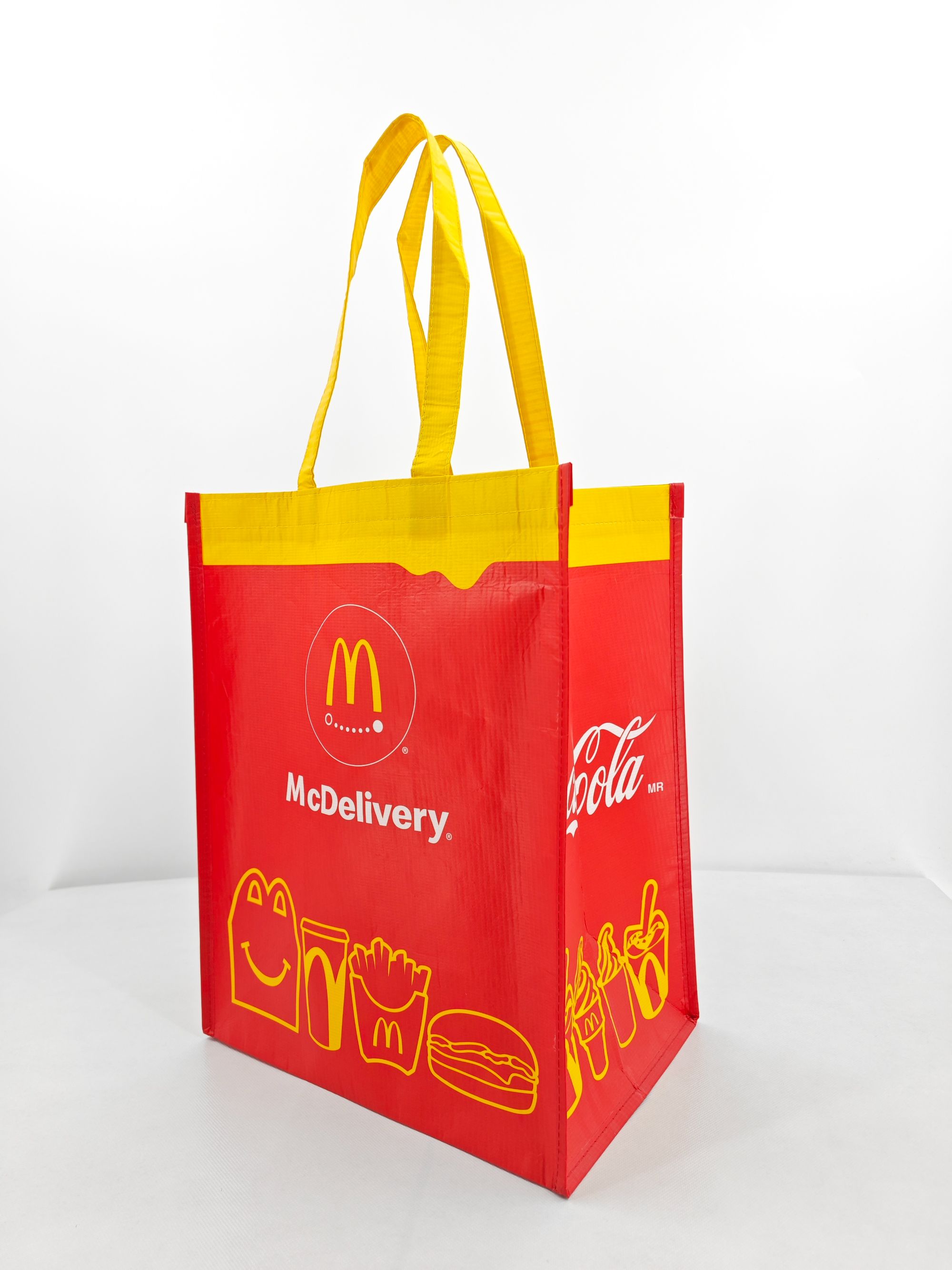
The hum of sewing machines fills the air the moment you step onto the factory floor. It’s not chaotic noise though—every stitch has a purpose. Rolls of thread in dozens of colors sit neatly on spindles, waiting their turn. A cutter glides through layered fabric with a quiet shush, guided by a steady hand and a well-worn pattern. There’s something almost meditative about watching it all come together, bit by bit.
Each tote starts as a flat piece of canvas, unremarkable on its own. But then hands get involved—real, skilled hands that have done this thousands of times. They fold, pin, and stitch with a rhythm that feels natural, not rushed. A stray thread gets snipped; a seam gets pressed flat. Nothing is left to chance. Even the lining gets the same attention, tucked in neatly so the inside feels as considered as the outside.
By the final stage, the tote has an identity. A handle that sits just right in your grip. Reinforced stress points that won’t give up after a few uses. Someone slides a finished bag off the line, gives it a quick once-over, and sets it in a stack of others just like it—yet each one carries the small, invisible marks of the process that made it. It’s ordinary stuff, maybe, but there’s a quiet pride in that stack, ready to go out and do a very practical job.
Customization Without Limits: Printing, Colors, and More
From the very first sketch, your ideas deserve to be translated without compromise. Whether it's a single prototype or a full production run, our printing options let you embed your designs directly onto the product surface with stunning precision. Choose from a vast palette of colors—think beyond basic swatches to gradients, metallics, and even custom-mixed shades that match your brand identity down to the last pixel. No minimums, no forced templates; just pure creative freedom to make every detail unmistakably yours.
But customization isn't just about what you see—it's also about feel and function. We offer an array of textures and finishes that turn ordinary items into tactile experiences. Go matte for a subtle, sophisticated look, or high gloss for that pop of vibrancy. Add embossing, debossing, or spot UV coatings to highlight specific elements. And for those who think beyond the surface, we provide advanced techniques like laser engraving and full-color edge printing, letting you carry your message across every inch.
What truly sets us apart is how these choices come together without complexity. Mix and match techniques on a single piece—imagine a soft-touch base with a metallic foil logo and a vibrant inner print. Our team works directly with you to ensure every combination is not only possible but flawless. It's personalization without the usual constraints, where the only limit is your imagination. From the smallest accessory to large-scale displays, we turn your vision into something tangible, memorable, and exclusively yours.
Torture Testing: How We Ensure Every Bag Survives the Toughest Use
We don’t just assume our bags can handle rough treatment—we prove it. Every design is put through a gauntlet of real-world abuse simulations. From yanking zippers thousands of times to dragging loaded packs across abrasive concrete, nothing is left to chance. Our test lab looks more like a battlefield, and we wouldn’t have it any other way.
Seams are stretched, straps are cranked, and fabric is rubbed raw against sharp edges. We douse them in water, bake them under UV lamps, and freeze them overnight. Only when a prototype survives these extremes without failure does it earn the right to carry your gear. It’s not pretty, but it’s the only way to know a bag is truly ready for anything.
The result is a bag that won’t let you down when it matters most. Whether you’re scrambling up a scree field or cramming it into an overhead bin for the hundredth time, the durability is built in—not just promised. That’s the peace of mind that comes from torture testing.
Green from the Ground Up: Eco-Friendly Manufacturing Reality
True sustainability in manufacturing starts long before the assembly line hums to life. It begins with the raw materials—sourced not from stripped forests or gouged quarries, but from regenerative farms, recycled supply streams, and urban mines that reclaim metals from yesterday's discarded electronics. Every bolt of fabric and injection-molded part carries a hidden story of water saved, carbon sequestered, or toxins avoided. This isn't just about swapping plastic for bamboo; it's a radical rethinking of supply chains where geography, chemistry, and ethics collide. Manufacturers who embrace this shift aren't simply checking boxes—they're building resilience into their business by decoupling from volatile extractive markets and aligning with a planet that doesn't have a backup.
On the factory floor, the dream of zero-impact production takes shape through a quiet revolution in process design. Closed-loop water systems recycle every drop, while renewable energy microgrids power machinery once chained to fossil fuels. Workers sort waste not into trash bins but into material flows destined for second lives: leather offcuts become flooring, metal shavings become alloys, and heat from furnaces warms adjacent greenhouses growing food for the local community. It's a symphony of efficiency orchestrated by sensors and AI, but driven by human commitment. The result is a facility that gives back more than it takes—a living building where the air inside is cleaner than the air outside, and where every product leaves with a net-positive footprint.
The ultimate test of eco-friendly manufacturing lies beyond the factory gate, in the hands of people who use the products and the landscapes that absorb them at end of life. Designing for disassembly means nothing if the instructions are lost, so manufacturers now embed circularity into the user experience—QR codes that summon take-back services, subscription models that keep materials in play, and modular designs that make repair a pleasure rather than a chore. Communities around factories aren't forgotten either; regenerative manufacturers invest in local biodiversity corridors, restore watersheds, and create green jobs that outlast any single product cycle. This is manufacturing as ecology—where growth supports planetary health, not undermines it, and where every choice from the ground up reflects a stubborn hope for a livable future.
Partnership in Every Stitch: Collaborating for Your Perfect Bag
We believe a bag isn't just a finished product—it's the outcome of a conversation. Right from the first sketch, we work side by side with you to understand how you move through your day, what you carry, and what you’ve always wished a bag could do. Every stitch is a reflection of your needs translated into form, texture, and function. It’s this back-and-forth that turns a simple accessory into something that feels like it was made only for you.
Our process is refreshingly fluid. Instead of handing you a catalog and asking you to choose, we start with a blank page and a lot of questions. Material samples are shared early so you can feel the difference between full-grain leather and a lightweight, weatherproof weave. Pocket placements are sketched, adjusted, and then adjusted again based on how you reach for your keys or whether you’re left-handed. This isn’t customization at the surface level—it’s a genuine collaboration where your instincts guide our craftsmanship.
The result is a bag that grows with you, quite literally. From the way the straps settle on your shoulder after months of use, to the patina that develops on hand-burnished edges, each piece carries the evidence of shared decisions. And because we stay involved long after the bag is delivered—offering repairs, adjustments, and even redesigns—the partnership doesn’t end at the final stitch. It’s an ongoing dialogue that ensures your bag never stops being exactly what you need, when you need it.
FAQ
They typically use high-grade polypropylene (PP) fibers, often reinforced with stitching techniques or laminated layers. Some add a waterproof coating or use thicker GSM fabric to resist tearing, making the bags sturdy enough for repeated use.
The process often involves thermal bonding or ultrasonic welding instead of traditional sewing, which creates seamless and stronger joints. Reinforced handles and cross-stitching at stress points are added to prevent ripping under heavy loads.
You can choose from various colors, sizes, and handle lengths. Printing methods like screen printing or heat transfer allow for detailed logos or full-color designs. Some manufacturers offer additional features like zipper closures, inner pockets, or gussets to expand capacity.
They implement strict quality control checkpoints at every stage, from raw material inspection to final product testing. Automated cutting and stitching machines reduce human error, while random sampling and load-bearing tests ensure each batch meets the same durability standards.
Non-woven polypropylene is recyclable and often made from repurposed materials. Its durability means fewer bags end up in landfills, and the production process typically uses less energy compared to cotton bags. Some manufacturers even offer biodegradable additive options.
Production times vary based on order size and complexity, but most leading manufacturers can complete a standard order within 2 to 4 weeks. Rush services may be available for tighter deadlines, often at an additional cost.
It starts with a consultation to define your needs—size, style, and print requirements. Digital mockups are created for approval, then the artwork is prepared for production. A pre-production sample is usually provided to verify colors, stitching, and overall look before full-scale manufacturing begins.
They're popular as grocery bags, trade show giveaways, and promotional merchandise because of their strength and reusability. Retailers use them as branded shopping bags, and many organizations adopt them for conferences or eco-friendly campaigns to replace single-use plastics.
Conclusion
Durable custom bags start long before the final stitch—they begin with an obsessive focus on materials. Premium polypropylene fibers, chosen for their exceptional tear resistance and flexibility, are spun into a tightly bonded fabric that holds up under repeated stress. Inside the production line, advanced machinery transforms this material with minimal human error, from precise cutting to reinforced seams that refuse to split. But no bag ships without proving its mettle. Through exhaustive torture tests—overloaded weights, harsh tumbling, and abrasion simulations—every design is pushed to failure points, ensuring only battle-ready products reach customers.
Of course, strength alone doesn't make a bag stand out; it's the ability to tailor every detail that turns a simple tote into a marketing tool. The manufacturer offers unbounded customization, from vibrant screen-printed logos to custom color palettes and unique handle shapes, so each order feels truly one-of-a-kind. This creative flexibility goes hand in hand with deep environmental responsibility. The entire manufacturing chain is designed for sustainability—recycled content, water-based inks, and closed-loop water systems drastically reduce the ecological footprint. Above all, the experience is collaborative. The team works side by side with clients, providing material samples, digital proofs, and expert guidance, so the final product isn't just delivered but co-created. It's this fusion of durable engineering, design freedom, and genuine partnership that defines what a leading non-woven tote bag manufacturer actually delivers.
Contact Us
Contact Person: Tony
Email: [email protected]
Tel/WhatsApp: +8615859766913
Website: https://www.cw-pak.com