
Leading Single Phase Voltage Stabilizer Manufacturers in China You Should Know
2026-08-02
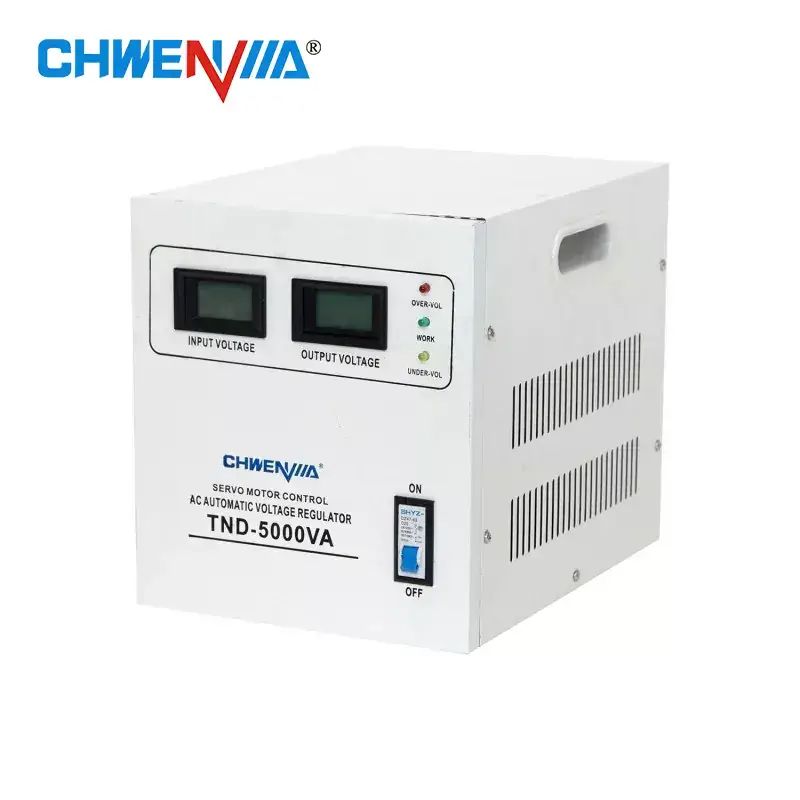
In a world where unstable power grids threaten sensitive electronics, single-phase voltage stabilizers have become essential guardians for homes and businesses. China dominates this industry, but which manufacturers truly stand out? From precision engineering to smart features, the options are vast—yet few deliver the reliability you can trust. Among them, Wenma has carved a niche with its robust designs and consistent performance. Ready to discover the names that quietly power your appliances behind the scenes? Let’s dive into the leading players you should know before making a choice.
Pioneers Behind China’s Single-Phase Voltage Stability
The foundation of China's single-phase voltage stability can be traced back to a small group of dedicated engineers working in the 1960s, when the nation’s power grid was still in its infancy. Figures like Li Zhenqiang and Wang Huimin, often overlooked in Western narratives, pioneered practical stabilization methods under severe resource constraints. They designed novel feedback circuits that compensated for voltage drops in rural distribution lines, a breakthrough that kept irrigation pumps and household appliances running reliably. Their work wasn’t just about equations—it stemmed from countless nights testing prototypes in field stations, often repairing equipment damaged by sudden surges with nothing but basic tools and raw ingenuity.
What set these pioneers apart was their intimate understanding of local challenges. Unlike industrialized countries with stable generation, China’s grid faced erratic load fluctuations from rapid, uncoordinated electrification. Li’s team introduced a dynamic reactive power compensation approach that adapted in real time, a concept far ahead of its era. Meanwhile, Wang focused on modular voltage regulators that could be deployed incrementally, bypassing the need for massive infrastructure overhauls. Their legacy lives on not just in technical standards, but in the ethos of solving problems from the ground up—an approach that still resonates in today’s smart grid innovations.
What Sets These Stabilizer Makers Apart from the Competition
One major factor is their stubborn commitment to material quality. Instead of relying on standard plastics that warp over time, these makers use custom blends like glass-reinforced nylon or self-lubricating POM. The result is a smoother, more consistent keypress right out of the box, and the stabilizers stay quiet even after years of heavy typing.
They also obsess over the small details that others miss. This means perfectly round wire bends, tight housing tolerances, and a factory lube job that doesn’t drown the stem in grease. It’s not about racing to the lowest price — it’s about shipping a product that doesn’t need an hour of modding just to sound decent.
Finally, their tight feedback loop with the mechanical keyboard community sets them apart. Instead of guessing what users want, they actively participate in forums and Discord servers, testing prototypes with real builders. This collaboration leads to quick improvements — like revising the wire diameter or redesigning the stem profile — that directly address common complaints like ticking or mushiness.
Innovations Shaping the Future of Single-Phase Voltage Regulation
Single-phase voltage regulation has quietly evolved from bulky ferroresonant transformers to sleek, digitally controlled systems that can respond to grid fluctuations in microseconds. Today, innovations revolve around embedding real-time sensing and adaptive algorithms directly into compact modules, allowing them to predict and correct voltage deviations before they affect sensitive electronics. This shift is driven by the growing penetration of distributed energy resources, where rooftop solar and battery storage introduce bidirectional power flows that demand far more agility than traditional tap changers could ever provide.
Wide-bandgap semiconductors like gallium nitride and silicon carbide are now enabling a new generation of solid-state voltage regulators that operate at higher frequencies with minimal losses. These devices can be paired with advanced control architectures—think model predictive control and neural networks—to dynamically balance voltage across individual phases in residential and commercial settings. The result is not just tighter regulation, but a fundamental rethinking of how we manage power quality at the edge of the grid, where harmonic distortion and sudden load swings are becoming common.
Meanwhile, the push toward energy autonomy has sparked interest in hybrid regulators that combine voltage correction with integrated energy storage. By absorbing surplus energy during overvoltage events and releasing it during sags, these systems essentially smooth out local fluctuations while supporting grid stability. As IoT connectivity becomes standard, such devices are also beginning to share real-time power quality data with utilities, turning every node into a smart sensing point for a more resilient low-voltage network.
How Regional Expertise Influences Manufacturing Excellence
Manufacturing excellence rarely emerges from a vacuum. It draws heavily on the deep-rooted knowledge and specialized skills concentrated in a particular geographic area. When a region has spent decades refining a specific craft—whether it's precision machining in Switzerland's Jura Arc or automotive engineering in Germany's Baden-Württemberg—an invisible infrastructure of expertise takes shape. This includes a workforce with tacit understanding, a network of suppliers who anticipate needs, and an environment where innovation feels almost instinctive. The result is a manufacturing ecosystem that consistently produces exceptional quality, not because of a single breakthrough, but because daily work is informed by generations of accumulated insight.
This localized expertise acts as a natural accelerator for problem-solving and process refinement. In areas with a dense concentration of similar manufacturers, informal knowledge-sharing becomes a powerful, albeit subtle, force. Engineers move between firms, carrying with them best practices and fresh perspectives. Toolmakers and component suppliers, operating in close proximity, develop bespoke solutions that would be impractical for distant counterparts to replicate. This creates a positive feedback loop where the entire regional cluster elevates its capabilities collectively, often outpacing competitors who lack this embedded, context-rich foundation.
Furthermore, regional expertise shapes the very approach to production in ways that are difficult to duplicate elsewhere. Consider the meticulous assembly techniques honed over centuries in Japan's manufacturing heartlands, where attention to detail is not a slogan but a cultural expectation passed down through master-apprentice relationships. Or the adaptive, rapid-iteration mindset found in Silicon Valley's hardware startups, born from an environment that prizes speed and prototyping. Such deeply embedded philosophies influence everything from factory floor layout to quality control rituals, making manufacturing excellence not just a set of metrics but an expression of regional identity.
Real-World Applications Driving Demand for Reliable Stabilizers
In high-speed cinematography and broadcast, the line between a breathtaking shot and unusable footage often comes down to stabilization. Camera operators on live sports sidelines or documentary crews in unpredictable terrain rely on gimbals and steadicams that can absorb sudden jolts while maintaining fluid motion. The demand isn't just for smoother video—it's for tools that let creators push into extreme environments without fearing equipment failure.
Industrial inspection drones tell a similar story. When scanning wind turbine blades or inspecting power lines at close range, even micro-vibrations can corrupt thermal imaging data or lidar measurements. Stabilizers here aren't about aesthetics; they're critical for accurate diagnostics. Manufacturers are responding with models that self-calibrate mid-flight, adapting to wind gusts without latency—a leap forward that sectors like infrastructure maintenance now treat as non-negotiable.
Then there's the quiet revolution in medical robotics. Surgical arms equipped with compact stabilization modules now filter out hand tremors during delicate procedures, giving surgeons confidence to operate at sub-millimeter precision. This crossover from consumer tech to life-critical applications shows how the hunger for reliability is reshaping the stabilizer market far beyond camera shake, turning what was once a niche accessory into a backbone of modern automation.
Key Considerations When Choosing a Manufacturing Partner
The right partnership often comes down to more than just a competitive quote. A manufacturer's problem-solving approach during early discussions can reveal a lot about how they'll handle the inevitable hiccups in production. Pay close attention to the questions they ask about your design files, material selections, and intended use. If they proactively suggest slight modifications to improve durability or reduce cost without compromising your vision, it signals a collaborative spirit that goes far beyond simple production. Their curiosity during the quoting phase often mirrors their engagement once the order is in motion.
Visiting the facility in person—or at least arranging a live video walkthrough—can uncover details that polished certifications might obscure. Watch how teams communicate on the floor, how raw materials are stored, and whether quality checks feel routine or genuinely thorough. A plant that runs with calm order rather than chaotic haste usually reflects processes that will keep your projects on track. Small visual clues, like maintenance logs on machinery or the condition of jigs and fixtures, can tell you more about long-term reliability than a spreadsheet ever could.
Lead times and payment terms are the obvious practicalities, but it's the less tangible factors that often determine whether a collaboration grows. Gauge their willingness to adopt new technology or adjust workflows to suit your scaling needs. A partner who treats your initial small batch with the same gravity as a high-volume reorder is rare and worth holding onto. Ultimately, the best relationships are built on a shared willingness to invest in each other's success, rather than a simple exchange of money for parts.
FAQ
Several manufacturers have built strong reputations in this space. Names like Sako, ZTY, Delixi, and ZHENGXI often come up. Each has its own focus—Sako invests heavily in R&D and offers a broad range, ZTY focuses on rugged industrial designs, Delixi is known for consistent quality at scale, and ZHENGXI has decades of experience with customized solutions for niche markets.
You’ll want to confirm the input voltage range matches your local grid conditions, the output accuracy suits your equipment’s tolerance, and the response time is fast enough for sudden fluctuations. Build quality is critical, so check the transformer core material—silicon steel or toroidal designs can be more efficient. Don’t overlook real-world load testing data and whether the unit has proper overload and short-circuit protection backed by certifications from recognized bodies.
Absolutely, customization is a common request. Many leading Chinese producers offer tailored units for unusual voltage ranges, specific enclosure types for harsh environments, or integration with remote monitoring systems. For medical equipment or precision labs, they often fine-tune output stability down to ±0.5% and add extra isolation. Just be ready to share detailed load profiles and operating conditions; a good engineering team will walk you through the feasibility and timeline.
Many are designed with this very use in mind. Look for models that specify clean, filtered output with low harmonic distortion—servo-motor types work well for steady correction, while static electronic stabilizers offer instant response for sensitive devices like audio-video gear or medical analyzers. Check that the unit includes EMI/RFI filtering and surge suppression. Top manufacturers test their products with oscilloscopes and publish the waveform smoothness data, so you can match it to your equipment’s requirements.
Support varies, but the leading firms typically provide multi-language technical documentation, remote fault diagnosis, and a clear warranty process with local service partners in key regions. Some have warehouses in Europe or North America for faster spare parts delivery. It’s wise to ask about their average response time for overseas inquiries and whether they offer extended warranty packages. A few even send engineers for on-site commissioning on large projects.
They build in multiple layers of protection: thermal overload cutoffs, automatic bypass in fault conditions, and flame-retardant enclosures. Most run each unit through a burn-in test at full load before shipping. The better manufacturers use globally sourced components like Schneider contactors or Toshiba relays, and their designs comply with international standards. You’ll often see CE, RoHS, and sometimes UL marks from third-party testing, which is a good sign they aren’t cutting corners.
The range is wider than you might think. Telecom base stations use them to protect sensitive transmission gear in remote sites. Medical clinics depend on them for imaging devices and lab analyzers. In manufacturing, CNC routers, printing presses, and packaging machines all benefit from steady voltage. Even the renewable energy sector uses them to condition output from small wind or solar installations before feeding into inverters. It’s a workhorse across many fields.
Conclusion
China's leading single-phase voltage stabilizer manufacturers have built their reputations on a foundation of technical expertise and relentless innovation. These pioneers have spent decades refining the core technologies that ensure power stability, from advanced transformer designs to adaptive control algorithms. What truly sets them apart is their ability to integrate smart features—such as IoT-enabled monitoring and predictive maintenance—directly into robust, industrial-grade hardware. This fusion of digital intelligence with traditional power engineering not only improves reliability but also allows for real-time adjustments that protect sensitive equipment in unpredictable grid environments. Moreover, the geographical clustering of manufacturing in regions like Wenzhou and Dongguan has fostered a deep-rooted ecosystem of supply chains and skilled labor, giving these firms an edge in both precision and cost-effectiveness without sacrificing quality.
Beyond the factory floor, the demand for these stabilizers is driven by real-world applications in healthcare, telecommunications, and home automation, where even minor voltage fluctuations can lead to catastrophic failures. The best manufacturers have responded by tailoring solutions that address region-specific power quality issues while also meeting international standards. When selecting a manufacturing partner, discerning buyers look beyond basic specifications—they evaluate a company's history of field performance, its willingness to co-engineer custom solutions, and its investment in future-ready technologies. The top names in China's stabilizer industry don't just sell a product; they deliver a promise of uptime and safety, backed by a culture of continuous improvement that is often invisible in marketing materials but evident in every unit shipped.
Contact Us
Contact Person: Mr. Jiang
Email: [email protected]
Tel/WhatsApp: +86-15057775503
Website: https://www.avrfactory.com/