
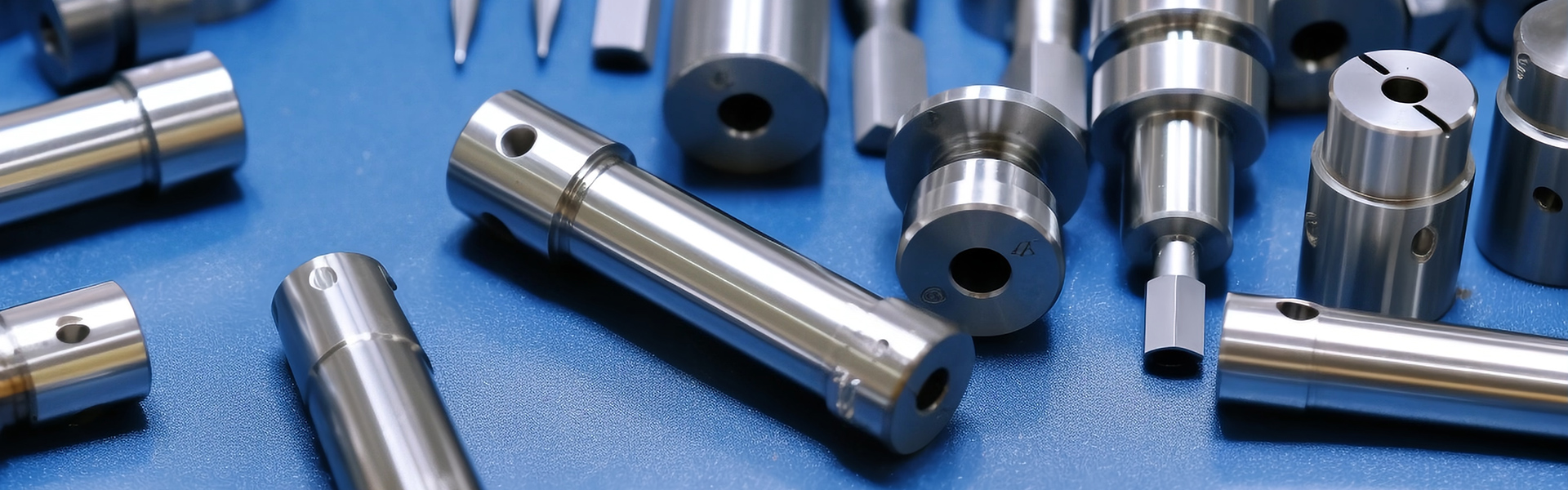
Leading Stamping Parts Manufacturer Shares Precision Metal Forming Insights
2026-11-16
In an industry where every micron matters, precision metal forming continues to push the boundaries of what's possible. A leading stamping parts manufacturer has stepped forward to share rarely discussed insights into this exacting craft—revealing methods that could change how we think about component design and production. Behind these revelations is BOYIKUN, a driving force in advanced stamping technology. If you've ever wondered what truly separates exceptional metal parts from the merely adequate, the following breakdown will open your eyes.
Precision Metal Forming: Beyond the Basics
Precision metal forming often starts where conventional stamping reaches its limit. Rather than simply pushing material into a die, the process orchestrates flow, grain alignment, and temperature with such control that variation drops to microns. It’s less about brute force and more about reading the metal’s behavior in real time—understanding how a subtle shift in hold-down pressure or a fraction of a degree in tool tilt can change the final geometry. When done well, tight tolerances are a by‑product, not a promise advertised.
What sets advanced work apart is the marriage of material science and sensor feedback. Instead of relying solely on predetermined settings, shops now embed instrumentation directly into tooling, measuring elastic recovery as it happens and adjusting the stroke on the next cycle. The focus shifts from “making parts” to cultivating a stable process window where springback, thinning, and residual stress are managed before they become scrap. For micro‑forming applications—connectors, medical implants, watch components—this means forming features so small that traditional tool‑and‑die logic breaks down, replaced by grain‑scale considerations and ultrasonic assistance.
Beyond the obvious dimensional gain lies a quieter advantage: repeatability under strain. When production runs stretch into the millions, the real test isn’t the first hundred parts off the press but how the process holds up as tools warm and coatings wear. The shift to servo‑driven presses and closed‑loop control has turned forming into a continuously self‑correcting dialogue between the machine and the material, often eliminating secondary finishing steps entirely. In that sense, “beyond the basics” is less a destination and more a willingness to treat every stroke as a data point worth reading.
How Top Manufacturers Eliminate Defects Early
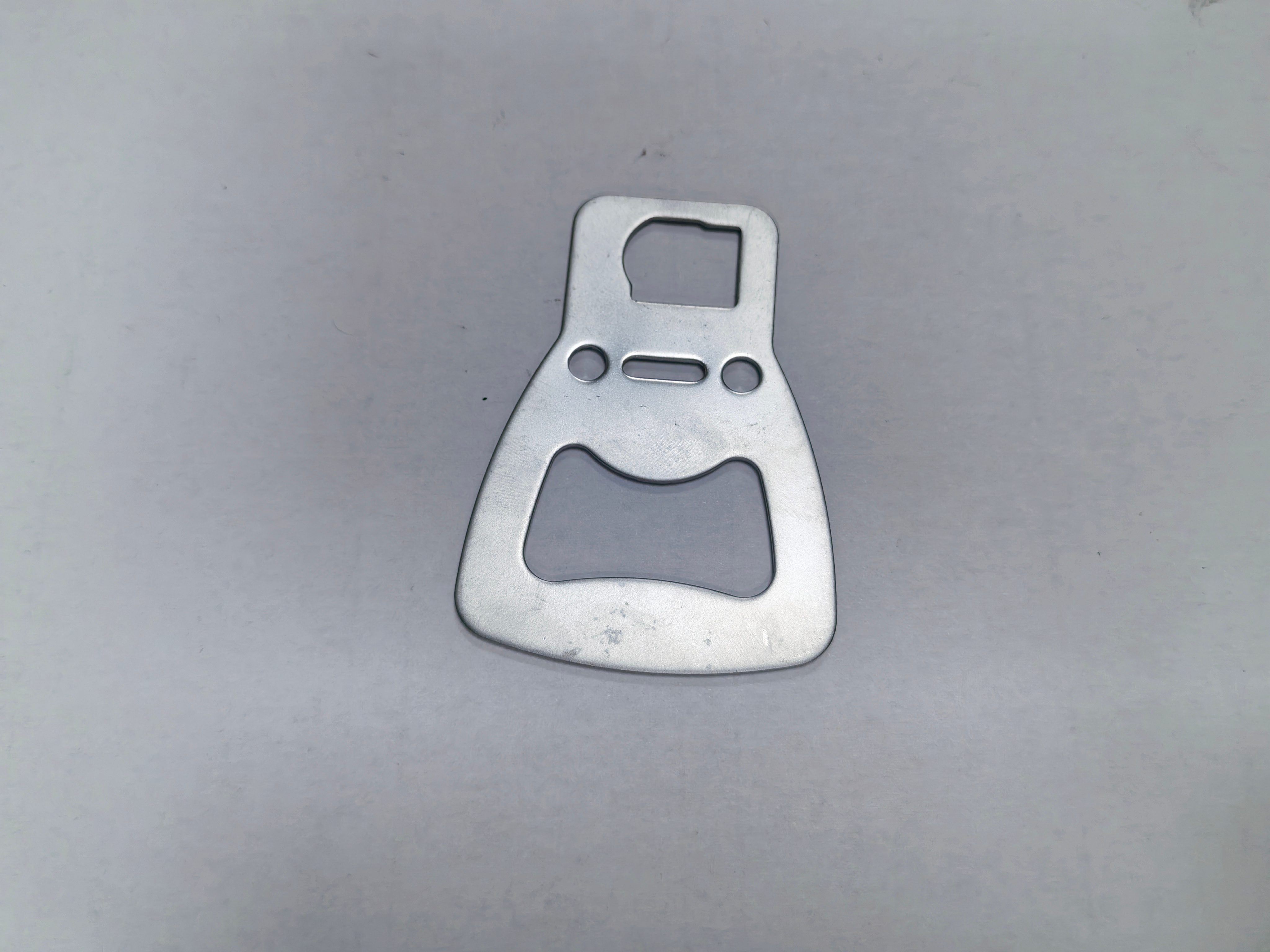
Catching flaws before they become expensive recalls isn't about luck—it's about building intelligence directly into the production line. Leading factories now deploy real-time sensor networks that track vibration, temperature, and pressure at every station, flagging anomalies the moment a process drifts out of spec. Instead of waiting for end-of-line inspections, operators receive live alerts on tablets, enabling them to adjust tooling or tighten a parameter while the batch is still running. This immediate feedback loop turns each operator into an active quality gate, drastically reducing the number of defective units that ever reach a pallet.
Beyond sensor data, top-tier manufacturers are pairing inline vision systems with predictive algorithms trained on years of historical defect images. These systems don't just spot a scratch or a misaligned component—they recognize the early pattern that led to it, like a subtle change in material reflectivity or a slight shift in assembly rhythm. When the algorithm detects a rising probability of a specific defect type, it can prompt a targeted preventive action: swapping a worn nozzle, cleaning a fixture, or reordering a raw material batch before bad parts are even produced. Maintenance teams move from reactive firefighting to planned micro-stops, which keeps throughput steady while quality climbs.
Perhaps the quietest revolution is the closed-loop culture these tools enable. When a defect is nipped at the source, the event is automatically logged with full contextual data—machine settings, operator input, ambient conditions—and shared across shifts in a daily digital stand-up. This isn't the old-school “blame and retrain” cycle; it's a rapid learning system where line crews, engineers, and suppliers jointly dissect root causes in minutes, not weeks. By making defect prevention a transparent, collaborative routine rather than a secretive post-mortem, these manufacturers have baked quality into their DNA, trimming waste and building trust in every unit that ships.
Material Choice as a Competitive Advantage
Few levers shift a product’s market position as quietly and profoundly as the materials you select. While competitors race to optimize price or add features, a carefully chosen substrate, coating, or composite can redefine how a product feels in the hand, how long it lasts in the field, and how decisively it communicates a brand’s intent. This isn’t about ingredient-label superiority—it’s about sidestepping the parity trap. When a running shoe midsole returns energy measurably longer, or a kitchen tool resists wear without added weight, the decision to buy stops being a comparison and becomes an instinct. The material itself carries the argument.
The advantage compounds when material choice intersects with real-world friction points that customers have learned to tolerate. Think of the seam that always frays, the grip that degrades under UV light, the enclosure that warps after repeated sterilization. Addressing these quietly, through a polymer substitution or a fiber orientation that competitors haven’t mapped, turns a commodity into a reference product. Buyers may never name the material, but they remember which item didn’t fail. Over time, that embedded reliability shapes entire procurement habits and creates distance that pure marketing cannot duplicate.
Yet the move demands a departure from spec-sheet thinking. Winning teams don’t simply pick a higher-grade alternative—they cultivate a tight feedback loop between field data, prototyping, and supplier collaboration. They treat early-stage material investigations as strategic bets rather than cost-down exercises. This can mean developing a custom alloy that opens a new design language or selecting a bio-based feedstock that aligns with emerging regulatory tailwinds long before mandates arrive. The result is a defensible moat built not around what the product does, but around what it is made of—something rivals find surprisingly hard to reverse-engineer in a meaningful timeframe.
When Tolerances Define Product Success
Precision manufacturing often looks flawless on paper until a batch of parts goes into assembly and suddenly nothing fits. The quiet culprit isn’t a glaring defect but a tolerance stack-up that was never studied with enough depth. When tolerances define product success, designers stop treating them as default values and start modeling worst-case and statistical variations early. The result is a design that breathes—compensating for thermal expansion, assembly force, and subtle material shifts without relying on luck or post-production rework.
In high-volume production, even a few microns of unexpected shift can cascade into field failures that drain warranty reserves. Teams that succeed here move past nominal thinking and use tolerance analysis to balance cost and reliability. They accept that perfection isn’t achievable, but predictable functionality is. That mindset shifts conversations with suppliers from “hit this number” to “stay inside this envelope because here’s what happens at the edges.” The assembly line becomes boringly consistent, and that’s exactly the goal.
Tolerances also shape the customer experience in ways hard to capture on a spec sheet. A latch that feels solid, a connector that clicks without excessive force, a door gap that’s visually uniform—these sensations are engineered through iterative tolerance loops. When companies get this right, the product earns a reputation for quality that no marketing campaign can fabricate. It’s a reminder that tolerance decisions aren’t just about geometric limits; they’re about the unspoken promise of durability and care in the user’s hands.
Lessons from Custom Stamping Projects
Every custom stamping project starts with a clear lesson: nothing on paper survives contact with the press. Early on, I learned that material behavior under real tooling diverges faster than simulation can predict. Grain direction, springback, even the way lubricant pools in a corner—these details don’t announce themselves until you’re holding a warped or fractured part. One run with an aggressive draw taught us more about thinning limits than any specification sheet ever did. The takeaway was simple but humbling: factor in generous validation cycles, and treat each die trial as a conversation with the metal, not a checkbox.
Another insight that keeps surfacing is how much tooling design feeds downstream chaos. A small radius here, a lack of venting there—those micro-decisions compound when you scale from prototype to production. In one stamping build, a seemingly harmless bend sequence started generating hairline cracks after 3,000 strokes. The fix wasn’t exotic; we just redistributed forming stages and dialed back a punch angle. But the real lesson was in foresight: the best projects don’t chase perfection. They build in escape routes for problems that nobody can forecast during the CAD stage.
Finally, and too often overlooked, is that custom stamping work thrives or stalls on the floor, not in the office. Operators who’ve run the same press for years often carry a library of undocumented fixes—things like adjusting dwell time by ear or recognizing coil set by the way stock feeds. The gap between an optimized digital model and a smoothly running setup is filled by that human intuition. I’ve seen weeks of engineering head-scratching resolved by a setup person moving a hold-down finger half an inch. The lesson there isn’t about technology. It’s about respecting the hands-on knowledge that exists only on the shop floor.
Automation’s Role in Consistent Part Quality
Handing a process over to a machine can feel like giving up control, but in manufacturing, it’s often the only way to lock in repeatability. Automated systems don’t lose focus after the third hour of a shift; they apply the same clamping force, the same cutting speed, and the same inspection check at cycle count 1,000 as they do at cycle one. That unglamorous consistency is what moves a shop from “we can hit tolerance sometimes” to “we guarantee it across every shipment.” When chatter marks or thermal drift threaten to introduce random variation, a programmed offset or a closed-loop feedback response keeps dimensions inside a band so narrow that SPC charts barely flicker.
Quality drift often starts with the kind of subtle shortcut no one writes down—the operator who nudges a feed rate override to make up lost time, or the inspector who relaxes a go/no-go check because the last fifty parts were fine. Automation removes those fragile human decision points and replaces them with a fixed sequence of events that can be audited, tuned, and validated. A collaborative robot loading a lathe doesn’t interpret a work instruction; it executes a trajectory verified with laser-tracked coordinates. An inline vision system doesn’t guess whether a surface finish is acceptable; it’s trained on a library of pass/fail images agreed on by both engineering and the customer. The result is a process that produces quality not by luck, but by design.
Perhaps the least celebrated advantage is how automation turns inspection from a sorting exercise into a source of real-time process intelligence. When every part is measured and the data flows directly into a statistical model, trends appear before they become defects. A slight shift in a bore diameter traced back to tool wear triggers a preemptive tool change during a scheduled pause, not an emergency alarm at 2 a.m. This feedback loop doesn’t just catch bad parts—it prevents them, tightening the link between what’s designed, what’s made, and what’s delivered, without relying on anyone’s heroic effort.
FAQ
The real difference comes down to control and intent. Conventional stamping often prioritizes speed and volume, accepting a certain amount of deviation as long as parts are functional. Precision stamping, on the other hand, is engineered from the ground up for repeatability, often holding tolerances down to the micron level. This requires a different mindset in tooling design, press selection, and in-process measurement—it's less about just hitting a shape and more about achieving that shape identically every single cycle.
There isn't a one-size-fits-all answer, but we consistently see great results with high-strength copper alloys and fine-grain stainless steels. What matters most isn't just the material grade but how predictable its springback and grain structure are. For medical or aerospace work, we often work with nickel-titanium or specialized aluminum alloys where the forming window is narrow, and the margin for error is almost nonexistent.
We never rely on post-production sorting. Instead, we embed real-time feedback loops directly into the press. Sensors monitor tonnage, material feed position, and part ejection force with every stroke. Any drift outside the expected envelope triggers an immediate automatic adjustment or a controlled stop. It's about treating the entire stamping cell as an intelligent system rather than a mechanical punch-and-die set.
Absolutely, but the approach has to shift. For lower quantities, we lean on modular tooling and rapid-change systems that minimize setup time and upfront investment. Sometimes the smartest solution is a hybrid approach—using laser-cut blanks combined with forming in a flexible press brake cell. The key is being honest with the client about where precision adds value and where a simpler method would suffice.
Tooling is everything. We often spend as much time simulating material flow and thermal effects in software as we do on the production floor. By the time steel meets strip, we've already accounted for deflection under load, progressive wear on cutting edges, and even the slight elastic rebound of the die set itself. A well-designed tool isn't just hard and sharp—it's predictably compliant where it matters.
Some features simply can't be formed in a single hit without tearing or thinning beyond the acceptable limit. In those cases, we break the operation into smaller, progressive steps, sometimes adding intermediate annealing to reset the grain structure. We've also had success using servo-driven presses that let us manipulate the ram speed and dwell within a single cycle, effectively changing the forming conditions mid-stroke.
Servo press technology combined with high-fidelity simulation software has been a game changer. Being able to program the slide velocity, acceleration, and pause points gives us a level of process control that mechanical presses simply can't match. Pair that with AI-assisted tool wear prediction, and we're now able to push boundaries in part complexity while maintaining uptime that wouldn't have been possible a decade ago.
We prefer to get involved before the drawing is locked. Engineers on both sides sit down and ask, 'What does this feature actually need to do?' That often reveals geometry that can be simplified, corners that can be radiused slightly for better material flow, or tolerances that are tighter than necessary and drive up cost. This kind of co-development turns stamping from a transactional process into a true partnership.
Conclusion
The landscape of modern manufacturing demands a precision metal forming approach that goes far beyond conventional presswork. A leading stamping parts manufacturer reveals that true expertise begins with eliminating defects at the earliest possible stage—long before any tooling is cut. By embedding rigorous process simulation and real-time monitoring from the outset, potential failures in grain structure or thinning are predicted and neutralized. This front-loaded engineering mindset turns material choice into a strategic lever rather than a mere specification; selecting the optimal alloy or even tailoring a custom temper can dramatically widen process windows and slash downstream waste. In high-stakes industries, such foresight transforms raw stock from a cost factor into a genuine competitive advantage.
When product success is defined in microns, tolerance control becomes the heartbeat of every project. Lessons extracted from years of custom stamping engagements show that achieving hair-width precision repeatedly hinges on harmonizing tool design, material springback behavior, and in-die feedback systems. No design review is complete without mapping how dynamic forces will interact across high-speed production runs. Here, automation plays a pivotal role—not as a labor replacement, but as the enforcer of consistency. Intelligent servo-driven systems that adjust ram position or cushion force mid-stroke can compensate for coil-to-coil variability in real time, locking in part quality that manual processes could never sustain. These interconnected practices form a repeatable blueprint where first-piece quality mirrors millionth-piece integrity, solidifying a manufacturer’s reputation in an unforgiving market.
Contact Us
Contact Person: Xianchen Hu
Email: [email protected]
Tel/WhatsApp: 86-13248645200
Website: https://www.hexnb.com/