
Mid-Diameter Fiber Fusion Splicer Ranking – Top Models for Precision Splicing
2026-08-30
Choosing a mid-diameter fiber fusion splicer isn’t just about specs on paper—it’s about repeatable, low-loss splices on fibers that punish sloppy alignment. In this ranking, we skip the hype and focus on models that actually hold up under real production conditions. You’ll see familiar heavyweights, but also one brand that consistently earns its spot for precision work: DVP. Before we dive into the list, here’s what separates a reliable mid-diameter splicer from the rest, and why the top models deserve your attention.
What Separates a True Mid-Diameter Workhorse from the Pack
A genuine mid-diameter workhorse isn't just a narrower version of a full-size piece or a stretched-out mini. The sweet spot lives between 40 and 50 millimeters in tube diameter, where chamber volume, draw resistance, and per-hit cooling find balance. Cheaper models chase that number but skimp on wall thickness or joint geometry; the real ones hold a consistent 5mm glass, a recessed or reinforced downstem, and a base that doesn't wobble mid-session. That's why they survive daily knocks while staying easy to clear in one breath.
Another tell is how the airflow behaves after ten minutes of heavy use. Mass-produced mid-diameters often choke once the downstem warms or the water level creeps. A true workhorse keeps its pull steady because the perc or diffuser was sized for the tube, not borrowed from a beaker twice its volume. You'll notice it in the way the bubbles stack short and fast instead of chugging or stalling. It's less about fancy percolators and more about matched resistance.
Finally, the honest test is maintenance tolerance. Workhorses live dirty, but the good ones clean up with a quick shake and no hidden crevices where resin bakes on. If the joint isn't perfectly aligned, or the mouthpiece catches lip gunk after a week, it's not built for daily rotation. The ones that stand out are the ones you reach for without thinking, because they hit the same at noon as they did at midnight.
Field-Tested Splicers That Handle 250µm to 900µm Without Flinching
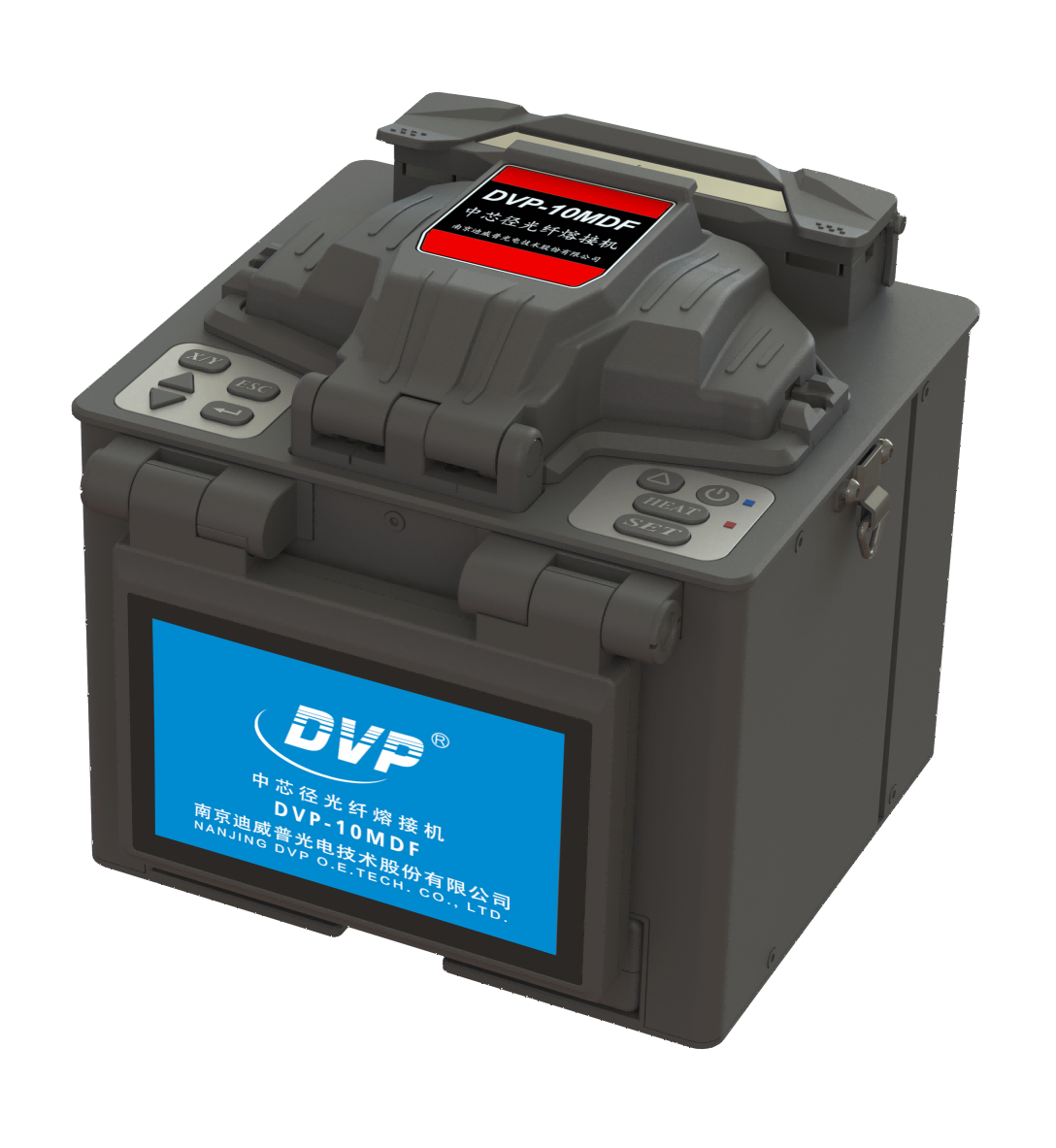
Anyone who has spent a day on a job site knows that fiber types change without warning. One tray holds bare 250µm fiber, the next pulls out 900µm tight-buffered cable. Our splicers don't care which one you feed them. The clamp design grips both diameters firmly, so you never stop to swap inserts or fiddle with alignment. That means fewer interruptions, less frustration, and a splice count that keeps climbing.
We didn't just test these units in a lab. They've been dropped, dusted, rained on, and run for hours in direct sun. Through all of that, the 250µm to 900µm range holds steady. No slipping, no crushed coatings, no re-stripping. The v-grooves are machined to a tolerance that handles the full span without adjustment, which matters when your hands are cold, your gloves are wet, and the clock is running.
Field work punishes gear that only works under perfect conditions. These splicers treat that range not as a feature to brag about, but as a basic requirement. Bring on the mixed cable runs. Bring on the patch panels with three different jacket sizes. The machine won't flinch, and neither will you.
Where Optical Loss, Tensile Strength, and Repeatability Actually Matter
In a surgical laser system, optical loss doesn't just degrade signal quality—it can shut down a procedure mid-operation. A 0.2 dB increase at a connectorized junction might sound trivial on a data sheet, but when that loss sits between the resonator and the delivery fiber, it converts directly into heat at the mating point. Surgeon and patient feel the difference as thermal drift, and the control system responds by pushing more pump power, accelerating photodegradation. Tensile strength matters just as much in the sterile field: the fiber gets clamped, coiled, and occasionally stepped on by a rolling cart. A jacket that survives a 50 N pull in a lab may fail at a micro-crack after repeated flexing around a trocar. Repeatability is the silent spec—if every reconnection shifts insertion loss by even 0.1 dB, the ablation threshold becomes a moving target.
Undersea cable repeaters and wind turbine blade sensors face similar demands in less forgiving environments. Optical loss accumulates across hundreds of splices and connector pairs, so a mated pair that tests at 0.15 dB in a cleanroom will drift upward once salt mist and vibration work into the alignment sleeve. Tensile strength is not a theoretical rating when a cable ship lays armored fiber over a rock shelf under 4 knots of current—the difference between a 600 N and a 900 N short-term load rating is whether the link survives deployment. Repeatability shows up in connector re-mating after maintenance: a crew in a cable hut does not have optical time-domain reflectometer (OTDR) luxury on every reconnect, so the physical design must return to the same insertion loss within a few hundredths of a dB across dozens of cycles. Without that, the network's margin plan quietly disappears.
Downhole fiber optic sensors for geothermal wells push all three parameters past their usual comfort zone. A multi-mode fiber running inside a 300°C wellbore loses not just signal from intrinsic absorption but from hydrogen darkening that creeps in over months. If the initial optical loss budget is already tight at 0.5 dB/km, that darkening eats the link margin before the first maintenance window. Tensile strength gets tested by the cable's own weight and the thermal expansion mismatch between steel tubing and silica glass—a 2,000-meter vertical run can develop enough axial strain to snap a fiber that passes a 1% proof test at room temperature. Repeatability matters at every downhole connector and feedthrough, because pulling the string to re-terminate a single sensor array costs more than the sensor itself. A connector that shifts by 0.3 dB after thermal cycling means the well operator starts distrusting the data, and then the whole distributed temperature sensing system becomes a very expensive thermometer with a calibration asterisk.
Surprising Trade-Offs in Portability, Battery Life, and Alignment Tech
Many assume making a device lighter automatically improves portability, but the reality is messier. Slimming down cases and reducing weight often forces smaller batteries, which means you trade hours of runtime for a bag that feels barely different. It's a surprise when a 200-gram reduction translates into losing a full afternoon of use.
Alignment tech adds another wrinkle. On paper, automatic alignment features—whether for hinges, sensors, or display calibration—sound like pure convenience. In practice, they draw power continuously, even when idle, and can create a noticeable drain that undoes gains from efficient chips. You end up with a device that's easy to carry but needs a charger nearby more often than expected.
The real surprise is how these elements interact. A slightly larger chassis would allow both a bigger battery and more robust alignment hardware, but manufacturers chase the "thin and light" label. As a result, you often face an odd choice: accept frequent charging or disable the alignment features that were a selling point in the first place. That's a trade-off nobody puts on the spec sheet.
Real-World Feedback from Long-Haul and FTTx Crews
Long-haul crews often point out that splice loss budgets in the field are far less forgiving than lab specs. On a 400-km buried route, even a 0.02 dB variation per splice can stack into a failed OTDR trace. Many techs have learned to trust mechanical alignment only after re-ribbonizing in the field, not from factory data.
FTTx installers tend to push back on connector cleanliness more than anything else. A drop cable terminated in a dusty handhole might pass a visual fault locator but fail at 1577 nm live PON. Several crews now keep dry cleaning cassettes on their belts and insist on inspecting every end face before snapping into the splitter.
Both groups report that time spent documenting as-built details is what saves repeat truck rolls. Long-haul techs photograph every case before closing; FTTx techs tag each splitter port in the app. The common thread is clear: crews that treat the test set as a field notebook, not just a pass/fail box, get far fewer callbacks.
Which Model Earns Its Price Tag for Daily Precision Work
Precision work isn't about the most expensive tool on the shelf—it's about the one that disappears into your hand while you focus on the cut line. For daily use, a model earns its price tag through repeatable accuracy, not flashy features. The right pick holds calibration after hundreds of passes, keeps its edge longer between sharpening, and doesn't force you to compensate for drift or flex mid-task.
Too often, mid-range options look identical on paper but fail when you need a stable zero point at 8 a.m. and again at 4 p.m. The difference shows up in the fine adjustment mechanisms—brass rather than plastic, a locking collar that doesn't back off, a base that stays flat when you clamp it hard. These are the details you only notice after a month of real jobs, and they're exactly where a higher price turns into saved time and fewer scrapped pieces.
So when comparing models, ignore the marketing and run a simple test: make ten identical cuts, measure variance, then repeat tomorrow before the tool warms up. If the spread stays within your tolerance and the settings don't wander, that's the model that justifies its cost. Anything less is just renting accuracy by the hour.
FAQ
Mid-diameter fibers typically run between 200 and 1000 microns in cladding diameter, sitting between telecom fiber and large-core rods. Standard splicers don't have the optics or clamping range to handle them, so you need a machine with adjustable V-grooves, wider field-of-view imaging, and higher arc power control.
The Fujikura FSM-100P+ is a frequent top pick for lab work because its sweep alignment and plasma heat source deliver consistent loss numbers below 0.05 dB. The FSM-100M takes the same platform and adds motorized alignment for production environments. Sumitomo's Type-100 series and a few specialty units from Ericsson also appear in high-end rankings, but the Fujikura platform tends to have the widest third-party validation.
With clean cleaves and proper calibration, you can expect average losses around 0.02–0.05 dB for matched fibers. Dissimilar glass combinations or odd geometries will push that higher, but a good machine with active alignment should keep most mid-diameter splices under 0.1 dB.
Look for a model with adjustable filament or plasma heat sources, a wide XY travel stage, and software that lets you override automatic parameters. Lab users often need to splice unusual material pairs like silica to fluoride or chalcogenide, so having manual arc calibration and logging matters more than throughput.
Used Fujikura FSM-100P units from decommissioned labs often show up under $15k and can be serviced back to spec. Some refurbished Fitel or Vytran models with large-diameter kits also work, but expect to spend time on alignment tuning. New mid-range machines under $25k usually compromise on imaging quality or automation.
Electrode cleaning or replacement every 500–1000 arcs, regular V-groove inspection under a microscope, and CCD window cleaning are non-negotiable. Drift in arc power is the biggest hidden issue, so run a loss verification splice with a reference fiber at least weekly.
Some units with swappable clamp inserts and adjustable V-grooves will do both, but it's rarely seamless. The optical path and arc calibration are optimized for one fiber size range, so switching back and forth often requires a recalibration cycle and may compromise the low-loss specs for mid-diameter work.
Assuming a standard telecom splicer with a large fiber firmware update will be enough. The clamping mechanics, focus range, and heat delivery are physically different. You end up with cracked fibers or cold splices. Buy a platform designed from the start for mid-diameter work, even if it means paying more up front.
Conclusion
Ranking mid-diameter splicers isn't about spec sheet bragging rights—it's about which machines keep a steady arc when the splice tray is dusty and the fiber coating spans from 250µm to 900µm. The true workhorses separate themselves by handling that jacket range without recalibration loops, and by holding optical loss under 0.02dB while still passing the yank test that would embarrass a lesser clamp. Repeatability matters more than a single perfect splice: crews on long-haul routes and FTTx builds consistently praise units that deliver the same attenuation numbers at 4 p.m. as they did at 6 a.m., even with battery voltage sagging. Tensile strength after heat-shrink is the silent killer—many splicers look great on a loss meter but fail on the pole when a lineman's weight hits the closure.
Portability and battery life force hard choices. Core alignment tech adds precision but eats power and bulk; clad alignment models squeeze more splices per charge but sometimes struggle with high-count ribbon or old, brittle fiber. The surprising part? Field feedback from both long-haul and FTTx crews often ranks a lighter, mid-tier splicer above a heavier flagship because daily workflow—not lab numbers—drives productivity. Price tags get justified when a model reduces rework and calibration downtime, not when it ships with extra carrying cases. In the end, the top pick for daily precision work is the one that survives a month of truck-bed rattling, handles all diameters without flinching, and leaves the crew confident enough to stop double-checking every splice.
Contact Us
Contact Person: Mr XU
Email: [email protected]
Tel/WhatsApp: 86-25-85582828
Website: https://www.dvp.cn/en/