
Naxi Cultural Attractions: Unmissable Top Sites to Explore
2026-07-25
Nestled in the heart of Yunnan, the Naxi culture boasts a tapestry of ancient traditions and breathtaking landscapes that captivate every traveler. Among its many treasures, the serene Jade Water Village stands out as a living showcase of Dongba heritage and natural beauty. But this is just the beginning—prepare to uncover more unmissable sites that reveal the soul of this enchanting land.
The Cobbled Heart of Naxi: Lijiang's Ancient Quarters
Wandering through Lijiang's old town feels less like sightseeing and more like stepping into a living folk tale. The cobblestones beneath your feet have been polished smooth by centuries of footsteps, tea-laden ponies, and the slow drip of mountain rain. Narrow lanes twist with a logic all their own, branching off toward hidden courtyards where Naxi women still sit in the sun, stitching embroidery that tells stories older than the streets themselves. It’s the kind of place where you stop checking your map and simply follow the sound of water—because here, every channel and stone bridge leads you somewhere that matters.
The Naxi people have cultivated an almost musical relationship with their environment, and you hear it in the wooden shop fronts creaking open at dawn, in the distant clatter of a loom, and in the murmur of conversations held in a language with its own pictographic script. Unlike other ancient quarters that have been entirely handed over to tourism, Lijiang still holds pockets of stubborn everyday life. A grandmother might water her potted orchids while tourists stream past, unbothered and unimpressed. At dusk, the air fills with the smell of woodsmoke and yak butter tea, and somewhere in the labyrinth a dongba priest might chant verses that have echoed here since the Tang dynasty.
The magic of these quarters isn’t in any single landmark but in the way the old stones channel the flow of life. The waterways, fed by Black Dragon Pool, rush alongside the lanes, carrying petals and fallen leaves through the heart of the town, a quiet reminder that Lijiang was built around nature, not against it. Standing on a bridge at night, with lanterns reflecting in the dark water and the mountains silhouetted against a star-filled sky, you understand why the Naxi say their home sits where heaven and earth meet. It’s not a museum piece; it’s a heartbeat, still steady after eight centuries.
Jade Dragon's Whisper: Myths Carved in Snow
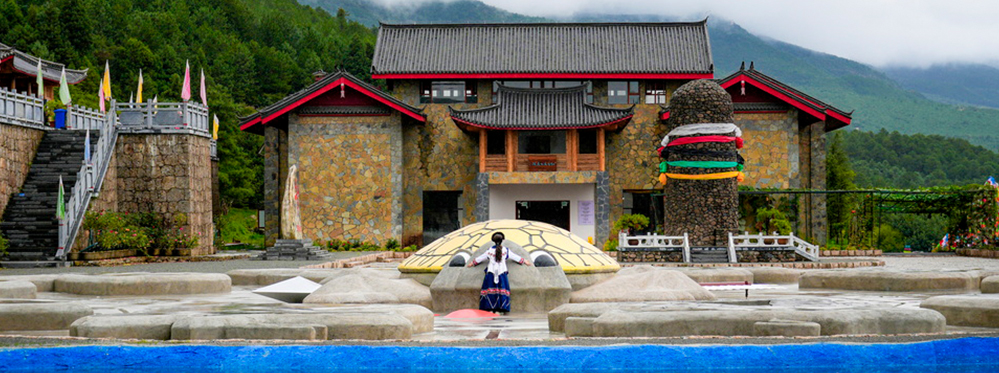
Beneath the frozen peaks of Jade Dragon Snow Mountain, a silence so deep that every gust of wind feels like a murmured legend. The Naxi people tell of a dragon who wrapped the mountain in its coils to shield the lands from a darkness that would not recede. Its breath turned to frost on the temple eaves and etched stories into the ice—stories of love torn between heaven and earth, of brave hunters who chased suns, of women who wove clouds into cloth. Each winter when the snow settles thickest, the dragon’s whisper can still be heard in the creak of bamboo groves and the crack of ancient glaciers, reminding those who listen that this mountain is not merely rock and ice, but a living scroll of memory.
Walking the narrow paths that snake through spruce forests, one stumbles upon silent cairns and prayer flags bleached by the sun—markers left by those who sought the dragon’s counsel. Local elders say that on clear nights, when the moon catches the summit just right, you can see the outline of scales along the ridge, shimmering faintly as if the beast is stirring in its long slumber. It’s easy to dismiss such tales as fanciful, yet the weight of the air up here presses them into something like truth. The mountain’s moods are fickle; cloud shadows race across granite faces like the ghost of a tail sweeping away doubts, while sudden flurries kiss your cheeks with an unsettling softness. Here, myth and landscape blend so seamlessly that you stop questioning where one ends and the other begins.
Perhaps what endures most is not the dragon itself but the hush that follows its name—a quiet that invites you to kneel by a half-frozen stream and trace the patterns carved into stone by centuries of meltwater. These are not random grooves; they are the lines of an epic, a record of floods endured, crops blessed, lovers parted and reunited under the dragon’s gaze. Visitors leave offerings of rice and barley wine at small shrines, not out of obligation, but from a sense of deep-rooted connection to something older than language. And as the wind rises and the peaks vanish into mist, you realize that the whisper is not a sound at all—it is the mountain breathing stories into the marrow of those who walk its slopes, ensuring that the myths carved in snow never truly melt away.
Script of Shamans: Dongba's Living Legacy
Carved into the bark of history, the Dongba script escapes easy classification—not quite pictogram, not fully syllabary, it is a restless code used by the Naxi shamans of Yunnan to converse with unseen realms. Each character is a gesture, a living handprint of a ritual specialist who danced between worlds, binding myth to matter with strokes that remain legible only to those initiated into the old ways.
Far from a fossilized curiosity, this script breathes through the ceremonies it was never meant to leave. Its symbols, coiled like sleeping snakes, awaken only when chanted aloud in the mountains where the Naxi still honor their ancestors. Broken free from museum cases and academic studies, the Dongba writing persists as a quietly defiant act—a memory system woven into fabric, etched onto altars, and sung into the dawn.
What survives today is more than a dictionary of the supernatural; it is a remnant of ecological literacy, encoding human relationships with forests, rivers, and the spirits that govern them. As younger generations look backward to find their future, the script transforms into something unexpected: not just a relic of shamanic power, but a compass for reimagining coexistence in a fading world.
Melodies from a Lost Era: The Naxi Orchestra
Sitting in a dimly lit hall in Lijiang, you hear the first strains of the Naxi Orchestra before you see them—ancient silk strings and bamboo pipes weaving a soundscape that feels more like memory than music. The players, many in their seventies and eighties, hold instruments that have been passed down for generations: the erhu with its snakeskin resonator, the pipa’s pear-shaped body worn smooth by countless fingers. Their hands move with a delicacy that speaks of lifelong devotion, coaxing out tones that seem to hover between the notes, as if the melodies themselves are reluctant to fully emerge from the past. The music is stately, unhurried, a communal breath held for centuries.
What makes the Naxi Orchestra’s repertoire so haunting isn’t just its age—some pieces trace back to the Tang and Song dynasties—but the way it has survived against impossible odds. Remote valleys and tight-knit communities shielded these sounds while they vanished elsewhere, turning them into a living fossil of Chinese classical music. And yet, there’s nothing dusty or academic about a performance. The percussionist might break into a sudden, mischievous grin as he strikes a wooden block, and the flutist closes her eyes as if listening to a voice only she can hear. This is music not as artifact, but as a conversation between the living and the long-gone.
Perhaps the most moving piece is "The Water Dragon's Song," a melody that supposedly came to a Naxi shaman in a dream centuries ago. The orchestra renders it with a solemnity that borders on ceremony, the gongs and bells punctuating the air like droplets in a cave. As the final note decays, you realize you’ve been listening not just to an ensemble but to a people’s stubborn refusal to let their sonic world dissolve. In the silence that follows, the lost era doesn’t feel so lost anymore—it hums beneath the floorboards, lingers in the incense smoke, and waits patiently for the next bowed string to call it back.
Frescoes of Faith: Baisha's Artistic Merge
Tucked away in the quiet town of Baisha, just a short journey from Lijiang’s bustling old quarter, a series of ancient murals quietly defy the passage of time. These are not mere decorations; they are a visual testament to a moment when Naxi artisans, Tibetan lamas, Han Chinese painters, and even envoys from far-flung lands poured their beliefs onto plaster. The result is a rare fusion where Buddhist compassion meets Daoist serenity and the everyday rhythms of village life, all rendered in mineral pigments that still whisper their stories centuries later.
What makes the Baisha frescoes so captivating is their seamless blending of artistic traditions. In one panel, a Bodhisattva’s robe might flow with the fluidity of a Tang dynasty ink scroll, while the background mountains echo the staccato brushwork of Himalayan thangka painting. Faces shift between the rounded, earthly warmth of Naxi folk art and the fine, elongated features of classical Chinese saints. This was no accidental overlap—it was a deliberate cultural conversation, sponsored by local chieftains who embraced religious pluralism as a political art. The murals became a bridge, not just between heaven and earth, but between communities that rarely shared a canvas.
Today, standing in the dimly lit halls of the Dabaoji Palace, you can still feel that delicate balance. Morning light filters through carved wooden screens, catching the gilded halos of Shakyamuni and the gentle smile of a Taoist immortal with equal tenderness. Small details reward the attentive eye: a peony in bloom beside a lotus, a celestial musician playing a Naxi instrument, a hunter laying down his bow before a sage. There’s no sermon here, only a quiet invitation to see the sacred in the familiar—and to remember that faith, in Baisha, was never a single note but a harmony of many voices captured on plaster.
Villages in the Mist: Naxi Life Beyond Tourism
As dawn breaks over the foothills of the Jade Dragon Snow Mountain, the stone-paved lanes of Yuhu village remain wrapped in a quiet mist. This is not the Lijiang of postcards—no throngs of tourists, no neon-lit bars. Here, the Naxi people begin their day as they have for centuries, feeding yaks and tending vegetable plots, their traditional wood-and-earth homes blending into the grey landscape. The air is cool and carries the scent of pine and damp earth, a reminder that life in these high-altitude hamlets follows rhythms older than any guidebook.
In villages like Baisha and Shuhe, the famed Dongba culture breathes not in staged performances but in everyday gestures. An elderly man in a blue Mao-era cap sits on a doorstep, whittling a wooden charm while humming a tune his grandfather taught him. Women gather in courtyards to spin wool or dry chilies, their laughter punctuating the stillness. The pictographic Dongba script, once used by shamans for rituals, now survives in manuscripts lovingly preserved in family homes, sometimes shown to curious visitors who wander off the main tourist trails.
Beyond the guesthouses and souvenir stalls, a quieter Naxi identity endures. It lives in the communal wells where villagers still draw water, in the stories told around fire pits during long winters, and in the stubborn refusal to let modernity erase a way of life attuned to the mountains. To walk these misty lanes is to step into a world where tourism is merely a faint echo, and the true heartbeat of the Naxi can still be heard, faint but steady, beneath the fog.
FAQ
It's the blend of cobblestone lanes, wooden architecture, and the ever-present sound of rushing water from the canals. Unlike many touristy spots, the town still has a living local culture—you'll see elderly Naxi women in traditional dress chatting on street corners, not staged performances.
You can find genuine Naxi music performances in smaller tea houses or courtyard inns, often by elderly musicians who've played together for decades. The most famous is the Naxi Ancient Music troupe, but seek out the less advertised gigs for a more intimate experience.
Yes, while the Baisha Murals are stunning, venture to Yuhu Village where the former residence of Joseph Rock houses intricate Naxi artifacts. The murals there are less crowded and you can have a quiet moment to absorb the fusion of Tibetan, Han, and Naxi art styles.
Stay in a family-run guesthouse in Shuhe Ancient Town or Baisha. Many hosts will invite you to join in making Naxi baba (flatbread) in the morning or teach you a few words of the Dongba pictographic script. It's these small, unplanned moments that make the culture come alive.
Genuine Dongba rituals are not tourist spectacles, but if you're lucky, you might encounter a small ceremony in a remote village near the Tiger Leaping Gorge area. Respect is key; don't treat it as a photo op. Some cultural centers in Lijiang offer respectful demonstrations with real Dongba priests.
Jade Dragon Snow Mountain is sacred in Naxi mythology—legend says it's the embodiment of a warrior protecting his love. Take the cable car up and, on a clear day, the view is breathtaking. But the real connection is felt in the foothills at Blue Moon Valley, where the water's color is said to mirror the tears of the mountain spirit.
Conclusion
Wandering through the ancient quarters of Lijiang feels like stepping into a living tapestry of Naxi heritage. The cobblestone streets, worn smooth by centuries of footsteps, lead you past wooden facades and burbling canals, where the Dongba culture still breathes. Here, the whispers of Jade Dragon Snow Mountain seem to guard the myths etched into its icy peaks—tales of love and sacrifice that echo in the rituals of the Dongba shamans. Their pictographic script, the only living hieroglyphic language, adorns handmade paper, preserving a cosmology that merges the divine with the everyday. As twilight falls, the haunting melodies of the Naxi Orchestra drift from a courtyard, their ancient instruments weaving a soundscape that transports you to a lost era, each note a thread in the fabric of this resilient culture.
A short journey from the old town, Baisha’s frescoes tell a different story—a fusion of Buddhist, Daoist, and indigenous beliefs, their faded colors still vibrant with a message of harmony that defies the passage of time. Beyond the tourist trails, mist-shrouded villages offer a quieter glimpse of Naxi life, where traditions endure in the rhythm of farming, weaving, and communal gatherings. Here, the spirit of Naxi isn’t just preserved in monuments; it thrives in the simple, unhurried moments. From snow-capped summits to mural-adorned temples, these attractions don’t just showcase a culture—they invite you into a narrative that continues to unfold, leaving an imprint as lasting as the cobblestones underfoot.
Contact Us
Contact Person: Changhong He
Email: [email protected]
Tel/WhatsApp: 086-0888-5190152
Website: https://vip.e-baixing.com/ysh