
New Type Car Ozone Generator Delivers Cleaner Air Inside Your Vehicle
2026-10-13
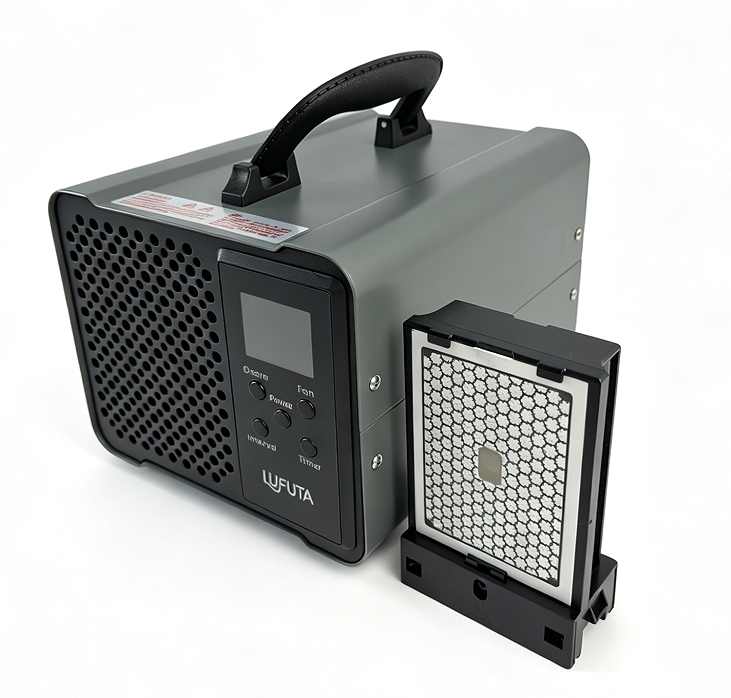
Your car’s cabin should be a sanctuary, yet it often traps odors, allergens, and even hidden bacteria. Traditional air fresheners only mask the problem. Enter the new type car ozone generator—a sleek, compact device from LUFUTATECH that actively purifies the air you breathe on every drive. Curious how ozone can make your vehicle feel factory-fresh again? Keep reading to see why this upgrade is a game changer.
The Air Inside Your Car Could Be Worse Than the Road Outside
When you roll up the windows and switch on the air conditioning, you might assume you're escaping the exhaust fumes and dust of the road. But research shows the cabin can trap a stew of volatile organic compounds from plastics, flame retardants, and upholstery adhesives. On a hot day, these materials release gases into the confined space, and because there's nowhere for them to go, you end up breathing a more concentrated mix than a pedestrian walking along the same street.
The problem is worse in newer vehicles, where that 'new car smell' signals off-gassing from dashboards, seat covers, and electronic components. Combine that with recirculated air that never fully refreshes, and tiny particles from brake wear or tire debris that seep through seals, and the inside can become a miniature pollution chamber. It's not just a matter of comfort; prolonged exposure to these compounds has been linked to headaches, dizziness, and long-term respiratory irritation.
To lower your exposure, try airing out the car before a long drive, especially after it's been sitting in the sun. Use the fresh-air setting instead of recirculation whenever you're in stop-and-go traffic, where outside tailpipe emissions are highest but often still less concentrated than the closed cabin's accumulated brew. A few minutes of open windows can do more than any scented air freshener, which often just adds another layer of synthetic fragrance to the mix.
How Ozone Reaches the Smells Air Fresheners Leave Behind
Ozone doesn't just linger where it's produced. It moves with ordinary air currents, mixing into the same spaces where air freshener molecules have settled on fabrics, walls, and floating dust. Because ozone is highly reactive, it seeks out the carbon double bonds found in many fragrance compounds. When an ozone molecule collides with a leftover scent molecule, it breaks the bond and attaches oxygen, turning the original fragrance into smaller, often odorless or differently scented fragments.
This process doesn't happen instantly or uniformly. The concentration of ozone, humidity, and the chemical makeup of the specific air freshener all shape which smells fade first and which transform into something sharper or stale. That's why a room treated with ozone can go from heavily perfumed to faintly chemical or even neutral—not because the original scent was masked, but because the very molecules that carried it were pulled apart.
No Filters, No Refills: The Maintenance-Free Advantage
Most air purifiers quietly demand a subscription to their own upkeep—replace this filter every six months, wash that screen every other week. It's a chore disguised as a feature. This unit sidesteps that entirely. No spinning blades caked in dust, no mesh you have to pry out and rinse under the tap. Just a sealed core that does its job without a single consumable part. You won't find a "filter replacement" indicator because there isn't one. That little blinking light is simply not in the design language.
Instead of trapping particles in a web that eventually clogs, the system uses an active field to neutralize airborne irritants at the molecular level. Dust, pollen, smoke, pet dander—they're broken down, not collected. So the performance curve stays flat. Year one, year three, year five: same output, same quiet hum. No gradual decline as the filter loads up. No rush of anxiety when you realize you forgot to order a replacement pack. The only thing you'll ever wipe is the outside shell, and that takes about ten seconds with a dry cloth.
For anyone who has ever stared at a dirty filter and thought, "I'll get to that this weekend," this is a quiet liberation. It's not just about skipping a task. It's about removing a recurring line item from your mental to-do list. The machine runs itself, and you get clean air without the background noise of obligation. That's the real advantage: not a lower-maintenance device, but a zero-maintenance one. Once it's plugged in, it's simply done—today, tomorrow, and every season after.
One Button to Neutralize Smoke, Pet, and Food Odors
You know the moment—last night's salmon lingers in the kitchen, the cat box makes its presence known from down the hall, and your favorite armchair still carries a faint trace of wet dog. Instead of grabbing a spray bottle for each room or lighting a candle that only adds another layer, you press one button. A quiet hum starts, and within minutes the air shifts from heavy to neutral. No perfume blast, no chemical sting. Just a clean baseline that feels like opening every window at once.
That single action triggers a reaction designed to break apart the molecules behind smoke, pet, and food odors rather than covering them with fragrance. It handles the greasy after-smell of fried bacon as easily as the stale haze left by a forgotten cigarette or the stubborn musk embedded in sofa fabric from a damp retriever. Because the process targets the source, the result is not a temporary overlay but an actual reduction in what your nose picks up.
You do not need to choose a mode for different smells or wait through a long cycle. One brief press starts the same effective response whether the offender is a burnt bagel, a litter tray overdue by a day, or last week's curry that refused to leave. That simplicity means the button becomes a reflex—hit it after cooking, after the dog comes in from rain, or before guests walk through the door. The air just feels lighter, without anyone asking what you sprayed.
Why Chemical Sprays Can’t Compete with Active Ozone
Most chemical sprays work by depositing a liquid layer that has to physically touch a surface, and that's where the first limitation appears. They miss the undersides of tables, the gaps behind appliances, the fibers deep inside upholstery. Active ozone, being a gas, doesn't rely on line-of-sight. It drifts into the same hard-to-reach spaces that sprays simply can't wet, reacting with odor molecules and microbes wherever air can circulate.
The second problem is what sprays leave behind. Many contain fragrances, surfactants, or disinfectants that linger as a film. Over time, that residue can attract dust, irritate skin, or interact with other cleaning products. Ozone, by contrast, is inherently unstable. After it does its job, it reverts to ordinary oxygen, leaving no chemical residue to rinse away or worry about.
Then there's the question of resistance and adaptation. Chemical biocides often target specific metabolic pathways, and microorganisms can develop tolerance with repeated exposure. Ozone's oxidizing power is broad and physical—it disrupts cell walls and breaks apart organic compounds rather than relying on a single biological target. That makes resistance far less of a practical concern, which is a quiet advantage chemical sprays rarely mention.
Cleaner Cabin Air in Minutes, Not Hours
Most drivers assume a thorough cabin air refresh means leaving the car with a service center for half a day. That used to be the case, but the latest filtration setups flip the timeline completely. A direct-fit replacement or a compact plug-in unit can pull dust, pollen, and stale odors out of the interior in the time it takes to grab a coffee. You pull into the driveway, swap the old filter or switch on the device, and within minutes the vents are pushing noticeably fresher air through the cabin.
What makes the speed possible isn't a stronger fan or a harsher chemical spray. It comes down to higher-efficiency media and better airflow design. Instead of waiting for the whole HVAC system to cycle multiple times, modern filters and purifiers start trapping fine particles on the first pass. The difference is easy to notice on a hot day when the AC kicks in: the usual musty smell fades quickly rather than lingering for the entire trip.
For anyone who spends real time behind the wheel, this shift matters. Quick cleaning means you're not breathing in the remnants of yesterday's takeout or a week's worth of road dust while sitting in traffic. And because the process is so fast, there's no reason to keep postponing it. A few minutes now saves you from hours of stale, uncomfortable air later.
FAQ
It releases ozone (O3) into the cabin, which reacts with odor-causing particles, bacteria, and mold spores. The extra oxygen atom breaks down these contaminants, leaving behind fresher air rather than just masking smells.
No, you should treat ozone as a treatment step, not something to breathe in continuously. Run the unit for 15-30 minutes in an unoccupied car, then air it out thoroughly before driving. This keeps your lungs happy and your interior clean.
A purifier filters particles out of the air as it passes through. Ozone actively oxidizes pollutants and reaches into fabrics, vents, and crevices where filters can't go. Think of it as a deep-clean versus routine maintenance.
If the source is gone, yes. Ozone neutralizes the compounds causing the smell, not just covering them. For heavy buildup, you might need two or three short sessions, but it's far more effective than sprays or charcoal bags.
There's no fixed schedule. Use it when you notice lingering odors, after a spill, or if the AC smells musty. For most people, once a month is plenty. Overuse can degrade rubber and plastic trim, so moderation matters.
Brief, controlled exposure is generally safe for modern materials. High concentrations over many hours can dry out leather and crack vinyl. Follow the run time recommendations and you shouldn't have issues.
Remove people, pets, and plants. Close all windows, set the AC to recirculate, and place the unit on the center console. After the cycle, open the doors and let the ozone dissipate for 10-15 minutes before entering.
Conclusion
Most drivers assume rolling up the windows keeps pollution out, but the air trapped inside a car is often loaded with volatile organic compounds from dashboards, seats, and carpets. Add in lingering smoke, pet dander, and fast-food smells, and that “new car scent” becomes a cocktail you breathe for hours. Chemical sprays only mask these odors with synthetic fragrance, leaving the root causes untouched. A new type of car ozone generator takes a fundamentally different approach: it releases active ozone that penetrates every crack and fabric fiber, oxidizing odor molecules at their source. Unlike air fresheners or cabin filters that need constant replacement, this device has no filters to swap and no refills to buy, making it truly maintenance-free.
Operation is as simple as pressing one button. Within minutes, the generator floods the cabin with ozone, breaking down smoke residue, pet enzymes, and food odors, then safely dissipates, leaving behind nothing but neutral, breathable air. Because ozone is a gas, it reaches places sprays and wipes can’t—under seats, inside vents, and deep within upholstery. Chemical sprays simply coat surfaces with perfume that fades in hours, while active ozone eliminates the source of the smell. For anyone who wants cleaner cabin air without scrubbing, waiting, or spending on disposable products, this device delivers a noticeable difference in minutes, not hours. You get back a car that actually smells clean, not just covered up.
Contact Us
Contact Person: Paul Luo
Email: [email protected]
Tel/WhatsApp: 0086-19966314501
Website: https://www.lufutatech.com