
OEM HDPE Roller Supplier Guide to High-Performance Conveyor Components
2026-09-11
Every conveyor system eventually hits the same wall: rollers that wear too fast, seize under load, or demand constant downtime. If you're sourcing OEM HDPE rollers, you already know the material and the supplier decide performance. This guide cuts through the usual spec-sheet clutter and shows what high-performance conveyor components really require—and why XAN is the name engineers keep coming back to.
When HDPE Makes More Sense Than Steel in Wet Conditions
In coastal or submerged settings, steel's biggest weakness shows up fast. Salt spray and constant moisture eat through protective coatings, and once a scratch exposes bare metal, rust spreads underneath the paint. HDPE doesn't have that failure mode—it won't corrode, pit, or need galvanizing, so a pipe or tank wall stays intact in wet conditions without the same level of surface protection.
Maintenance costs are where the gap widens. A steel structure in a humid plant demands regular inspection, repainting, and eventual patching or replacement. HDPE asks for almost none of that. It also shrugs off the weak acids and alkalis common in wastewater and industrial runoff, which accelerate steel corrosion far more than plain water does.
Installation can tip the decision too. HDPE is much lighter than steel, so crews can carry and join long sections without heavy lifting gear or field welding. In swampy trenches, stormwater basins, or tight retrofit spaces, that weight difference and the material's slight flexibility often mean fewer joints, faster placement, and fewer leak points over time.
Tolerances You Can Actually Measure on a Roller Shell
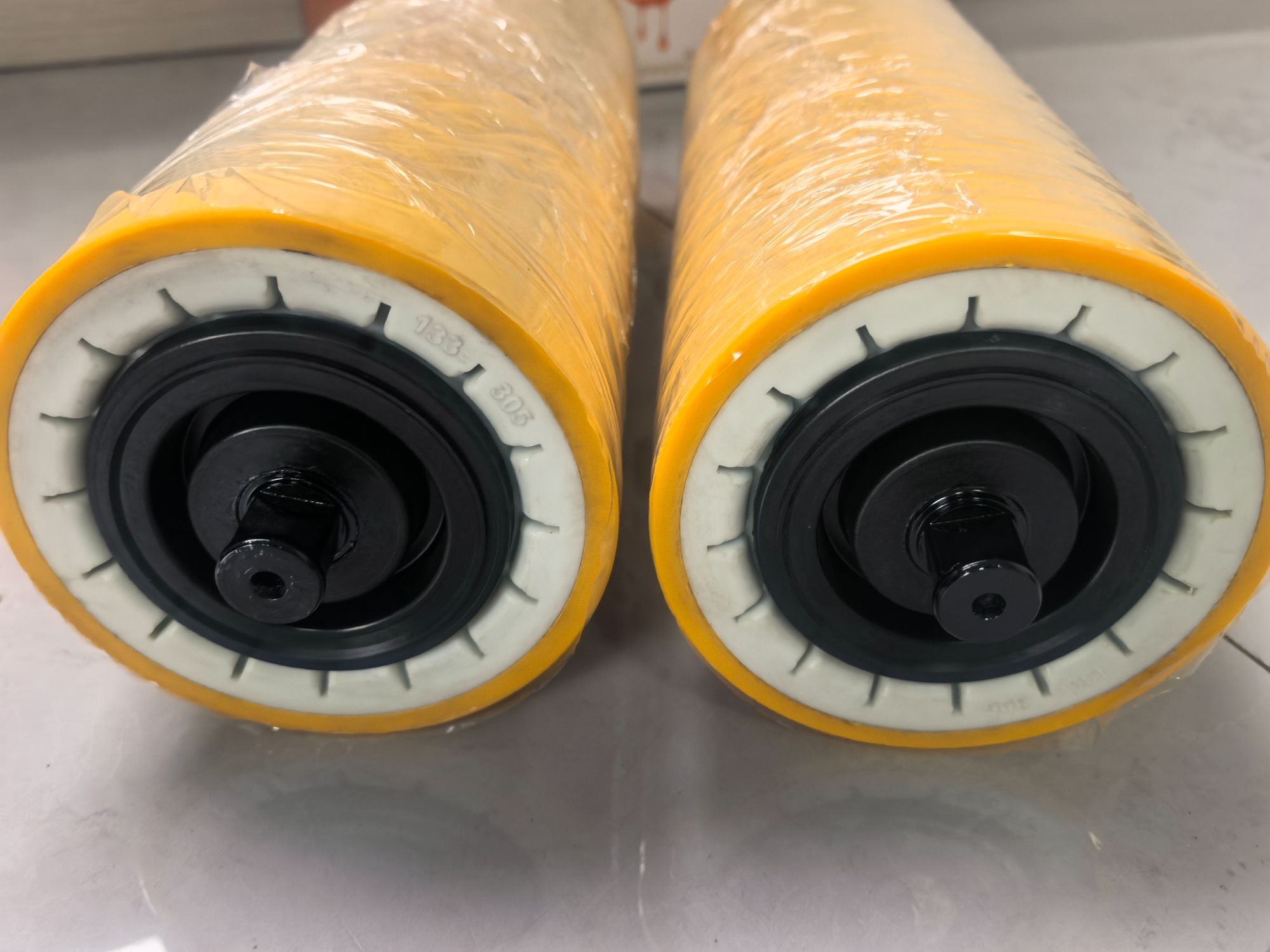
When you put a micrometer or dial indicator on a roller shell, the numbers that matter most aren’t the ones printed in a generic catalog. Diameter runout across the face, for example, often gets overlooked until a bearing starts running hot. A shell that looks true on the bench can show 0.002–0.004 inches of variation once it’s mounted and rotating. That’s enough to load one side of the bearing unevenly and chew up a set of rollers in a few hundred hours.
Cylindricity is another one that’s easy to chase but hard to pin down. You’re not just measuring a single diameter at two points; you’re checking whether the shell stays round along its entire length. A slight taper or an hourglass shape won’t show up with a two-point reading, but it will cause uneven nip pressure and vibration. Surface finish gets called out less often than it should—a rough or wavy finish on the OD can trap lubrication differently from one side to the next, leading to localized wear that no amount of static balancing will fix.
And then there’s the bore fit. If the shell’s ID taper or ovality is out more than a couple thousandths, you’ll feel it when you go to slip it on the shaft. Too tight, and you’re heating the shell and praying it doesn’t seize halfway. Too loose, and the shell creeps under load, fretting the shaft and throwing off every other measurement you just took. Good shops keep a record of these actual numbers, not just the drawing limits, because the measured variance tells you more about the machine’s health than any nominal spec ever will.
Reading Load Patterns to Avoid Premature Bearing Failure
Most bearing failures don't start with a sudden crack—they begin with a load pattern that repeats until the metal quietly gives up. Technicians who rely only on vibration data or temperature alarms often miss the early story written in the raceway. By learning to read subtle marks like frosting, spalling edges, or uneven track wear, you can spot a misalignment or excessive axial thrust weeks before the bearing goes loud. The key is to treat every inspection as a chance to match what you see against the actual duty cycle, not just the nominal rating.
Take a cylindrical roller bearing in a cooling tower fan, for instance. If the inner ring shows a polished band on one side and a dull, lightly pitted zone on the other, that's not random—it points to a steady overhung load or a belt tension pulling the shaft slightly off center. Similarly, deep groove ball bearings in a pump that cycles between low and high flow can develop a characteristic 'washboard' pattern from repeated partial load skidding. These signatures don't show up on a standard condition report unless someone knows to look for them. The trick is to document them with a sketch or photo, then tie the pattern back to operating history: startups per day, unbalance after impeller coating, or even a recent foundation settle.
Of course, not every mark means imminent doom. Normal break-in can leave a light, even matte finish, while a true problem often appears as localized burnishing or an asymmetrical contact ellipse. The practical habit is to build a small reference library of failed bearings from your own site—tag them with the load pattern, the hours run, and the shaft arrangement they came from. Over time, that collection becomes far more useful than a generic failure chart. It lets you judge whether a new mark is just a cosmetic change or the first chapter of a fatigue story you still have time to rewrite.
The Noise and Vibration Signals Most Teams Ignore
A bearing rarely fails without warning. It whispers first. A faint tick when the shaft slows, a subtle change in the pitch of the hum under load, a barely noticeable roughness in the housing. Most technicians hear it, pause for a second, then move on because the machine is still making parts. That moment of hesitation is the signal being ignored.
The reason these cues get lost is simple: they don't trip alarms. Vibration thresholds are often set from generic charts or left at factory defaults, so a slow rise from 0.08 to 0.15 in/s goes unnoticed for months. Teams also lack a recorded baseline. Without knowing how a healthy pump sounds or feels on day one, nobody can spot the drift by day ninety. What gets measured is total vibration, but the telling information lives in the frequency spectrum, the waveform shape, and the direction of movement, none of which show up on a standard display.
Ignoring these early warnings has a compounding effect. A worn bearing draws more current, heats the windings, and stresses the coupling. By the time it becomes loud enough to force action, the repair bill has tripled and the downtime is no longer a choice. A practical fix costs little: mark a spot on each critical machine, take a thirty-second vibration reading with a simple pen-style meter every week, and log the trend. When the trend bends upward even slightly, open the cover and look. That small habit catches the failures most teams wait too long to hear.
Short-Run Custom Orders Without the Custom Price Tag
The old assumption that custom automatically means expensive comes from bulky setup fees and rigid production minimums. Short-run manufacturing has quietly moved past that. With digital printing and modular cutting equipment, switching from one design to the next no longer demands hours of recalibration. That overhead used to be passed straight to you—now it simply isn't part of the equation.
This opens up a different way to buy. You can order two dozen shirts for a weekend event, fifty branded boxes for a product launch, or a single test batch of a new design without padding your budget for phantom costs. The per-unit price stays close to what you would pay at higher quantities, but you are not forced to warehouse extras you never wanted.
The real value shows up when your needs shift quickly. Add a late change, adjust a color, or run a tiny restock without triggering a new quote or a long delay. Custom work becomes a practical tool, not a premium unlock.
Questions to Ask Before You Trust a Roller Supplier
Asking the right questions up front can save you from costly downtime later. Start with their production capacity—can they handle your monthly volume without stretching lead times? A supplier who hesitates or gives vague answers often struggles under real demand.
Next, dig into their material sourcing and quality control. Do they use certified raw materials and test each batch before shipping? If they cannot show inspection reports or traceability data, you might be gambling on rollers that wear out faster than expected.
Finally, clarify their post-sale support and return policy. What happens if a roller fails within weeks? A trustworthy supplier will outline replacement timelines and stand behind their work, not disappear once the invoice is paid.
FAQ
A true OEM partner engineers rollers to match your conveyor's exact speed, load, and chemical exposure requirements. Generic vendors often sell one-size-fits-all parts that wear unevenly or seize under stress.
HDPE rollers cut noise, resist corrosion, and shed sticky material far better than steel. They also reduce belt wear because the surface gives slightly instead of grinding against the belt.
Yes, when properly specified. High-density polyethylene rollers can support substantial weight if the wall thickness, bearing type, and shaft diameter are matched to the load. The key is working with a supplier who calculates deflection rather than guessing.
They lower rolling resistance, which reduces motor strain and energy use. Their non-stick surface prevents carryback buildup, so the belt runs cleaner and needs less frequent scraping or washing.
Check bearing seals every few months, clear any wrapped material from the roller ends, and avoid pressure washing directly into the bearing housing. HDPE itself needs almost no surface care, but the bearings are the part that likes attention.
Food processing, chemical plants, mining, and any operation dealing with moisture or corrosive materials. HDPE excels where steel rusts or where sanitation rules demand easy cleanup.
OEM rollers arrive with correct tolerances, bearing preload, and shaft dimensions, so they drop straight in without forced fitting. That shortens changeouts and avoids the frequent adjustments that eat into production hours.
Conclusion
For conveyor systems that run in wet or washdown conditions, a practical OEM HDPE roller supplier guide starts with material selection: HDPE often beats steel because it won't corrode, absorbs shock more quietly, and resists material buildup that would otherwise seize bearings. But a smart guide goes further. A shell that looks smooth on a lathe can still be out of round by a few thousandths—enough to cause vibration and premature bearing wear. That's why real OEM guidance focuses on tolerances you can actually check with a dial indicator: radial runout, concentricity, and end face squareness. Watching load patterns on the bearing seats and shaft ends tells you more than a datasheet ever will. Uneven fretting or discoloration usually means the roller is flexing under load, which shortens bearing life long before a catastrophic failure. And the noise and vibration signals—high-frequency chatter at low speed, or a periodic thump once per revolution—are early warnings most maintenance teams ignore until it's too late.
For buyers who aren't ordering thousands of pieces, short-run custom HDPE rollers shouldn't come with a custom price tag. A good supplier will use modular tooling, standard bearing inserts, and cut-to-length shell stock to deliver specific diameters, lengths, and shaft configurations without NRE charges. Before trusting any roller supplier, ask how they verify roundness, what grade of HDPE they use (virgin vs. reprocessed), whether they balance rollers above a certain speed, and how they handle moisture absorption in their tolerance stack. Also ask about real lead times for small batches and whether they offer mixed pallet options. These questions separate a true OEM partner from a reseller with a catalog.
Contact Us
Contact Person: Anna Lu
Email: [email protected]
Tel/WhatsApp: 8618561668850
Website: https://www.x-conveyor.com