OEM Warehouse Chrome Wire Shelving Unit Ideas for Maximizing Durable Storage Space
2026-11-16
Most warehouse storage advice stops at "buy more racks." But if your racks can't handle humidity, weight shifts, or daily abuse, extra shelving just means extra replacements. Chrome wire shelving from ZEOU flips that equation: the open-wire design keeps air moving and dust from settling, while the chrome finish resists corrosion in spaces that punish ordinary steel. Below, we're breaking down practical OEM warehouse shelving ideas that treat durability and usable square footage as one problem—not two.
Why Chrome Wire Shelving Works in Humid and High-Heat Warehouse Bays
Warehouse bays that trap heat near the ceiling or sit next to washdown areas punish ordinary shelving fast. Powder-coated steel starts blistering within months, particleboard swells at the edges, and fasteners seize up when you need to adjust a shelf. Chrome wire shelving holds up because the open grid lets air move instead of holding moisture against solid panels. That ventilation also keeps stored cartons and plastic bins from developing the musty film common in damp corners of a distribution center.
The chrome finish does not simply sit on the surface — it plates the steel underneath and the wire construction removes hiding spots for rust. In high-heat zones near ovens, dryers, or southern-facing dock doors, the metal expands and contracts without warping. Workers can slide a shelf out, wipe it down, and push it back without fighting corroded clips or swollen joints. That matters when a bay runs 24 hours and downtime means rerouting pickers around a blocked aisle.
Maintenance crews also appreciate that chrome wire units weigh less than solid steel alternatives while still carrying heavy totes and spare parts. The open design makes inspection straightforward: a quick scan shows whether any shelf is overloaded or if a label strip has peeled. In humid environments where cardboard breaks down and wood pallets grow soft, these shelves keep inventory off the floor and dry enough to scan. Over years of washdowns, temperature swings, and constant loading, the metal dulls slightly but keeps doing its job without the flaking or pitting that forces early replacement.
How to Stack Heavy OEM Parts Without Blocking Airflow or Light
Heavy OEM parts often get stacked like solid cubes against a wall, which turns the rack into a dam for both air and light. Leaving a gap of about 18 to 24 inches between the first row and the wall keeps return air moving and keeps wall-mounted fixtures useful. For the base layer, set parts on timber sleepers or steel channel so the weight isn't resting directly on floor-level vents or causing moisture to sit under the castings.
Stagger the rows the way you would lay bricks instead of building straight vertical columns. Two hardwood dunnage strips between layers are enough to create a horizontal break where air can drift across the stack. Turn large housings or open cavities toward the aisle, not the wall, and line up any existing holes in the castings so they make a rough duct through the pile. Keep the heavy base stable, but don't pack every gap tight just to make it look tidy.
Check the result with a strip of paper or a smoke pencil at the stack edges, not just at chest height. If the paper hangs limp behind the stack or a shadow cuts across the middle of the aisle, lower the top layer or pull the stack into a stepped profile. It also helps to leave a diagonal access lane for forklift forks so removing one bottom part doesn't force a full restack that blocks the air path for half a shift.
Use Adjustable Wire Shelves to Reclaim Vertical Storage in Narrow Aisles
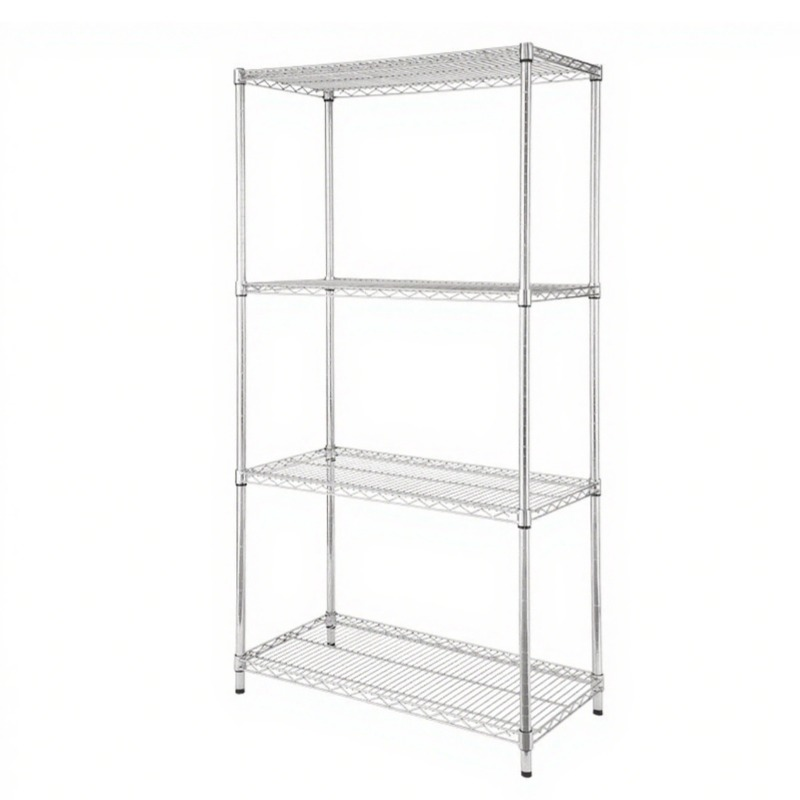
Narrow aisles often feel unusable because standard shelving either blocks the path or wastes the upper air space. Adjustable wire shelves solve both problems at once. Because they are open and slim, they let light and airflow pass through, so a tight corridor doesn't turn into a dark, stuffy tunnel. More importantly, the shelf positions can be moved up or down in small increments, which means you can start a unit just above a cart or bin and keep stacking storage upward without sacrificing the walking lane below.
The real advantage comes from treating the vertical wall as usable square footage. Instead of adding another shallow cabinet that juts into the aisle, mount or place a wire shelving unit against the wall and adjust the shelves to fit odd-sized items like tall spray bottles, folded linens, or small parts bins. Wire construction also makes it easy to see what is stored on every level, reducing the need to pull things out just to check labels. In a narrow pantry, laundry room, or stockroom, this visibility keeps the aisle clear because people grab what they need and move on.
A practical trick is to leave the bottom shelf high enough for brooms, step stools, or rolling baskets to slide underneath, then use the middle and upper shelves for items that are lighter or used less often. Since the shelves adjust without tools, the layout can change with the seasons or with shifting inventory. What starts as a cramped pass-through becomes a organized vertical corridor, and the floor stays open for actual foot traffic rather than loose clutter.
Adding Casters to Chrome Wire Units for Safer Batch Picking
Mobility changes how pickers interact with chrome wire units on the floor. Instead of tugging or leaning into a loaded shelving unit, staff can push the entire cart alongside them as they move through batch zones. This reduces the awkward twisting that often happens when reaching across fixed shelving, especially in narrow aisles where space is tight. The casters take most of the strain, so workers are less likely to pull a shoulder or strain a lower back mid-shift.
A common upgrade involves locking casters at the two front corners while leaving the rear pair free to swivel. That setup keeps the unit stable during loading and unloading, but still allows controlled turns without fighting the cart. Adding a center brake bar or foot pedal gives an extra layer of control when the unit is parked on a slight incline or near high-traffic walkways. Even a small change in caster size matters: larger wheels roll over dock plates and floor grates without jolting the contents loose.
Beyond physical safety, the addition of casters changes batch picking rhythm. Workers can group multiple chrome wire units around a pick zone, pull what they need, then roll the loaded carts toward packing without making repeated trips. Fewer manual lifts and carries means fewer dropped items and less fatigue near the end of a shift. Managers often notice the difference within the first week, reporting smoother workflows and fewer near-miss incidents tied to overreaching or unbalanced loads.
Labeled Zones and Open Wire Decks That Speed Up Inventory Counts
Warehouse aisles stop feeling like a guessing game when every bay has a position label that matches the pick list. The labels are placed at eye level and use large, high-contrast lettering so counters can confirm a location without slowing down or doubling back. Open wire decks reinforce this by letting light through from above, which keeps the labels readable even when the shelf is partially loaded.
During a count, the combination removes most of the hunt time. Staff scan the location tag, glance through the wire deck to see what is sitting underneath, and move on. Because the deck does not trap dust or hide small items in shadow, discrepancies become easier to spot at a distance. In practice, zones that used to take a full morning are often wrapped up in under an hour, with fewer recount passes at the end.
Pairing Chrome Shelving With Clear Bins for Durable Long-Term Storage
Chrome shelving tends to pick up dust and loose debris quickly, which makes clear bins a practical partner for anything stored longer than a few weeks. The open wire design already gives you height flexibility, but adding transparent containers seals out the grime while keeping labels or even the items themselves visible from across the room.
For long-term use, pay attention to bin depth and weight distribution. Bins that sit slightly short of the shelf edge allow air to move behind them, which helps prevent dampness in garages and basements. Heavier bins belong on lower shelves, and it is worth choosing models with reinforced bottoms or adding a thin liner since plastic can bow under steady load over time.
Small details matter more than most people expect. Apply labels to the side of the bin rather than the top, because stacked or eye-level placement hides lid labels. Every few months, wipe down the chrome finish and check the plastic clips or shelf sleeves for cracks so the unit stays steady and rust-free.
FAQ
Focus on shelf capacity and overall unit capacity rather than just the price. Look for a chrome finish that resists corrosion, adjustable shelf clips or split sleeves, and leveling feet or heavy-duty casters if the unit will move. Also check the wire spacing so small parts don’t slip through.
Measure your tallest container and add about three inches of clearance before locking the sleeves. Put bulky but lighter items higher, and keep dense or heavy stock close to the floor. Leave one shelf with extra headroom for irregular items that arrive later.
Assemble it upside down first, then flip it over and tap the shelf collars down with a rubber mallet until they seat evenly. Use a level on every shelf, and if the floor is uneven, adjust the feet instead of forcing the frame. Re-check the collars after the first week of loaded use.
They can handle serious weight if you match the load to the stated per-shelf and total-unit ratings. Distribute weight across the shelf surface instead of concentrating it in the middle. Place the heaviest loads on the bottom shelf to keep the center of gravity low.
One option is to leave the bottom shelf open for pallets or rolling bins while using the upper shelves for picking stock. You can also split a long run into zones with colored label holders, mount hooks on the sides for tools, or use wire baskets that angle down like gravity feed bins.
If the unit is used as a mobile picking cart, choose heavy-duty casters with at least two locking wheels. For a fixed installation, leveling feet are usually better because they remove wobble on sloped or rough floors. Avoid putting casters on a tall, heavily loaded unit unless the base is wide enough to stay stable.
Chrome resists rust as long as the surface isn’t scratched or constantly wet. Wipe up spills quickly, avoid abrasive scrubbers, and clean with mild soap and water. In particularly humid or washdown areas, add shelf liners or use a clear protective spray on any nicks.
Use the sides by hanging S-hooks or clip-on bins for small parts. Add shelf dividers so boxes stand upright instead of stacking loosely. If you have high ceilings, put light but bulky items on the top shelf and use a rolling safety ladder instead of trying to reach from the floor.
Conclusion
In humid and high-heat warehouse bays, chrome wire shelving earns its place because the open grid lets air move instead of trapping moisture against OEM parts. That same openness keeps lower shelves from going dark, so workers can spot a bin or a label without bending into shadows. When heavy components need to be stored in volume, the shelving can be set with wider vertical gaps between tiers. This preserves airflow and allows ceiling light to reach the floor, while the adjustable shelf positions help reclaim vertical space in narrow aisles that would otherwise sit empty.
Putting casters under a chrome wire unit turns it into a mobile picking station, which is far safer for batch picking because the shelves come to the worker instead of forcing repeated reaching and carrying. Labeled zones on open wire decks keep inventory counts moving quickly, since tags stay readable and dust has nowhere to settle. Clear bins paired with chrome shelving add another layer of durable long-term storage, letting small OEM parts stay visible and sealed at the same time. Together these choices create a layout that handles heat, heavy loads, tight aisles, and frequent counting without becoming cluttered or hard to maintain.
Contact Us
Contact Person: Alin
Email: [email protected]
Tel/WhatsApp: +86 15015291051
Website: https://zeoumetal.com/