
Professional Pot Still Distillation: Mastering the Craft of Artisanal Spirits
2026-05-14
Pot still distillation isn't just a technique—it's a quiet dialogue between fire, copper, and time. In DYE's world, every batch tells a story that textbooks can't capture. This guide walks you through the hands-on rituals and subtle choices that elevate a spirit from simply distilled to truly crafted. Whether you're chasing a silky Irish single pot still or a robust single malt, the journey begins with understanding what makes the pot still so unforgivingly honest—and rewarding.
The Art of Selecting Raw Materials for Superior Spirits
Crafting a spirit that lingers on the palate begins long before the first drop is distilled. It starts with a quiet, almost obsessive relationship with the raw materials. Think of the farmer who knows each contour of his field, the subtle shift in soil from one row to the next. He selects grains not by yield alone, but by the way the morning dew settles on the husk, a small sign of the starch and character locked inside. This isn’t farming by spreadsheet; it’s a dialogue with the land itself. The best distillers don’t just buy ingredients—they partner with the earth, choosing varietals that whisper promises of depth rather than shouting for volume.
Then there’s the water, often treated as a mere solvent, but in the hands of the discerning, it becomes a silent conductor. It’s not enough to filter it to sterility. You need to know its journey—whether it slipped through ancient limestone, picking up a ghost of minerality, or tumbled down granite slopes, remaining assertive and crisp. This hidden narrative shapes the spirit’s very soul, influencing fermentation, extraction, and that final, mouth-filling texture. A master distiller tastes the water not just for purity, but for personality, understanding that a soft, rounded water might cradle a delicate botanical, while a harder, more angular source can cut through the richness of a heavy grain mash.
Finally, consider the botanicals and fruits—the wild cards that inject a spirit with its signature. Here, selection becomes an act of time travel, harvesting at the precise moment when sugar, acid, and aromatic oils hit their apex. A juniper berry picked a week too early offers only a sharp, one-dimensional pine; a week too late, and the oils have dulled to a faint memory. The art lies in knowing the rhythm of each plant, the way a particular slope catches the afternoon sun or how a cool, foggy morning intensifies essential oils. This intimacy with the raw, unprocessed world is what separates a merely good spirit from an unforgettable one.
Mastering Temperature Control: The Heart of Pot Still Distillation
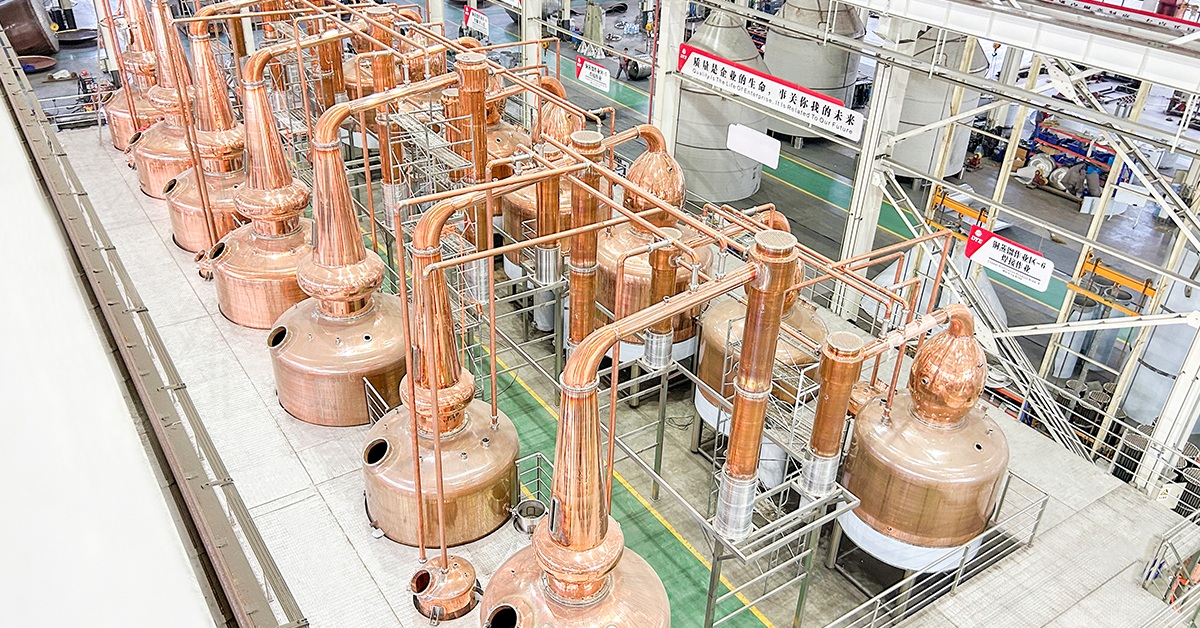
In pot still distillation, temperature is not a simple setpoint—it’s a conversation between the copper and the wash. The curve of that conversation determines whether your spirit emerges with clarity or carries the muddled notes of tails. Too hot too early, and you scorch the delicate esters; too timid, and you fail to coax out the fruit and floral whispers hiding in the ethanol. Every degree shift below the boiling point of water tightens the noose on congeners, deciding which ones will whisper sweetness and which will shout in astringent tones. This isn’t just chemistry; it’s the artisan’s ear against the still, reading the pitch of the vapor as it moves from a gentle sigh to an urgent whisper.
The trick isn’t just in hitting a number, but in understanding the thermal dance between the pot’s shape, the wash’s heritage, and the day’s air pressure. A tall onion-shaped still will refine vapors differently from a squat, broad-bottomed one under identical heat. Master distillers learn to feel the rhythm: a slow ramp during heads removal, a steady plateau through the heart, and a subtle nudge near the end to hold back the greasy tails. They watch for the sudden bead of condensation that signals a temperature stumble, or the subtle change in the spirit’s “bead” when it drips, telling them the alcohol strength is shifting. This sensory vigilance transforms temperature control from a mere dial setting into a living craft.
True mastery comes when you stop watching thermometers and start listening to the spirit. You learn that a cooler run on a grain-heavy rye mash pulls out cinnamon and clove, while a slightly warmer run on a fruit brandy can unlock jammy depth without burning the sugars. The heat source itself matters—direct fire kisses the pot with a fierce urgency that steam jackets never replicate, creating micro-sites where caramelization and Maillard reactions birth unexpected complexity. Ultimately, temperature control in pot stills is less about rules and more about building a personal dialect with your equipment, one where each subtle adjustment writes a different chapter in the story of what ends up inside the barrel.
Cutting the Spirit: Precision in Heads, Hearts, and Tails
Distillers know that the art of the cut is where character is forged. The head, laced with sharp, volatile compounds, must be separated with exacting timing, for a moment's hesitation can stain the entire batch. This isn't mere chemistry—it's a tightrope walk where the maker's senses, honed through years of practice, decide the fate of the spirit. Each still run demands full presence, a quiet calibration between the copper heat and what the nose perceives as the first vapors condense.
Then comes the heart, the liquid soul, flowing clean and true. It carries the essence without the fire of the head or the muddy weight of the tail. To capture only this fraction is to reject greed in favor of clarity, a decision that trims away potential yield for the sake of something luminous. In the end, what remains in the cask is a testament to precision—not just in the cut, but in the mindset that values quality over volume, and knows exactly what to leave behind.
Time-Honored Techniques for Aging and Maturation
Long before modern refrigeration and chemical accelerants, craftspeople relied on subtle environmental rhythms to coax depth from raw ingredients. In the damp cellars of rural France, wheels of cheese rest on wooden boards, absorbing the quiet breath of stone walls and the soft blanket of local molds. There is no rush here, only an understanding that time transforms texture and taste in ways that cannot be faked. The affineur turns each wheel by hand, brushing the rind, feeling for the precise moment when the paste yields from crumbly to creamy, carrying the memory of pasture and season within its folds.
Similarly, atop windswept Scottish moors, copper pot stills produce a spirit that is merely a whisper of what it will become. The magic unfolds inside oak casks that once held sherry or bourbon, resting in dunnage warehouses where the sea air seeps through walls damp with decades of mist. Here, the whisky breathes, slowly drawing out vanillins and tannins, losing its fiery edge while gaining honeyed warmth. No two casks follow the same path; each matures according to its own elusive dialogue between wood, spirit, and climate.
In the world of wine, the subterranean caves of ancient estates offer a sanctuary where temperature and humidity remain constant without a single dial or gauge. Barrels of oak, sometimes centuries old, cradle the young wine as it undergoes a quiet metamorphosis. Lees stirring, a practice as old as the hills, lifts spent yeast from the bottom, giving the liquid a rounded mouthfeel and subtle pastry-like notes. These methods persist not out of nostalgia, but because they produce a living, evolving product that carries the fingerprint of its birthplace long after it leaves the cellar.
Balancing Science and Instinct in Small-Batch Production
Precision has its place—tracking temperatures, timing each step, measuring down to the gram. Without that backbone, consistency falls apart, especially when your output is measured in handfuls, not pallets. But stopwatch and scale can only carry you so far. A dough that’s a touch too slack, a fermentation that suddenly speeds up, a batch of beans that roasted a shade darker than last week: these are the moments where a rigid recipe fails and you have to lean on something messier.
That messier thing is instinct, built from hundreds of small failures and the occasional happy accident. It’s the feel of the material, the smell in the air, the sound a process makes when it’s going right—or wrong. Over time, you stop reacting to numbers and start anticipating what the batch needs before the thermometer even registers a shift. This isn’t guesswork; it’s internalized science, a subconscious catalog of patterns that no spreadsheet can capture.
The real craft lies in knowing when to cede control to the data and when to let gut sense take the wheel. Too much science, and you stamp out the very quirks that make small-batch goods worth seeking out. Too much instinct, and you risk inconsistency that confuses customers. The middle ground is a continuous negotiation, one where every batch asks you to decide anew which voice to trust.
Elevating Flavor Through Unique Botanical Infusions
Botanical infusions have long been a quiet art, but today’s approach pushes far beyond the expected mint or chamomile. It’s about harnessing the unexpected — think wild foraged herbs, rare blossoms, or heirloom citrus peels — and letting them interact in ways that surprise the palate. The goal isn’t just to add flavor, but to build layers: a whisper of piney rosemary complementing the bright pop of bergamot, or the gentle heat of ginger mellowed by elderflower’s honeyed notes. Each infusion becomes a signature, impossible to replicate without the precise balance of time, temperature, and botanical selection.
What elevates this craft is the instinct to move away from extracts and toward whole, living ingredients. A single batch might steep whole juniper berries hand-crushed moments before they meet a base liquid, releasing oils that a standardized powder could never capture. Others might employ cold maceration over weeks, coaxing out delicate compounds that heat would destroy. The result is a drink that evolves as it rests, the aroma shifting from first scent to last sip — earthy at first breath, then floral, then something deeper and spiced. It’s this kinetic quality that turns a simple beverage into an experience, rewarding attention with each new nuance.
Ultimately, it’s about creating a bridge between nature’s raw complexity and human creativity. No two infusions are alike, and the best ones feel less like a product and more like a moment captured — a summer orchard after rain, the cool snap of a coastal breeze through wild fennel. When done thoughtfully, botanical infusions don’t just enhance flavor; they rewrite what flavor can be, inviting us to taste the world with renewed curiosity.
FAQ
Pot stills work in batches, allowing the distiller to make fine adjustments based on the character of the wash. Unlike continuous column stills that prioritize efficiency and neutral alcohol, a pot still retains more congeners—those flavorful compounds that define a whiskey, rum, or brandy. The copper contact is extensive, which helps remove sulfides, but the slower, manual process is what lets a skilled operator shape the spirit’s final profile.
Temperature directly influences the sequence of volatile compounds drawn off. Too hot, and you’ll drag over harsh, oily tails prematurely. Too cool, and you miss the delicate fruit and floral notes that come at the beginning of the hearts. A seasoned distiller watches the vapor temperature closely, adjusting the heat input to tease out the best cuts, something that becomes instinct after hundreds of runs.
It’s a combination of sensory evaluation, experience, and analytical tools. While ethanol concentration is a guide, the real decision comes from nosing and tasting the spirit as it drips. Heads smell of solvent and can cause unpleasant headaches; hearts are clean and expressive; tails bring wet cardboard or vegetal notes. Many distillers collect the runoff in small glasses, smelling each one to pinpoint exactly when the shift occurs, sometimes going by the 'oily residue' on the back of a spoon.
They’re ideal for spirits where the raw material’s character should shine—single malt scotch, cognac, artisanal rum. Pot stills struggle with very high-proof neutral spirits like vodka, which typically require multiple rectifications. If you’re aiming for a spirit bursting with terroir, a pot still is the tool. For bland, industrial alcohol, you’d look elsewhere.
Copper pulls out sulfur compounds that would otherwise give the spirit a rotten egg or rubbery off-note. It also catalyzes ester formation, which leads to fruity aromas. That’s why stills are built from heavy-gauge copper, and why the spirit safe and condenser often use it—every copper surface encountered leaves a mark on flavor. A well-maintained copper patina inside the still is considered as precious as a chef’s seasoned skillet.
Taller, slim-necked stills encourage more reflux, where vapors condense and fall back, leading to a lighter, more refined spirit. Onion-shaped or squat stills let heavier compounds through, producing a richer, oilier distillate. Even the angle of the lyne arm plays a part—pointing upward gives more reflux, downward less. Master distillers often have a favorite shape for a specific recipe, treating the still’s geometry as a variable, not a constant.
Running too fast is the big one—flooding the condenser or smearing the fractions. Another is being shy with the cuts: beginners often include too much heads or tails out of greed, ruining the batch. Not cleaning the still properly between runs, especially after a peated mash, can haunt future spirits. And ignoring water chemistry in the proofing step can turn a great distillate into a cloudy mess.
Conclusion
The journey of professional pot still distillation begins long before the copper still is heated, rooted in the careful selection of raw materials that form the soul of any artisanal spirit. Whether it is the starch-rich grains or the sugar-laden fruits, every choice influences the final flavor profile, making the procurement of superior ingredients both a science and an art. Once mashing and fermentation are complete, the distiller's focus shifts to the heart of the craft: temperature control during the distillation run. Here, subtle adjustments can mean the difference between a harsh, unbalanced spirit and one of exceptional smoothness. The true mastery, however, lies in the cut—the precise separation of heads, hearts, and tails. This stage demands not only technical knowledge but also a seasoned sensory intuition, as the distiller must decide in real time which fractions will carry the essence of the spirit forward.
Beyond the still, the craft extends into the quiet, transformative process of aging and maturation, where time and wood collaborate to deepen complexity and mellow any lingering roughness. In small-batch production, this is where the balance between scientific exactness and instinctive artistry becomes most evident, as no two casks evolve identically. The distiller must rely on calibrated instruments and personal judgment to decide when a spirit has reached its peak. For many, the final flourish comes through the infusion of unique botanicals, a step that elevates flavor and adds a signature character. From foraging local herbs to meticulously balancing rare spices, this creative act ties the entire process together, resulting in a spirit that is not merely distilled but truly crafted.
Contact Us
Contact Person: Ada Xu
Email: [email protected]
Tel/WhatsApp: 0577-86806088
Website: https://www.dayuwz.com/