

Smart Bench Factory: Innovations in Smart Bench Manufacturing
2026-11-16
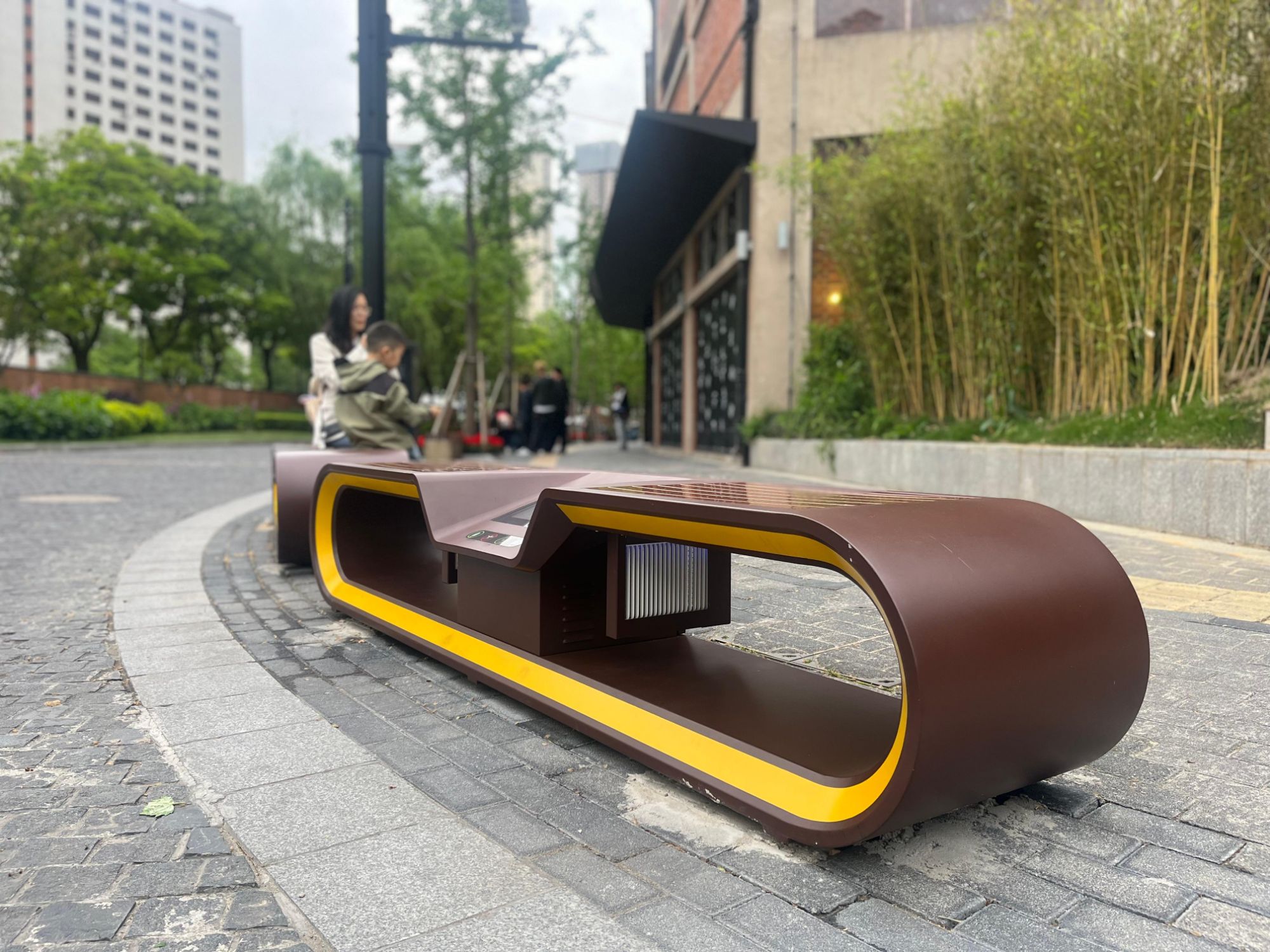
The park bench used to be the most analog object in the city. Now, it's becoming a solar-powered, sensor-packed piece of urban tech—and the way we build them is changing just as fast. Inside zemso's smart bench factory, modular frames, hidden wiring, and weatherproof electronics come together in a production line that feels more like consumer electronics than traditional outdoor furniture. This is where the next generation of public seating takes shape, and it's far from business as usual.
The End of the Dumb Bench
For years, a bench was just a place to sit and catch your breath. That simple slab of wood or metal asked nothing of you, offered nothing back, and disappeared into the background of parks and bus stops. But that era is quietly closing.
The new benches showing up in cities do a lot more than hold your weight. They can charge a phone, sense air quality, or light up a path when someone walks by. Some even track foot traffic or display local transit times on a small screen. It’s no longer about resting your legs; it’s about staying connected while you do.
This shift doesn’t mean every old bench will vanish overnight. But the idea of “dumb” public furniture is losing ground. Planners and designers now expect seating to do double duty, blending into smart city infrastructure without making a fuss about it. The bench that merely sits there is becoming the exception, not the rule.
Rethinking Assembly for Modular Intelligence
Assembly has long been treated as a linear process: fit part A into slot B, tighten, repeat. That mental model breaks down when the parts themselves carry intelligence. A modular system does not simply snap together; it starts to argue about timing, share context, and renegotiate what each piece should contribute. The shift matters because static connectors and fixed protocols quietly cap what modularity can achieve.
Rethinking assembly here means designing interfaces that leave room for interpretation rather than prescribing every interaction. Modules need enough local autonomy to resolve mismatches on the fly, but also enough shared vocabulary to stay aligned. It resembles a conversation more than a mechanical fit, where the boundaries between components become negotiable and can change as tasks evolve.
This perspective also reframes failure. Instead of treating a loose connection or conflicting update as a defect, it becomes a signal that the assembly rules themselves need revision. Builders who accept that modular intelligence is an ongoing negotiation, not a one-time integration, tend to produce systems that remain useful far longer than those optimized for a perfect initial fit.
Materials That Hide Sensors and Survive Everything
The trick isn't just wrapping a sensor in rubber and hoping for the best. Real concealment comes from materials that match the dielectric constant of their surroundings, so RF and optical signatures vanish. Engineers layer graphene-doped elastomers over antenna arrays, shifting surface impedance until the thing reads as empty air. Potting compounds with glass microspheres provide mechanical armor without adding reflective mass.
Survival is another game. Polyimide and PEEK composites shrug off salt spray, jet fuel, and thermal shocks from -60°C to 300°C. Ceramic-loaded silicones keep embedded strain gauges reading true while submerged in hydraulic fluid. The better formulas aren't advertised; they're mixed in small batches, tested by yanking prototypes through mud, ice, and sand until only the sensor's data stream proves it's still there.
A Factory That Stress-Tests Benches Like Smartphones
Inside the testing hall, a robotic arm slams down onto a wooden bench seat for the 40,000th time that morning. It’s not checking for comfort—it’s counting the micro-fractures that form near the bolts. Technicians call this the "butt-drop cycle," a nod to how smartphone makers measure repeated impacts. Each bench gets hit with a 90-kilogram dummy from varying heights, and the impact force is logged in real time. The goal isn’t just survival; it’s knowing exactly when a slat will splinter or a weld will sigh.
Across the room, a row of benches sits inside a corrosion chamber where salt fog rolls in every forty minutes, then bakes dry under UV lamps tuned to mimic ten years of afternoon sun. The metal legs are already blooming with tiny rust spots, but that’s the point. Just like a phone’s IP rating test, the bench has to keep its structural promise even after simulated monsoons and heat waves. One engineer walks along, tapping each joint with a small hammer and listening for the dull thunk that means a hidden crack is waiting to spread.
What leaves the factory isn’t the bench that aced every test—it’s the design data that came from the ones that failed. A cracked armrest at cycle 83,000 sends engineers back to the CAD file to shift a screw hole by two millimeters. Every bench is then built to the revised spec, and the testing floor starts again. The result looks like an ordinary park bench, but it has been through more abuse than most smartphones will ever see—and that’s exactly why it can survive a decade of real people sitting down hard.
From Solar Skin to Self-Heating Slats
The leap from passive solar cladding to active thermal slats didn't happen overnight. Early attempts to marry photovoltaics with building skins often stopped at the facade, treating the sun as a one-way source of electricity. But once designers began embedding thin-film cells directly into aluminum louvers, the logic flipped: why not let the same slats that harvest light also radiate warmth when the temperature drops?
Self-heating slats close that loop. A low-voltage current runs through a resistive layer printed on the back of each blade, turning the solar skin into a distributed radiator. On a clear winter afternoon, the array charges a compact battery; after sunset, the stored energy warms the slat surfaces just enough to prevent frost and take the chill off adjacent glass without firing up a central boiler. Because the heating is local, response times shrink from hours to minutes.
What makes this shift worth noticing is how it changes the rhythm of a building's energy use. Instead of separating collection, storage, and delivery into distinct systems, the slats bundle them into a single component. That cuts embodied material, simplifies maintenance, and gives occupants a more immediate connection to the weather outside—even when the sun isn't shining.
Every Bench Leaves With a Digital Birth Certificate
Each bench that rolls out of the workshop carries a small metal plate with a laser-etched code. Scan it and you’ll see the exact batch of oak or ash, the name of the joiner who shaped the seat, and the day it passed inspection. There’s no mystery about where the wood came from or whose hands built it.
That code stays with the bench for life. If a leg loosens or a finish needs re-oiling years later, the owner can pull up the original build notes and order the right replacement part without guesswork. It turns a simple piece of furniture into something with a traceable history.
More than just a record, the digital certificate is a quiet promise. Instead of a generic warranty card, you get proof that a real person stood behind the work. The bench isn’t anonymous — and neither is the care that went into it.
FAQ
Instead of standard bending and welding, the factory uses modular extrusion frames that hide wiring and sensor channels inside the bench structure. Automated CNC routing cuts each slat to fit around solar panels and USB ports with minimal visible fasteners.
Each sensor module is potted in a UV-stable resin and mounted in a recessed cavity with a silicone gasket. The assembly line then runs a 30-minute pressurized water spray test on every finished bench before it leaves the floor.
Yes, configuration happens at a dedicated programming station. Workers can enable Wi-Fi repeaters, air quality monitors, or heating strips depending on the order, and the bench frame is the same base model so switching features takes under 20 minutes per unit.
The factory prefers powder-coated aluminum for main frames and high-density recycled plastic lumber for seating slats. For coastal orders, stainless steel hardware is swapped in and all electrical contacts get an extra conformal coating.
Every bench goes through a simulated sunrise-to-sunset cycle in a light chamber. Batteries are charged and discharged three times while logging temperature and current draw. Only units that stay within a 5% voltage tolerance are approved.
The design team keeps the seating surface continuous and slope-free, so laptops and coffee cups sit flat. Charging ports are placed under a small overhang rather than on the armrests, and the backrest angle is kept at 105 degrees to avoid feeling like a bus stop.
The modular design allows city crews to swap out individual sensor pods or battery packs with a hex key. Because the wiring runs through accessible channels, there's no need to cut into the frame or return the entire bench to the factory for most upgrades.
The R&D line is testing kinetic tiles in the footrest area that generate a small charge from foot traffic, plus low-power e-ink displays that can show transit times without drawing attention. There's also a pilot project using recycled tire rubber for vibration-dampening seating layers.
Conclusion
The smart bench is no longer a wooden plank with legs. At this factory, the "dumb bench" era ends the moment a frame enters the line. Modular assembly rethinks how intelligence gets embedded: pre-wired sensor nodes snap into slots, not screwed on as afterthoughts. Materials are chosen to hide the tech completely—composite slats feel like warm wood yet shield capacitive touch grids, temperature probes, and strain gauges from rain, salt, and vandals. Nothing is bolted on; everything is fused in. Legacy production lines built for static furniture simply cannot handle this integration; the factory had to invent its own assembly logic.
Before shipping, each bench is stress-tested like a smartphone: drop simulations, thermal cycling from -30°C to 70°C, UV chambers, and repeated impact on the seating surface. The solar skin is laminated directly into the top layer, feeding a self-heating slat system that melts frost without exposed wires. Finally, every unit leaves with a digital birth certificate—an encrypted record of its build date, sensor calibration, material batch, and test results. That certificate travels with the bench, making maintenance predictive rather than reactive, and turning a simple piece of street furniture into a connected asset that can live outdoors for a decade. A bench that knows its own history can report wear before it becomes visible.
Contact Us
Contact Person: Leo
Email: [email protected]
Tel/WhatsApp: +86 18901905138
Website: https://www.zemsogroup.com/