
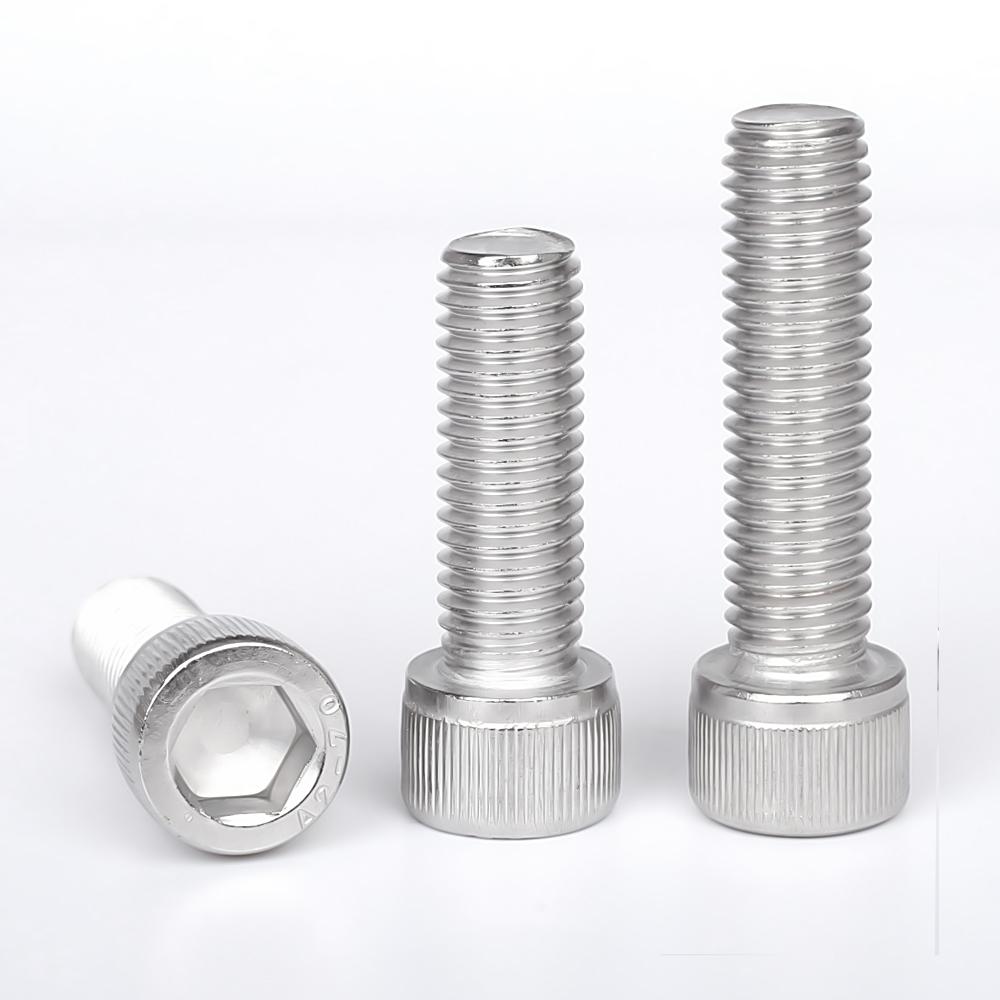
Stainless Steel Hex Socket Cap Screw Factory Produces High-Quality Fasteners for Industrial Use
2026-09-24
You don't notice a good hex socket cap screw until the one you're using shears off at the worst possible moment. For maintenance teams and OEMs alike, that's why the choice of fastener supplier matters. Wanluo doesn't treat stainless steel hex socket cap screws as a commodity—we build them with tighter tolerances, cleaner threads, and material that actually stands up to industrial abuse. In the next few minutes, you'll see exactly how that difference plays out on the factory floor.
What Sets These Fasteners Apart in Harsh Conditions
Most fasteners start to fail the moment they meet salt spray, thermal cycling, or constant vibration. What separates these from the standard hardware bin is a layered approach—each component is built around a specific failure mode. The alloy composition leans on higher nickel and molybdenum content, which doesn't just slow down pitting corrosion but effectively halts it in chloride-heavy environments. Meanwhile, the surface treatment isn't a single dip or spray; it's a multi-stage conversion coating that fills micro-voids in the metal, creating a barrier that shrugs off both acidic runoff and alkaline cleaning agents without cracking or flaking.
Beyond chemistry, the geometry does real work under stress. Threads are rolled rather than cut, which compresses the grain structure and eliminates the sharp stress risers that become crack initiation points. A controlled radius under the head and a precisely engineered bearing face distribute clamp load more evenly, so the fastener doesn't chew into softer mating materials or loosen when the assembly expands and contracts. In high-vibration settings, a mechanical locking feature—often a serrated flange or a deformed thread patch—keeps preload from bleeding away, not by adding glue or nylon, but by creating interference that stays effective through hundreds of thermal cycles. The result is a joint that holds its torque spec when everything around it is trying to shake it loose.
Inside the Production Line: From Raw Steel to Precision Threads
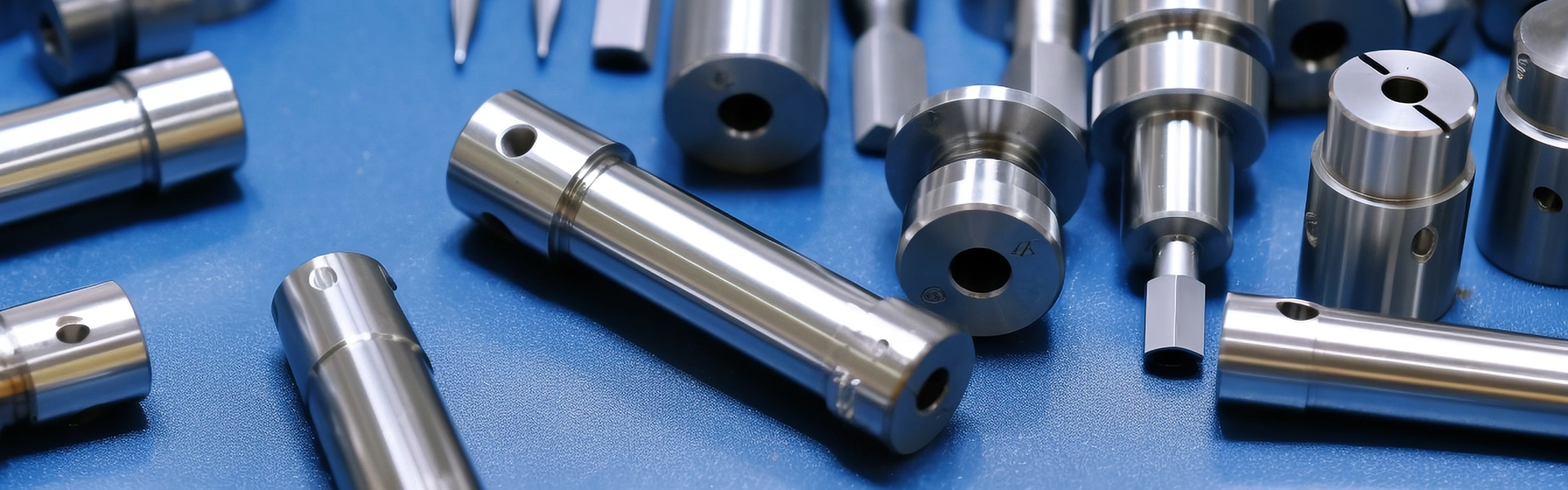
At the intake end of the line, coils of hot-rolled steel arrive with mill scale, surface irregularities, and dimensional variance that would doom any attempt at precision threading later. Workers uncoil, straighten, and run each length through a mechanical descaler before it enters the first drawing die. The die's carbide insert squeezes the rod down by a few thousandths of an inch, forcing the grain structure to elongate and giving the surface its first true roundness. A laser micrometer immediately after the die checks diameter at eight points around the circumference, and any bar drifting beyond ±0.001 inch trips a marker spray so it can be pulled at the next station.
From there the drawn wire moves into the cold header, where a series of punches and dies upset the end into a near-net shape for the thread. Unlike cut threads, which tear through the metal's grain, rolled threads are formed by displacing material under high pressure between two flat or cylindrical dies. The thread roller's dies close in on the blank with forces well over ten tons, and the pattern imprints itself in a single pass. Temperature rises from friction, so a soluble oil flood keeps the workpiece below 150°F to prevent dimensional drift. After rolling, each part passes under an optical comparator that projects a 50× silhouette against a master overlay, flagging any thread with a flattened crest or incomplete root radius.
Precision threads are not done until they survive the finishing gauntlet. A continuous mesh belt carries batches through a controlled-atmosphere furnace for stress relief and case hardening, then into a quench bath where oil temperature dictates final hardness. Post-quench, a vibratory finisher removes scale and burrs, followed by a phosphate or zinc plating line for corrosion resistance. The final step is a 100% functional check on a pneumatic go/no-go bench: a master nut must thread on under its own weight, and a no-go gauge must refuse to start beyond one full turn. Only bars that pass both leave the line with a micro-etch lot code and a paperless QC record linked to the original heat number.
Why Torque Consistency Matters More Than You Think
Most people assume that as long as a bolt feels tight, the job is done. But torque isn't just about tightness—it's about predictable clamping force. When torque varies from one fastener to the next, even by a small margin, the entire assembly can shift under load, causing uneven stress distribution. That's the kind of problem that doesn't show up on day one, but quietly shortens the life of a joint or a rotating component.
Think of it like tuning a drum head. If every lug is pulled to a slightly different tension, the head will still sound okay at first, but it won't resonate cleanly. Over time, the uneven pull warps the hoop. Fasteners behave the same way. A few inconsistent torque values on a wheel, a cylinder head, or a bearing housing can introduce microscopic flexing that leads to premature fatigue. The real danger isn't a sudden failure—it's the gradual degradation that happens while everything looks fine from the outside.
That's why torque consistency isn't just a spec to chase; it's a habit that separates careful work from guesswork. Whether you're using a calibrated wrench, angle tightening, or a stretch gauge, the goal is repeatability. Because when every fastener shares the same load, the whole assembly breathes as one. And that's what keeps it alive long after the job is forgotten.
How We Verify Every Batch Before It Ships
Each batch gets pulled from the line before any labels go on. Our QC team grabs a random sample—usually around 30 units—and runs them through a full instrument check: dimensions with calipers, coating thickness with a gauge, and a quick salt-spray test on plated parts. If one unit drifts past tolerance, the entire batch goes back for sorting, not just the bad piece.
After the machine checks, there is a hands-on pass. Two inspectors look at every sample under a bright light for burrs, scratches, or uneven finishes. We also simulate the customer's first use: threads get run in and out ten times, clips are opened and closed, and any part with a spring is cycled until it either holds tension or gets pulled. Notes from this step go straight into the batch record.
Before packing, each batch gets locked to its lot number and a single page summary with the test results, the machine settings, and the inspector's initials. No batch ships without that sheet signed. It is not the fastest way to move product, but it keeps the worst surprises from ever reaching a dock door.
Matching the Right Screw to Your Assembly Challenge
A mismatched screw doesn’t just slow down assembly—it quietly undermines the joint over time. For example, threading a standard machine screw into a soft plastic boss without considering the hole diameter or engagement length often results in stripped threads on the first service call. Start by mapping out the actual loads: static clamping force, any shear or pull-out forces, and whether the assembly sees vibration or thermal swings. If a joint flexes or heats up, a fastener that relies only on friction will eventually work loose, so you might need a thread-locking feature or a screw with a longer bearing surface under the head. Look at the materials being joined, too. Dissimilar metals in a damp environment create galvanic corrosion unless you pick a compatible coating or an insulating washer.
Beyond material compatibility, thread design and drive style have a direct impact on how quickly and reliably the assembly goes together. A thread-forming screw with a trilobular cross-section can eliminate the need for a separate tapping operation in ductile plastics or light metals, but it requires careful pilot hole sizing to avoid cracking. On the drive side, choosing a Torx or hexalobular recess over a Phillips can reduce cam-out on automated lines, but it also means your torque tooling and bit inventory need to match. Head geometry matters just as much: a pan head distributes clamping force over a wider area, while a countersunk head centers the screw in a pre-machined recess but adds a stress riser if the countersink angle is wrong.
Cost always lurks in the background, but the cheapest screw that passes a static pull test may still fail in the field after repeated thermal cycles or exposure to cleaning chemicals. Instead of chasing raw tensile strength, focus on the failure mode you are trying to prevent. If joint relaxation is the enemy, a screw with a slightly larger thread flank angle or a pre-applied thread locker could save far more than it costs. If corrosion is the concern, a zinc-nickel plating or a stainless grade with the right passivation may be cheaper than a full redesign. Finally, run a small batch through the actual assembly process—hand torque feel, driver access, and alignment issues often reveal problems that a spec sheet never will.
The Hidden Costs of Inferior Socket Caps—and How to Avoid Them
Choosing cheap socket caps often leads to failures that don't show up on the invoice. Threads strip under normal torque, requiring rework or full replacement. The caps crack during routine maintenance, sending metal fragments into machinery. These hidden expenses quickly erase any initial savings.
Corrosion resistance is another silent cost driver. Low-grade caps rust within weeks, contaminating connections and accelerating wear on mating parts. In environments with moisture or chemicals, this can result in seized fasteners that demand cutting or drilling to remove. The labor hours pile up long before the caps' rated lifespan ends.
To avoid these pitfalls, look beyond price tags. Specify caps with documented material certifications and hardness testing. Demand batch traceability from suppliers. A few extra cents per piece prevents the costly cycle of early failure, emergency repairs, and unplanned downtime.
FAQ
Their internal hex drive resists stripping under high torque, and the stainless alloy shrugs off corrosion, moisture, and chemical exposure far longer than standard carbon steel fasteners.
Most orders use 304 or 316 stainless. 304 handles general industrial environments, while 316 adds molybdenum for better resistance to chlorides, acids, and marine conditions.
Cold forming and thread rolling happen on CNC-controlled equipment, with in-process optical sorting and random batch sampling. Threads get checked with go/no-go gauges and coordinate measuring machines.
Yes, non-standard lengths, reduced head heights, shoulder sections, fine or left-hand threads, and special surface finishes can be produced according to customer drawings.
Common options include passivation, electropolishing, black oxide coating for stainless, and anti-galling dry film lubricants. Passivation is standard because it removes free iron and enhances natural corrosion resistance.
Food processing, pharmaceutical equipment, marine hardware, chemical plants, automation systems, and heavy machinery builders use them where corrosion resistance and high tensile strength are both required.
Each batch can be supplied with mill test certificates, material chemical composition reports, hardness testing results, and full dimensional inspection reports. Lot numbers are stamped on packaging for traceability.
Standard DIN 912 / ISO 4762 sizes in common lengths usually ship within 7-15 days from stock or scheduled production. Custom dimensions or special threads may take 20-35 days depending on tooling and quantity.
Conclusion
Stainless steel hex socket cap screws from this factory are built to hold up where lesser fasteners fail. The alloy resists corrosion, galling, and stress cracking in wet, chemical, or high-vibration environments. On the production floor, each batch starts with certified 304 or 316 stainless rod, which is cold-forged and then thread-rolled to exacting tolerances—no cut threads that weaken the root. Torque consistency is engineered in, not hoped for: the socket geometry and thread pitch are controlled within microns so every screw seats and clamps predictably. This matters when a maintenance crew or automated line cannot afford rework or sudden loosening.
Before anything ships, every lot is sampled for tensile strength, hardness, and dimensional checks, with full traceability back to the heat number. That way, a buyer isn't gambling on a mixed batch. The real challenge is matching the right screw to the assembly—length, thread engagement, head height, and drive size all change how a joint behaves under load. Cheaper socket caps often hide problems: inconsistent hex broaching, soft cores, or off-spec threads that cam out or snap. By pairing a reliable factory process with honest batch verification, you avoid the downtime, damaged tooling, and warranty claims that inferior fasteners quietly cause.
Contact Us
Contact Person: Shane
Email: [email protected]
Tel/WhatsApp: 8613357785029
Website: https://www.wanluohardware.com