
Stainless Steel Self Tapping Screws Solutions for Durable Fastening Projects
2026-10-21
When a fastening job demands both speed and staying power, stainless steel self tapping screws become the quiet heroes of the build. Yet not all screws deliver the same bite under pressure, and that’s where the real difference shows. Wanluo brings a lineup engineered not just to thread through tough materials, but to hold up long after the project is done. Whether you’re working with metal sheeting, structural framing, or outdoor fixtures, the right screw can mean the difference between a one-time fix and a lasting bond. In this guide, we’ll unpack what makes these fasteners stand out, where they shine, and how to choose the best fit for your next durable fastening project.
Why Stainless Steel Self Tapping Screws Outlast Standard Fasteners in Outdoor Projects
Outdoor environments punish fasteners in ways most people never notice until a project starts falling apart. Rain seeps into threads, morning dew lingers in tight corners, and UV rays bake exposed heads. Standard screws—even those with a basic zinc coating—begin to lose their protective layer within the first few seasons, leaving bare steel vulnerable to rust and pitting. Stainless steel self tapping screws, on the other hand, carry chromium in the alloy itself, not just on the surface. That built-in resistance means the material fights corrosion from the inside out, rather than relying on a thin plating that scratches off the moment a driver bit slips.
The self tapping design adds another layer of durability that people often overlook. When a standard screw is driven into wood, composite, or thin metal, the pilot hole must be precise, otherwise the surrounding material cracks or the threads strip under pressure. Stainless steel self tapping screws cut their own path, carving clean threads as they go without generating excessive heat or friction. That reduces micro-fractures around the hole—the exact spots where water collects and rot begins. In outdoor projects like deck railings, fence hardware, or gutter brackets, those tiny gaps become entry points for moisture, and closing them up means the connection stays solid far longer.
What really sets stainless steel apart outdoors is its behavior when exposed to different types of moisture, including salt air near coastlines or acidic rain in urban areas. Galvanized and coated fasteners often fail at the cut edges, where the zinc layer disappears and the steel underneath starts to oxidize. Stainless steel doesn't have that weak point because the entire cross-section is corrosion-resistant. Even after years of expansion and contraction from temperature swings, the threads hold their shape, the heads don't crumble, and the screw can still be backed out with a standard bit if repairs are ever needed. That kind of long-term reliability means you replace the board, not the fastener—and for anyone who has had to drill out a rusted screw on a Saturday afternoon, that difference matters more than any spec sheet.
Choosing the Right Thread Pattern for Thin Metal and Plastic Substrates
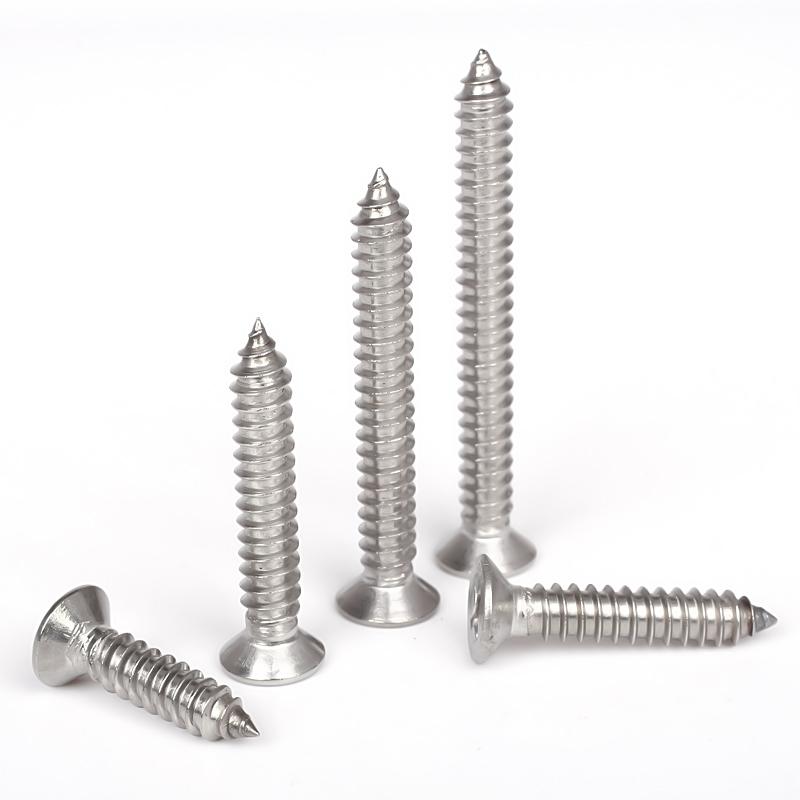
Selecting the right thread pattern for thin metal and plastic substrates begins with recognizing that conventional coarse threads often fail because there isn't enough material to hold them. Thin metal tears between adjacent thread crests, while thin plastic strips or cracks under concentrated stress. The thread geometry must therefore spread the load across as much of the available surface as possible without cutting away too much of the base material.
For thin sheet metal, a finer pitch usually outperforms a coarse one. With only a few millimeters of thickness, even one extra engaged thread can double the pull-out resistance. Use thread-forming screws with tri-lobular cross-sections rather than thread-cutting designs; they displace metal instead of removing it, preserving the thin cross-section and creating a stronger friction lock. If the panel is extremely thin, consider a threaded insert or a clinch nut to provide deeper engagement.
For plastic substrates, standard machine screw threads often lead to boss cracking, especially in glass-filled or brittle resins. Look for screws with widely spaced, asymmetric threads or a high-low thread form that reduces radial stress while increasing material flow into the thread root. In very thin plastic walls, a self-threading screw with a reduced minor diameter and a blunt tip can form threads without splitting the part, but molded bosses should still have at least twice the screw diameter in wall thickness or use metal inserts for repeatable assembly.
Preventing Galvanic Corrosion When Mixing Metals on the Job Site
Mixing metals on a job site often feels unavoidable, but skipping a quick check on material compatibility can lead to ugly corrosion failures months later. Take a hard look at the galvanic series before you bolt aluminum panels to steel framing or attach stainless fasteners to zinc-coated parts. The farther apart two metals sit on that chart, the stronger the battery effect when moisture gets involved. On a humid site or anywhere with morning dew, even a small contact patch can turn into an active corrosion cell. A five-minute review of the drawings beats tearing apart finished work to replace crumbling fasteners.
The most reliable fix is physical separation. Slide a non-conductive gasket, nylon washer, or plastic sleeve between dissimilar metals so electrons can't jump from one surface to the other. If you can't fit an isolator because of tight tolerances, use a heavy-duty sealant or a compatible coating to keep water and salt from bridging the joint. Remember that paint alone rarely works—scratches and pinholes leave bare metal exposed. On threaded connections, wrap the shank with insulating tape or choose a fastener with a built-in polymer barrier. Test a few assemblies in the actual environment before committing to a method.
Don't overlook the job site itself. Standing water, concrete dust, and de-icing salts crank up the corrosion rate dramatically. Make sure joints drain freely and avoid trapping debris between metal layers. A simple sloped surface or weep hole can prevent the electrolyte film that drives galvanic action. For coastal or industrial locations, specify metals that are closer together in the galvanic series, or accept that you'll need sacrificial anodes on larger assemblies. The key is to think about corrosion at the layout stage, not after the first rust streaks appear.
Torque Control Techniques That Stop Stripped Heads Before They Start
Most stripped screw heads happen not because the fastener is soft, but because the driver keeps applying torque after the head has already seated. A drill with an adjustable clutch or a dedicated torque screwdriver lets you set a ceiling that stops rotation before the bit can cam out. The key is to start low and work upward until the screw pulls flush without sinking below the surface.
Bit fit matters just as much as the torque number. A worn Phillips or Pozi bit will rock inside the recess and chew the metal edges, even at modest settings. Use a bit that sits deep and has no visible play, and keep it pressed firmly into the screw while driving at a moderate speed. If the bit starts to chatter or bounce, release the trigger immediately rather than pushing harder.
For dense materials or long screws, reduce friction before you reach for a higher torque setting. A properly sized pilot hole, a little beeswax on the threads, or switching to a lower gear on the drill can lower the resistance enough that a conservative clutch setting does the job. Where precision counts, check the actual breakaway torque with a digital adapter and dial the tool back until it consistently stops just as the head contacts the surface.
Matching Screw Head Styles to the Tool Access You Actually Have
Before buying fasteners, take stock of the drivers you already own. A Phillips #2 bit lives in nearly every household, but if your only screwdriver is a worn flathead, choosing a slotted screw might seem obvious—until you try to drive it at an angle inside a tight cabinet. The depth and width of the recess matter just as much as the shape, because a driver that cannot seat fully will cam out, strip the head, and leave you with a half-driven screw.
Consider the physical room around the screw location. A deep counterbore or an obstruction close to the head can make a standard screwdriver useless, even if the bit matches the recess. In those cases, a Torx or hex drive with a longer bit and a slim profile often beats Phillips, since the driver grips more securely and tolerates a slight angle without slipping. If the access is from the side rather than straight on, a right-angle adapter or a stubby driver may be necessary—check the screw head height and the driver's shaft length before committing.
Finally, match the drive style to the torque level and the tools you can actually fit into the space. Square drive (Robertson) bits stay on the driver without magnetic help, which is useful when working overhead or reaching into a cavity. Hex and Torx are better choices for machine screws that need repeated assembly, because they resist rounding better than Phillips. The goal is not just having the right bit in the drawer, but being able to apply it at the correct angle and depth where the screw actually sits.
Real-World Fastening Projects Where Self Tapping Screws Save Hours
On metal roofing jobs, self tapping screws cut through corrugated steel and bite into the wood or steel purlins underneath without any pilot hole. Traditional methods force you to pre-drill every hole, swap bits, then drive a standard screw—an extra 15 seconds per fastener. A typical residential roof has over 800 attachment points, so eliminating pre-drilling alone saves more than three hours. Using hex-head self tappers with a sealing washer lets one worker drill and fasten in a single motion, no tool changes required.
Deck and fence building with dense hardwoods like ipe or ironwood benefits just as much. Regular wood screws often strip or demand a pilot hole in tight grain. Self tapping screws have cutting threads that drive straight into compact fibers while holding high torque without snapping. A two-person crew installing 50 meters of fencing can save around two hours compared to traditional screws, and they avoid rework caused by guide holes wandering off line.
In auto interiors and appliance repair, self tapping screws fasten plastic trim, thin sheet metal, or electronic components in tight spaces where a drill can't fit for pre-drilling. The screw tip locates and cuts its own path, letting a technician secure panels one-handed. Replacing a door card or fixing a dishwasher control panel with self tappers takes nearly half the time of standard screws, and you don't get plastic shavings clogging the threads.
FAQ
Stainless steel resists rust on its own, so scratches or wear won't expose a corroding layer underneath. These screws also cut their own threads into thin metal, plastic, or wood, which saves time when you don't want to pre-drill every hole.
If you choose 316 grade stainless, they hold up well around salt spray and splashing. The threads stay serviceable instead of seizing from surface oxidation. Rinsing with fresh water now and then helps prevent salt buildup.
Hardened steel, cast iron, and thick high-strength alloys usually resist self tapping threads. The screw may not cut in properly or could snap under torque. Pre-drilling and using a machine screw tends to work better for those jobs.
Keep the drill speed moderate and use a torque limiter if you have one. Hold the tool square to the surface and stop as soon as resistance jumps. Switching to a slightly larger pilot hole can also reduce the load on the screw.
Not always. Many are designed to drive straight into thin sheet material. But in thicker stock or hard plastic, a small pilot hole lowers the chance of breaking the screw and gives you a more accurate entry point.
304 works well for most indoor and general outdoor uses at a lower cost. 316 contains molybdenum, so it resists chlorides and industrial chemicals much better. Coastal or chemical-heavy sites should lean toward 316.
Apply penetrating oil and let it sit for a few minutes. Use a bit that fits snugly and back the screw out with steady pressure. If it still won't move, a careful heat-and-cool cycle can break the bond without forcing it and stripping the head.
Yes, but pick a model with a sharp point and wider thread spacing. Control the depth so the plastic doesn't crack. Pre-drilling a small hole gives a cleaner result, especially in cold weather when plastic becomes more brittle.
Conclusion
Outdoor projects chew through standard fasteners in a season or two, but stainless steel self tapping screws hold up because they resist rust and don't need pre-drilled holes. That said, not every stainless screw is the same. If you're working with thin sheet metal or plastic, a fine thread with a sharp point bites cleanly without cracking the substrate, while coarser threads are better for thicker or softer materials where you need more holding power. Mixing metals on the same job can invite galvanic corrosion, so pairing stainless screws with aluminum or copper parts demands a barrier like nylon washers or a corrosion-inhibiting compound. Ignoring this detail can turn a "durable" fastening into a weak point within months.
Torque control is where many projects go sideways. A variable-speed drill with an adjustable clutch lets you stop before the head strips or the screw snaps, saving you from drilling out broken fasteners later. Also match the head style to what you can actually reach: a Phillips head is useless in a tight corner where you can't get straight-on pressure, but a hex or Torx drive will let you angle in with a bit holder. Real-world examples show the payoff—hanging metal roofing, assembling PVC trim, or mounting conduit to steel studs all go faster when the screw cuts its own hole and you're not swapping out stripped or rusted hardware. Choosing the right thread, controlling torque, and respecting metal compatibility turns a simple fastener into a long-term solution.
Contact Us
Contact Person: Shane
Email: [email protected]
Tel/WhatsApp: 8613357785029
Website: https://www.wanluohardware.com