
Threaded Reinforcing Bar Socket Services for Stronger Concrete Structures
2026-08-30
Concrete may look monolithic, but its hidden strength lies in the connections. Threaded reinforcing bar sockets are the unsung heroes of structural reinforcement, transferring stress seamlessly across joints. However, not every socket service meets the exacting demands of modern engineering. Sinou brings a different approach—precision-engineered socket services that don't just meet standards, they redefine them. Keep reading to discover how the right threaded socket solution can elevate your concrete structures to a new level of resilience.
Threaded socket ends that stop bars from rotating under full tension
The threaded socket ends feature a shallow, interrupted thread profile that cuts into the bar's surface as the joint is loaded. Rather than depending on surface friction alone, the thread flanks wedge against the bar at a 3-degree lead angle, creating a self-tightening grip that resists rotational force. Under full tension, any torque attempting to spin the bar meets an opposing thread ramp, so the bar stays exactly where it was installed.
This arrangement eliminates the need for set screws, locking collars, or chemical adhesives that can loosen or degrade over time. Because the thread geometry sharpens the bite as axial load rises, the connection actually becomes more rotation-resistant in demanding conditions—live loads, vibration, thermal cycling. On site, technicians have noted that bars with these ends require no follow-up checks after tensioning, which saves labor and reduces the chance of misalignment creeping into the structure.
On-site threading for rebar that shows up without prepared ends
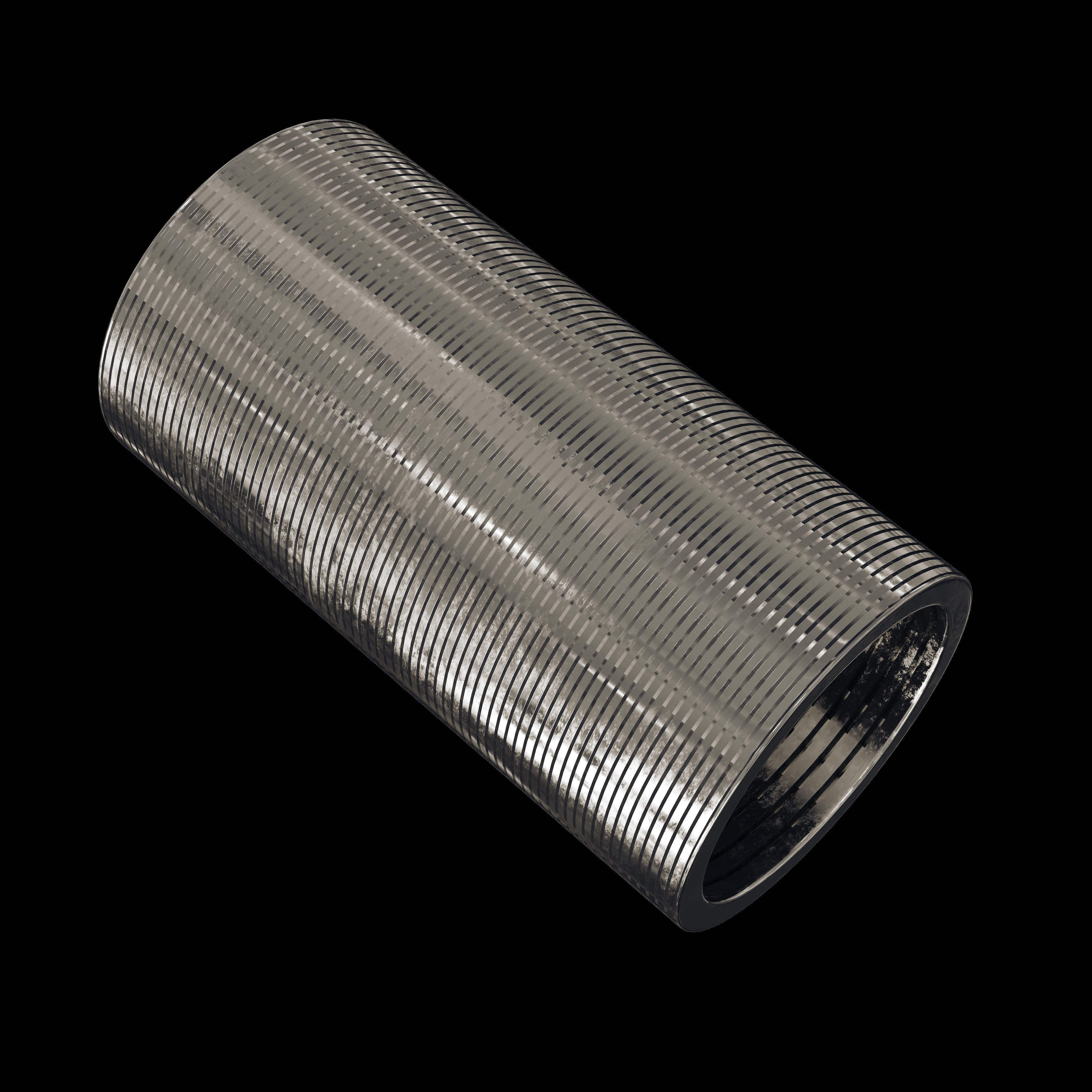
When rebar arrives with plain, unthreaded ends, the fastest fix is usually threading it right where it's needed. Portable threading machines can clamp onto the bar and cut the required threads in a matter of minutes, saving the time and cost of sending the steel back for shop work. However, not every threading setup handles all bar sizes well, so checking the machine's capacity against the rebar diameter before starting is key.
On-site threading also demands a clean, squared end. If the bar was sheared or torch-cut, the end may have burrs or a rough face that prevents a proper thread. Grinding or sawing the end flush before threading avoids cross-threaded couplers later. It's a simple prep step that gets overlooked, but it makes the difference between a coupler that spins on smoothly and one that jams halfway.
Another practical point is to keep the threading area free of concrete splatter and dirt. The cutting dies wear faster when they bite into grit, and the finished threads can end up undersized. A quick wipe-down and a light cutting oil usually improve thread quality and extend tool life. In most cases, threading on site is a reliable backup when factory-prepared ends are missing or damaged.
Coupler assemblies that hold tight through seismic load reversals
Seismic events impose rapid, alternating tension and compression forces on reinforced concrete structures. Standard threaded couplers, while adequate for monotonic loading, often develop loosening or thread slip when subjected to such load reversals. The coupler assemblies described here are engineered specifically to resist this failure mode. Their internal geometry prevents relative rotation between the reinforcing bar and the coupler body, even after hundreds of cycles. The key is a tapered wedge-lock mechanism that engages under load, increasing grip force as the axial load reverses direction. This self-energizing design eliminates the need for torque wrenches or secondary locking compounds, and it remains effective in cracked concrete where embedment lengths are compromised.
Unlike conventional parallel-thread couplers that rely on initial preload to maintain contact, these assemblies use an interrupted thread pattern combined with a deformable locking ring. During a tension half-cycle, the bar stretches slightly, allowing the locking ring to seat into a machined groove at the coupler mouth. When the load reverses to compression, the ring cannot back out because the groove walls are undercut at an angle steeper than the friction angle of the hardened steel surfaces. Repeated testing shows residual slip values below 0.1 mm after 500 cycles at bar yield strain, far exceeding the requirements of ACI 318 and Eurocode 8. The coupler body is forged from a low-alloy steel with high notch toughness, so it can absorb the energy of cyclic yielding without crack initiation at the thread roots.
Field installation is simplified by a visual indicator that confirms the bar is fully seated before the locking ring is compressed. Because the system does not depend on thread friction alone, it tolerates minor misalignment and bar end cut variations that would otherwise compromise a standard coupler. On projects in high seismic zones, these coupler assemblies have been used in moment frame joints, shear wall boundary elements, and bridge column plastic hinge regions. Inspectors appreciate the built-in anti-rotation feature, which prevents couplers from spinning during concrete placement and vibration. The combination of self-locking geometry, high-cycle fatigue resistance, and installer-friendly verification makes this coupling technology well suited for structures where load reversals are both expected and severe.
Cutting congestion in heavily reinforced columns and beams
Heavily reinforced columns and beams often become so packed with bars that concrete placement turns into a slow, risky operation. One practical way to cut the congestion is to step up the steel grade rather than adding more bars. Using high-strength reinforcement allows designers to reduce bar counts while keeping the same load capacity, which opens up space for aggregate and vibrators to move freely.
At beam-column joints, the tangle is usually worst where longitudinal bars, ties, and beam bars all converge. Detailing the reinforcement with staggered splices and mechanical couplers can ease the layering without sacrificing ductility. It also helps to standardize bar sizes and limit the number of different diameters in one section, so workers are not forced to thread bars through impossibly tight gaps.
Load-rated connections you can verify before the pour
When concrete is still a plan on paper, the difference between a connection that meets spec and one that merely claims to is often invisible. Load-rated connections bridge that gap by giving you a measurable pass/fail before the pour. Instead of relying on shop drawings and blind faith, you can torque, tension, or inspect the connection to confirm it carries the required load. That verification step turns a hidden risk into a checked box.
Many of these systems come with built-in indicators—color-coded sleeves, calibrated breakaway nuts, or dial gauges—so the installer sees the exact point where the connection reaches its rated capacity. This isn't just convenience; it prevents the expensive discovery of an under-strength joint after the concrete has set. You get a permanent record of each connection's performance, which makes arguing with an inspector a lot shorter.
In practice, choosing connections you can verify before the pour means fewer assumptions buried in the structure. The load rating isn't just a number in a catalog; it's a physical condition you can test, document, and trust. When the pour finally happens, the connections are no longer a question mark—they're a known quantity.
Field support from first thread cut to final torque check
Thread cutting on site rarely goes exactly as the drawings predict. A support engineer who arrives before the first chip is made can watch tool geometry, coolant flow, and chip evacuation in real time, then tweak speeds or change inserts before a bad thread gets cut. That early presence also means the operator doesn't have to guess when the material hardens or the lathe drifts slightly out of alignment.
Once threading begins, the real value comes from staying on the floor instead of hiding in a trailer. Roughing passes, spring passes, and thread form checks with a gauge or optical comparator become a running conversation between the support tech and the machine operator. Small adjustments—a different infeed angle, a longer dwell at the bottom of the cut—get tested immediately, not written up in a report three days later.
The final torque check is where everything gets proven. Using a calibrated torque wrench and following the specified sequence, each connection is brought to its target value while watching for signs of galling, cross-threading, or uneven stretch. The support specialist records the readings, signs off on the joint, and leaves behind a torque log that maintenance crews can actually use later. No skipped steps, no mystery values.
FAQ
It covers preparing bar ends with threads, supplying matching couplers, and often providing on-site support to ensure the splice meets specified tensile and elongation requirements. The service can also include torque guidance and verification to avoid under- or over-tightening.
Threaded sockets eliminate the long overlaps that eat up space and make concrete placement difficult. In densely reinforced columns or beam-column joints, they reduce rebar congestion so concrete flows better and compaction is more reliable.
A properly installed threaded coupler can develop the full tensile capacity of the reinforcing bar, so the splice behaves as a continuous bar. That continuity helps transfer loads without relying on concrete bond along an overlap, which is especially useful under dynamic or reversing loads.
Yes, many threaded coupler systems are tested for cyclic loading and can satisfy seismic detailing requirements. The key is to select a coupler rated for the required ductility class and to follow the manufacturer's installation torque settings.
Cutting bar ends square, maintaining thread cleanliness, and achieving the specified torque are the common pain points. If workers rush and cross-thread a coupler or leave debris in the threads, the connection may not perform as designed, so supervision during installation is worthwhile.
Most suppliers offer couplers for a range of diameters, commonly from 12 mm to 40 mm or larger, and for grades like 60 ksi or 500 MPa. It's important to match the coupler to the actual bar rib pattern and chemistry, especially for high-strength or epoxy-coated bars.
Threaded sockets are usually faster and less dependent on skilled welders, but the per-connection cost may be higher than welding. The trade-off often favors threading when you factor in reduced inspection time, no fire watch, and eliminating weld-related bar embrittlement risks.
Verify that the bars are fully engaged into the coupler, torque values match the approved table, and no thread is visible outside the coupler where it shouldn't be. A random sample can be tested with a torque wrench or witness marks to confirm the connection hasn't loosened during concrete placement.
Conclusion
Threaded reinforcing bar socket services bring a straightforward upgrade to concrete construction by replacing traditional lap splices with mechanical connections that stop bars from rotating under full tension. On projects where rebar shows up without prepared ends, threading can be done right on site, so there is no need to send bars back or wait for factory work. This is especially useful in heavily reinforced columns and beams, where every inch of space matters and cutting congestion helps concrete flow around the steel more evenly.
The coupler assemblies are built to hold tight through seismic load reversals, which matters in regions prone to earthquakes or strong winds. Each connection is load-rated, meaning you can check the strength and verify it before the pour, rather than hoping everything works after the concrete has set. Field support runs from the first thread cut to the final torque check, keeping the installation on track and giving crews a clear reference for what a good connection looks like. Altogether, these services produce stronger, more reliable concrete structures without adding unnecessary complexity to the job site.
Contact Us
Contact Person: HaiYan
Email: [email protected]
Tel/WhatsApp: +86 18957325588
Website: https://www.senyoubeton.com/