

Tissue Packaging Machine Company Evaluation Guide for Modern Manufacturers
2026-11-23
Choosing a tissue packaging machine supplier usually comes down to spec sheets, delivery promises, and a rushed comparison chart. But modern manufacturers have more at stake: line speeds, film waste, changeover downtime, and after-sales support can quietly reshape your unit economics. This guide moves beyond the glossy brochures to evaluate what actually matters on your production floor. Along the way, we look closely at how DAXIN approaches these practical challenges, so you can judge suppliers on evidence rather than sales talk.
Reading the Factory Floor Before the Sales Pitch
Walking a production line reveals things a capabilities deck never will. The way material moves between stations, how defects are tagged, whether operators have quick access to the right gauges—these small signals tell you if a supplier can actually hold the tolerances they quoted. A sales conversation built before this kind of look often promises more than the floor can deliver.
It pays to ask questions that don't have a rehearsed answer. Instead of asking about headline capacity, request to see the last shift's output against plan, or how a recent line stoppage was resolved. The pause, the glance at the plant manager, the quick redirect—all of it is information. You aren't auditing for show; you're matching the reality of the line to the language of the proposal.
When you carry that floor-level understanding into the pitch, the conversation shifts. You can speak to actual changeover times, tooling wear, or a bottleneck at final inspection rather than generic strengths. That specificity builds far more trust than another polished slide, because it shows you did the harder work before asking for the order.
Why Fast Cycle Rates Can Hide Real Throughput Issues
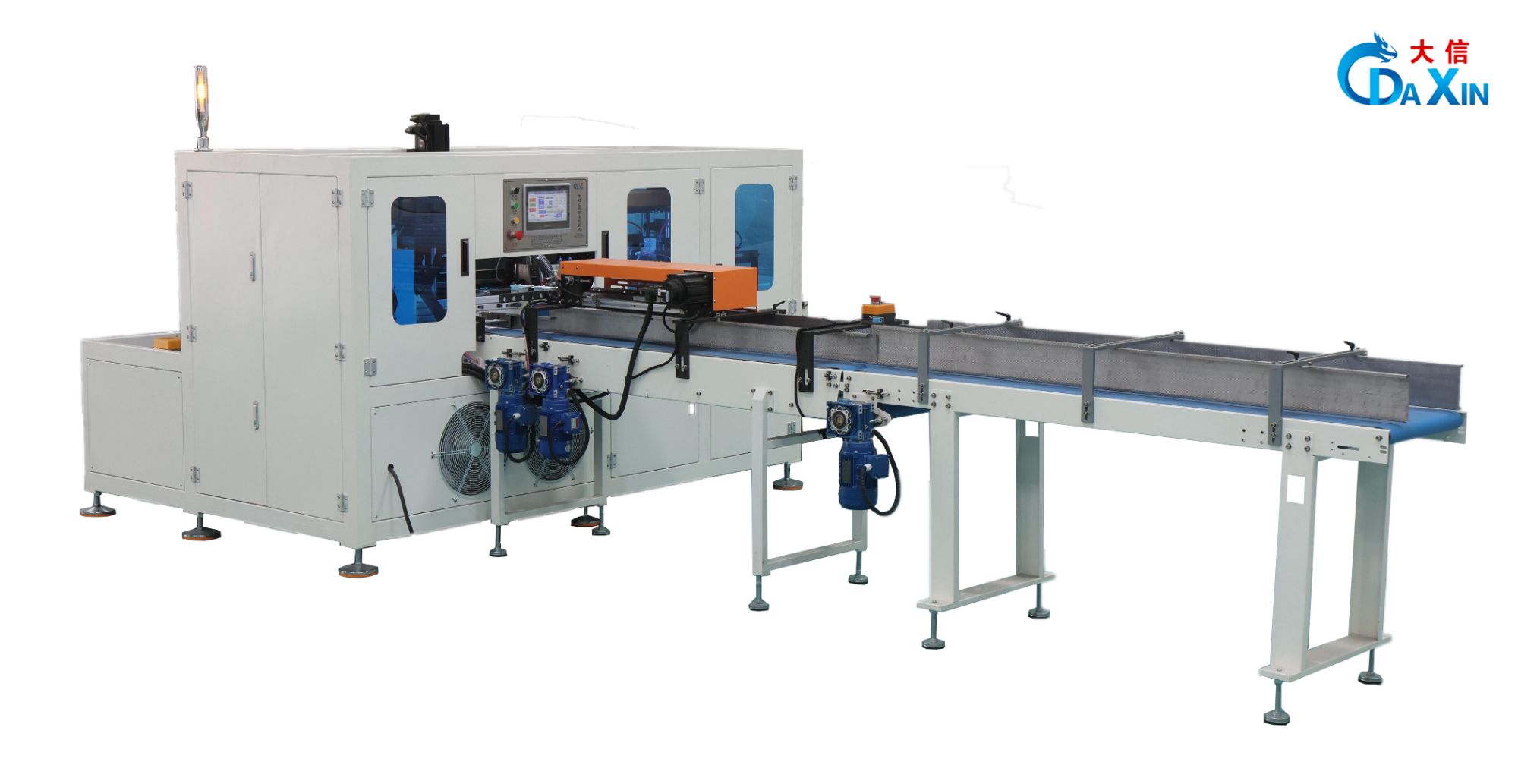
Fast cycle rates give the impression of a healthy production line, but they can easily mask bottlenecks that accumulate between stations. When a single machine runs at an impressive pace, slowdowns often appear elsewhere—in material handling, inspection, or manual packaging—yet the headline number keeps everyone focused on the wrong metric. The result is a line that looks efficient on paper while work-in-progress quietly piles up in front of constrained steps.
Because throughput is determined by the slowest operation, a high cycle rate at one point simply increases inventory if downstream processes cannot keep up. Teams may celebrate shorter takt times without realizing they have shifted the problem into queues, longer lead times, and uneven labor loads. Without measuring end-to-end flow, these hidden constraints remain invisible until delivery dates slip or floor space becomes overwhelmed.
A more useful approach is to compare cycle rates against exit rate and track the dwell time of units between operations. Observing how long a part waits, rather than how quickly a machine moves, reveals where capacity is genuinely lost. Slowing an upstream asset to match the system bottleneck often improves overall output, reduces clutter, and stabilizes quality.
The Cost Drivers Most Buyers Overlook in a Line Quote
Unit price and material grade tend to dominate a line quote review, but the quieter cost drivers often sit in secondary handling. Deburring, straightening, part marking, and the setups required for unusual grain direction or surface finish can easily double labor without ever showing up as a discrete line. Buyers only notice when the first production invoice arrives and the math no longer matches the spreadsheet.
Packaging assumptions and delivery logistics also carry hidden weight. A standard carton, one drop point, and full pallet utilization get priced implicitly, while split shipments or custom dunnage become change orders later. The same applies to supplier-side documentation, batch traceability, and inspection equipment needed for internal audit rules. These obligations stay invisible in the initial quote and quietly widen the gap between the offer and the final cost.
Changeover Realities That Shape Daily Output
Every shift carries the weight of what came before. A line that finished a long run of one product rarely starts the next at full speed. Operators spend the first thirty minutes recalibrating guides, swapping nozzles, or waiting for the last pallet of the old label to clear the floor. Those lost minutes rarely show up in a planning spreadsheet, but they set the rhythm for everything that follows.
The truth is that changeover time is never purely mechanical. It includes the moment a supervisor walks over to double-check a setting, the extra wipe-down someone does because the next order is allergen-sensitive, and the quiet pause while a forklift finds room for leftover packaging. None of these moments are dramatic, yet together they decide whether the day ends with a comfortable buffer or a scramble to catch up.
Plants that ignore these realities plan a perfect world. Plants that respect them build a little slack into the schedule, keep the right tools within arm’s reach, and train crews to move deliberately rather than desperately. The daily output is not shaped by the fastest machine on the floor, but by the slowest realistic changeover between product runs.
Testing Service Promises Before the Install Ends
A lot of teams wait until the installation is fully finished before they start checking whether the service actually delivers what was promised. That delay is where trouble hides. Instead, run targeted checks while the final configuration steps are still in progress. For example, once the core binaries are in place but before the last service restarts, you can already probe the health endpoints, validate configuration parsing, or send a few synthetic requests. Catching a broken default setting or a missing environment variable at this stage saves you from declaring a silent failure as a successful rollout.
The idea is not to interrupt the installer, but to treat its remaining steps as a live testing window. If the promise includes automatic failover, trigger a manual switch before the install script exits. If the promise mentions backward compatibility, point a legacy client at the almost-ready endpoint. These actions reveal mismatches between the marketing language and the actual behavior while the install process still gives you room to roll back cleanly.
Once the install ends, everyone expects the service to be fully verified. Doing the verification just before that moment closes the gap between “deployed” and “proven.” It also gives the installer logs a useful final entry: the service was not merely installed, but tested against its stated promises while the window was still open.
Spare Parts Availability as a Reliability Signal
When a manufacturer keeps spare parts on the shelf long after a product leaves the catalog, it says more than any warranty card. It reflects an internal expectation that the equipment is worth repairing rather than replacing. A healthy parts pipeline for seals, boards, couplings, or firmware keys suggests the design team believes failures will be isolated and fixable, not catastrophic or obsolete.
The absence of spare parts works in the opposite direction. If critical modules are already unavailable six months after launch, buyers should treat that scarcity as a clue about build quality, supply commitments, or planned obsolescence. Maintenance planners often read parts lead times and stock depth as a quiet audit of how long the vendor intends to stand behind its product.
FAQ
Look at how the control system handles rapid changeovers and whether the frame is built for continuous high-speed runs without shaking itself out of alignment. A supplier that asks about your film specs, plant humidity, and operator skill level before quoting is usually more credible than one that leads with a generic brochure.
More than the paint finish. Ask to see the gearbox mounting points, the thickness of the side plates, and whether the sealing jaws are machined or just folded sheet metal. Those details indicate whether the machine will hold tolerances after three years or start producing wrinkled packs after six months.
Not always. Servo gives you recipe flexibility and faster changeovers, but a well-built cam-driven machine can be more durable for a dedicated product size running three shifts. Match the drive type to the range of pack formats you actually run, not to the trend.
Request a run with your own tissue and film, at the speed you expect on your floor, not the supplier's best-case demo conditions. Measure rejected packs, film waste, and jaw temperature drift over several hours. A supplier confident in its equipment will not dodge this.
Ask for a list of the last five installations in your region and call two of them unannounced. Ask about response time on a Saturday, spare part lead time, and whether the technician fixed the issue on the first visit. The answers are usually more honest than a curated case study.
It is central. Tissue films vary in slip, gauge consistency, and heat-seal window. A good partner runs trials across the film types you use and points out where your cheapest film may cost you more in downtime. If they promise every film works perfectly, be skeptical.
Rarely. Look at total cost per million packs, including planned maintenance, spare parts, energy use, and expected lifespan. A lower-priced machine that loses an extra hour per week to film jams can erase its price advantage within a year.
Ask how long a full format change takes with one technician, whether wear points are reachable without removing guards, and if lubrication points are centralized. If the answer sounds vague or requires a "specialist" for routine tasks, walk away.
Conclusion
Modern tissue packaging lines are rarely won by the lowest sticker price or the fastest advertised cycle rate. A more useful evaluation starts on the factory floor, before any sales presentation sets the agenda. Watching how a machine handles roll changes, film splice points, and minor jams reveals more than a polished demo. Fast cycle rates often look impressive in isolation, but they can hide waiting time at downstream accumulation, inconsistent film feed, or operator interventions that erase the gains. Buyers who only compare cycle times tend to miss the real throughput story.
Quoting also deserves a wider lens. Many cost drivers sit outside the base unit: air consumption, changeover tooling, guarding modifications, and the labor needed to keep a line stable across multiple SKUs. Changeover realities directly shape daily output because a line that runs fast in a single long run may lose hours when switching between tissue counts, pack sizes, or film formats. Before the install ends, it is worth testing service promises with concrete scenarios such as response time for PLC faults, remote diagnostic access, and whether technicians can handle mechanical adjustments without waiting for a specialist. Spare parts availability is another reliability signal: if common wear items are not stocked locally or have long lead times, a small component can stop the entire line. Modern manufacturers should treat quoting, changeover, service, and parts as one connected evaluation rather than separate boxes to tick.
Contact Us
Contact Person: Sam Xie
Email: [email protected]
Tel/WhatsApp: 86-18938538530
Website: https://www.daxin321.com/