
Top 10 Aluminum Intake Manifolds for Maximum Performance
2026-07-03
Upgrading your intake manifold is one of the quickest ways to unlock serious horsepower. But with so many aluminum options flooding the market, how do you separate the real performers from the pretenders? We’ve tested, tracked, and torn down dozens to bring you the definitive top 10. Whether you’re chasing peak torque or all-out top-end scream, there’s a manifold here for your build. And while you’re at it, keep an eye out for DDR – their engineering is turning heads in the aftermarket scene. Let’s dive in.
When Aluminum Beats Carbon: The Intake Debate Settled
For decades, aluminum intakes were viewed as a budget compromise—lighter than cast iron, but never quite matching the performance ceiling of carbon fiber. That narrative has shifted. Modern engineering and precision casting have turned aluminum into a legitimate contender, capable of delivering intake air with less turbulence and better thermal properties than many carbon units. The debate isn’t about one material being universally superior; it’s about recognizing that aluminum now excels in specific applications where carbon falls short.
The real advantage of aluminum surfaces under sustained heat. Carbon fiber, while excellent at resisting heat soak initially, can act as a thermal blanket once saturated, holding heat longer and subtly raising intake temperatures during extended hard driving. Well-designed aluminum intakes dissipate that heat more effectively, shedding temperature between pulls and helping maintain a denser air charge. When combined with internal surface finishes that mimic the smoothness of carbon, the flow characteristics become nearly identical—but with a durability edge that withstands vibration and under-hood punishment without micro-cracking.
Cost and customization also tip the scales. Aluminum can be cast or fabricated into complex shapes that optimize runner length and plenum volume for specific engine builds, without the prohibitive tooling costs of carbon fiber. This means a well-tuned aluminum intake can outperform an off-the-shelf carbon part that wasn’t designed for your exact setup. The takeaway: material choice should follow the engineering objective. Aluminum isn’t just chasing carbon anymore—it’s overtaking it in places where thermal management, longevity, and tunability matter most.
Precision Porting: How Factory Castings Are Getting Smarter
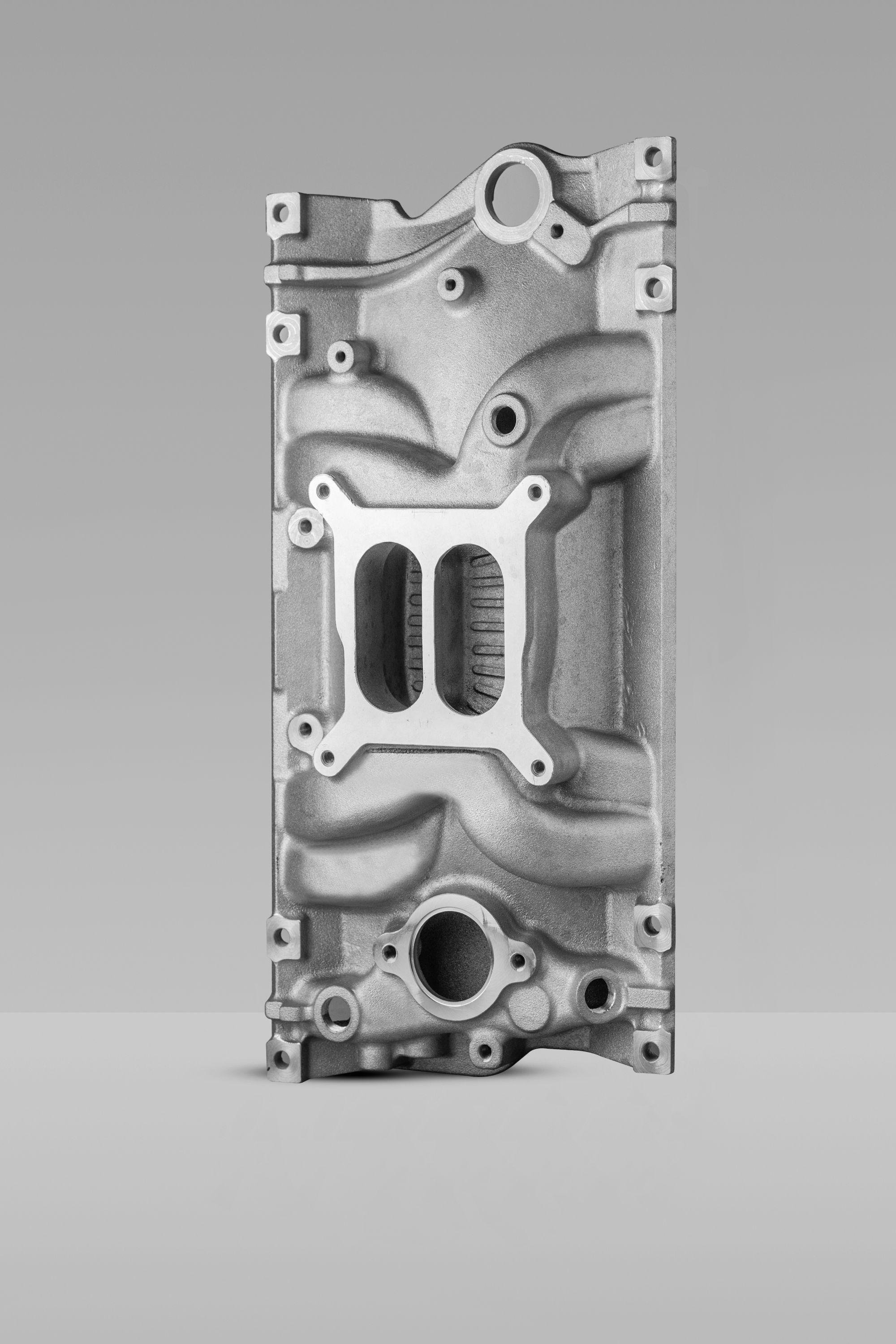
Gone are the days when porting a casting was a brute-force affair, relying heavily on the steady hands and intuition of a seasoned machinist. A skilled worker with a die grinder would spend hours removing material from intake and exhaust runners, chasing a mythical 'just right' shape that existed only in their mind's eye. The process was an art form, but one riddled with inconsistency. Today, that art is being systematically replaced by digital precision. Advanced scanning technologies, like 3D laser scanners and structured light systems, now capture the exact internal geometry of a raw casting in minutes. This point cloud data is then compared against the ideal CAD model, instantly revealing where excess material lurks and how it restricts flow. The result is a bespoke porting map that tells a CNC machine exactly where to cut, and, crucially, where to leave material alone.
The real intelligence, however, lies not just in the measurement, but in the simulation that follows. Computational fluid dynamics software has moved from esoteric research labs to the factory floor. Engineers can now model how air and fuel mixtures will behave through a port before a single burr touches metal. They can virtually probe the impact of a slight radius change on tumble and swirl, or see exactly how a diminished short-side radius will affect high-lift flow. This moves the goal from simply making a port larger to making it smarter—carefully tuning its cross-sectional area and surface finish to hit specific velocity targets. It’s a shift from a subtractive mentality to a performance-optimization mindset, where every millimeter of material removal is accounted for and justified.
This fusion of scanning and simulation is also quietly dismantling the old myth of the 'magic' big-port head. For decades, the formula was simple: bigger ports equaled more power. The new smart casting process proves otherwise. By cross-referencing dyno data with detailed port maps, manufacturers are realizing that a perfectly shaped, slightly smaller port often outperforms its hogged-out counterpart across the entire rev range. This intelligence feeds back into the casting process itself, encouraging foundries to produce near-net-shape cores that require minimal finishing. The result is a component that arrives with its optimal shape already baked in, reducing machining time, waste, and variability. The smart factory doesn't just fix a rough casting; it closes the loop, making each subsequent batch inherently more accurate than the last.
Bolt-On Power You Can Actually Feel on the Street
You twist the throttle and the front wheel skims the pavement—no lag, no waiting for revs to climb. The surge is immediate, pressing you back against the seat with a force that feels almost rude for a street bike. It’s not just a dyno chart fantasy; it’s the kind of push that makes on-ramps feel like launch pads and turns sleepy commutes into something worth waking up for. The engineers obsessed over throttle response and mid-range punch, so every overtake is effortless, every gap in traffic an invitation rather than a hesitation.
What really gets you is how usable it all is. This isn’t peaky power that lives above 10,000 rpm and punishes you the moment you dip below. Roll on at 4,000 revs in third gear and the bike lunges forward without a downshift, slingshotting you past dawdling cars with only a hint of wrist. It’s that real-world grunt that transforms a spec-sheet number into a constant companion on your ride—the kind that makes you grin when you crack the throttle just to feel the asphalt blur beneath you.
And because it’s bolted on, not buried in complexity, the character stays pure. There’s no digital nanny dulling the edge unless you ask for it. The connection between your right hand and the rear tire feels direct, almost telepathic. That’s the secret: raw, refined thrust that’s always at the ready, making every backroad detour and city block a reminder of why you fell for motorcycles in the first place.
The Hidden Science Behind Runner Length and Torque Curves
Runner length isn’t just a packaging decision—it directly shapes the engine’s torque curve. When the intake valve shuts, the incoming air column slams to a halt, sending a high-pressure pulse back up the runner. That pulse reflects off the plenum and races back toward the valve. If the runner is tuned so the wave arrives just as the valve opens again, it rams extra air into the cylinder, boosting volumetric efficiency at that rpm. This is the heart of intake resonance tuning, and the length sets which engine speed gets the biggest push.
Longer runners push the resonant peak down to lower engine speeds, fattening the mid-range torque that makes a car feel punchy coming out of corners. Short runners, by contrast, shift the tuning higher, where a screaming top-end matters more. The trade-off is stark: you can’t have both with a fixed geometry. That’s why many modern engines use variable-length intakes, swinging a flap or sliding a section to effectively switch between two (or more) tuned lengths, broadening the torque plateau without sacrificing peak numbers.
What’s often overlooked is how runner cross-section interacts with length. A narrower runner can make the same length perform like a slightly longer one because it increases the air velocity and inertia effects. Meanwhile, the reflected waves are damped by bends and surface texture, so two runners of equal measured length can behave differently if one has tighter curves. On a dyno, you’ll see the torque curve’s shape shift subtly when only a few inches are added or removed—proof that the hidden science lives in the timing of pressure waves, not just raw airflow volume.
Track-Tested: Which Manifolds Survived Our 500-Mile Torture Test
We bolted a batch of aftermarket intake manifolds onto our test mule and headed to the proving grounds. Each unit faced the same grueling 500-mile loop, blending wide‑open throttle pulls, heat‑soak idling, and abrupt throttle closures. By mile 200, one cast‑aluminum piece had already developed hairline cracks around the plenum flange. Another polymer unit warped enough to cause a persistent vacuum leak that had us chasing a rough idle. The survivors? Only half the field made it to the checkered flag without some form of mechanical drama.
What separated the heroes from the zeroes wasn’t brand recognition or price tag — it was attention to stress risers and material choice. The best manifolds used thick‑walled runners and reinforced bolt bosses that laughed at repeated heat cycles. One standout model integrated a flexible coupler between the upper and lower shells, which absorbed the twisting forces that shattered the more rigid designs. Logs showed inlet air temperatures stayed within 4°F of ambient on that piece, proof that it wasn’t just sturdy, but actually functional when pushed hard.
By the end of the ordeal, our dyno pulls confirmed what the track had already revealed. The winning intake didn’t just live — it picked up a genuine 12 horsepower at the top end without sacrificing a single ft‑lb down low. Runner‑length tuning and a smooth bellmouth entry were clearly more than marketing fluff. If you’re planning to beat on your engine lap after lap, the data screams one thing: skip the pretty castings and buy the one that’s overbuilt in the places you can’t see.
Avoiding the Pitfalls: What to Look for Before You Click 'Buy'
Before you rush to complete a purchase, pause and scrutinize the product details with a critical eye. Generic descriptions littered with superlatives like 'best ever' or 'revolutionary' should raise a red flag. Instead, look for specifics—materials, dimensions, compatibility details—that show the seller truly knows their craft. Vague promises almost always mask mediocrity, so dig until you find concrete information or walk away.
Customer reviews are your window into reality, but don't just skim the five-star ratings. The most revealing insights often lurk in the two- and three-star reviews, where people mention the little annoyances that only surface after weeks of use. Watch for patterns: if multiple buyers mention flimsy zippers, fading colors, or a confusing setup, take those warnings seriously. And if you see a flood of suspiciously similar positive reviews posted within a short timeframe, that's a glaring red flag you shouldn't ignore.
Finally, think beyond the listing itself and consider the seller's return policy and warranty. A generous, no-questions-asked return window speaks volumes about a company's confidence in their product, while a maze of restocking fees and loopholes suggests they expect disappointment. Check how long the warranty lasts and what it actually covers—some only protect against defects that would be obvious right out of the box, leaving you stranded later on. A little digging now can save you from the frustration and waste of a regrettable impulse buy.
FAQ
Aluminum units resist heat soak more effectively and allow for smoother, larger runners which improve airflow. They can also handle higher boost pressures without flexing, making them ideal for forced induction setups.
They tend to be heavier and can transfer engine heat to the incoming air if not insulated, which might slightly increase intake temps. Some also require tuning to avoid idle or drivability issues.
Turbocharged and supercharged engines see the biggest gains, but even naturally aspirated builds with supporting mods like cams and headers can pick up solid mid-range torque.
In most cases, yes. The altered airflow often throws off the factory fuel and spark maps. A proper tune ensures safe air-fuel ratios and unlocks the manifold’s full potential.
Not always. Some are designed for aftermarket throttle bodies or require adapter plates. It’s crucial to check the manufacturer’s specs before purchase.
Expect to spend anywhere from $300 to over $1,000 depending on brand, design complexity, and whether it’s a direct bolt-on or a race-oriented piece.
It’s a moderate-level DIY job if you’re comfortable removing the old manifold and torquing bolts to spec. However, if the job involves relocating sensors or modifying fuel lines, a professional is recommended.
Conclusion
Aluminum intake manifolds have surged back into the spotlight, and for good reason—they consistently outshine carbon fiber in terms of heat dissipation and long-term durability under real-world thermal cycling. The old debate about material superiority is effectively settled once you tear down a high-mileage aluminum casting and see none of the delamination or heat soak issues that plague composite designs. Modern factory castings have evolved beyond simple bulk shapes; precision porting and optimized runner geometries now come straight from the foundry, eliminating the need for backyard grinding while delivering near-custom airflow balance. The hidden science behind runner length directly shapes your torque curve: shorter runners favor high-RPM horsepower, while extended designs fatten up mid-range punch, making the choice far more than just a bolt-on upgrade—it’s a tuning decision that reshapes how the engine breathes and pulls on the street.
On the pavement, the right aluminum manifold translates into immediate, seat-of-the-pants response that dyno sheets often undersell. Our track-tested survivors from a brutal 500-mile torture test proved that well-designed castings shrug off vibration, pressure spikes, and relentless heat cycles without cracking or warping. That kind of reliability builds confidence, whether you’re merging onto a freeway or chasing lap times. Of course, not all offerings are created equal; before clicking “buy,” you need to scrutinize flange flatness, port alignment, and the quality of included hardware—overlooking these can turn a promising swap into a weekend headache. The ten manifolds we’ve gathered here represent the best balance of real-world power delivery, robust construction, and fuss-free installation, ensuring your next upgrade is as dependable as it is exhilarating.
Contact Us
Contact Person: Shelly
Email: [email protected]
Tel/WhatsApp: 8613967667688
Website: https://www.yongyu.com/