Top 10 Cold-Rolled Steel Plate Manufacturers Leading the Global Market
2026-10-09
What does it take to become one of the top ten cold-rolled steel plate manufacturers in the world? It's not just about production capacity—it's about precision, adaptability, and a relentless drive to outperform. In this article, we explore the companies redefining the global market, including Sanhe Steel, a name that increasingly keeps appearing in industry conversations. If you're curious about who is truly leading the charge—and what sets them apart—keep reading.
The Mills Behind the Tightest Thickness Tolerances in Cold-Rolled Plate
Achieving thickness tolerances within a few microns on cold-rolled plate doesn't happen by accident. It starts with mill stands that have exceptionally stiff housings and work rolls ground to sub-micron roundness. The hydraulic gap control systems on these lines adjust roll force several times per second, responding to signals from laser or x-ray thickness gauges just downstream. Any drift in incoming strip profile is corrected before it can translate into gauge error.
Beyond the machinery, the real difference is how these mills manage thermal crown and roll wear. Operators use zoned cooling sprays across the roll face, and the most advanced setups run scheduled roll changes based on accumulated tonnage rather than waiting for tolerance drift. In practice, that means a coil processed at the start of a campaign and one processed near the end can still hold the same ±0.005 mm band.
Where the World’s Automotive Sheet Metal Actually Comes From
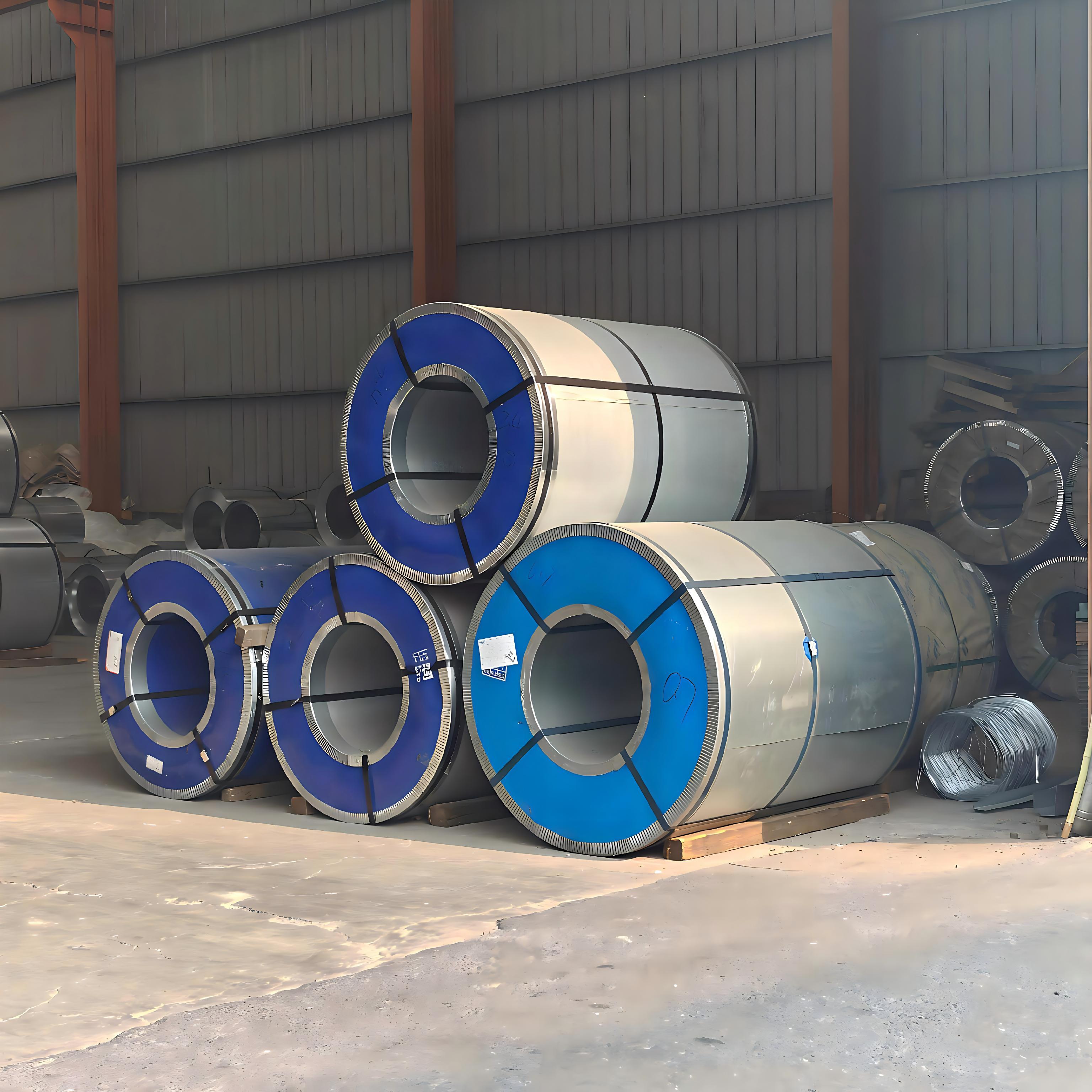
The steel that ends up as a car's door skin or roof panel rarely travels in a straight line from mill to stamping plant. A coil might leave a cold-rolling facility in South Korea, get slit and blanked in Mexico, then be shipped to an assembly plant in the American Midwest. Tariffs and logistics costs can reroute these flows within a single quarter, so the map of automotive sheet metal supply is less a fixed picture than a constantly shifting web.
China remains the largest single producer of automotive-grade steel, but much of that tonnage feeds its own domestic vehicle plants. For export markets, Japan, South Korea, and Europe are more common direct sources of exposed-quality panels. North American stamping operations also rely heavily on integrated mills in the U.S. and Canada, though a meaningful share of substrate steel still crosses the Pacific or the Atlantic before it becomes a fender or hood.
The real answer to where automotive sheet metal comes from depends on the grade. Advanced high-strength steels with tight tolerances often come from specialized mills in Japan or Germany, while more standard outer panels can be sourced regionally. Recycled content adds another layer: a typical car body may contain steel from multiple continents, melted down and re-rolled without losing its mechanical properties.
How Regional Leaders Handle the Shift Toward Higher-Strength Cold-Rolled Plate
Regional mills that once leaned on commodity grades are now retooling their annealing lines and roll-force setups to chase 980-megapascal and beyond. The shift isn't just about swapping a few alloys; it means rethinking cooling curves, tension control, and even edge trimming to avoid microcracks that show up later in stamping. Some mid-sized producers have started running smaller, more frequent campaigns instead of long monolithic runs, letting them tune parameters on the fly without tying up a whole week of capacity.
What separates the frontrunners is how they handle the incoming hot band. Instead of demanding a perfect substrate from their own melt shops, a few have built tighter feedback loops with upstream suppliers, specifying crown and wedge tolerances that used to be considered overkill. This lets them push reduction ratios harder without tearing, especially on thin-gauge high-strength stock. The result is a more stable product that downstream fabricators don't have to babysit through die trials.
The real friction comes down to people and data. Older operators often trust a hard-won recipe, while younger engineers push model-based setups that account for roll wear and temperature drift in real time. The best-run plants blend both, using the models to narrow the window and the veterans to spot anomalies a sensor won't catch. That kind of quiet collaboration, not any single piece of equipment, is what lets a regional player hold its own against bigger integrated mills.
Inside the Cold-Rolled Plate Lines That Keep Appliance Makers Loyal
The cold-rolled plate lines that win over appliance manufacturers rarely rely on a single selling point. Instead, they stack precise gauge control with surface conditioning that survives the harsh stamping and coating processes. One line serving a major refrigerator brand holds thickness variation to within ±0.005 millimeters using a six-high mill with hydraulic roll bending. The payoff shows up downstream: side panels come off the press without edge wave or oil canning, and the inline pickling plus passivation keeps roughness between 0.6 and 1.0 microns Ra, so powder coating adheres evenly across every batch.
Flexibility matters just as much as metallurgical consistency. Appliance models shift every season, and a loyal supplier can switch from 0.4 mm galvanized substrate for dryer drums to 1.2 mm cold-rolled deep-draw stock for range bodies in under twenty minutes, including work roll changes. Smaller runs are accepted without surcharges, a practice that lets washing machine makers test textured anti-fingerprint finishes for premium lines without locking in container-sized orders. That kind of responsiveness keeps inventory lean on the OEM side and makes the steel mill feel like an extension of the appliance plant's own stamping department.
Traceability seals the relationship. Each coil carries a laser-etched code that links back to the heat number, and every pass through the mill logs roll force, speed, and tension into a cloud database. When a quality engineer at an appliance factory scans the code, they see the full yield strength and elongation curve, plus any edge trim adjustments made during slitting. A suspected defect can be traced to a single slab within hours, not days, avoiding broad recalls and keeping production lines running. That level of transparency builds a trust that price competition alone cannot break.
The Supply Chain Moves That Separate Top Cold-Rolled Plate Producers
Leading cold-rolled plate producers don't treat hot band purchasing as a simple commodity transaction. They sign multi-year framework agreements with a handful of mills and lock in width, thickness, and flatness tolerances at the slab stage. This upstream involvement keeps their alloy surcharge exposure predictable when nickel or chrome prices swing, while smaller competitors have to absorb spot market volatility.
On the logistics side, top performers turn inventory from a safety cushion into a scheduling tool. They mix bonded warehouses at ports with satellite stockyards near key industrial clusters, using rail tracking and short-haul data to re-route coils within hours. When an automotive or appliance customer shifts its press schedule, these producers can swap coil batches without creating extra slitting or scrap loss.
Downstream collaboration is the third divider. Rather than shipping to a generic specification, the best mills embed process engineers with the customer's stamping or roll-forming team. They fine-tune hardness ranges, surface roughness, and even edge condition for a specific die set, and they pre-qualify substitute grades before a shortage occurs. That joint development makes switching costs high and keeps price-only competition at the gate.
What a Decade of Plant Expansions Reveals About the Industry’s Big Names
A close look at ten years of factory floor additions shows how the largest players have quietly reshaped their competitive footing. Rather than chasing raw output, most of the expansion budgets went into retrofitting existing sites with more flexible lines—making it easier to switch between product grades when demand shifts. That pattern separates companies that see volatility as a permanent condition from those still betting on steady, predictable growth.
Geographic choices in expansion tell an equally blunt story. The big names that placed new capacity near emerging logistics corridors tended to absorb raw material shocks faster, while rivals who stuck close to legacy industrial parks spent more on freight and waited longer during disruptions. It’s a decade-long test of location strategy masquerading as a series of ribbon-cutting events.
Timing also worked as a filter. Firms that broke ground early in the cycle and then paused before overbuilding generally ended up with healthier balance sheets. Those that rushed to match a competitor’s headline capacity often found themselves running lines below break-even once demand cooled. The plants themselves became public statements of discipline—or the lack of it.
FAQ
ArcelorMittal, Nippon Steel, POSCO, Baosteel, and JFE Steel are usually among the first names cited, thanks to their massive production capacity and consistent product quality.
It is not only about tonnage. Leaders invest heavily in tight thickness tolerances, excellent surface finish, and specialized grades for automotive or appliance use, while also maintaining reliable delivery schedules and strong technical support.
Asian players like POSCO and Baosteel often emphasize high-volume efficiency and cost competitiveness, while European mills such as Thyssenkrupp or ArcelorMittal tend to focus on premium surface quality, advanced high-strength grades, and sustainability-linked production processes.
Cold-rolled steel directly affects stamping behavior, paint appearance, and crash performance. Automakers need suppliers that can guarantee consistent mechanical properties across thousands of coils, so they usually stick with proven top-tier mills.
A mill that also controls annealing, temper rolling, and surface treatment can offer more uniform products. This vertical integration reduces variability and lets the manufacturer tailor properties for specific customer needs, which separates leaders from smaller re-rollers.
Yes, mills in Vietnam, Turkey, and India are expanding their cold-rolling and annealing lines rapidly. Companies like Tata Steel and Formosa Ha Tinh are improving quality while keeping costs low, which may shift the balance in regional markets.
Beyond price, buyers should check for ISO or IATF certifications, the mill's track record with similar end-use applications, available width and thickness ranges, surface finish options, and the supplier's ability to handle just-in-time delivery without quality complaints.
Leaders are investing in electric arc furnaces, hydrogen-based direct reduced iron, and more efficient annealing lines to cut carbon emissions. This is becoming a competitive advantage because downstream customers increasingly request low-carbon steel for their own sustainability goals.
Conclusion
For buyers of cold-rolled plate, the difference between an acceptable coil and a rejected one is often measured in microns. The top ten producers have built their reputations on holding thickness variation to within a few micrometers across entire coil lengths, a feat that ordinary reversing mills can't match. It's these tight tolerances that keep automotive stamping plants running without die adjustments, and why appliance manufacturers rarely switch suppliers once they've qualified a surface-critical grade. Much of the sheet metal you see in a car door inner panel or a refrigerator side wall comes from a small circle of mills in East Asia, Europe, and North America. Their cold-rolling lines are configured for both exposed and unexposed applications, with inline skin-pass mills and tension levelers that correct shape defects before the steel is shipped. As automakers demand more high-strength low-alloy grades in thinner gauges, the leading producers are shifting their reductions and annealing cycles accordingly, sometimes at the expense of throughput but never at the expense of formability.
The geographic distribution is no accident. Japanese and Korean mills have long controlled the ultra-thin, ultra-flat segment used in electronics and premium automotive exposed panels; European producers lead in high-strength cold-rolled plate for lightweight chassis components; and North American mills dominate just-in-time supply to domestic assembly plants. What separates the top tier from the rest isn't raw capacity but how they manage the supply chain. The best either own or control their cold-rolling feedstock from integrated blast furnaces or large EAF operations, which cushions them against hot-band price swings. They also invested early in wider, faster cold mills and continuous annealing lines that can switch between drawing quality, high-strength, and dual-phase grades without long changeovers. Over the past decade, plant expansions reveal a consistent pattern: the leaders didn't just add tonnage; they added downstream processing like laser welding, slitting, and blanking close to their customers. This pull-through strategy locks in appliance and automotive contracts, turning a commodity product into a service. As regions push for higher recycled content and lower emissions, those ten names continue to widen the gap.
Contact Us
Contact Person: Zoey
Email: [email protected]
Tel/WhatsApp: +86 15865577002
Website: https://www.sanhesteels.com