
Top 10 Conveyor Pulley Companies in China You Can Trust
2026-10-18
Most conveyor pulley suppliers in China look great on paper. Few hold up when a mining conveyor is running 24/7 in abrasive conditions. That's why we dug into track records, material specs, and after-sales support to compile the Top 10 Conveyor Pulley Companies in China You Can Trust. One name that repeatedly surfaced from plant managers was XAN—and you'll see why as we break down the list.
Inside the Factories That Keep Global Mining Operations Moving
Walking through the machining hall, the air carries a faint metallic tang mixed with cutting fluid. Here, massive gear blanks are slowly turned on lathes that stand two stories tall, their surfaces emerging with a precision that belies the brute force of the mining equipment they will eventually drive. Each component is checked against tolerances measured in microns, yet the workers move with an unhurried rhythm, as if the scale of the task has long ago become routine.
In another corner, a team assembles a hydraulic cylinder the size of a school bus, hand-fitting seals that must hold back thousands of pounds of pressure. The factory floor is not quiet, but it is orderly: tools rest on shadow boards, hoses coil in neat spirals, and a half-finished haul truck frame waits under a gantry crane. What strikes you is not the noise or the heat, but the sense that every action is calibrated to keep a distant open-pit mine from stalling.
Beyond the assembly lines, a test bay simulates the violent vibrations of a drill rig biting into rock. Engineers watch data flicker across monitors, adjusting parameters that most people will never see but that determine whether a mine in Chile or Australia can keep pulling ore at three in the morning. These factories do not just build machines; they build the margin between a productive shift and a costly shutdown, one weld and one bearing at a time.
How to Spot a Conveyor Pulley Supplier That Won’t Let You Down
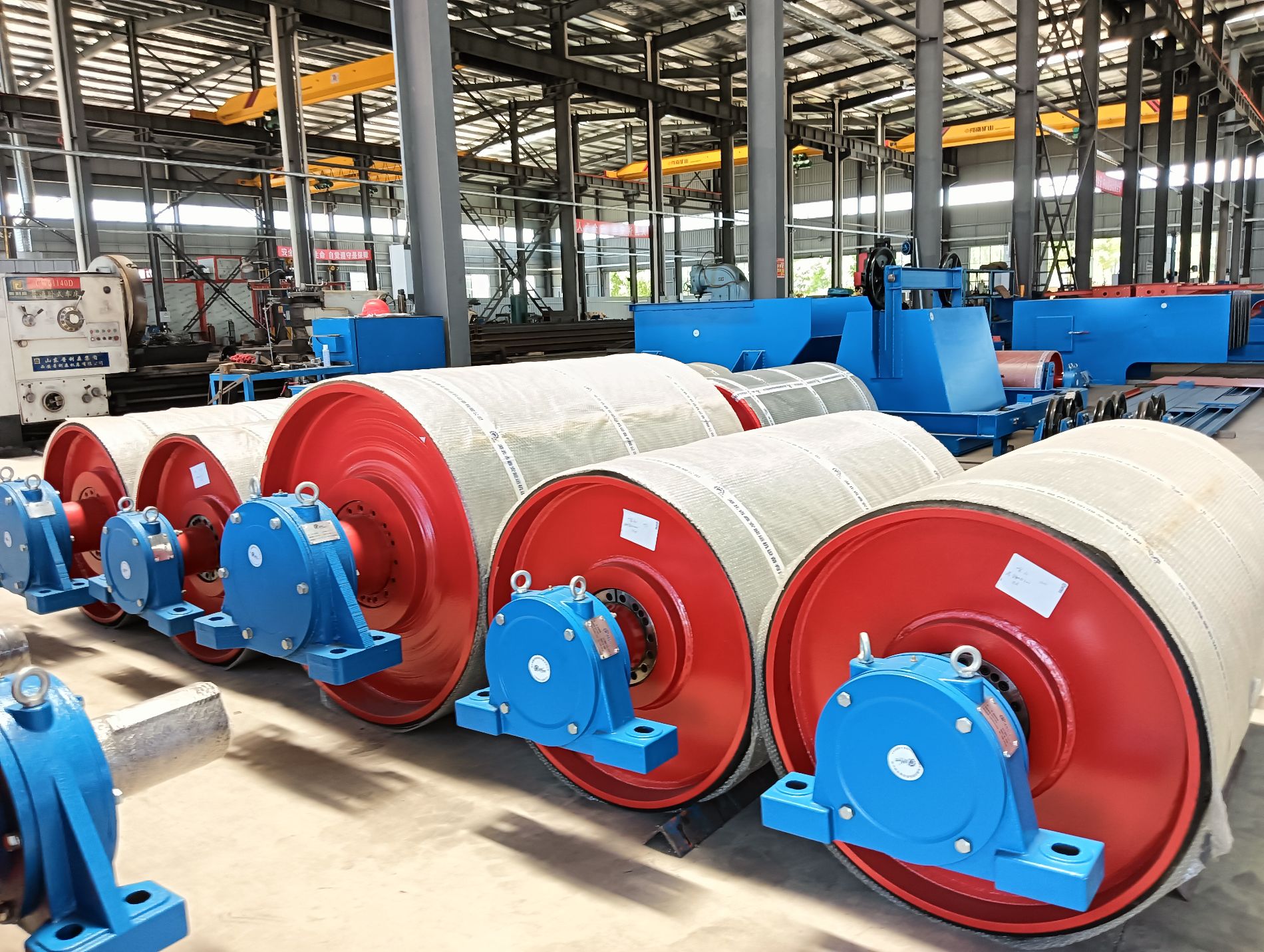
A supplier worth keeping will start by asking about belt width, tension, lagging type, and how the pulley sits in the drive or take-up. If they quote before understanding the load and speed, walk away. Ask to see their shaft deflection and hub stress calculations for your exact duty, not a generic catalog page.
Ask for references from sites where similar pulleys have run for at least three years. Then call those sites and ask what happened when something went wrong. That tells you more than any brochure. If you can, visit the shop and watch how they weld, machine, and balance. You want to see material certificates and check runout on finished pulleys before they ship.
Lead time is where many suppliers fall apart. A good one gives a date and updates you before you have to chase them. They also won't hide behind a warranty. After a failure, even if it's not clearly their fault, a trustworthy supplier will want to inspect the returned pulley and share findings. That kind of follow-through is rare and usually means they know their product.
The Engineering Tricks Behind Longer-Lasting Pulley Shells
Most pulley shells fail not because the metal wears thin, but because stress concentrates at the rope groove and the hub junction. Modern designs now use asymmetric wall thickness, thickening the section just below the groove where cracks tend to start, while shaving unnecessary mass from the flanges. This keeps the shell stiff enough to resist ovalization under heavy side loads, yet light enough to reduce bearing load and vibration fatigue.
Another quiet improvement is the shift from sand casting to die forging or rolled ring blanks. Forging aligns the grain flow along the shell's circumference, giving the material a continuous path that resists crack propagation far better than the random grain of castings. Some manufacturers then shot-peen the groove surface, introducing a compressive layer that blunts the microscopic scratches from wire rope contact before they can grow into fatigue cracks.
Coatings also play a surprising role. A sacrificial zinc layer or a ceramic-filled polymer not only blocks corrosion, but also reduces friction between rope and groove, spreading the load over more of the groove surface instead of concentrating it on high spots. Field data from mining hoists shows that these subtle changes can extend shell life by a factor of two or three, especially where abrasive dust and moisture constantly attack the surface.
Why These 10 Chinese Manufacturers Outperform Local Alternatives
The edge these ten Chinese manufacturers hold isn't just about lower labor costs — that advantage has been eroding for years. What keeps them ahead is a rare blend of vertical integration and process discipline. Many local alternatives rely on piecemeal subcontracting, where quality control slips between handoffs. These factories, by contrast, control everything from raw material sourcing to final assembly under one roof. The result is not only tighter tolerances but also faster iteration when a customer needs a design tweak. A connector that would take six weeks to rework through a fragmented supply chain gets turned around in ten days here.
Another factor is how they treat production knowledge as a living asset rather than a static manual. Instead of relying on a few veteran supervisors whose expertise leaves when they retire, these manufacturers codify adjustments, test parameters, and failure modes into digital logs that operators actively consult and update. This turns every rejected batch into a lesson for the whole line. Local competitors often have the same machines, but they lack this feedback loop — so they keep making the same mistakes at higher volumes, while these ten factories quietly cut their defect rates in half year over year.
Perhaps most telling is their approach to customer problems. When a buyer sends back a failed component, the typical local supplier fixes the symptom and ships a replacement. These manufacturers dig into the application context — vibration profiles, thermal cycling, mating cycles — and often propose a material or geometry change that prevents recurrence entirely. That kind of proactive engineering used to be reserved for premium Western suppliers. The fact that it now comes at a competitive price point, without the scheduling delays that plague smaller workshops, is precisely why repeat buyers keep coming back.
From Raw Steel to Finished Pulley: A Look at Production Standards
The journey from raw steel to a finished pulley begins long before the first cut. Mills supply steel in specific grades—often 1045 medium carbon or 4140 alloy—each heat accompanied by a mill test report that verifies chemical composition, tensile strength, and hardness. Incoming material isn’t trusted on paper alone; samples are pulled for spectrographic analysis and macro-etch testing to catch inclusions, seams, or voids that could compromise the pulley under load. Only stock that clears these checks moves to the production floor.
Machining and forming operations are where standards really tighten. Forging or casting shapes the blank, but it’s the CNC turning, boring, and keyway cutting that bring the pulley to print. Tolerances typically stay within ±0.001 inches on bore diameters and face runout, because even a slight wobble translates into belt wear and vibration. Heat treatment follows, usually quench and temper to a specified hardness range—often 25–35 HRC for durability without brittleness. After heat treat, critical surfaces get a final grind or hard turning to restore dimensional accuracy lost during thermal distortion.
The last phase is all about verification. Every pulley undergoes dimensional inspection with CMMs or dedicated gauges, and high-speed pulleys may require dynamic balancing to ISO 1940 G2.5 or tighter. Surface finish is measured, and a protective coating—black oxide, zinc plating, or powder coat—is applied to prevent corrosion. Final documentation ties each pulley back to its heat lot and production date, creating a traceable record that matters as much as the steel itself when the pulley ships to a customer.
Real-World Feedback from Buyers Who Made the Switch
When we asked buyers what finally pushed them to switch, the answers rarely revolved around a single missing feature. Instead, they kept pointing to the same quiet frustrations: support tickets that sat unanswered for days, clunky workarounds for tasks that should have been simple, and pricing pages that felt like a bait-and-switch. One former user described it as "death by a thousand small cuts"—none of them fatal on their own, but together enough to make the old tool feel like a chore rather than a help.
The feedback after switching told a different story. Buyers mentioned the relief of not having to explain the same issue twice to a support team that actually read the previous conversation. They talked about rediscovering time that used to vanish into manual data entry or confusing menus. Several people used the same phrase without prompting: "It just works." That simplicity, more than any advanced feature, showed up again and again as the reason they stayed.
What surprised many buyers was how quickly the switch paid for itself. Not in some abstract ROI calculation, but in concrete moments—closing the browser tab an hour earlier, skipping the monthly export-import ritual, or finally trusting the permissions screen. That kind of feedback doesn't come from a feature comparison chart. It comes from living with both tools long enough to know the difference.
FAQ
It usually comes down to three things: material traceability, consistent machining tolerances, and a documented quality control process. A reliable supplier will show you mill certificates for the steel shell, use bearing brands you recognize, and run dynamic balancing tests on every pulley before crating. If they hesitate to share those records, keep looking.
The list features a mix of long-established exporters and specialized workshops. Names that often show up include Baoding Huayue, Hebei Juntong, Shandong Xintian, Anhui Pandeng, and Tangshan Xinhai. The remaining five are smaller but have strong OEM portfolios for mining and bulk handling clients in Australia, South America, and Southeast Asia.
Most of them can handle pulley diameters from 200 mm up to 1,800 mm and face widths beyond 2,500 mm. Monthly output varies, but leading factories typically ship 300 to 500 units per month, with extra capacity for urgent orders during planned shutdowns. Ask for a current production schedule rather than relying on catalog numbers.
Yes, but you need to specify the right design. Top manufacturers produce mine-duty and engineered-class pulleys with thicker end discs, full penetration welds, and fatigue-resistant shaft materials like 40Cr or 42CrMo. Many have supplied pulleys for overland conveyors running 5,000 to 10,000 hours per year without failures.
Look for ISO 9001 as a baseline, plus ISO 14001 if environmental compliance matters to your project. For the pulleys themselves, request dynamic balance reports to ISO 1940 G6.3 or better, ultrasonic weld inspection for critical joints, and dimension reports against your drawing. A serious manufacturer will include these without you having to ask twice.
Typical lead times from the better Chinese factories run between 45 and 75 days for custom-engineered pulleys, depending on shaft size and surface treatment. That is often 30% to 50% shorter than comparable Western suppliers, but rush orders can strain quality if not planned. Always confirm the ship date in writing and allow buffer time for port congestion.
Customization is the norm rather than the exception. They routinely work from customer drawings for shaft dimensions, hub styles, lagging thickness, and bearing arrangements. Some even offer finite element analysis and fatigue calculations as part of the quotation, which is useful when you are replacing a failed pulley and need a stronger design.
Conclusion
Walking through the production halls behind these ten Chinese conveyor pulley manufacturers, the first thing that stands out is the obsessive attention to weld integrity and shell concentricity. Instead of relying on off-the-shelf tube stock, several of them cut and roll their own steel plate, then run every completed drum through a dynamic balancing rig before painting. That extra step matters more than most buyers realize—an out-of-balance pulley transfers vibration straight into the belt splice and bearing seats. One plant supervisor explained how they switched to submerged arc welding for end discs because it reduces porosity compared to hand welding, which directly extends shell life in high-abrasion iron ore applications. The production standards here are not marketing fluff; they include ultrasonic testing of shafts, laser alignment checks, and salt spray tests on coatings that would make many Western fabricators envious.
The buyers who made the switch consistently mention two reasons for trusting these manufacturers over local alternatives: transparent material traceability and the willingness to customize without jacking up lead times. Instead of quoting a generic DIN or JIS standard, the better suppliers show you the mill certificate for every steel batch and let you audit their lagging process. Real-world feedback points to fewer unexpected failures at the conveyor head end, less downtime from shell cracking, and support engineers who actually understand belt tension calculations rather than pushing whatever is in stock. Spotting a supplier that won't let you down often comes down to how they handle a request for a thicker rim or a non-standard bearing center distance. If the answer is a quick sketch and a call with their engineering team, you are likely dealing with one of the ten worth your trust.
Contact Us
Contact Person: Anna Lu
Email: [email protected]
Tel/WhatsApp: 8618561668850
Website: https://www.x-conveyor.com