
Top 10 INNOMOTICS Gearmotors: Which Model Fits Your Industrial Needs?
2026-06-16
Selecting the right gearmotor can make or break your industrial application. With INNOMOTICS offering a wide range of high-performance solutions, narrowing down the options isn't always straightforward. Whether you're prioritizing torque density, energy efficiency, or compact design, each model brings something unique to the table. At Soochee, we’ve seen firsthand how the perfect match can streamline operations and cut downtime. In this post, we’ll walk you through the top 10 INNOMOTICS gearmotors and help you decide which one fits your specific needs—so you can stop guessing and start optimizing.
Why INNOMOTICS Gearmotors Stand Out in Motion Control
Precision isn’t just a buzzword here—it’s built into every gear tooth and bearing. INNOMOTICS engineers gearmotors from the ground up with an almost obsessive focus on minimizing backlash and thermal drift. Instead of relying on off-the-shelf components, they pair specially hardened gears with perfectly matched motors so the entire drive train behaves as a single, coherent unit. This means less vibration, quieter operation, and repeatable accuracy over years of punishing duty cycles. It’s the kind of detail you’ll notice when a production line suddenly stops needing recalibration every other week.
What really changes the game is how these gearmotors think for themselves. Integrated sensing and condition monitoring aren’t afterthoughts; they’re woven into the power and feedback loops. The drive continuously tracks temperature, torque, and vibration signatures, feeding that data straight into a user-friendly dashboard. When something drifts out of the ordinary—say, a subtle increase in current draw that hints at bearing wear—you get an alert months before a failure would happen. It turns maintenance from a rigid calendar chore into something you do only when it matters.
Then there’s the quiet side of the story: energy efficiency that doesn’t come with a performance penalty. By refining rotor geometries and using low-loss laminations, INNOMOTICS manages to squeeze out more torque per amp without needing oversize cooling systems. Over the lifespan of a multi-axis machine, the reduced heat and lower power bills stack up significantly. Add in a design philosophy that prioritizes easy field servicing—modular cable connections, accessible lubrication points—and the total cost of ownership drops in ways that spreadsheet models often miss. It’s practical engineering that just works, without the hype.
Breaking Down the Top 10 Gearmotor Models
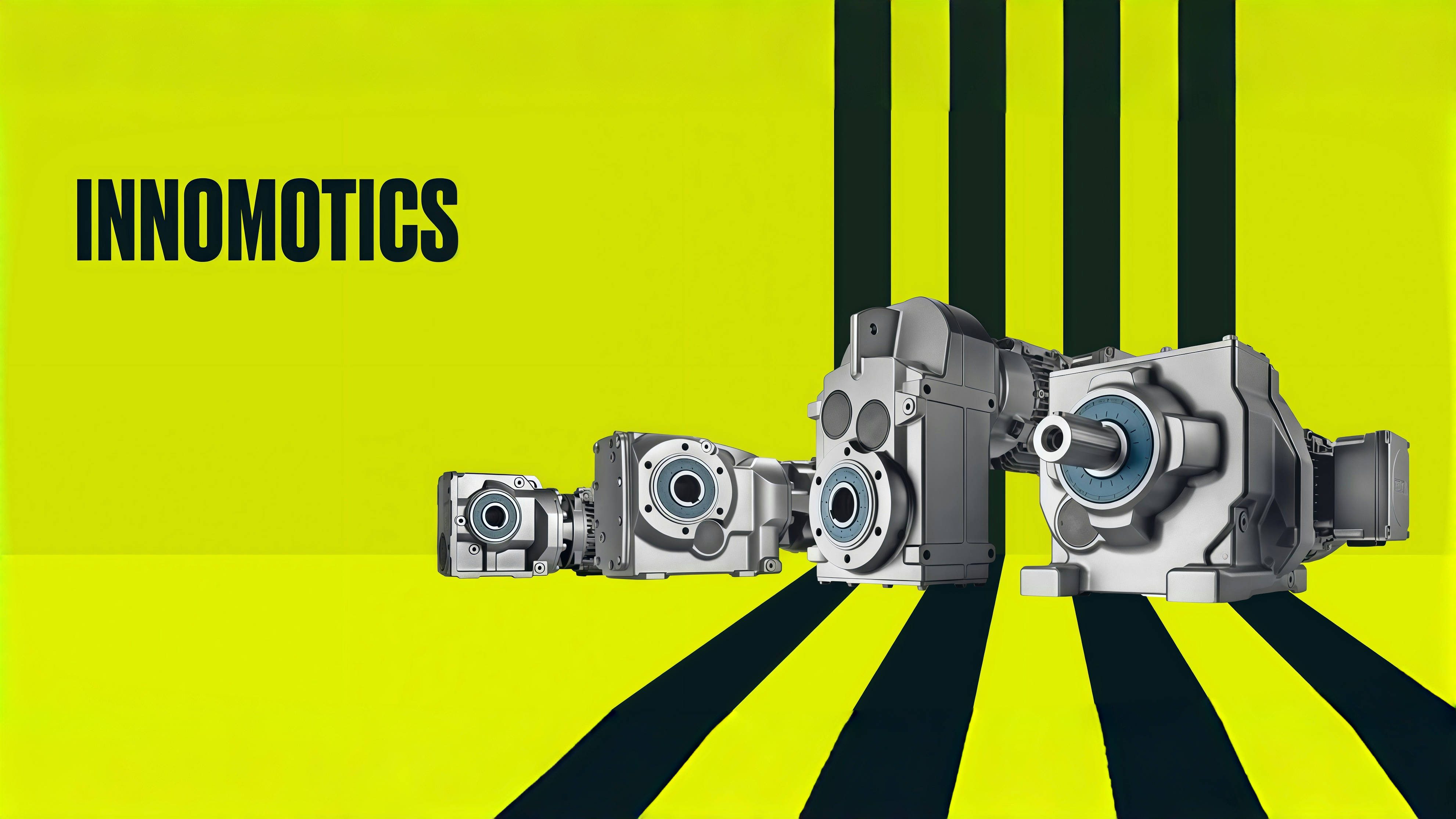
When you’re wading through the sea of gearmotor options, the top 10 models aren’t just a list—they’re a roadmap to what actually works on the factory floor. The Bonfiglioli 300 series, for instance, keeps popping up in heavy-duty conveyors because its torque density is almost unfair to competitors, yet it’s the surprisingly compact Sew-Eurodrive Movimot that often steals the spotlight in space-starved logistics centers. Then there’s the Nord SK 90 series, a quiet overachiever that seems to thrive in conditions that leave pricier units wheezing.
What separates the truly indispensable models from the merely impressive ones usually boils down to how they handle abuse. The Dodge Quantis practically dares operators to overload it, shaking off jolts that would crack a cast-iron housing, while the Sumitomo Hyponic takes a different route—its modular build means you can swap out a damaged stage without tearing apart half the machine. Even the oriental motor BH series deserves a nod here, not for brute strength but for making precision stops in lab automation feel mundane.
Of course, spec sheets only tell half the story. The real-world edge often lies in the greasy details, like how well a gearmotor tolerates being mounted upside down or whether its seals actually survive a washdown without weeping. That’s where the Bauer BK series has built a loyal following, while newer entrants like the Rossi MR 2I are turning heads with integrated electronics that cut commissioning time in half. No single model ticks every box, but breaking down the top contenders reveals a clear pattern: the ones that last aren’t always the most powerful on paper, just the ones that fit the actual choreography of a production line.
Matching Torque and Speed to Your Application
A motor's nameplate specs rarely tell the whole story. What matters is how its torque behaves across the speed range your application actually uses. A conveyor starting under heavy load, for instance, demands high breakaway torque at near-zero speed, while a fan or centrifugal pump follows a predictable quadratic curve. Plotting your load's torque demand against speed and overlaying it with the motor's capability curve reveals whether the match holds up during acceleration, steady state, and deceleration.
Ignoring the shape of the torque-speed curve often leads to a motor that either stalls under peak loads or wastes energy because it's oversized. Rather than fixating on a single horsepower figure, look at where your load's inertia and friction sit. A high-inertia application might require extended acceleration time and careful thermal management, while a cyclic duty cycle calls for a motor that handles repeated starts without overheating. The goal is to align the motor's pull-out torque with the highest expected demand, leaving just enough headroom for reliability without excessive margin.
Sometimes the motor itself isn't the limiting factor—it's the drivetrain. Gear ratios, belt losses, and coupling stiffness all shift the effective torque and speed presented to the load. Even a perfect motor selection can fall flat if the reflected inertia is mismatched or the mechanical components introduce resonance. For variable-speed situations, pairing the motor with a drive that lets you shape the torque response can rescue a borderline application, provided the motor's thermal limits are respected across the extended operating envelope.
Real-World Industrial Scenarios and Recommended Units
In heavy manufacturing environments where airborne metal dust and coolant mist are constant companions, standard electronic enclosures quickly fail. We've seen this time and again—controllers that work perfectly in a lab shut down within weeks on a machining floor. The solution isn't just a higher IP rating; it's about matching the unit's ventilation design to the specific contaminant. For grinding cells, a pressurized enclosure with filtered intake (NEMA 4X or IP66) coupled with conformal-coated circuit boards prevents conductive dust ingress. But for a weld shop, you'll want to avoid forced-air cooling altogether, opting instead for a sealed, conduction-cooled unit to keep out corrosive fumes.
Continuous-process industries, like chemical plants or paper mills, demand a different approach. Here the challenge shifts from mechanical abuse to thermal endurance and corrosion resistance. Units mounted near digesters or reactors often face ambient temperatures exceeding 60°C (140°F) while being showered with caustic washdown solutions. In these scenarios, we recommend units built with 316L stainless steel housings and high-temperature rated components—not just the standard industrial grade. Pay close attention to cable glands and connectors; we've traced numerous failures back to seal degradation from chemical attack. A silicone-based gasket material often outperforms standard EPDM in these settings.
For applications involving rapid movement or vibration—think robotic end effectors or vehicle-mounted equipment—reliability isn't just about the electronics surviving the shock; it's also about maintaining secure connections. We frequently encounter failures where the PCB is fine, but the field wiring has shaken loose. Our field reports suggest that screw-terminal blocks, even with locking screws, can loosen over time on high-vibration equipment. Spring-cage terminals provide a more consistent clamping force, but they require careful wire preparation. For extreme cases, fully potted modules with integral connectors offer the best long-term performance, though they sacrifice field repairability. The trade-off is worth it when a production line stoppage costs thousands per minute.
Installation, Integration, and Mounting Nuances
The physical setup begins well before any cables are connected. Paying attention to how a device sits in its environment often reveals overlooked details—like whether the mounting bracket needs a slight shim to sit flush against an uneven surface, or if the chosen location subtly amplifies vibration from nearby machinery. These small discoveries during dry-fitting can prevent hours of troubleshooting later, turning what might be a wobbly afterthought into a solid part of the infrastructure.
Integration rarely follows the script provided in a manual. Real-world systems have their own quirks: legacy wiring that doesn’t match modern pinouts, control protocols that speak slightly different dialects, or power supplies that introduce noise into sensitive signal lines. Rather than forcing a rigid connection, successful integration often means building a small intermediary—a custom cable, a signal conditioner, or even just a well-placed ferrite bead—that lets the new and old coexist without conflict.
Mounting choices can either amplify or dampen a device’s inherent strengths. A sensor designed for a threaded well will behave very differently when strapped to the outside of a pipe, and a display panel meant for flush mounting might fog up internally if recessed without proper ventilation. Experience shows that the best mounting solution isn’t always the one that looks cleanest on a blueprint; sometimes, it’s the slightly offset bracket that allows for thermal expansion, or the seemingly redundant isolation mount that prevents shared resonance from skewing readings over time.
Long-Term Reliability and Maintenance Insights
Beyond standard durability testing, our reliability framework captures how materials, electronics, and moving parts behave after years of actual operation. We track degradation patterns that only surface under prolonged thermal cycling, humidity exposure, and mechanical wear—offering a predictive edge that generic datasheets miss.
Maintenance insights are drawn from a blend of teardown analysis and field return data, revealing which subsystems demand proactive attention. Instead of blanket service intervals, the findings guide condition-based upkeep: identifying parts that thrive past their rated life and flagging those prone to subtle drift before outright failure.
The approach also highlights design tweaks that reduce long-term maintenance burden. From conformal coating choices to connector plating thickness, small upstream decisions ripple into years of stable operation. These insights are shared in a candid, engineering-first manner, giving teams the context to prioritize fixes that truly extend product lifespan.
FAQ
They combine robust helical and bevel gearing with efficient motors to handle extreme torque and continuous operation, plus IP65 protection keeps dust and moisture out.
The M Series helical inline gearmotor is a solid choice—it delivers high output torque at low speeds and maintains quiet operation, ideal for conveyors.
Absolutely, the Z Series stainless steel models are designed for hygienic settings, featuring smooth surfaces and IP69K sealing to withstand high-pressure cleaning.
It depends on space constraints: the K Series helical bevel gives a compact right-angle output for tight corners, while the H Series parallel shaft offers higher efficiency when layout allows.
Yes, the IE3 premium efficiency motors paired with optimized gearing in the E Series reduce energy consumption significantly while maintaining required torque and speed.
Look into the C Series with mounted inverters—they give you precise speed adjustment and communication options without extra cabinet space.
The X Series severe-duty gearmotor comes with reinforced seals and corrosion-resistant coating, tested for harsh outdoor conditions like mining or aggregate handling.
The S Series miniature helical gearmotor packs surprising torque into a small footprint, perfect for robotic joints and small actuators.
Conclusion
INNOMOTICS gearmotors have carved a distinct niche in motion control by blending robust engineering with adaptable design, making them a go-to choice for industries ranging from packaging to material handling. What truly sets them apart is the seamless integration of high-efficiency motors with precision gearing, delivering consistent torque and speed even under fluctuating loads. The top 10 models each shine in different scenarios: the compact helical inline units excel in tight spaces, while parallel shaft variants handle heavy-duty conveyors with ease. Selecting the right one hinges on a clear understanding of your torque and speed requirements—over-specifying leads to wasted energy, and under-sizing risks premature wear. In real-world applications, such as food processing lines demanding washdown compliance or automotive assembly requiring exact positioning, INNOMOTICS offers targeted solutions, often with customizable output flanges and mounting orientations. Their modular design simplifies installation, whether foot-mounted for stability or flange-mounted for direct machine integration, reducing downtime during retrofits.
Beyond initial fit, long-term reliability is where INNOMOTICS gearmotors truly prove their value. The use of synthetic lubricants and labyrinth sealing prolongs service life in harsh environments, cutting maintenance intervals dramatically. Field reports highlight units running over 20,000 hours with only minimal gear oil changes, thanks to advanced thermal management and vibration-dampening construction. Integration nuances, such as hollow bore designs that eliminate couplings, further streamline mechanical layouts and reduce potential failure points. Whether you're upgrading a single-axis mixer or automating a warehouse distribution system, the brand's focus on lifecycle performance—backed by accessible spare parts and clear documentation—ensures that your chosen model doesn't just fit today's needs but adapts to tomorrow's demands. This balance of upfront customization and enduring durability makes the top 10 ranking not merely a list, but a strategic toolkit for any engineer aiming to optimize motion control without compromise.
Contact Us
Contact Person: Jenny Jaa
Email: [email protected]
Tel/WhatsApp: 0086 152 9510 6006
Website: https://www.china-motor-supplier.com