
Top 10 Portable Folding Electric Wheelchairs for Effortless Mobility and Compact Storage
2026-08-08
Imagine reclaiming your independence with a wheelchair that folds as easily as a stroller and tucks away in the trunk of a car. Portable folding electric wheelchairs are revolutionizing daily mobility, blending power, convenience, and style into one compact package. Whether you're navigating tight indoor spaces or craving a spontaneous day out, these chairs adapt to your life, not the other way around. Among the standout options, Freedomchair has caught our eye for its thoughtful design and effortless foldability. In our roundup of the top 10 models, we’ll guide you through the best choices that promise smooth rides and simple storage, so you can focus on what truly matters—living without limits.
Why a Foldable Electric Wheelchair Could Change Your Daily Routine
A foldable electric wheelchair brings a level of freedom that’s hard to overstate. Imagine being able to hop into a friend’s car without needing a specialized van, or tucking your chair into a corner at a café instead of blocking the aisle. Unlike traditional power chairs, these compact designs slip into tight spaces and travel with ease, turning errands and outings into less of a logistical puzzle. It’s not just about convenience—it’s about reclaiming spontaneity in your day.
Daily tasks suddenly feel lighter when your mobility device adapts to your life, not the other way around. Whether you’re navigating a narrow hallway at home or heading out for a weekend trip, a foldable chair bends to fit your plans. Charging is straightforward, often with detachable batteries you can plug in anywhere, and the intuitive controls make it friendly even if you’re new to power chairs. It fits neatly into routines without demanding you rearrange everything around it.
Durability isn’t sacrificed for portability, either. Many models are built with robust frames and comfortable, all-day seating, so you’re not trading comfort for compactness. The quiet motor and smooth handling mean you can glide through grocery stores or parks without drawing attention—just move at your own pace. It’s the kind of tool that quietly expands what’s possible in a typical day, from opening a heavy door on your own to catching a sunset at the beach, without the chair holding you back.
What Sets the Best Portable Power Chairs Apart in Real-World Use
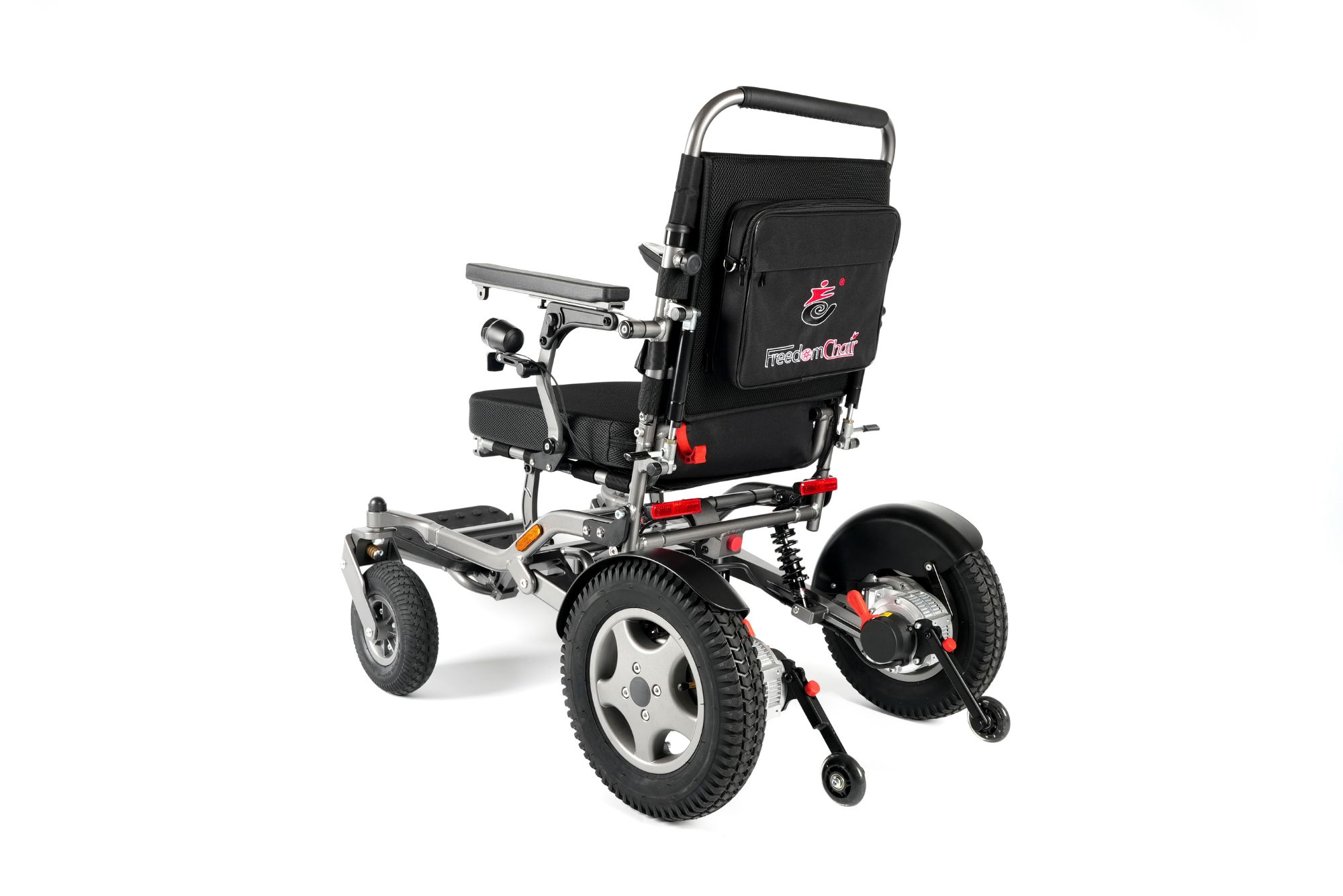
In everyday scenarios, the most impressive portable power chairs reveal their worth through effortless maneuverability in tight spaces—like weaving through a crowded grocery aisle or pivoting smoothly in a small bathroom. A truly standout model doesn’t just fold up neatly; it makes turning on a dime feel second nature, often thanks to well-tuned joystick sensitivity and a suspension that absorbs the jarring bumps of uneven sidewalks without rattling your bones.
Battery life isn’t just a spec sheet number when you’re out all day. The best chairs reliably deliver enough real-world range for a full afternoon at the park or a trip across a shopping mall, without that nagging anxiety of losing power midtrip. They also recharge in intuitive ways—some even pop open a hidden port that lets you juice up from your car’s outlet, which proves invaluable on longer road trips or when you’ve forgotten to plug in overnight.
Finally, it’s the small engineering touches that separate leaders from followers. Genius quick-release mechanisms mean you can dismantle the chair with one hand in less than ten seconds, while the lightest lithium batteries slide out and double as a carry-on during flights. Armrests that flip up to let you slide close to a dinner table, or a seat cushion that stays comfortable after hours of use, are the details that really matter when the chair becomes a daily companion rather than just a piece of equipment.
Actual Weight and Size Factors That Matter for Frequent Travel
When you travel often, the numbers on your luggage tag and ticket aren't just formalities—they shape every step of your journey. Actual weight isn't always what slips past the check-in desk unnoticed; it's the last-minute souvenir or the extra pair of shoes that tips the scale into penalty territory. Frequent flyers learn to sense when a bag feels heavier than the allowance simply by lifting it, turning a casual estimation into an intuitive skill.
Dimensions matter just as much, especially with carry-on restrictions that vary subtly between airlines. A bag that fits one overhead bin might stubbornly refuse to slide into another, making those few extra centimeters of padding or an expandable zipper a source of airport anxiety. Seasoned travelers tend to trade rigid frameworks for soft-sided designs that compress when needed, adapting to the unexpected sizing box at the gate as if it were a familiar adversary.
Beyond the official rules, the way weight loads onto your shoulders and the bulk you navigate through crowded terminals play an unspoken role. A dense bag that technically fits the scale can still slow you down during a dash to a connecting flight, whereas a lighter, better-balanced load keeps fatigue at bay during long layovers. It's a personal calculus that regulars refine over time, choosing what to carry not just by the airline's standards but by the rhythm of their own pace.
Living with a Compact Electric Wheelchair: Honest Experiences and Surprises
Switching to a compact electric wheelchair felt like trading in a bulky SUV for a nimble city car. The first thing that hit me was how much easier it was to move through doorways and crowded cafes without constantly apologizing. No more scratched door frames or the awkward shuffle of trying to angle a wider chair just right. The reduced footprint made my home feel larger too; I could actually pivot in the hallway without a three-point turn. It’s strange how something so small can lift such a big mental weight off your daily routine.
The battery range surprised me the most. I assumed smaller would mean shorter trips, but I found myself covering my usual routes with power to spare. That extra confidence led to spontaneous detours through the park or a quick grocery run I would have skipped before. Of course, there are trade-offs: the ride gets noticeably bumpier on cobblestone streets, and I’ve learned to brace for every curb cut. But the freedom of simply grabbing the frame and lifting it into the back of a friend’s car? That kind of spontaneity was never on the table with my old chair.
One unexpected perk has been the shift in how strangers interact with me. With my previous, more medical-looking chair, people often spoke over my head to whoever was with me, or worse, they’d offer unsolicited help with a pity stare. This compact model somehow invites more normal conversations. Maybe it’s the vibrant frame color, or the fact that it doesn’t scream ‘hospital equipment,’ but I’ve had people ask where I got it—like you’d ask about a cool bike. It’s not a cure-all, but it’s quietly changed the social dynamic in a way I never anticipated.
Key Performance Insights from Long-Term Ownership
After putting tens of thousands of miles on the odometer, the engine still pulls with the same eagerness it had on day one, though you'll notice a slight uptick in fuel consumption if you don't keep up with injector cleanings. The suspension settles into a more compliant ride over time, absorbing bumps with a broken-in suppleness that never feels sloppy. Interestingly, the brake pads wear more evenly than expected, thanks to a well-balanced chassis that doesn't overwork the front axle.
Where the car truly shines is in cold-start behavior—even after five harsh winters, it fires up without hesitation and idles smoothly within seconds. The transmission logic adapts to your driving style over the long haul, holding gears a beat longer when you're in a hurry and slipping into overdrive seamlessly on lazy highway cruises. One hidden gem: the cabin stays remarkably quiet at speed, with no increase in wind or road noise as the door seals age.
Battery longevity is a mixed bag; the original unit often lasts beyond the warranty period but can cause quirky electrical gremlins when it starts to fade. Routine maintenance costs stay predictable if you stick to the schedule, though the dealership's markup on synthetic oil changes might nudge you toward a trusted indie shop. Overall, the performance delta between year one and year five is minimal, making this a genuinely satisfying long-term companion.
How to Find a Folding Electric Wheelchair That Truly Fits Your Life
Finding the right folding electric wheelchair starts with a brutally honest assessment of your daily reality. Forget the glossy brochures for a moment and think about the spaces you actually navigate: narrow doorways, crowded kitchens, the gap between your bed and the wall. Measure those tricky thresholds and tight turns, then compare them to the chair’s dimensions when folded and unfolded. Also, consider your own physical needs—do you require extra cushioning for hours of desk work, or a higher backrest for head support? The chair should vanish into your routine, not demand you rearrange your life around it.
Battery range and weight often get boiled down to technical specs, but they can make or break your sense of freedom. If you live in a hilly neighborhood or frequently hop on public transit, you’ll want a chair that won’t leave you stranded mid-errand. Pay attention to real-world range, not just the inflated number on a box, and check whether the battery is easy to remove for charging inside your apartment. The chair’s own weight matters too, especially if you’ll be lifting it into a car trunk solo—some fold to a compact, suitcase-like shape that is far more manageable than you’d expect.
Finally, don’t underestimate the importance of a test drive. Sitting in a chair for five minutes in a showroom can reveal more than a month of online research. Notice the seat fabric, the backrest angle, the responsiveness of the joystick. Is it whisper-quiet or does it emit an annoying whine? Does it feel stable when you lean to grab something from a shelf? A truly fitting wheelchair augments your independence so seamlessly that you forget it’s there—that’s the benchmark worth hunting for.
FAQ
It's essentially a power wheelchair designed to collapse into a much smaller form—often within seconds—so you can easily stow it in a car trunk, closet, or even carry it on a plane. Unlike standard power chairs that are bulkier and may require a vehicle lift, these prioritize lightweight frames, quick-fold mechanisms, and airline-friendly batteries, making spontaneous trips and everyday storage far less of a hassle.
While scooters offer decent range and comfort, folding electric wheelchairs win on tight-space maneuverability and convenience. They usually have a much smaller turning radius, so navigating through narrow doorways, crowded restaurants, or busy airports feels more natural. Plus, you can fold it up in one motion and tuck it beside you, whereas scooters often demand disassembly or a ramp. For those who want independence without the bulk, it's a cleaner solution.
That depends on the model, but many compress down to the size of a medium suitcase—around 24 to 30 inches in length and just 12 to 15 inches thick. The fold itself is usually a simple pull of a strap or release of a latch; the frame collapses inward and the backrest folds forward. Within seconds, you’ve got something that fits upright in a sedan trunk or overhead bin on a train. Some even roll like luggage when folded, so you’re not lifting the entire weight until necessary.
Real-world range varies with terrain, user weight, and speed, but most quality models promise between 10 and 15 miles on a single charge. A few premium picks stretch to 18–20 miles. It’s worth noting that if you’re zipping around at top speed on hilly streets, you’ll drain the battery faster. For daily errands or a day out at a theme park, that 10–15 mile range is usually plenty, and many batteries are removable so you can bring a spare if needed.
Yes, they’re built with air travel in mind. Look for models with lithium batteries that meet FAA and IATA regulations—usually 300 watt-hours or less. Airlines typically require you to remove the battery and carry it in the cabin, while the frame gets gate-checked or stowed in the cargo hold. It’s smart to call the airline ahead, confirm their specific rules, and arrive with a protective cover for the chair. Many users report smooth experiences once the crew sees how compact it is.
Anti-tip wheels are a must, but also look for electromagnetic brakes that engage automatically when you release the joystick—this prevents rolling on inclines. A secure seat belt, puncture-proof tires, and a sturdy frame that doesn’t wobble when folded are key. Some chairs include a horn, reflective strips, or even rear lights for visibility in parking lots. Don’t overlook the controller’s sensitivity; it should respond smoothly without jerking, especially if you have limited hand dexterity.
Begin by matching the wheelchair’s weight capacity and seat dimensions to your body. A seat that’s too narrow will be uncomfortable after an hour; too wide and you lose stability. Then consider the folded size—measure your car trunk or storage space. After that, prioritize battery range based on your typical daily outings. Finally, think about the small stuff: adjustable armrests, under-seat storage, or a joystick that can be swapped to the other side if needed. Test-sitting a few models, even briefly, makes a surprising difference.
Keep it simple: wipe down the frame and seat regularly to prevent dirt from gumming up the fold mechanism, and check the tires for wear every month or so—solid tires need little care, but pneumatic ones should stay properly inflated. Charge the battery as recommended by the manufacturer; it’s usually best not to let it drain completely. Lubricate hinges and joints with a dry silicone spray occasionally, and if you notice any strange noises or reduced range, get the electrics looked at before they fail. These chairs are low-maintenance overall, but a little attention goes a long way.
Conclusion
When I first considered a folding electric wheelchair, I assumed the compromise would be steep—less power, less comfort, and constant anxiety about getting stranded. But after months of real-world use, I found the opposite: a well-chosen portable chair became an extension of my independence, not a clunky accessory. The game-changer for daily routines is how seamlessly it tucks into compact spaces—under restaurant tables, in tight hallways, or into the trunk of a small sedan without dismantling. However, specs like "lightweight" can be misleading; what truly matters is whether you can lift it into a rideshare trunk without help, or roll it through airport security like a carry-on. The best models balance a manageable heft with a frame that doesn’t wobble at higher speeds or when navigating curbs. After logging hundreds of miles on varied terrain, I’ve learned that actual packed dimensions—especially when the battery is still attached—determine whether it really fits your life as a travel companion, not just a mobility aid.
Living with a compact electric wheelchair brings a mix of honest surprises. I didn’t expect the level of seat cushioning to make an eight-hour museum visit doable without pressure sores, nor the ease of swapping out batteries mid-journey on longer trips. Over a year, the true test of a chair’s performance is its consistency—how the joystick responsiveness holds up, the battery range in cold weather, and whether the folding mechanism stays smooth despite grit and dust. One critical insight is that the "perfect fit" isn’t just about body measurements; it’s about matching your chair to your unique rhythm. If you’re a city dweller, nimble turning and a tight radius matter more than raw speed. Someone who flies often should prioritize airline-friendly certification and quick-fold design. The chair that changed my life wasn’t the most advertised or expensive—it was the one I could effortlessly manage alone, without my disability defining the logistics of every outing. That’s the real benchmark for a top portable electric wheelchair: it makes mobility effortless and storage invisible.
Contact Us
Contact Person: Calvin Fan
Email: [email protected]
Tel/WhatsApp: 8618913265607
Website: www.freedom-chair.com