
Top 132kV Galvanized Angle Steel Transmission Tower from China for Durable High-Voltage Lines
2026-10-09
When high-voltage transmission lines need to stand firm against decades of weather and load, the choice of tower matters more than most engineers admit. That’s where the 132kV galvanized angle steel transmission tower from Anbang comes in—built in China, yet designed for the world’s toughest grids. This isn’t just another steel structure; it’s a guarantee that your power lines stay up when they matter most. In this post, we’ll break down what makes this tower a top pick for durable high-voltage projects, from its hot-dip galvanizing to its angle steel geometry. Keep reading to see why more utilities are turning to Anbang for infrastructure that outlasts the elements.
Why 132kV Galvanized Angle Steel Towers Still Anchor High-Voltage Grids
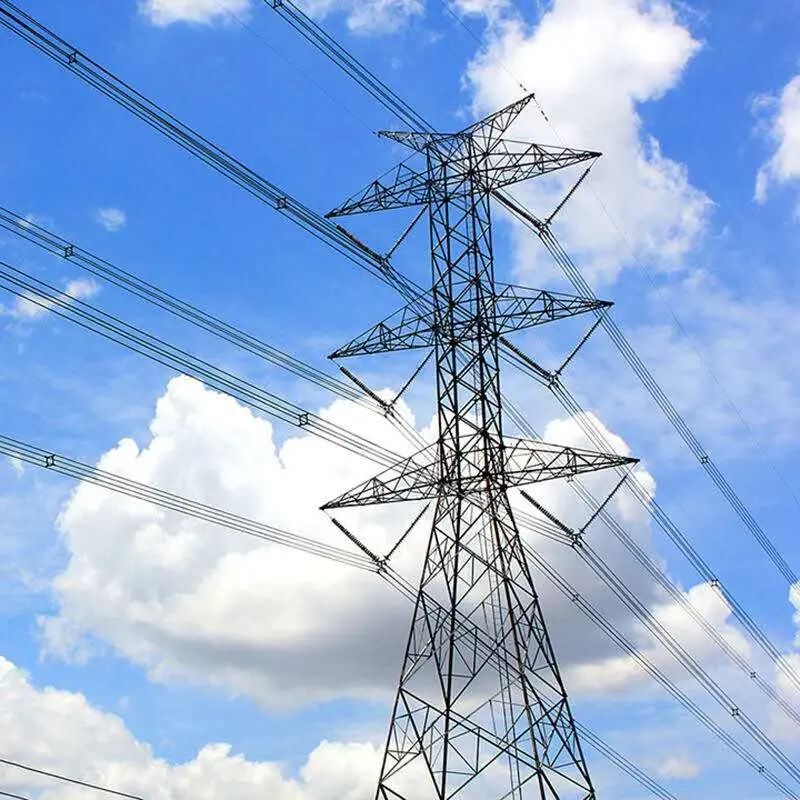
The continued reliance on 132kV galvanized angle steel towers comes down to a rare blend of mechanical reliability and economic sense. Unlike tubular or lattice alternatives that demand specialized fabrication, angle steel members can be cut, drilled, and bolted in virtually any fabrication shop with standard tooling. This keeps lead times short and repair work straightforward — a lineman with a torque wrench can replace a single leg member without bringing down the whole line. Galvanizing adds a sacrificial layer that shrugs off decades of rain, salt spray, and industrial fallout, which is why utilities still find these towers standing firm after forty or fifty years of service.
There is also a quiet advantage in how these towers handle variable terrain. The bolted lattice design flexes slightly under wind load, dissipating stress rather than concentrating it at welded joints. That forgiving behavior matters in regions prone to microbursts or uneven soil settlement. Field crews appreciate that the towers arrive as manageable bundles of angle sections that can be hand-carried up a hillside where a crane cannot reach. Once assembled, the galvanized finish requires no painting cycle, cutting long-term maintenance budgets in ways that newer, sleeker designs often fail to match.
The Hot-Dip Galvanizing Step That Gives Angle Steel Towers a Multi-Decade Lifespan
When angle steel towers leave the fabrication shop, they are lowered into a molten zinc bath running at about 450°C. The zinc doesn't merely coat the surface; it reacts with the iron to build up a sequence of zinc-iron alloy layers, with a relatively pure zinc layer on top. Because the coating grows out of the steel rather than sitting on it like paint, it can take rough handling during loading, transport, and bolting without losing adhesion.
The durability comes from zinc's electrochemical role. At a scratch or cut edge, the surrounding zinc corrodes in place of the exposed steel, acting as a sacrificial anode. Over decades, the zinc weathers slowly — often at a rate of one to five micrometres per year, depending on atmospheric conditions — while the underlying angle steel remains shielded. That is why many galvanized towers exceed their 40- to 50-year design expectations without structural repair.
What inspectors find after decades in the field is typically a matte grey patina, not red rust. The initial zinc thickness, commonly specified between 85 and 150 microns for angle members, dictates how long that barrier lasts. Because corrosion rates are well documented for different climates, utilities and tower designers can predict service life accurately enough to plan replacements decades ahead, which makes hot-dip galvanizing a practical, low-maintenance choice for power and communication networks.
What Chinese Fabrication Standards Mean for Bolt Hole Alignment and Joint Strength
Chinese fabrication standards treat bolt hole alignment as a dimensional control issue, not a site-fit adjustment. The relevant GB specifications set allowable deviations for hole diameter, center-to-center spacing, and edge distance in a way that is often tighter than a visual inspection suggests. A 22 mm bolt in a 24 mm hole may look acceptable, but the cumulative group tolerance across a splice plate can push the hole pattern outside the standard. When that happens, erectors usually ream or enlarge holes on site, which increases slip and reduces the effective bearing area of the connection.
This tolerance stack-up has a direct effect on joint strength because Chinese-designed steel connections assume bolts bear uniformly against the hole wall. Misaligned holes shift load to fewer bolts, raising local stress and lowering the actual capacity below the calculated value. In practice, fabricators working to GB standards rely on match drilling or CNC punching with controlled clearance, but older shops that still use hand layout produce more scatter in hole position. The difference is most visible in fatigue-sensitive structures, where early bolt loosening is often blamed on installation when the root cause is a fabrication tolerance problem.
Compared with AISC or Eurocode, Chinese standards use similar hole sizes and edge distances but tend to keep minimum edge distance on sheared edges, which can compound misalignment if the shear cut is rough. Joint strength tests reported in Chinese technical literature show that properly aligned holes recover the full design slip resistance, while skewed holes can reduce it by 10 to 20 percent depending on plate thickness and surface coating. For a fabricator working under Chinese standards, controlling hole position before welding and blast cleaning is cheaper than field correction and is the only way to preserve the joint strength the standard assumes.
How Wind, Ice, and Terrain Shape the Bracing Patterns in a 132kV Tower
A 132kV lattice tower rarely meets the ground as a generic structure. The diagonal bracing that climbs its legs and webs reflects a quiet negotiation with the site itself. In open, wind-scoured plains, engineers often add redundant cross-members and compact panel spacing to resist gust-induced vibration and fatigue. The tower leans into the prevailing breeze not by tilting, but by stiffening the windward face with extra horizontals and reducing the slenderness of individual angle sections. This is not a cosmetic choice; it changes the natural frequency of the frame so that vortex shedding stays below damaging resonance.
Where freezing rain and wet snow accumulate, bracing patterns shift again. Ice load can double or triple the effective weight of every member, and asymmetric accretion on one side creates torsional stress that a calm-weather design never sees. To handle this, designers often switch from single lacing to double lacing on the upper cross-arms and use K-bracing instead of simple X-bracing near the conductor attachment points. The K-pattern shortens the unsupported length of the main leg angles, which reduces buckling risk under vertical ice load while still allowing some torsional flexibility.
Terrain adds another layer of constraint. On steep slopes or uneven rock, the tower legs rarely share the same foundation elevation. Here, the bracing below the waist may become asymmetric: shorter, steeper diagonals on the downhill leg to carry extra shear, while the uphill leg uses longer panels with lighter members. In narrow ridgelines, engineers sometimes eliminate one face of horizontal bracing entirely and rely on portal frames within the tower body to transfer load. These choices are not written into a universal standard; they emerge from site-specific calculations, field surveys, and the accumulated judgment of line designers who know that a 132kV tower must stand for decades in exactly one place.
Angle Steel Versus Tubular Towers: Picking the Right Profile for Your Transmission Route
Angle steel towers have long been the workhorse of transmission lines. Their lattice structure, built from bolted L-shaped members, offers a forgiving assembly process and easy transport to remote sites. Field crews appreciate being able to hand-carry individual pieces and make minor adjustments on the fly. The open design also reduces wind loading compared to a solid face, making them a sensible choice for high-wind corridors or regions with frequent icing. However, all those bolts and joints demand regular inspection—loose connections can lead to costly outages if not caught early.
Tubular towers bring a different set of trade-offs. With a smooth, closed cross-section, they present a cleaner aesthetic that often wins over communities near scenic routes. The reduced surface area also means less ice accumulation in freezing climates, and fewer nooks for birds to nest. On the downside, the single-piece sections are heavier and require cranes for erection, which can slow construction in tight right-of-ways. Maintenance is simpler in some respects—no bolt torquing—but internal corrosion can hide inside the tube if proper sealing isn’t applied at the factory.
Choosing between the two isn’t a matter of right or wrong, but of matching the structure to the route’s realities. Steep terrain with limited crane access favors the piece-by-piece assembly of angle steel. Urban fringes where visual impact matters may tip the scales toward tubular. Budget, soil conditions, and long-term inspection plans all play a role—the best profile is the one your line crews can live with for the next forty years.
From Foundation Bolts to Final Tensioning: Field Practices That Keep Towers Rock-Solid
Foundation bolts are the first place where a tower either gets a solid start or inherits a problem that no amount of upper steel can fix. Before the concrete ever reaches the anchor cage, the crew checks bolt projection against the base plate thickness, verifies thread condition, and makes sure the leveling nuts are set to hold the base plate at the right elevation. It's slow, unglamorous work, but a bent bolt or a cage that's shifted an inch out of position will turn the rest of the erection into a fight.
Once the tower sections start going up, bolt tightening follows a deliberate sequence rather than a single pass with an impact gun. Most field specs call for a star or cross pattern, starting at the center and working outward in at least two or three passes. Hand snug first, then bring each bolt to a lower torque value before the final pull. The goal isn't to max out one side and then chase the other; it's to let the flange or base plate seat evenly without warping.
Final tensioning is where shortcuts show up fast. Whether the spec uses torque, turn-of-nut, or direct tension indicators, the wrench needs to be calibrated and the method consistent across the whole joint. After the last pass, a few random bolts should be checked again to catch any that relaxed as the steel settled. Record the values, mark the nuts, and only then move up. That last bit of verification is what keeps the tower from working loose under wind, thermal swings, and years of cyclic loading.
FAQ
It's built from galvanized angle steel, which provides a strong, corrosion-resistant framework. The design specifically targets 132kV systems, so the geometry and load calculations match the demands of high-voltage transmission without overbuilding.
Angle steel gives good strength-to-weight ratio and is easy to fabricate and assemble on site. Galvanizing adds a zinc coating that prevents rust for decades, even in harsh weather or coastal environments, reducing maintenance needs.
The galvanized finish protects against moisture and salt, while the lattice structure allows wind to pass through rather than pushing against a solid face. This reduces wind load and helps the tower stay stable in storms.
Yes. Since they're produced in China with a mature supply chain, manufacturers can adjust height, cross-arm length, and bolt patterns to match specific terrain or line specifications. You just need to share the technical drawings or load data.
Minimal. The hot-dip galvanizing usually lasts 20-30 years before any touch-up is needed. Regular visual inspections are enough for most sites; only if the zinc layer is scratched during transport would you need to apply a zinc-rich paint.
They are supplied as pre-cut and pre-drilled angle steel members, bundled and packed for container shipping. On site, workers bolt the pieces together following an assembly drawing. No welding is required in the field, which speeds up construction and reduces labor costs.
China has a large steel industry and specialized factories for transmission towers, so lead times are shorter and pricing competitive. Many suppliers also offer quality certifications and can arrange third-party inspection before shipment.
132kV is a standard transmission voltage in many countries, so the tower design is proven. While the main structure is optimized for 132kV, minor modifications can adapt it for 110kV or 138kV if the conductor clearances and loads are checked.
Conclusion
The 132kV galvanized angle steel tower remains a mainstay of high-voltage transmission because its lattice design balances weight, cost, and proven performance under real-world loads. Hot-dip galvanizing coats every angle member and connection plate with a zinc layer that resists corrosion for decades, even in coastal or industrial environments, sharply reducing maintenance visits. Chinese fabrication shops bring another layer of confidence: CNC punching and drilling keep bolt holes within tight tolerances, so joints transfer loads without slop or stress concentrations that can lead to fatigue cracking. Wind, ice, and terrain then dictate the bracing arrangement—heavier diagonal patterns appear in typhoon zones or icing regions, while lighter configurations suit flat, low-wind corridors, ensuring the tower stands firm without wasting steel.
Choosing between angle steel and tubular towers often comes down to route constraints and long-term service expectations. Angle steel profiles simplify bolted assembly in remote terrain and allow easy inspection of every member, while tubular designs reduce wind drag but demand more complex welding and handling. In the field, the difference between a rock-solid line and a problem line often lies in foundation bolt setting, correct torque sequencing, and final conductor tensioning. When each of these steps follows a clear standard, the result is a 132kV line that stays aligned, carries rated load, and remains serviceable for a design life well beyond thirty years.
Contact Us
Contact Person: antor khan
Email: [email protected]
Tel/WhatsApp: 8613863903569
Website: https://www.qdabtower.com/