
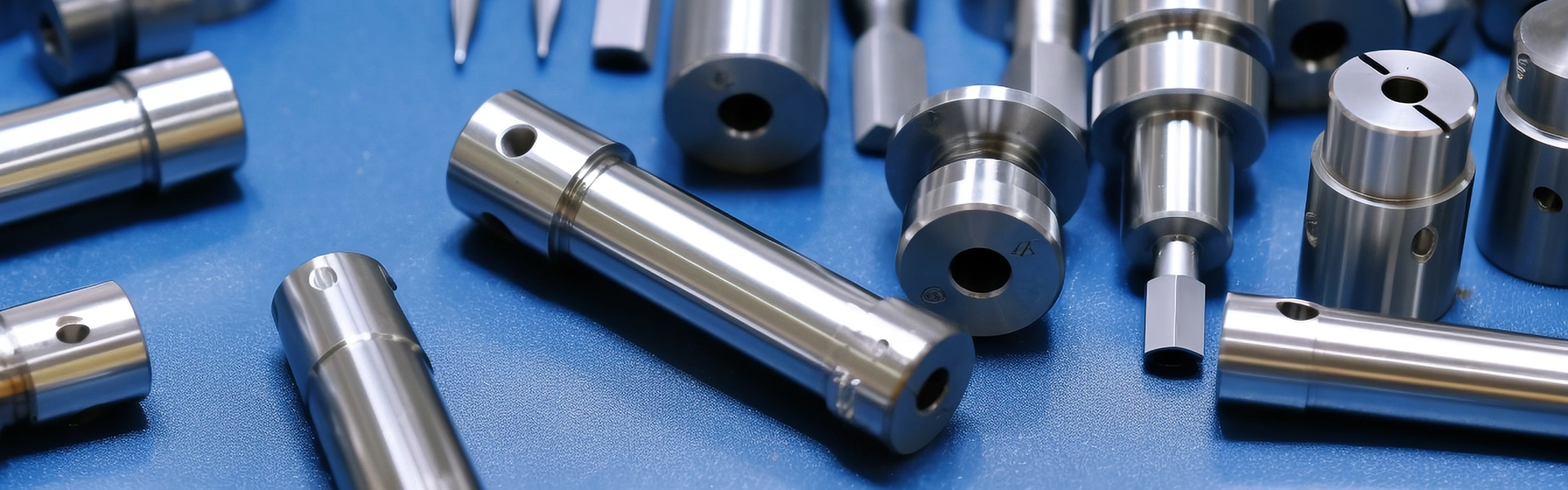
Top Butterfly Valve Factory: Precision Engineering for Reliable Flow Control
2026-05-12
When it comes to industrial fluid handling, the difference between smooth operations and costly downtime often hinges on a single component: the valve. Yet, not all valves are created equal. Behind every high-performance system lies precision engineering, and that’s where ZMV stands apart. In this exploration of a top butterfly valve factory, we’ll uncover what makes their designs a benchmark for reliable flow control—from advanced manufacturing to rigorous testing. Get ready to see how the right valve transforms efficiency, safety, and longevity in even the most demanding environments.
Where Precision Shapes Performance
There’s a quiet confidence that comes from knowing every detail has been accounted for. In the realm of high‑performance design, precision isn’t just a metric—it’s the governing principle that turns potential into tangible results. When tolerances are measured in microns and surface textures refined to the molecular level, the boundary between a fast product and a truly exceptional one becomes razor‑thin.
That philosophy doesn’t stop at the manufacturing floor. It echoes through every choice, from the selection of raw materials to the final assembly rhythm. Here, performance isn’t bolted on after the fact; it emerges organically because the foundation itself is built with obsessive exactitude. The result is rarely loud, but it speaks volumes in consistency, responsiveness, and a kind of mechanical intuition that feels almost reflexive.
Built to Last: The Durability Factor
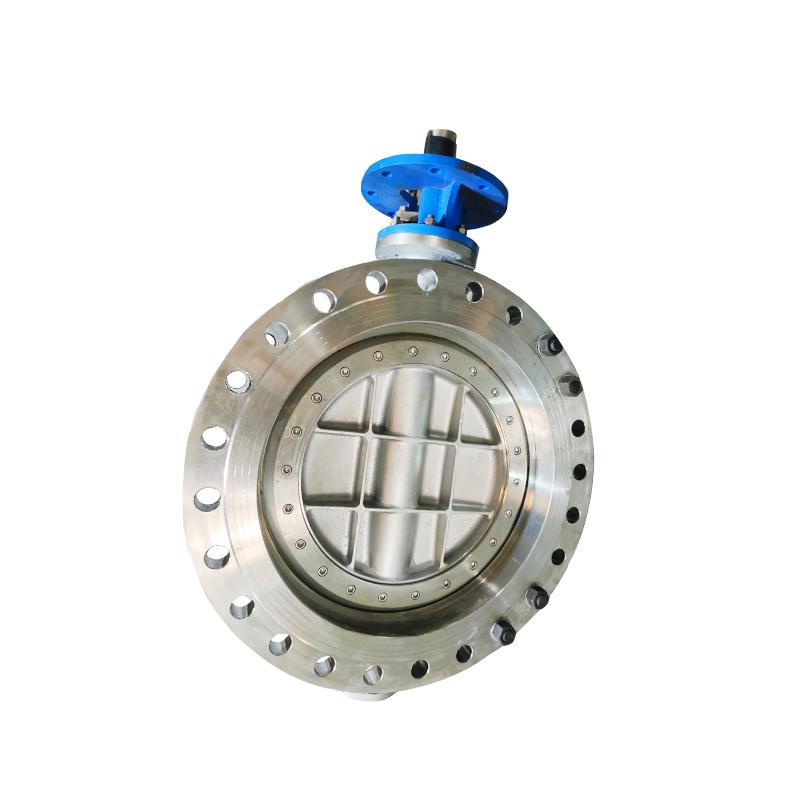
Things that stand the test of time aren’t just put together—they’re engineered with an obsessive attention to what normally gets overlooked. It starts with material choices that reject the ordinary. Instead of cutting corners, every component is selected for how it ages, how it handles stress, and whether it can take a beating without complaint. Seams are reinforced not because it’s required, but because someone decided failure wasn’t an option. The result is something that feels just as reliable on day one thousand as it did out of the box.
Durability isn’t just about surviving drops or weather—it’s about refusing to slowly fall apart in the small ways most products accept. Zippers don’t snag. Edges don’t fray without a fight. Coatings don’t peel under sun or moisture because the bonding process goes deeper than surface level. This isn’t about adding weight or bulk for the sake of it; it’s about intelligent design that works with wear instead of against it, treating every scratch as a story rather than a failure.
Long-term thinking shows up in the quiet details—like the way a stitch is angled to distribute tension across a wider area, or how a hinge is dampened to prevent metal fatigue that creeps in over years of use. There’s no planned obsolescence hiding in the specs, just the assumption that you’ll be using this for a very long time. When something is truly built to last, it doesn’t ask for special care; it earns trust by simply doing its job, day after day, without drama.
Engineered Materials for Extreme Conditions
Pushing the boundaries of what materials can withstand, today's advanced composites and alloys are being custom-designed at the atomic level. We no longer simply select from a catalog; we engineer components that thrive in environments where conventional substances quickly degrade. From the crushing pressures of the deep ocean to the intense heat of a turbine blade, the focus has shifted to creating materials that actively manage stress, heat, and corrosion in real time, often with embedded sensing capabilities.
The development process itself has become remarkably iterative. High-throughput simulations now predict performance years before a physical sample exists, while additive manufacturing allows us to produce test parts with previously impossible geometries. This combination means that a new superalloy destined for a rocket nozzle or a ceramic matrix composite for a hypersonic leading edge can be refined in months, not decades. The real innovations often happen when we step away from incremental improvements and embrace entirely new microstructures—like dual-phase lattices that are both ultralight and able to absorb enormous impacts.
The most exciting frontier isn’t just surviving harsh conditions, but adapting to them. Smart materials with shape-memory or self-healing properties are moving out of the laboratory and into industrial use. Imagine a deep-sea drilling component that can seal its own microcracks, or a satellite structure that subtly changes its reflectivity to manage temperature swings. These aren't science fiction; they are the tangible outcomes of blending material science with data-driven design. The goal is no longer mere durability—it's a kind of resilience where the material responds intelligently to its environment, extending service life in ways that traditional margined safety factors never could.
Rigorous Testing for Flawless Operation
Every system undergoes a battery of tests designed to simulate real-world stress far beyond typical usage. We push components to their breaking points in controlled environments, identifying weaknesses that might only surface after years of operation. Thermal cycling, vibration analysis, and continuous load tests run for thousands of hours, ensuring nothing slips through the cracks.
The testing protocol extends beyond pass/fail metrics—it's about understanding how the system behaves when pushed past its limits. Engineers meticulously log every anomaly, no matter how minor, and feed those insights back into the design loop. This iterative refinement means the final product doesn't just meet specifications; it operates with headroom that keeps failures at bay.
Before any system ships, it must earn approval through a final series of randomized stress scenarios that no script can fully predict. This chaos-engineering approach mimics the unpredictability of actual operation, guaranteeing that when the system faces the unexpected, it responds with composure, not compromise.
Tailored Solutions for Complex Flow Challenges
Every industrial process brings its own set of flow intricacies—viscous slurries, volatile chemicals, extreme temperatures, or erratic pressure swings. Off-the-shelf components rarely handle these conditions without compromise. That’s where a deep engineering review comes in. By dissecting the actual fluid behavior, pipe geometry, and operational cycles, we design pumping and control systems that feel almost bespoke. It’s not just about picking a bigger pump; it’s about reshaping the flow path, selecting materials that won’t degrade after a few months, and integrating monitoring that catches surges before they become downtime.
The real advantage surfaces when the unexpected happens. A system tuned for your specific viscosity and duty cycle doesn’t just survive—it holds steady when batch recipes change or seasonal temperatures shift. We’ve built solutions where a progressive cavity pump with a custom stator geometry quietly handles a non-Newtonian polymer that would shear-thin in a standard unit, or where a mag-drive unit replaces troublesome mechanical seals in a corrosive, crystallization-prone loop. The result is less maintenance firefighting and more predictable throughput, even in conditions that would make generic setups fail.
Innovative Design That Redefines Flow Control
Flow control has long been constrained by conventional valve geometries that prioritize simplicity over precision. Our approach discards these limitations entirely, introducing a fluid-dynamic contour that channels media with minimal turbulence. The result is not just a component, but a philosophy—a silent promise of stability even in chaotic process conditions.
We’ve reengineered the internal pathways to mimic natural flow patterns, eliminating dead zones where particles once accumulated. This self-flushing architecture extends maintenance intervals dramatically, allowing operators to focus on output rather than upkeep. It’s a design born from observing how rivers carve their most efficient courses, then translating that insight into industrial hardware.
Every curve, every angle in the new mechanism serves a dual purpose: reducing energy loss while preventing cavitation. By embedding smart material composites at critical stress points, the system adapts to pressure flux in real time. This is innovation that doesn’t just control flow—it reinterprets the relationship between mechanism and motion.
FAQ
Every valve is built using CNC-machined components and tested to micron-level tolerances. Our in-house R&D team refines disc and seat profiles to minimize torque while ensuring bubble-tight shut-off, even after thousands of cycles.
We subject each valve to rigorous pressure, temperature, and endurance testing that simulates real-world operating environments. Materials like duplex stainless steel and PTFE seats are chosen based on specific media to withstand corrosion, high velocity, and thermal cycling.
Absolutely. We collaborate closely with clients to modify dimensions, actuation methods, and sealing materials. Recent projects include cryogenic valves for LNG terminals and high-speed units for wind tunnel flow modulation.
Our factory is ISO 9001, API 6D, and PED certified. We also meet stringent fire-safe standards (API 607) and carry ATEX approvals for explosive atmospheres, ensuring compliance in global markets.
By optimizing our supply chain and maintaining lean manufacturing, we eliminate unnecessary overhead without compromising on material integrity. This allows us to offer durable, precision valves at competitive price points.
We offer on-site commissioning, remote diagnostics, and a dedicated technical team reachable within hours. Spare parts are kept in regional hubs to minimize downtime, and we provide hands-on training for maintenance crews.
Our valves are found in water treatment plants, chemical processing, power generation, and oil & gas pipelines. We also serve niche sectors like pharmaceutical clean steam and marine ballast systems.
From compact electric actuators with Modbus connectivity to fail-safe pneumatic setups, we pre-integrate controls to guarantee compatibility. For challenging locations, we offer hydraulic override and subsea actuation packages.
Conclusion
At the core of this butterfly valve factory lies a commitment to precision that transforms performance across every application. Starting from initial design, engineers utilize advanced modeling to optimize disc and seat geometry, ensuring minimal pressure drop and bubble-tight shut-off. The selection of engineered materials—ranging from high-grade stainless steels to specialized polymers—enables these valves to withstand corrosive chemicals, extreme temperatures, and abrasive slurries without compromise. Each unit undergoes a battery of rigorous tests, including hydrostatic and pneumatic evaluations, to verify zero leakage and smooth operation under rated conditions. This meticulous approach means that precision is not just a specification but a measurable outcome reflected in flow accuracy and energy efficiency.
Beyond baseline quality, the factory’s focus on durability and tailor-made solutions sets it apart. Components are designed with longevity in mind; reinforced stems, heavy-duty bearings, and robust seat constructions extend service life even in high-cycle or throttling services. For unique challenges—whether it’s cryogenic service, high-pressure gas, or hygienic processing—custom valve configurations are developed with exacting attention to material certification and surface finish. An innovation-driven mindset leads to features like self-compensating seats and smart positioners that adapt to changing process demands. This fusion of dependable construction and adaptive engineering delivers flow control that not only performs reliably but also evolves with the operator’s needs, reinforcing the factory’s reputation as a top-tier provider.
Contact Us
Contact Person: Lucas Lin
Email: [email protected]
Tel/WhatsApp: 8613968913000
Website: https://www.zhengmaogroup.com